







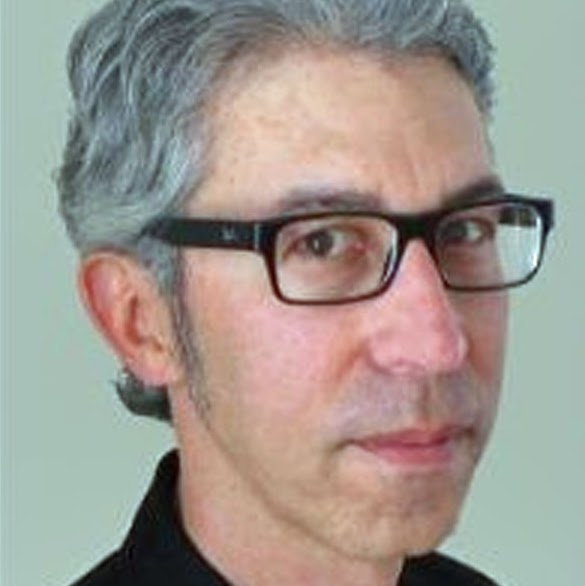
Attorney at law, Nolo Legal Editor, Blogger — Dear Rich: Nolo’s Patent, Copyright and Trademark Blog, Author, Nolo
Q: Thank you for updating the copyright overview on this site. What are the most important changes that you want us to know?
A: Because the update reflects changes from 2014 through 2016 it includes a few decisions that readers may be familiar with such as the Google book scanning decision (Author’s Guild v. Hathitrust, discussed below), the sequel rights to Catcher in the Rye, (Salinger v. Colting), the use of news – including business news and video clips – for transformative purposes (Swatch Grp. Mgmt. Servs. Ltd. and Fox News v. TVEYES, Inc.), the use of pop culture references (the “Who’s on First” comedy routine) within a play (Fox News v. TVEYES, Inc), and the ability to parody a popular movie (Point Break). (Keeling v. Hars). I think the cumulative importance of these and other cases that are discussed, is the evolving liberalization of fair use standards.
Q: Do we have any more clarity on Fair Use with respect to academic or library uses?
A: In order to provide more clarity, I think academics and librarians would like to see courts or legislators adopt quantitative guidelines – for example, establishing what percentage of a book or article constituted fair use. That seems unlikely based on the Eleventh Circuit rejection of the “10% rule” in Cambridge University Press v. Patton. The District court had allowed copying of 10% of a work as recommended by the Code of Best Practices, a set of fair use guidelines established by a group of publishers and academics. But the Eleventh Circuit rejected that standard and instead emphasized the importance of a flexible case-by-case fair use analysis. The good news for the academics was that on remand the majority of copying at issue was permitted under fair use.
The other good news for academics was the ruling in Author’s Guild v. Hathitrust. Most of your readers are probably aware of this case, in which the Second Circuit ruled that digital scans of a book constituted a fair use when used for two purposes: a full-text search engine, and electronic access for disabled patrons who could not read the print versions. The Second Circuit remanded as to whether “preservation” constituted a third fair use purpose, but the parties settled in 2015 before the issue could be litigated.
Attorney at law, Nolo Legal Editor, Blogger — Dear Rich: Nolo’s Patent, Copyright and Trademark Blog, Author, Nolo
此内容由惯性聚合(RSS阅读器)自动聚合整理,仅供阅读参考。 原文来自 — 版权归原作者所有。