


惯性聚合 高效追踪和阅读你感兴趣的博客、新闻、科技资讯
阅读原文 在惯性聚合中打开

推荐订阅源

Google DeepMind News
aimingoo的专栏
aimingoo的专栏
爱范儿
爱范儿
D
Docker
I
InfoQ
Microsoft Security Blog
G
Google Developers Blog
OSCHINA 社区最新新闻
OSCHINA 社区最新新闻
Vercel News
Vercel News
H
Hackread – Cybersecurity News, Data Breaches, AI and More
T
Tailwind CSS Blog
D
DataBreaches.Net
月光博客
月光博客
N
Netflix TechBlog - Medium
Cyber Security Advisories - MS-ISAC
让小产品的独立变现更简单 - ezindie.com
V
Visual Studio Blog
MyScale Blog
MyScale Blog
B
Blog
阮一峰的网络日志
阮一峰的网络日志
L
LangChain Blog
Recent Announcements
Microsoft Azure Blog
WordPress大学
WordPress大学

Vector Institute for Artificial Intelligence

Mohamad Moosavi: Accelerating the search for climate solutions with AI A strategic blueprint for safe health AI implementation: Your 2026 roadmap Vector Institute awards 100 scholarships to Ontario’s top AI graduate students Agentic AI evaluation strategies Hassan Ashtiani: Building trustworthy AI through mathematical foundations Vector researchers advance representation learning and deep learning research at ICLR 2026 Remarkable 2026 Poster Session: 60 research projects shaping AI’s future CRISPNAM-FG: An interpretable Fine-Gray deep survival model for competing risks in health care Demo Day: How the Vector Institute helps Canadian startups turn innovative ideas into commercial reality The New Cartography of the Invisible Vector researchers advance AI frontiers with 80 papers at NeurIPS 2025 New study reveals AI’s $100B economic impact across Canada, with Ontario leading the charge When smart AI gets too smart: Key insights from Vector’s 2025 ML Security & Privacy Workshop Vector Institute names 13 new Faculty Members, expanding core research leadership across Ontario Vector researchers dive into deep learning at ICLR 2025 When AI Meets Human Matters: Evaluating Multimodal Models Through a Human-Centred Lens – Introducing HumaniBench Vector Institute 2024-25 annual report: Where AI research meets real-world impact Vector researchers tackle real-world AI challenges at ICML 2025 Ontario’s AI ecosystem: fueling real economic growth with record number of jobs and private investments Transforming Youth Mental Health Support: FAIIR’s AI-Powered Crisis Response Model Vector Institute awards up to $2.1 million in scholarships to Ontario’s top AI graduate students AI Weather Forecasting Breakthrough: How Canadian Innovation is Transforming Climate Prediction | Aardvark Weather Exploring Intelligence: Vector Faculty Member Kelsey Allen’s Path from Particle Physics to Cognitive Machine Learning Vector Institute Announces the Appointment of Glenda Crisp as President and CEO Vector Institute Unveils Comprehensive Evaluation of Leading AI Models State of Evaluation Study: Vector Institute Unlocks New Transparency in Benchmarking Global AI Models Real World Multi-Agent Reinforcement Learning – Latest Developments and Applications Principles in Action: Introducing the Vector Institute’s Playbook for Responsible AI Product Development Leveraging Large Language Models for More Efficient Systematic Reviews in Medicine and Beyond CEO Update
Global AI Alliance for Climate Action funding announcement
Kylie Williams · 2025-03-19 · via Vector Institute for Artificial Intelligence

Vector Institute and Be Node have announced the recipients of Global AI Alliance for Climate Action project funding. Climate NGOs CleanTech21, The USA National Phenology Network, and a combined project from The Global Centre for Risk and Innovation Canada and the Internet Society Kyrgyzstan Chapter will each receive funding to deploy their projects. The ultimate goal is to deploy and scale their proposed climate solutions in areas such as energy efficiency, extreme weather, and seasonal shifts in plant and animal activities.
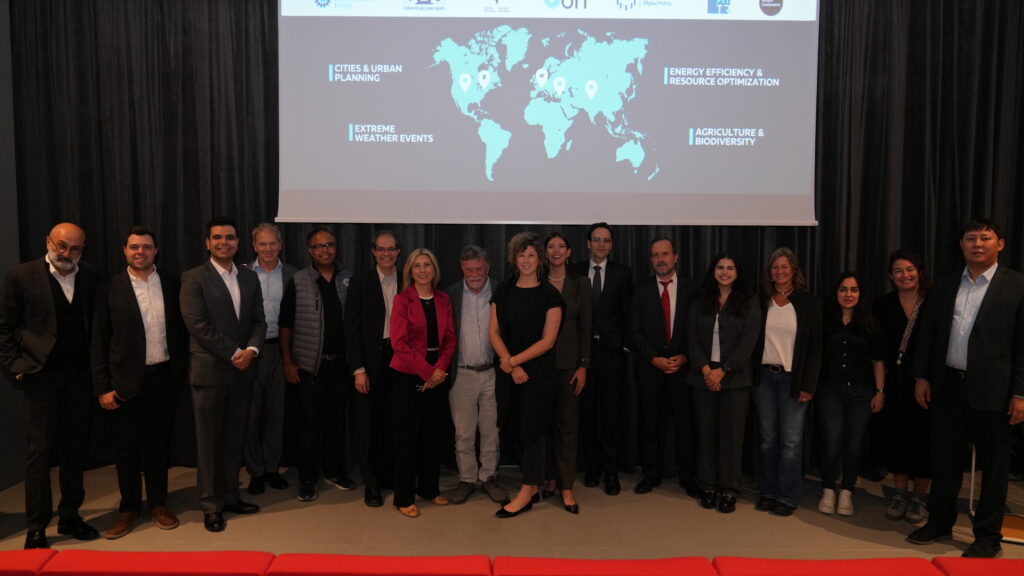
Group shot of the participants of the AI for Climate Summit

Global AI Alliance for Climate Action is a partnership between the Vector Institute and the Turkish Informatics Foundation through its Be Node platform. The international collaboration connects Vector’s research community with global climate action groups to explore how the transformative power of AI can produce sustainable solutions for some of the most critical environmental challenges.

At the AI for Climate Summit, held in Istanbul, Turkiye in November and organized by Vector and Be Node, Faruk Eczacıbaşı, President of the Turkish Informatics Foundation, highlighted the need for new paradigms in addressing climate change, a role for which AI is uniquely suited. Yet even that comes with its challenges. 

In their presentations at the conference Vector’s Vice President of AI Engineering Deval Pandya and Vector Faculty Member Pascal Poupart highlighted the hidden environmental costs of AI due to the large sums of energy consumption associated with training large language models (LLMs). During a panel moderated by Sedef Akinli Kocak, Vector’s director of professional development, panelists emphasized the importance of collaborative efforts in leveraging AI to support climate action initiatives.

Following the initial call for projects, climate NGOs were paired with members of Vector’s AI research community. Vector’s AI researchers bring the technical expertise to develop the AI models necessary to ensure that climate solutions can reach a wider audience more quickly and at a lower cost. Meanwhile, the climate NGOs provide datasets critical to the success of these projects, ensuring that AI-driven solutions are grounded in real-world data and operational insights.

The winning projects are set to tackle some of the most pressing issues facing our planet. 

  • Renewable Energies: A collaboration between Poupart and Swiss climate NGO CleanTech21, this project will use energy production and consumption data from an energy community pilot held in the Swiss county of Weislingen. Researchers will employ reinforcement learning models to optimize the flow of energy in the community network – thereby save resources and accelerate the deployment of renewables. 
  • Tracking Changes in Species: Vector Faculty Member Graham Taylor and The USA National Phenology Network will leverage LLMs and agent-based workflows to optimize phenology data collection with a 19-year-old dataset from the USA Phenology Network, which includes observational data gathered by citizen scientists.
  • AI-Driven Heatwave Prediction Across Diverse Geographies: Vector Faculty Member Yalda Mohsenzadeh, Vector Postdoctoral Fellow Elham Bagheri, and graduate researcher Joud El-Shawa along with climate NGOs The Global Centre for Risk and Innovation Canada and the Internet Society Kyrgyzstan Chapter, aim to develop an advanced, AI-driven system for heatwave prediction. By leveraging state-of-the-art machine learning models, they hope to address the increasing frequency and severity of heatwaves and their associated disasters, including forest fires. 

Projects were selected after an initial call for proposals for actionable solutions for the climate crisis went out to climate NGOs in the summer of 2024. After those proposals were matched with Vector researchers, the field was narrowed down to five. 

During the Climate AI Workshop at the Summit, teams from those five NGOs were able to define the scopes of their projects, align their problem statements with tangible AI and ML requirements, identify resource needs and data gaps, and strategize for implementation. The workshop also enabled them to identify specific technical problems where AI can have the most impact and establish a roadmap for future developments. 
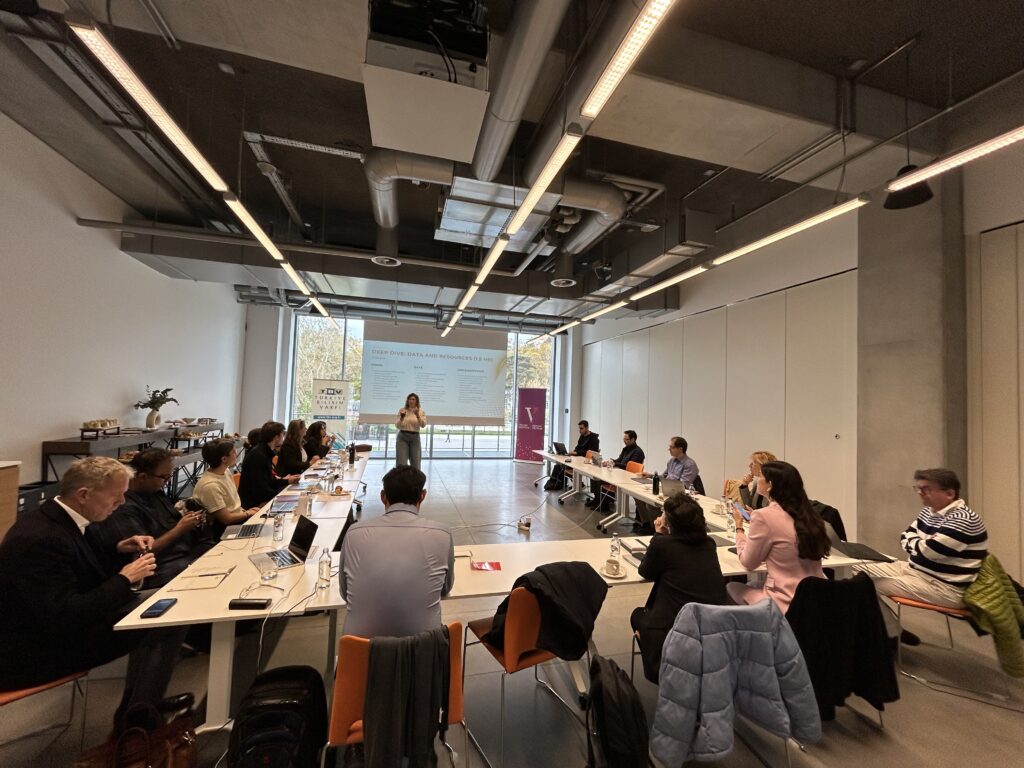
Group shot of the participants of the AI for Climate Summit workshop

In the end, three projects were funded, with The Global Centre for Risk and Innovation Canada and the Internet Society Kyrgyzstan Chapter combining their efforts due to the similarities of their proposed work. 

The preliminary results of the projects are expected in early May, 2025.