







The Sun is not known for being quiet! It blasts out energy equivalent to 100 billion nuclear bombs every single second, routinely hurls billion tonne clouds of magnetised plasma into space, and occasionally treats us to auroras visible as far south as my home in Norfolk UK. But even by its own extraordinary standards, something that began on an unremarkable day in August 2025 turned out to be genuinely remarkable and it took a small fleet of spacecraft spread across the inner solar system to piece together what had actually happened.
It started with a Type IV radio burst. These are bursts of radio waves produced when electrons get trapped inside the Sun's magnetic fields, swirling around and releasing energy as they go. They happen reasonably regularly, typically lasting a few hours to a couple of days, and while the radio waves themselves are harmless, the magnetic environments that produce them are not. The very same regions can also launch dangerous particle storms capable of damaging satellites and disrupting spacecraft.
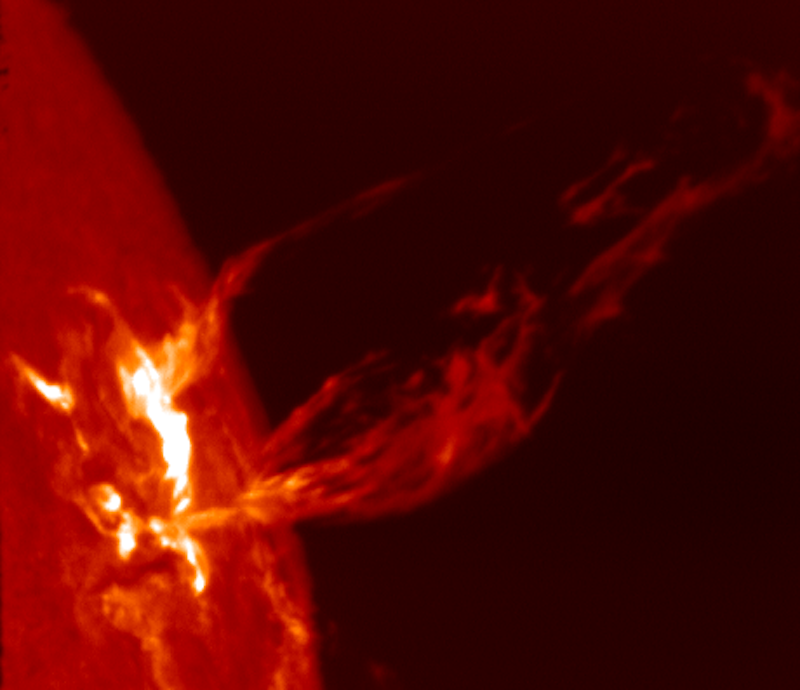 The Sun's magnetic field drives events such as this filament eruption arching out into space (Credit : U.S. National Oceanic and Atmospheric Administration)
This one, however, didn’t stop. Days passed. Then more days. When it finally ended, the radio burst had lasted 19 days, that’s nearly four times longer than anything previously recorded. The previous record holder had only managed five days.
To work out what was going on, researchers combined data from four different spacecraft: NASA's STEREO, Parker Solar Probe, and Wind missions, alongside ESA and NASA's Solar Orbiter. Each spacecraft caught the burst for a few days over its duration as the Sun's rotation slowly carried the source region in and out of view of each probe, a bit like relay runners passing a baton across the Solar System. No single spacecraft could see the whole event. It took all of them together to build the full picture.
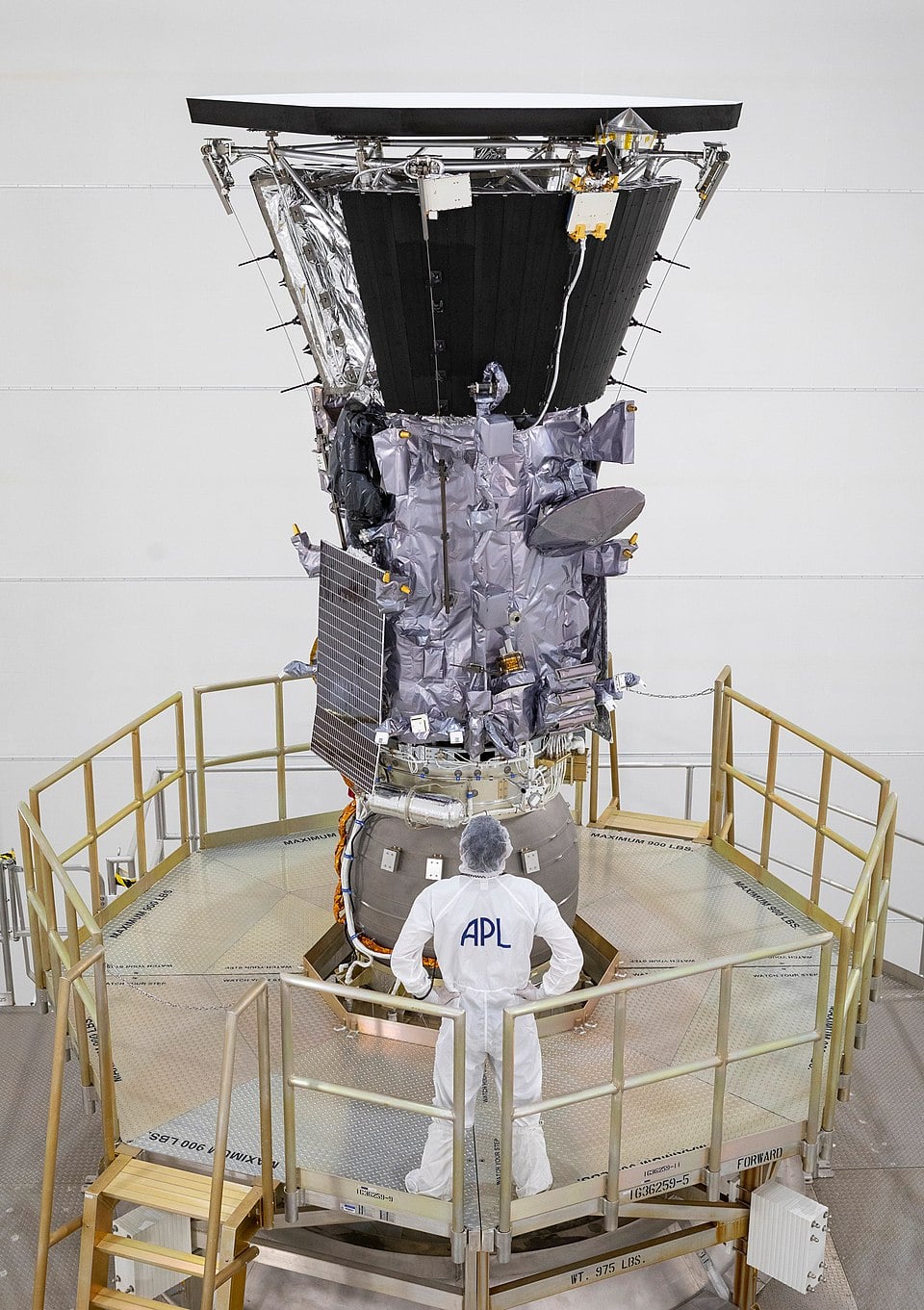 Parker Solar Probe mated to its third stage rocket motor before observing the record breaking solar event (Credit : NASA/Johns Hopkins APL/Ed Whitman)
Using a new analysis technique applied to STEREO data, the team managed to pinpoint the burst was coming from a large magnetic structure in the Sun's outer atmosphere called a helmet streamer. The name sounds oddly medieval for something 150 million kilometres away, but it describes a distinctive V-shaped feature visible during solar eclipses, where magnetic field lines arch up from the Sun's surface and stretch outward into space. They are regions of concentrated magnetic activity, and this one had been supercharged by a series of three coronal mass ejections from the same area in quick succession effectively feeding the magnetic trap and keeping it energised far beyond its normal lifespan.
Understanding what makes solar radio bursts like this persist for days or weeks while others fizzle out quickly is directly relevant to space weather forecasting, our ability to predict when the Sun is about to throw something dangerous in our direction. The more accurately we can identify these features and understand their behaviour, the better protected our satellites, astronauts, and ground-based infrastructure will be.
Source : NASA Missions Track Record-Breaking Radio Burst from Sun
此内容由惯性聚合(RSS阅读器)自动聚合整理,仅供阅读参考。 原文来自 — 版权归原作者所有。