
惯性聚合 高效追踪和阅读你感兴趣的博客、新闻、科技资讯
阅读原文 在惯性聚合中打开

推荐订阅源

钛媒体:引领未来商业与生活新知
钛媒体:引领未来商业与生活新知
酷 壳 – CoolShell
酷 壳 – CoolShell
博客园 - 司徒正美
让小产品的独立变现更简单 - ezindie.com
Last Week in AI
Last Week in AI
大猫的无限游戏
大猫的无限游戏
博客园 - Franky
奇客Solidot–传递最新科技情报
奇客Solidot–传递最新科技情报
爱范儿
爱范儿
The Cloudflare Blog
阮一峰的网络日志
阮一峰的网络日志
博客园 - 叶小钗
博客园_首页
有赞技术团队
有赞技术团队
WordPress大学
WordPress大学
宝玉的分享
宝玉的分享
V
V2EX
V
Visual Studio Blog
博客园 - 三生石上(FineUI控件)
S
SegmentFault 最新的问题
量子位
OSCHINA 社区最新新闻
OSCHINA 社区最新新闻
Apple Machine Learning Research
美团技术团队

Help Net Security

Police arrest 10 suspected members of Black Axe cybercrime gang ShinyHunters claims it stole 1.4 million records from Udemy Sevii unveils Cyber Swarm Defense Mode to stop AI-driven attacks at scale Alleged Chinese hacker extradited to US over cyberattacks targeting COVID-19 research Cequence Agent Personas bring granular control and governance to enterprise AI agents NowSecure MARI gives enterprises evidence-based visibility into third-party mobile app risk The metrics killing your SOC, and what to use instead US state privacy fines reached $3.425 billion in 2025 Canada’s first SMS blaster case leads to three arrests Linux storage management tool Stratis 3.9.0 adds online encryption and cache-less pool startup TLS Connect gives SMBs a right-sized automated tool to manage TLS certificates Aptori expands its platform with autonomous offensive testing to reduce security bottlenecks Your IAM was built for humans, AI agents don’t care The AI criminal mastermind is already hiring on gig platforms 25 open-source cybersecurity tools that don’t care about your budget Product showcase: LuLu reveals unauthorized outbound connections from Mac apps Week in review: Claude Mythos finds 271 Firefox flaws, Vercel breach Users advised to drop passwords and make room for passkeys - Help Net Security Indirect prompt injection is taking hold in the wild - Help Net Security Compromised everyday devices power Chinese cyber espionage operations - Help Net Security New Cisco firewall malware can only be killed by pulling the plug - Help Net Security Meta is overhauling how you sign in, manage settings, and protect your accounts - Help Net Security Ubuntu 26.04 LTS delivers memory-safe system tools and live patching for Arm servers - Help Net Security OpenAI’s GPT-5.5 is out with expanded cybersecurity safeguards - Help Net Security AI is speeding up nation-state cyber programs - Help Net Security A study of 1,000 Android apps finds a privacy policy logging gap - Help Net Security IT spending to hit $6.31 trillion record, thanks to AI - Help Net Security Where AI in CI/CD is working for engineering teams - Help Net Security With AI's help, North Korean hackers stumbled into a near-undetectable attack - Help Net Security Hacker with a special interest in breaching sports institutions ends behind bars - Help Net Security
Your coworker might be selling company logins, and thinks...
Anamarija Po · 2026-05-08 · via Help Net Security

Employee behavior once considered unacceptable is becoming tolerated across various industries, particularly in IT and telecommunications, and at all levels of seniority, including leadership.

Cifas Workplace Fraud Trends research, based on a survey of 2,000 UK employees working at companies with more than 1,000 staff, shows that employee-driven fraud, such as selling login credentials or secretly working for competitors, is being viewed as justifiable.
Cifas workplace fraud trends

“These findings reflect a broader shift in workplace behaviors when faced with the opportunity to commit fraud,” said Mike Haley, CEO at Cifas. “They suggest a shift in workplace norms and raise urgent questions about organizational culture, risk management, and accountability.”

Employees increasingly justify workplace fraud

Participants were presented with five fictional workplace fraud scenarios and asked whether they considered the actions justifiable, as well as whether they or someone they knew had engaged in similar behavior. The scenarios included falsifying references, selling login credentials, secretly working for a competitor, misusing expense claims, and gambling with company funds with the intention of repaying the money later.

The findings were striking, especially considering that fraud is estimated to cost the UK £219 billion annually.

24% of respondents, equivalent to around 240 people in a company of 1,000 employees, said it is acceptable to secretly work for a competitor, a practice referred to as “polygamous working.” Almost the same proportion, representing the most commonly witnessed behavior, said they knew someone who had committed expense fraud within the past year.

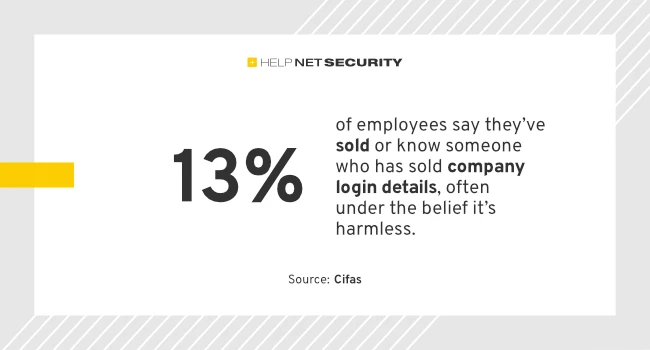
Falsifying references to cover employment gaps and secure a job followed at 19%. Meanwhile, 13% of respondents said they or someone they knew had used company funds for gambling with the intention of repaying the money after winning. The same proportion also said they, or someone they knew, had sold company login credentials and considered the behavior harmless.

Senior leaders also viewed fraud as acceptable

One of the more concerning findings was that one-third of senior managers and directors surveyed considered such behavior justifiable. The proportion was even higher among C-suite executives and business owners.

Rachael Tiffen, Director of Learning at Cifas, said selling login credentials may appear insignificant to those involved, but can open the door to serious fraud and financial harm. She added that the findings show the value of building fraud-aware workplace cultures in which employees at every level understand both their responsibilities and the consequences of fraudulent behavior.

Download: 2026 SANS Identity Threats & Defenses Survey