



惯性聚合 高效追踪和阅读你感兴趣的博客、新闻、科技资讯
阅读原文 在惯性聚合中打开

推荐订阅源

F
Fortinet All Blogs
爱范儿
爱范儿
P
Proofpoint News Feed
OSCHINA 社区最新新闻
OSCHINA 社区最新新闻
T
Tailwind CSS Blog
J
Java Code Geeks
宝玉的分享
宝玉的分享
Jina AI
Jina AI
B
Blog
N
Netflix TechBlog - Medium
Recent Announcements
aimingoo的专栏
aimingoo的专栏
腾讯CDC
C
Check Point Blog
The Cloudflare Blog
阮一峰的网络日志
阮一峰的网络日志
博客园 - Franky
罗磊的独立博客
B
Blog RSS Feed
WordPress大学
WordPress大学
小众软件
小众软件
博客园 - 叶小钗
M
MIT News - Artificial intelligence
GbyAI
GbyAI

Help Net Security

Police arrest 10 suspected members of Black Axe cybercrime gang ShinyHunters claims it stole 1.4 million records from Udemy Sevii unveils Cyber Swarm Defense Mode to stop AI-driven attacks at scale Alleged Chinese hacker extradited to US over cyberattacks targeting COVID-19 research Cequence Agent Personas bring granular control and governance to enterprise AI agents NowSecure MARI gives enterprises evidence-based visibility into third-party mobile app risk The metrics killing your SOC, and what to use instead US state privacy fines reached $3.425 billion in 2025 Canada’s first SMS blaster case leads to three arrests Linux storage management tool Stratis 3.9.0 adds online encryption and cache-less pool startup TLS Connect gives SMBs a right-sized automated tool to manage TLS certificates Aptori expands its platform with autonomous offensive testing to reduce security bottlenecks Your IAM was built for humans, AI agents don’t care The AI criminal mastermind is already hiring on gig platforms 25 open-source cybersecurity tools that don’t care about your budget Product showcase: LuLu reveals unauthorized outbound connections from Mac apps Week in review: Claude Mythos finds 271 Firefox flaws, Vercel breach Users advised to drop passwords and make room for passkeys - Help Net Security Indirect prompt injection is taking hold in the wild - Help Net Security Compromised everyday devices power Chinese cyber espionage operations - Help Net Security New Cisco firewall malware can only be killed by pulling the plug - Help Net Security Meta is overhauling how you sign in, manage settings, and protect your accounts - Help Net Security Ubuntu 26.04 LTS delivers memory-safe system tools and live patching for Arm servers - Help Net Security OpenAI’s GPT-5.5 is out with expanded cybersecurity safeguards - Help Net Security AI is speeding up nation-state cyber programs - Help Net Security A study of 1,000 Android apps finds a privacy policy logging gap - Help Net Security IT spending to hit $6.31 trillion record, thanks to AI - Help Net Security Where AI in CI/CD is working for engineering teams - Help Net Security With AI's help, North Korean hackers stumbled into a near-undetectable attack - Help Net Security Hacker with a special interest in breaching sports institutions ends behind bars - Help Net Security
PureLogs infostealer is stealing credentials worldwide
Zeljka Zorz · 2026-05-19 · via Help Net Security

A phishing campaign is smuggling the powerful PureLogs information stealer onto targets’ Windows machines by hiding encrypted malicious payloads inside cat photos, Fortinet researchers discovered.

The attack

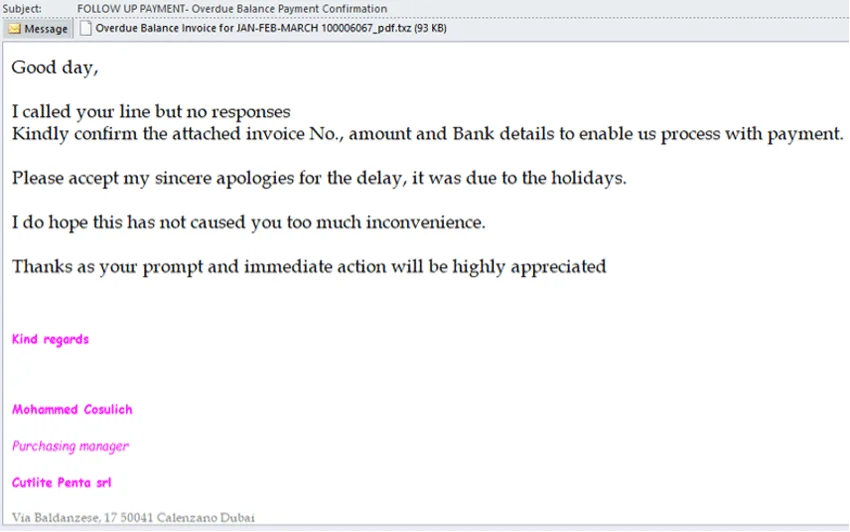
The attack starts with a phishing email containing a TXZ archive and using an invoice-themed lure to pressure the victim into opening it quickly:
PureLogs infostealer steganography

The phishing email carrying the malicious TXZ archive (Source: Fortinet)

The extracted JavaScript stores malicious commands in process environment variables (which are also filled with garbled text and multilingual comments as obfuscation), then launches a hidden PowerShell session to decode, decrypt, and decompress a .NET assembly loader dubbed PawsRunner.

PawsRunner decrypts a download URL using RC4, then tries multiple network APIs to fetch a PNG image. (In a previous campaign flagged by Swiss Post Cybersecurity, the PNG image was retrieved from archive.org.)

It then extracts an encrypted payload hidden withing the image (PNG) file using steganography markers, and bypasses Event Tracing for Windows and Windows 11 security features.

A prodigious infostealer

The final malicious payload is the PureLogs infostealer, which profiles the victim’s system environment and harvests credentials, cookies and session tokens from:

  • An extensive list of popular and lesser known web browsers used around the world
  • Over 100 crypto wallet extensions and desktop wallets
  • Communication apps (Discord, Telegram, Signal, etc.)
  • Password managers (Bitwarden, LastPass, 1Password, etc.)
  • Authenticators (via browser extensions)
  • Other software like Steam, OpenVPN, PhontanVPN, Ngrok, OBS Studio, FileZilla, WinSCP, FoxMail, MailBird, MailMaster, and Outlook.

The stolen data is AES-encrypted and exfiltrated.

“This version of PureLogs uses extensive async/await patterns to improve task efficiency and complicate analysis. Additionally, it uses HTTPS for its Command and Control (C2) communications,” the researchers added.

The stolen data can be used for financial theft or sold on criminal markets, potentially enabling follow-on attacks against victims’ employers, banks, or contacts.

Steganography on the rise

The shift toward hiding payloads inside image files represents a deliberate effort to blend malicious activity into normal-looking network traffic: A PNG file fetched over HTTPS, from what might appear to be a legitimate host, raises far fewer alarms than a direct download of an executable.

According to Fortinet, the technique is increasingly used by attackers.

Users are advised to treat unexpected emails and attachments as suspicious regardless of how urgent or routine they look, and to be wary of opening files in unusual file formats.

Organizations can do more: they can train employees on how to detect invoice-themed lures, block uncommon archive formats at the email gateway, monitor for unusual PowerShell behavior, restrict JavaScript execution from email attachments, and deploy endpoint detection that covers in-memory execution.

Subscribe to our breaking news e-mail alert to never miss out on the latest breaches, vulnerabilities and cybersecurity threats. Subscribe here!