

惯性聚合 高效追踪和阅读你感兴趣的博客、新闻、科技资讯
阅读原文 在惯性聚合中打开

推荐订阅源

Engineering at Meta
Engineering at Meta
G
Google Developers Blog
WordPress大学
WordPress大学
M
MIT News - Artificial intelligence
D
DataBreaches.Net
云风的 BLOG
云风的 BLOG
爱范儿
爱范儿
Microsoft Security Blog
钛媒体:引领未来商业与生活新知
钛媒体:引领未来商业与生活新知
H
Hackread – Cybersecurity News, Data Breaches, AI and More
Blog — PlanetScale
Blog — PlanetScale
T
Tailwind CSS Blog
S
SegmentFault 最新的问题
阮一峰的网络日志
阮一峰的网络日志
博客园 - 三生石上(FineUI控件)
酷 壳 – CoolShell
酷 壳 – CoolShell
Recent Announcements
T
The Blog of Author Tim Ferriss
I
InfoQ
MyScale Blog
MyScale Blog
V
V2EX
B
Blog
罗磊的独立博客
freeCodeCamp Programming Tutorials: Python, JavaScript, Git & More

Help Net Security

Police arrest 10 suspected members of Black Axe cybercrime gang ShinyHunters claims it stole 1.4 million records from Udemy Sevii unveils Cyber Swarm Defense Mode to stop AI-driven attacks at scale Alleged Chinese hacker extradited to US over cyberattacks targeting COVID-19 research Cequence Agent Personas bring granular control and governance to enterprise AI agents NowSecure MARI gives enterprises evidence-based visibility into third-party mobile app risk The metrics killing your SOC, and what to use instead US state privacy fines reached $3.425 billion in 2025 Canada’s first SMS blaster case leads to three arrests Linux storage management tool Stratis 3.9.0 adds online encryption and cache-less pool startup TLS Connect gives SMBs a right-sized automated tool to manage TLS certificates Aptori expands its platform with autonomous offensive testing to reduce security bottlenecks Your IAM was built for humans, AI agents don’t care The AI criminal mastermind is already hiring on gig platforms 25 open-source cybersecurity tools that don’t care about your budget Product showcase: LuLu reveals unauthorized outbound connections from Mac apps Week in review: Claude Mythos finds 271 Firefox flaws, Vercel breach Users advised to drop passwords and make room for passkeys - Help Net Security Indirect prompt injection is taking hold in the wild - Help Net Security Compromised everyday devices power Chinese cyber espionage operations - Help Net Security New Cisco firewall malware can only be killed by pulling the plug - Help Net Security Meta is overhauling how you sign in, manage settings, and protect your accounts - Help Net Security Ubuntu 26.04 LTS delivers memory-safe system tools and live patching for Arm servers - Help Net Security OpenAI’s GPT-5.5 is out with expanded cybersecurity safeguards - Help Net Security AI is speeding up nation-state cyber programs - Help Net Security A study of 1,000 Android apps finds a privacy policy logging gap - Help Net Security IT spending to hit $6.31 trillion record, thanks to AI - Help Net Security Where AI in CI/CD is working for engineering teams - Help Net Security With AI's help, North Korean hackers stumbled into a near-undetectable attack - Help Net Security Hacker with a special interest in breaching sports institutions ends behind bars - Help Net Security
The AI oversight paradox: Is the investment worth the cos...
Anamarija Po · 2026-05-15 · via Help Net Security

Unlike in 2025, when AI adoption and testing drove business strategies, organizations in 2026 want proven ROI before committing budgets, according to a report by Globalization Partners.
AI workforce impact

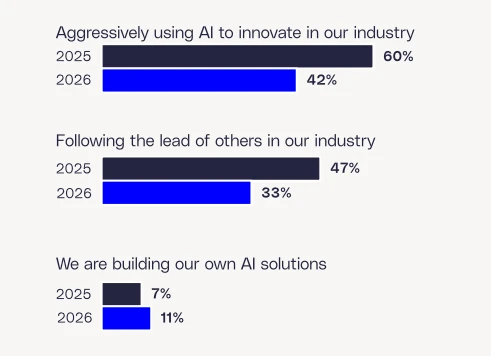
How global executives characterize their organization’s approach to AI adoption (Source: Globalization Partners)

62% of business leaders said they felt pressure from their organizations to use AI, while only 38% found AI tools personally beneficial. Companies also began building in-house solutions to address security and compliance requirements.

“A sophisticated strategy identifies high-impact AI use cases and builds the necessary organizational foundation before the plan is written. That’s the difference between a perpetual proof of concept and a successful, transformative deployment,” said Nat Natarajan, COO of G-P.

Most global firms are ready to reduce AI spending if profit goals for 2026 are not met. This shows disappointment with last year’s ROI results.

Globally, business leaders remain divided on AI’s long-term trajectory, with 69% of U.S. HR executives view AI as a lasting transformation tied to the future of work.

The growing oversight burden

AI helps employees work faster, but many decision-makers still do not trust the results. Only 23% of global executives said they have total confidence in the accuracy of AI output. Companies are increasing human oversight to prevent speed from affecting quality, turning workers into reviewers who check and revise AI-generated content.

Managers are also concerned about workers using AI tools without approval or oversight.

Some say they are uncomfortable using AI for sensitive documents because they are uncertain whether the information is legally accurate.

Firms are becoming more comfortable allowing AI to handle tasks such as risk management, financial budgeting, and talent management.

AI is also increasing review work for employees. Most workers report spending more time checking, editing, and updating AI-assisted work, while only a small percentage say they spend less time on oversight.

AI is changing how companies value work

Decision-makers admit they increasingly view employees as secondary assets because advanced AI systems have reduced the value they place on human labor. They also worry that they use AI to “perform productivity” instead of creating measurable business value.

Only 12% of executives strongly agree that sacrificing employee privacy for AI monitoring is worth it to achieve business goals.

AI is reducing the perceived value of parts of the workforce while increasing competition for specialized talent. To secure top AI talent, leaders say they are willing to hire in countries where they do not already employ workers. They also say AI improves access to talent but introduces risks they are not prepared to manage.

Leaders say organizations need a borderless workforce strategy to turn global talent access into a competitive advantage.