




惯性聚合 高效追踪和阅读你感兴趣的博客、新闻、科技资讯
阅读原文 在惯性聚合中打开

推荐订阅源

爱范儿
爱范儿
H
Help Net Security
Jina AI
Jina AI
T
The Blog of Author Tim Ferriss
宝玉的分享
宝玉的分享
博客园 - 叶小钗
Y
Y Combinator Blog
罗磊的独立博客
大猫的无限游戏
大猫的无限游戏
WordPress大学
WordPress大学
C
Check Point Blog
Recent Announcements
IT之家
IT之家
奇客Solidot–传递最新科技情报
奇客Solidot–传递最新科技情报
美团技术团队
云风的 BLOG
云风的 BLOG
雷峰网
雷峰网
H
Hackread – Cybersecurity News, Data Breaches, AI and More
S
SegmentFault 最新的问题
MyScale Blog
MyScale Blog
Apple Machine Learning Research
Microsoft Azure Blog
V
Visual Studio Blog
B
Blog

Help Net Security

Police arrest 10 suspected members of Black Axe cybercrime gang ShinyHunters claims it stole 1.4 million records from Udemy Sevii unveils Cyber Swarm Defense Mode to stop AI-driven attacks at scale Alleged Chinese hacker extradited to US over cyberattacks targeting COVID-19 research Cequence Agent Personas bring granular control and governance to enterprise AI agents NowSecure MARI gives enterprises evidence-based visibility into third-party mobile app risk The metrics killing your SOC, and what to use instead US state privacy fines reached $3.425 billion in 2025 Canada’s first SMS blaster case leads to three arrests Linux storage management tool Stratis 3.9.0 adds online encryption and cache-less pool startup TLS Connect gives SMBs a right-sized automated tool to manage TLS certificates Aptori expands its platform with autonomous offensive testing to reduce security bottlenecks Your IAM was built for humans, AI agents don’t care The AI criminal mastermind is already hiring on gig platforms 25 open-source cybersecurity tools that don’t care about your budget Product showcase: LuLu reveals unauthorized outbound connections from Mac apps Week in review: Claude Mythos finds 271 Firefox flaws, Vercel breach Users advised to drop passwords and make room for passkeys - Help Net Security Indirect prompt injection is taking hold in the wild - Help Net Security Compromised everyday devices power Chinese cyber espionage operations - Help Net Security New Cisco firewall malware can only be killed by pulling the plug - Help Net Security Meta is overhauling how you sign in, manage settings, and protect your accounts - Help Net Security Ubuntu 26.04 LTS delivers memory-safe system tools and live patching for Arm servers - Help Net Security OpenAI’s GPT-5.5 is out with expanded cybersecurity safeguards - Help Net Security AI is speeding up nation-state cyber programs - Help Net Security A study of 1,000 Android apps finds a privacy policy logging gap - Help Net Security IT spending to hit $6.31 trillion record, thanks to AI - Help Net Security Where AI in CI/CD is working for engineering teams - Help Net Security With AI's help, North Korean hackers stumbled into a near-undetectable attack - Help Net Security Hacker with a special interest in breaching sports institutions ends behind bars - Help Net Security
KDE gets over €1 million investment to strengthen securit...
Mirko Zorz · 2026-05-13 · via Help Net Security

European governments and public institutions have been shifting away from proprietary software for years, and the financial infrastructure supporting open-source alternatives is growing to match. Germany’s Sovereign Tech Fund announced today that it is investing more than €1 million in KDE, the open-source project behind the Plasma desktop environment and a broad range of Linux software.
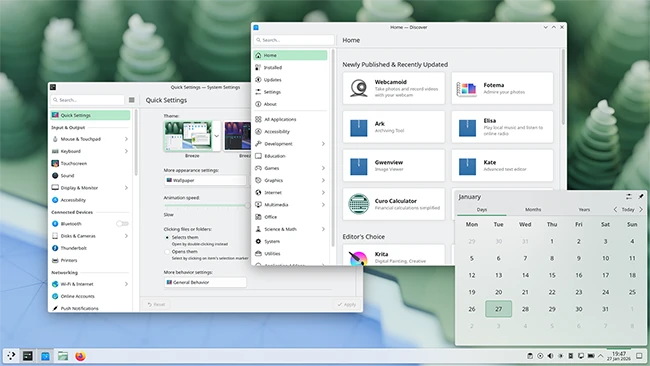
kde investment

The investment will go toward strengthening KDE’s testing infrastructure, security architecture, and the frameworks underpinning its communication services. KDE Linux, the project’s dedicated Linux distribution, is also listed among the targets.

What KDE is and why it matters to the fund

KDE has operated as a non-profit technology organization for 30 years, producing free and open-source software that runs on Linux, BSD, Windows, macOS, and Haiku. Its output includes Plasma, one of the two dominant desktop environments for Linux systems, along with document viewers, multimedia tools, image editors, and software development libraries. KDE software ships in more than 60 languages.

The Sovereign Tech Fund, operated under Germany’s Sovereign Tech Agency, focuses on digital infrastructure that public administrations and enterprises depend on. Fiona Krakenbürger, Technical Director at the Sovereign Tech Agency, cited the desktop’s role as the primary access point for digital services in daily life, from medical appointment booking to workplace software. “We are investing in KDE because it is one of the two major desktop environments used across Linux and plays a key role in how millions of people experience open technology,” Krakenbürger said.

Scope of the work

KDE charges nothing for its software and carries no shareholder obligations. Its source code is publicly auditable, and organizations can modify and redistribute it without licensing fees or subscription costs. The project does not collect or resell user data and does not use that data to train AI models.

The fund’s investment will be directed at making KDE’s core products more reliable and secure at a structural level. The stated goal is to give individuals, businesses, and public agencies a viable path to greater control over their own digital infrastructure.

KDE’s patrons include Canonical, Google, SUSE, and The Qt Company, among others. The Sovereign Tech Fund has previously invested in other foundational open-source projects and publishes details of its investments publicly at sovereign.tech.