惯性聚合 高效追踪和阅读你感兴趣的博客、新闻、科技资讯
阅读原文 在惯性聚合中打开

推荐订阅源

GbyAI
GbyAI
T
Tenable Blog
Webroot Blog
Webroot Blog
L
Lohrmann on Cybersecurity
S
Securelist
S
Schneier on Security
NISL@THU
NISL@THU
Know Your Adversary
Know Your Adversary
C
Cybersecurity and Infrastructure Security Agency CISA
T
The Exploit Database - CXSecurity.com
L
LINUX DO - 热门话题
C
CXSECURITY Database RSS Feed - CXSecurity.com
O
OpenAI News
I
Intezer
Threat Intelligence Blog | Flashpoint
TaoSecurity Blog
TaoSecurity Blog
S
Secure Thoughts
Application and Cybersecurity Blog
P
Privacy International News Feed
H
Hacker News: Front Page
N
Netflix TechBlog - Medium
M
MIT News - Artificial intelligence
博客园 - Franky
PCI Perspectives
PCI Perspectives
OSCHINA 社区最新新闻
OSCHINA 社区最新新闻
Microsoft Azure Blog
MongoDB | Blog
MongoDB | Blog
L
LangChain Blog
P
Proofpoint News Feed
S
Security Affairs
WordPress大学
WordPress大学
The Last Watchdog
The Last Watchdog
S
SegmentFault 最新的问题
小众软件
小众软件
F
Full Disclosure
博客园 - 叶小钗
cs.AI updates on arXiv.org
T
The Blog of Author Tim Ferriss
Simon Willison's Weblog
P
Palo Alto Networks Blog
Security Latest
Security Latest
P
Proofpoint News Feed
月光博客
月光博客
T
Tailwind CSS Blog
Scott Helme
Scott Helme
Hacker News - Newest:
Hacker News - Newest: "LLM"
Google Online Security Blog
T
Threat Research - Cisco Blogs
Help Net Security
Help Net Security
Project Zero
Project Zero

祈雨的笔记

安全多方计算MPC spark原理解析 kueue执行源码分析 spark on k8s执行源码分析 spark-operator源码解析 系统压测遇到的缓存击穿问题 我的世界PC与安卓联机 蚂蚁金服流量投放平台的AIG改造 G1大对象致Old区占用率高 日志打印导致接口响应率下跌分析 Groovy加载类导致OOM分析 ERROR日志打印导致CPU满载 记OceanBase死锁超时 应用发版期间服务响应超时 Ark Serverless初探 系统优化复盘一二三 The user specified as a definer does not exist Kong网关初探 API网关选型调研 CPU火焰图常用工具 配置中心选型调研 root操作Nginx导致用户组错误 基于Proxifier使用代理 FastJSON字段智能匹配踩坑 Nacos初探 记一次Nginx服务器CPU满荷载故障 基于券系统分库分表的思考 Linux常用性能监控命令 golang低版本http2偶现400 hostname in certificate didn't match 常见对称加密原理以及应用 tcp_tw_recycle引起的TCP握手失败 记一次mysql执行DDL导致锁表 mysql磁盘占用查看 mysql对text字段update致磁盘增长 elasticsearch报错index read-only TIME_WAIT与Http的Keep-Alive 记一次TIME_WAIT导致连接数报警 记一次生产事故OOM问题排查 redis分布式锁RedissonLock的实现细节 webservice复杂加密签名(2)java调用 webservice复杂加密签名(1)SoapUI mysql延时关联 利用中间人拦截实现APP内H5窜改 MySQL表字符集不同导致关联查询索引失效 通过SSH隧道远程办公 数据落盘方案 BeanDefinitionRegistryPostProcessor扩展 mysql空间索引 HTTPS攻击 spring循环依赖过程解析 elasticsearch性能优化 mysql IS NULL 使用索引 mysql字符集utf8mb4失效踩坑 常用加密算法 xml与javaBean转换 初探InnoDB MVCC源码实现 mysql索引原理 redis之list源码分析 redis之key过期源码分析 redis之string源码分析 redis之hash源码分析 线程池之ThreadPoolExecutor mysql数据页结构 Using temporary与Using filesort mysql回表致索引失效 springboot(28)HTTP连接池 定时任务之ScheduledThreadPoolExecutor elasticsearch常用script聚合 elasticsearch实现like查询 elasticsearch实现乐观锁 elasticsearch准实时原理 springboot(27)自定义缓存读写机制CachingConfigurerSupport optimizer tracing arthas常用命令 HTTP和HTTPS详解 redis集群选举机制 kafka消息重试 一点压力测试的经验 kafka架构概念 explain分析sql语句字段的解释 JVM问题分析处理手册 logstash过滤器(2)date logstash过滤器(3)dissect logstash编码器(1)json logstash编码器(2)multiline logstash表达式 logstash输入(1)通用选项 logstash输入(3)file logstash过滤器(1)通用选项 logstash输入(2)stdin logstash安装 记一次前端vConsole导致JSON序列化错误排查 解决多个异步操作嵌套问题 fastjson反序列化失败autoType is not support RTMP串流服务 POI自动调整列宽错误 Nginx+Lua实现动态黑名单 使用curl命令模拟POST和GET请求 ResponseEntity下载文件
limit不参与SQL成本计算致索引失效
祈雨的笔记 · 2020-09-09 · via 祈雨的笔记

描述

测试环境对某应用进行压测时,QPS突然陡降,监控显示mysql的CPU荷载跑满且有大量的慢查询。于是查看慢查询sql,发现该sql理论上不应该出现慢查询。

简化后的SQL:select * from test_table where a = 0 and b = 0 limit 1a字段和b字段已经建立了联合索引后,mysql执行该sql时却选择了其他的错误索引导致了慢sql。

复现

1
2
3
4
5
6
7
8
9
CREATE TABLE `test_table` (
`id` int(11) NOT NULL AUTO_INCREMENT,
`a` int(11) NOT NULL,
`b` int(11) NOT NULL,
`content` varchar(32) NOT NULL,
PRIMARY KEY (`id`),
KEY `a_index` (`a`) USING BTREE,
KEY `b_a_index` (`b`,`a`)
) ENGINE=InnoDB DEFAULT CHARSET=utf8mb4;
1
2
3
4
5
6
7
8
9
10
11
12
13
14
15
16
17
delimiter  //
CREATE PROCEDURE init_test_table()
BEGIN
DECLARE index_id INT;
SET index_id = 0;
START TRANSACTION;
WHILE index_id < 2000000 DO
insert into test_table(a,b,content) values (0,0,CONCAT('content',index_id));
SET index_id = index_id + 1;
END WHILE;
COMMIT;
END //
delimiter ;
call init_test_table();

update test_table set b = 1 where id < 300000;
update test_table set a = 1 where id > 1700000;

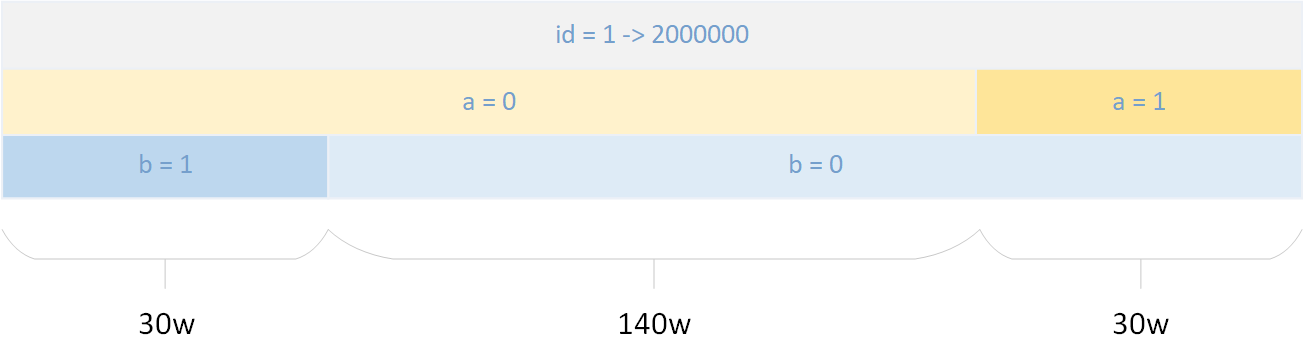
该测试表一共填充了200W条记录,其中前30W条记录的b=1,后30W条记录的a=1,数据分布情况如下图:

image

1
select * from test_table where a = 0 and b = 0 limit 1;

该sql当前最佳使用的索引是b_a_index,mysql使用该索引只需要通过索引找到一条符合查询条件的记录ID后,再对ID做一次回表操作即可。但实际上,如下,mysql使用了错误的索引a_index,导致sql在执行where查询条件时发生了30万条记录的回表,造成了慢查询。

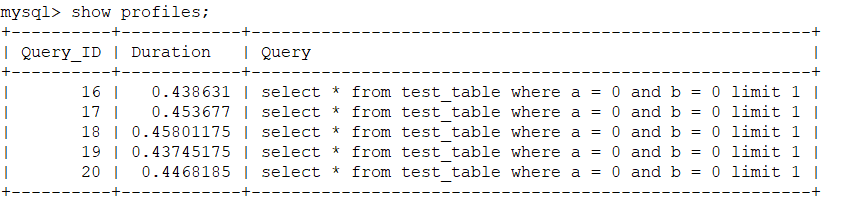
在对sql使用强制索引后,对比发现,a_index索引下sql的平均耗时在450毫秒左右,而b_a_index索引下sql的平均耗时仅需要0.5毫秒左右,两者相差近千倍的耗时。这一对比,更加证实mysql的执行计划选择了错误的索引导致sql的执行效率下降。

1
2
3
4
5
6
mysql> explain select * from test_table where a = 0 and b = 0 limit 1;
+
| id | select_type | table | partitions | type | possible_keys | key | key_len | ref | rows | filtered | Extra |
+
| 1 | SIMPLE | test_table | NULL | ref | a_index,b_a_index | a_index | 4 | const | 997354 | 8.08 | Using where |
+
1
2
3
4
5
6
7
8
9
10
11
12
13
14
15
mysql> show profiles;
+----------+------------+-------------------------------------------------------------------------------+
| Query_ID | Duration | Query |
+----------+------------+-------------------------------------------------------------------------------+
| 49 | 0.44619325 | select * from test_table where a = 0 and b = 0 limit 1 |
| 50 | 0.466321 | select * from test_table where a = 0 and b = 0 limit 1 |
| 51 | 0.45312325 | select * from test_table where a = 0 and b = 0 limit 1 |
| 52 | 0.4334895 | select * from test_table where a = 0 and b = 0 limit 1 |
| 53 | 0.48915875 | select * from test_table where a = 0 and b = 0 limit 1 |
| 54 | 0.000488 | select * from test_table force index(b_a_index) where a = 0 and b = 0 limit 1 |
| 55 | 0.0005185 | select * from test_table force index(b_a_index) where a = 0 and b = 0 limit 1 |
| 56 | 0.0006425 | select * from test_table force index(b_a_index) where a = 0 and b = 0 limit 1 |
| 57 | 0.00053575 | select * from test_table force index(b_a_index) where a = 0 and b = 0 limit 1 |
| 58 | 0.00069475 | select * from test_table force index(b_a_index) where a = 0 and b = 0 limit 1 |
+----------+------------+-------------------------------------------------------------------------------+

原因

1
2
3
4
5
6
7
8
9
10
11
12
13
14
15
16
17
18
19
20
21
22
23
24
25
26
27
28
29
"range_scan_alternatives": [
{
"index": "a_index",
"ranges": [
"0 <= a <= 0"
],
"index_dives_for_eq_ranges": true,
"rowid_ordered": true,
"using_mrr": false,
"index_only": false,
"rows": 997354,
"cost": 1200000,
"chosen": true
},
{
"index": "b_a_index",
"ranges": [
"0 <= b <= 0 AND 0 <= a <= 0"
],
"index_dives_for_eq_ranges": true,
"rowid_ordered": true,
"using_mrr": false,
"index_only": false,
"rows": 997354,
"cost": 1200000,
"chosen": false,
"cause": "cost"
}
]

通过mysql的optimizer tracing输出该sql的执行计划,发现执行计划中mysql估算出a_indexb_a_index两个的索引的执行成本相同,输出如上。因此mysql选择了第一个索引,也就是a_index

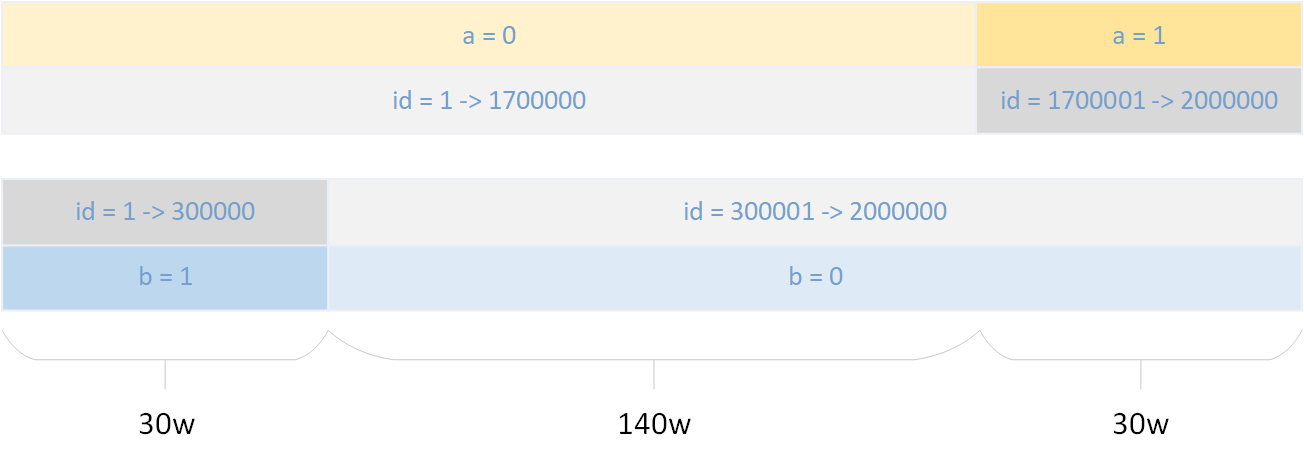
对于a_index索引,由于索引字段只有a,不能满足查询条件的ab两个查询条件使用覆盖索引条件,因此该索引需要在where查询时就需要对数据进行回表操作。见下图数据分布,where a = 0 and b = 0的查询条件下,由于前30万条数据都是b=1,因此前30万条记录均不符合查询条件而导致30万条记录的回表操作,产生了30万次的回表性能浪费。

而对于b_a_index索引,该索引字段有ab,对于where a = 0 and b = 0的查询条件下不需要做回表操作,直接通过innodb的B+Tree索引结构快速获取到一个符合查询条件的记录ID后,仅对该一条记录做回表操作即完成sql执行。因此性能消耗远远低于a_index索引。

image

之所以mysql的执行计划估算两个索引的执行成本相同,是因为mysql在评估执行成本时不考虑limit条件,即参与执行计划计算的sql是select * from test_table where a = 0 and b = 0。对于select * from test_table where a = 0 and b = 0的sql执行,a_indexb_a_index两个的索引的执行成本相同。虽然不知道innodb引擎在设计时为什么在执行计划过程中会不考虑limit条件,但这一现象,确实导致了当前场景下的索引失效问题。

解决

  1. 强制索引
  2. 拆分查询,将原sql拆成如下的右连接查询
1
2
3
select * from test_table where a = 0 and b = 0 limit 1;
select * from test_table force index(b_a_index) where a = 0 and b = 0 limit 1
select * from test_table t1 right join (select id from test_table where a = 0 and b = 0 limit 1) t2 on t1.id = t2.id;
1
2
3
4
5
6
mysql> explain select * from test_table where a = 0 and b = 0 limit 1;
+
| id | select_type | table | partitions | type | possible_keys | key | key_len | ref | rows | filtered | Extra |
+
| 1 | SIMPLE | test_table | NULL | ref | a_index,b_a_index | a_index | 4 | const | 997354 | 8.08 | Using where |
+
1
2
3
4
5
6
7
8
mysql> explain select t1.* from test_table t1 right join (select id from test_table where a = 0 and b = 0 limit 1) t2 on t1.id = t2.id;
+
| id | select_type | table | partitions | type | possible_keys | key | key_len | ref | rows | filtered | Extra |
+
| 1 | PRIMARY | <derived2> | NULL | system | NULL | NULL | NULL | NULL | 1 | 100 | NULL |
| 1 | PRIMARY | t1 | NULL | const | PRIMARY | PRIMARY | 4 | const | 1 | 100 | NULL |
| 2 | DERIVED | test_table | NULL | ref | a_index,b_a_index | b_a_index | 8 | const,const | 997354 | 100 | Using index |
+

image

image

image