现象
项目中需要使用动态规则引擎,因此对热门的Groovy进行了调研。但早先就对Groovy会有OOM的问题有所耳闻,因此调研的时候特地关注了高频率使用Groovy加载类的场景,结果果然与预期一直稳定复现OOM故障。
分析
复现场景
1
2
3
4
5
6
7
8
9
10
11
12
13
| GroovyClassLoader loader = new GroovyClassLoader();
for (int i = 0; ; i++) {
String source = "" +
"public class CustomApplication {\n" +
" public void print() {\n" +
" System.out.println(\"" + i + "\");\n" +
" }\n" +
"}";
Class<?> clazz = loader.parseClass(source);
Object target = clazz.newInstance();
Method method = clazz.getMethod("print");
method.invoke(target);
}
|
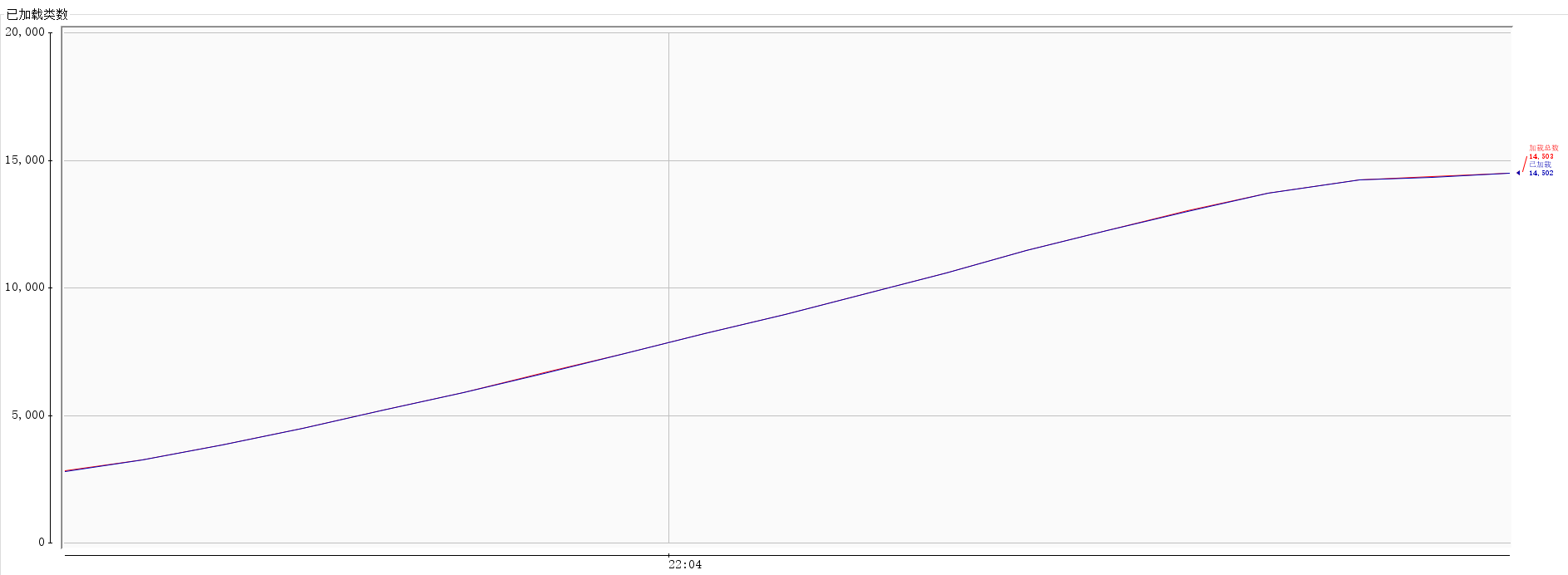
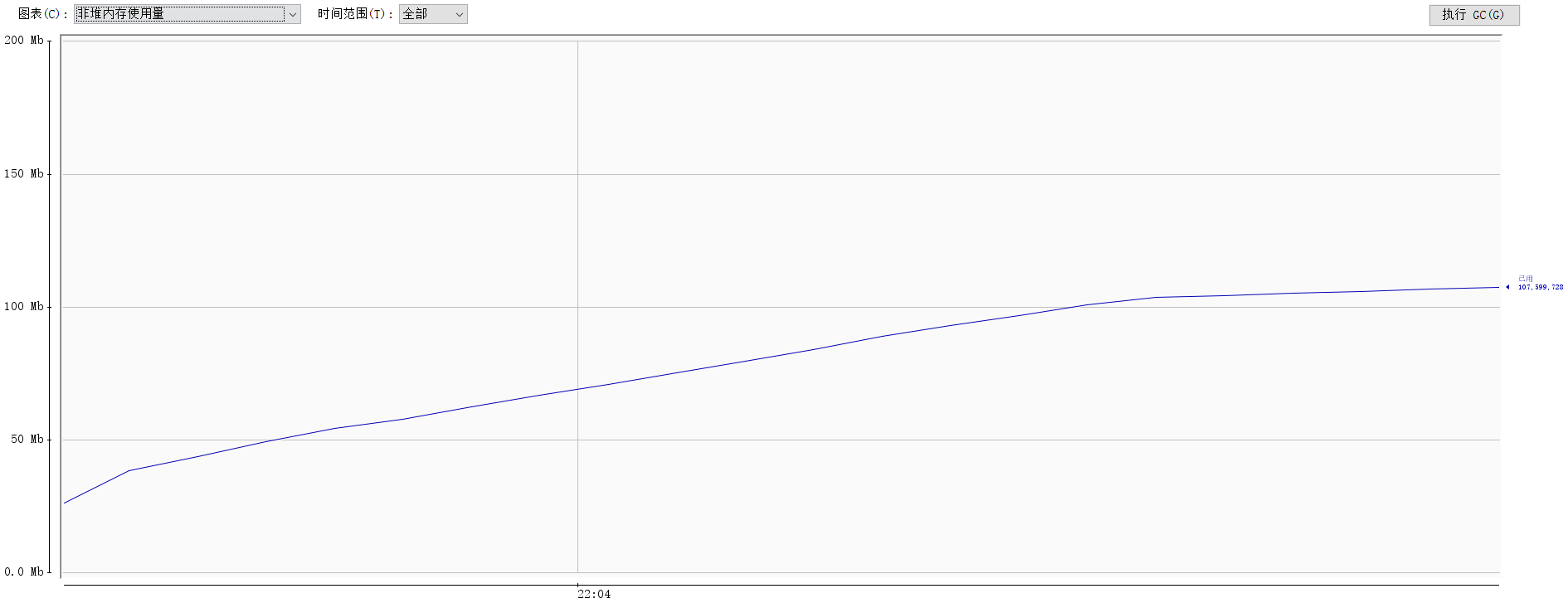
执行以上代码,并通过JVM自带的jconsole工具监控类加载数量和元数据区的内存,如下图所示。监控显示,JVM的类数量从三千一路飙升到一万三,元数据内存使用也是一路飙涨,直到OOM后应用报错。
分析OOM
通过以上两张图,显而易见,应用OOM的原因是Groovy加载的类即使只使用一次,但却并没有被释放,最终导致元数据内存空间不足而OOM。因此接下来的思路是需要分析类如何才能被回收释放,以及如何才能让Groovy加载的类回收释放掉。
首先分析一个类的回收的前置条件,一个类如果需要被垃圾回收,则需要同时满足下面3个条件:
- 该类所有的实例都已经被回收
- 加载该类的ClassLoader已经被回收
- 该类对应的java.lang.Class对象没有在任何地方被引用,无法在任何地方通过反射访问该类的方法
对照复现场景中的测试代码,显然条件1和条件3是满足的,所有的类对象和类实例都没有被外部持有。至于条件2则需要了解Groovy的类加载机制才能解答。
Groovy类加载机制
Groovy加载类的核心逻辑在groovy.lang.GroovyClassLoader#doParseClass,其实现细节是通过GroovyClassLoader对象执行parseClass方法尝试加载类时,实际是每次类加载都会新建一个新的GroovyClassLoader.InnerLoader类加载器来真正执行类加载,加载完成后则不再引用该GroovyClassLoader.InnerLoader类加载器对象。
1
2
3
4
5
6
7
|
ClassCollector collector = createCollector(unit, su);
unit.setClassgenCallback(collector);
int goalPhase = Phases.CLASS_GENERATION;
if (config != null && config.getTargetDirectory() != null) goalPhase = Phases.OUTPUT;

unit.compile(goalPhase);
|
1
2
3
4
5
6
7
8
| protected ClassCollector createCollector(CompilationUnit unit, SourceUnit su) {
InnerLoader loader = AccessController.doPrivileged(new PrivilegedAction<InnerLoader>() {
public InnerLoader run() {
return new InnerLoader(GroovyClassLoader.this);
}
});
return new ClassCollector(loader, unit, su);
}
|
1
2
3
4
5
6
7
8
9
10
11
12
13
14
15
16
17
18
19
20
21
22
23
24
25
26
27
28
29
30
31
32
33
34
35
36
37
38
39
40
41
42
43
| public static class ClassCollector extends CompilationUnit.ClassgenCallback {
private Class generatedClass;
private final GroovyClassLoader cl;
private final SourceUnit su;
private final CompilationUnit unit;
private final Collection<Class> loadedClasses;
protected ClassCollector(InnerLoader cl, CompilationUnit unit, SourceUnit su) {
this.cl = cl;
this.unit = unit;
this.loadedClasses = new ArrayList<Class>();
this.su = su;
}
public GroovyClassLoader getDefiningClassLoader() {
return cl;
}
protected Class createClass(byte[] code, ClassNode classNode) {
BytecodeProcessor bytecodePostprocessor = unit.getConfiguration().getBytecodePostprocessor();
byte[] fcode = code;
if (bytecodePostprocessor!=null) {
fcode = bytecodePostprocessor.processBytecode(classNode.getName(), fcode);
}
GroovyClassLoader cl = getDefiningClassLoader();
Class theClass = cl.defineClass(classNode.getName(), fcode, 0, fcode.length, unit.getAST().getCodeSource());
this.loadedClasses.add(theClass);
if (generatedClass == null) {
ModuleNode mn = classNode.getModule();
SourceUnit msu = null;
if (mn != null) msu = mn.getContext();
ClassNode main = null;
if (mn != null) main = (ClassNode) mn.getClasses().get(0);
if (msu == su && main == classNode) generatedClass = theClass;
}
return theClass;
}
...
}
|
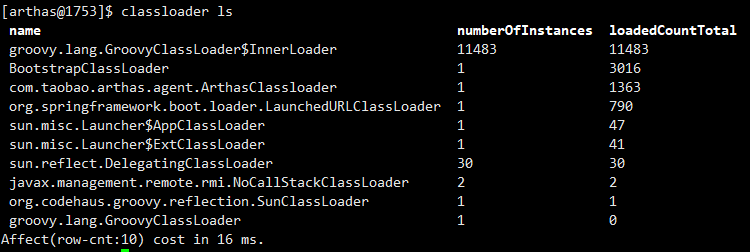
通过arthas工具监控类加载器如下图,通过GroovyClassLoader对象加载类时,实际上是使用的GroovyClassLoader.InnerLoader对象加载目标类,且每个GroovyClassLoader.InnerLoader类加载器对象只加载一个类。
漏网之鱼
我们再回忆一下一个类的回收的3个前置条件:
- 该类所有的实例都已经被回收
- 加载该类的ClassLoader已经被回收
- 该类对应的java.lang.Class对象没有在任何地方被引用,无法在任何地方通过反射访问该类的方法
测试代码中条件1和条件3满足,根据Groovy的类加载机制,明显类加载器加载完成目标类后就不再引用,因此条件2也满足,但实际上类并没有按预期被垃圾回收。显然在测试代码之外,有代码引用到了类对象或者类实例亦或者类加载器,导致最终类木有被垃圾回收。
这里就需要借助其他工具来分析对象引用,为了方便分析,使用OOM的内存快照,来分析导致内存溢出的对象,可直接定位到被偷偷引用的漏网之鱼。
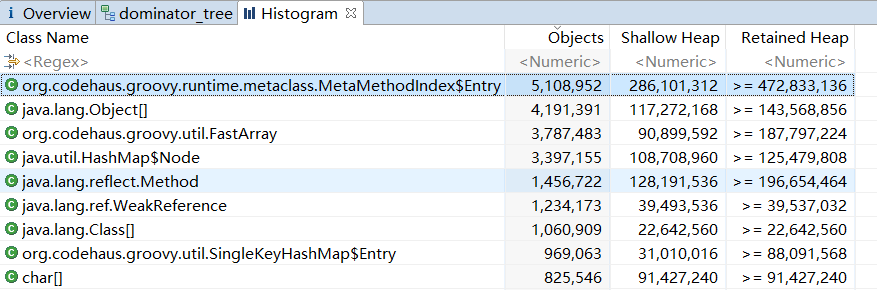
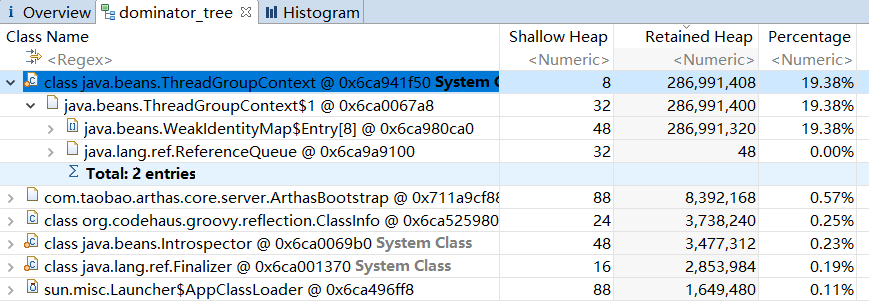
如上图,最终定位出java.beans.ThreadGroupContext下引用了类对象,因此上述的类回收的3个条件未满足而导致类不会被垃圾回收。
那么问题来了,类对象为什么会被java.beans.ThreadGroupContext引用?经过层层debug后发现,当对Groovy加载的类执行反射时,会将该类的结构缓存到java.beans.ThreadGroupContext中,且不会主动清除缓存。核心代码如下:
groovy.lang.MetaClassImpl
1
2
3
4
5
6
7
8
9
10
11
12
13
14
15
16
17
18
19
20
21
22
23
24
25
26
|
private void addProperties() {
    BeanInfo info;
    final Class stopClass;

    try {
        if (isBeanDerivative(theClass)) {
            info = (BeanInfo) AccessController.doPrivileged(new PrivilegedExceptionAction() {
                public Object run() throws IntrospectionException {

                    return Introspector.getBeanInfo(theClass, Introspector.IGNORE_ALL_BEANINFO);
                }
            });
        } else {
            info = (BeanInfo) AccessController.doPrivileged(new PrivilegedExceptionAction() {
                public Object run() throws IntrospectionException {

                    return Introspector.getBeanInfo(theClass);
                }
            });
        }
    } catch (PrivilegedActionException pae) {
        throw new GroovyRuntimeException("exception during bean introspection", pae.getException());
    }
    ...
}
|
java.beans.Introspector
1
2
3
4
5
6
7
8
9
10
11
12
13
14
15
16
17
18
19
20
| public static BeanInfo getBeanInfo(Class<?> beanClass)
throws IntrospectionException
{
if (!ReflectUtil.isPackageAccessible(beanClass)) {
return (new Introspector(beanClass, null, USE_ALL_BEANINFO)).getBeanInfo();
}
ThreadGroupContext context = ThreadGroupContext.getContext();
BeanInfo beanInfo;
synchronized (declaredMethodCache) {
beanInfo = context.getBeanInfo(beanClass);
}
if (beanInfo == null) {
beanInfo = new Introspector(beanClass, null, USE_ALL_BEANINFO).getBeanInfo();
synchronized (declaredMethodCache) {
context.putBeanInfo(beanClass, beanInfo);
}
}
return beanInfo;
}
|
解决
综上,虽然Groovy通过GroovyClassLoader.InnerLoader来加载类,实现类加载器在类加载完成后就会被垃圾回收,但由于Groovy加载的类在反射时会被java.beans.ThreadGroupContext缓存,且该缓存不会被主动清除,因此最终类没有按预期被垃圾回收。
所以只要定期清除java.beans.ThreadGroupContext中的缓存,就能释放所有类引用,让Groovy加载的类被垃圾回收。测试代码如下:
1
2
3
4
5
6
7
8
9
10
11
12
13
14
15
16
17
18
| GroovyClassLoader loader = new GroovyClassLoader();
for (int i = 0; ; i++) {
String source = "" +
"public class CustomApplication {\n" +
" public void print() {\n" +
" System.out.println(\"" + i + "\");\n" +
" }\n" +
"}";
Class<?> clazz = loader.parseClass(source);
Object target = clazz.newInstance();
Method method = clazz.getMethod("print");
method.invoke(target);
if (i % 100 == 0) {
Introspector.flushCaches();
}
}
|
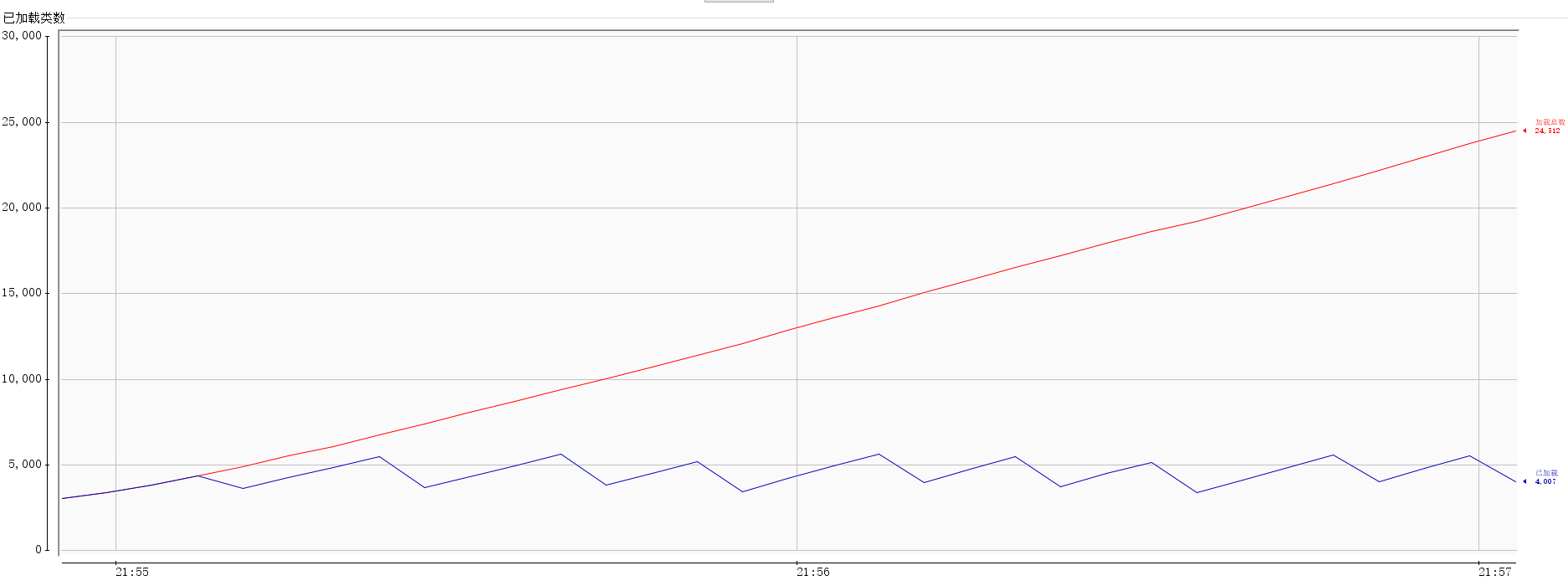
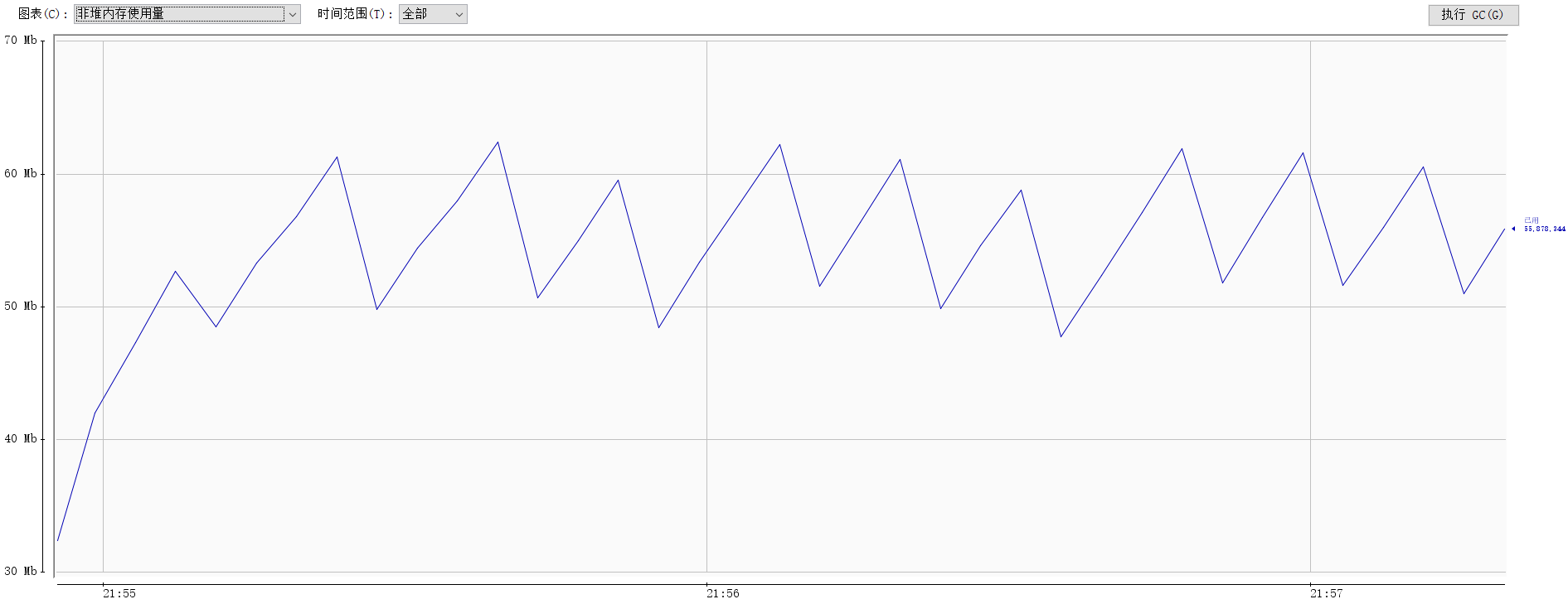
如下图,图1为类加载数量图,其中红线为累计加载类数量,蓝色为当前加载类数量,而图二为元数据内存使用情况。可见在定期清除ThreadGroupContext中的缓存后,实现了对Groovy加载类的垃圾回收,不再出现OOM的问题。