
惯性聚合 高效追踪和阅读你感兴趣的博客、新闻、科技资讯
阅读原文 在惯性聚合中打开

推荐订阅源

酷 壳 – CoolShell
酷 壳 – CoolShell
H
Hacker News: Front Page
P
Palo Alto Networks Blog
T
ThreatConnect
Apple Machine Learning Research
博客园_首页
T
True Tiger Recordings
P
Privacy & Cybersecurity Law Blog
B
Blog
IT之家
IT之家
Last Week in AI
Last Week in AI
F
Full Disclosure
Hacker News: Ask HN
Hacker News: Ask HN
C
Comments on: Blog
Microsoft Azure Blog
C
Cybersecurity and Infrastructure Security Agency CISA
Microsoft Security Blog
博客园 - 【当耐特】
N
News and Events Feed by Topic
NISL@THU
NISL@THU
腾讯CDC
雷峰网
雷峰网
Security Latest
Security Latest
李成银的技术随笔
M
Microsoft Research Blog - Microsoft Research
L
LangChain Blog
L
Lohrmann on Cybersecurity
cs.CL updates on arXiv.org
C
Check Point Blog
Y
Y Combinator Blog
Recent Announcements
博客园 - Franky
N
News | PayPal Newsroom
V
V2EX
A
About on SuperTechFans
The Register - Security
月光博客
月光博客
奇客Solidot–传递最新科技情报
奇客Solidot–传递最新科技情报
Google Online Security Blog
MyScale Blog
MyScale Blog
Cisco Talos Blog
Cisco Talos Blog
Vercel News
Vercel News
WordPress大学
WordPress大学
C
Cyber Attacks, Cyber Crime and Cyber Security
The Hacker News
The Hacker News
IntelliJ IDEA : IntelliJ IDEA – the Leading IDE for Professional Development in Java and Kotlin | The JetBrains Blog
爱范儿
爱范儿
A
Arctic Wolf
L
LINUX DO - 最新话题
freeCodeCamp Programming Tutorials: Python, JavaScript, Git & More

Security Affairs

PinTheft: Another Linux Privilege Escalation, Another Working Exploit, This Time Targeting Arch Microsoft issues YellowKey mitigation, no patch yet Carding site B1ack’s Stash dumps 4.6 Million stolen cards for free A malicious VS code extension just breached GitHub ‘s internal repositories DirtyDecrypt: PoC Released for yet another Linux flaw Alleged Huawei zero-day blamed for the 2025 Luxembourg telecom crash Drupal is rolling out an emergency security update on May 20. You cannot miss it Microsoft dismantled malware-signing network Fox Tempest Poland shifts away from Signal following cyberattacks on officials’ accounts Massive MENA cybercrime Operation Ramz disrupts infrastructure and arrests 201 suspects Shai-Hulud worm copycats emerge after source code leak Grafana confirms GitHub token breach cybercrime group claims the attack ShinyHunters hack 7-Eleven: franchisee data and Salesforce records exposed Public Amazon bucket leaks sensitive guest data from Japanese hotel platform Tabiq Chaotic Eclipse discloses MiniPlasma zero-day, suggesting a missing or undone 2020 Windows security fix Experts warn of active exploitation of critical NGINX flaw CVE-2026-42945 Experts warn of active exploitation of critical NGINX flaw CVE-2026-42945 SECURITY AFFAIRS MALWARE NEWSLETTER ROUND 97 Security Affairs newsletter Round 577 by Pierluigi Paganini – INTERNATIONAL EDITION Attackers exploit Funnel Builder bug to inject e-skimmers into e-stores Pwn2Own Berlin 2026, Day Three: DEVCORE Crowned Master of Pwn, $1.298 Million Total U.S. CISA adds a flaw in Microsoft Exchange Server to its Known Exploited Vulnerabilities catalog Russian APT Turla builds long-term access tool with Kazuar Botnet evolution OpenAI hit by supply chain attack linked to malicious TanStack packages Pwn2Own Berlin 2026, Day Two: $385,750 more, Microsoft Exchange falls, and the running total crosses $900K CVE-2026-42897: Microsoft confirms active exploitation of Exchange Server zero-day Ghostwriter group resumes attacks on Ukrainian Government targets Researchers uncover YellowKey and GreenPlasma Windows Zero-Days Pwn2Own Berlin 2026, Day One: $523,000 paid out, AI products fall U.S. CISA adds a flaw in Cisco Catalyst SD-WAN to its Known Exploited Vulnerabilities catalog Linux Kernel bug Fragnesia allows local root access attacks Broadcom releases VMware Fusion security update for root access bug NGINX Rift: an 18-year-old flaw in the world’s most deployed web server just came to light FamousSparrow targets Azerbaijani energy sector in multi-wave espionage campaign Nitrogen Ransomware claims massive data theft from Foxconn Microsoft Patch Tuesday for May 2026 fix 138 bugs, some of them are alarming OpenLoop Health confirms January 2026 Data breach affecting 716,000 Quest KACE SMA flaw CVE-2025-32975: when one unpatched tool opens the door to 60 organizations Instructure settles with hackers following massive student data theft Critical Fortinet vulnerabilities fixed in FortiSandbox and FortiAuthenticator Hackers accessed BWH Hotels reservation system for months The world’s most “Dangerous” AI, Anthropic’s Mythos, found only one flaw in curl Attackers exploit cPanel CVE-2026-41940 to deploy Filemanager Backdoor WannaCry, the ransomware attack that changed the history of cybersecurity Android banking Trojan TrickMo evolves using TON network for C2 Identity security firm SailPoint discloses GitHub repository breach Google warns artificial intelligence is accelerating cyberattacks and zero-day exploits Crimenetwork returns after takedown, dismantled again by German authorities U.S. CISA adds a flaw in BerriAI LiteLLM to its Known Exploited Vulnerabilities catalog Instagram removed end-to-end encryption for DMs. What should users do? New cPanel vulnerabilities could allow file access and remote code execution Official JDownloader site served malware to Windows and Linux users between May 6 and May 7 SECURITY AFFAIRS MALWARE NEWSLETTER ROUND 96 Security Affairs newsletter Round 576 by Pierluigi Paganini – INTERNATIONAL EDITION Quasar Linux RAT (QLNX): A Fileless Linux Implant Built for Stealth and Persistence Braintrust security incident raises concerns over AI supply chain risks RansomHouse says it breached Trellix and exposes internal systems Cyberattacks on Poland’s Water Plants: A Blueprint for Hybrid Warfare Zara Data Breach: 197,000 Customers Exposed in Third-Party Security Incident Dirty Frag: A new Linux privilege escalation vulnerability is already in the wild AI, Cyberwarfare, and Autonomous Weapons: Inside America’s New Military Strategy Nation-state actors exploit Palo Alto PAN-OS zero-day for weeks U.S. CISA adds a flaw in Ivanti Endpoint Manager Mobile (EPMM) to its Known Exploited Vulnerabilities catalog Cisco patches high-severity flaws enabling SSRF, code execution attacks From Android TVs to routers: the xlabs_v1 Mirai-based botnet built for DDoS attacks U.S. CISA adds a flaw in Palo Alto Networks PAN-OS to its Known Exploited Vulnerabilities catalog Taiwan High-Speed Rail Emergency Braking Hack: How a Student Stopped the Trains and Exposed a Major Security Gap After 17 years, Gavril Sandu extradited to U.S. for hacking scheme Iranian cyber espionage disguised as a Chaos Ransomware attack Apache fixes critical HTTP/2 double-free flaw CVE-2026-23918 enabling RCE Palo Alto Networks PAN-OS flaw exploited for remote code execution Malicious PyTorch Lightning update hits AI supply chain security U.S. court sentences Karakurt ransomware negotiator to 8.5 years Vimeo confirms breach via third-party vendor impacts 119K users Critical Android vulnerability CVE-2026-0073 fixed by Google Microsoft warns of global campaign stealing auth tokens from 35K users Educational tech firm Instructure data breach may have impacted 9,000 schools MOVEit automation flaws could enable full system compromise Hackers target governments and MSPs via critical cPanel flaw CVE-2026-41940 U.S. CISA adds a flaw in Linux Kernel to its Known Exploited Vulnerabilities catalog AI speeds flaw discovery, forcing rapid updates, UK NCSC warns Bluekit phishing kit enables automated phishing with 40+ templates and AI tools Salt Typhoon breach IBM subsidiary in Italy: a warning for Europe’s digital defenses SECURITY AFFAIRS MALWARE NEWSLETTER ROUND 95 U.S. CISA adds a flaw in WebPros cPanel to its Known Exploited Vulnerabilities catalog Security Affairs newsletter Round 575 by Pierluigi Paganini – INTERNATIONAL EDITION Google Revamps Bug Bounty Programs: Android Rewards Rise, Chrome Payouts Drop in the Age of AI Two US cybersecurity experts sentenced in ransomware case, third awaits July ruling Trellix discloses the breach of a code repository New Deep#Door RAT uses stealth and persistence to target Windows Digital attacks drive a new wave of cargo theft, FBI says Carding service Jerry’s Store leak exposes 345,000 stolen payment cards Anthropic launches Claude Security to counter rapid AI-Powered exploits SonicWall patches three SonicOS flaws in Gen 6, 7 and 8 firewalls. Patch them now Copy Fail: New Linux bug enables Root via page‑cache corruption Agent’s claims on WhatsApp access spark security concerns Meta accused of violating DSA by failing to safeguard minors Large-scale Roblox hacking operation shut down by Ukrainian authorities CVE-2026-42208: LiteLLM bug exploited 36 hours after its disclosure Internet censorship index reveals Russia’s lead and widespread content blocking
Bitcoin Depot hack leads to $3.6M Bitcoin theft via stolen credentials
2026-04-10 · via Security Affairs

Hackers breached Bitcoin Depot, stole credentials, and took about 50 BTC worth $3.6M from its wallets after a March 23 intrusion.

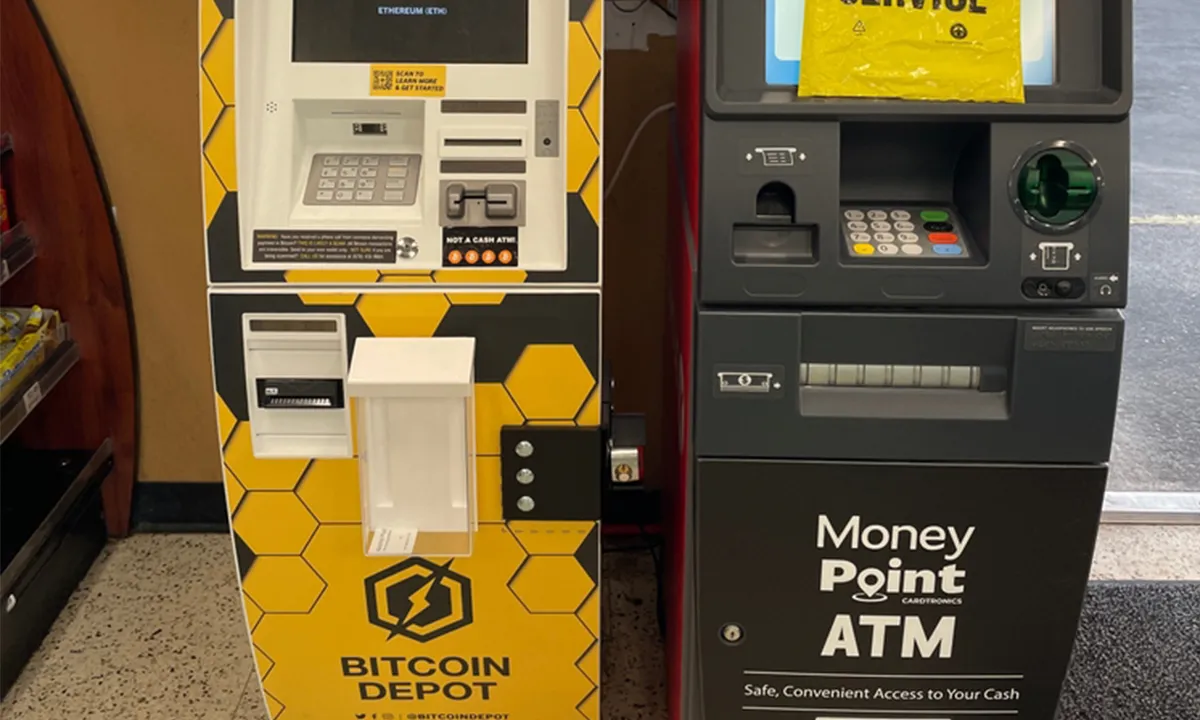
Hackers breached the largest US Bitcoin ATM operator, Bitcoin Depot, on March 23, stole login credentials, and drained about 50.9 BTC worth $3.6M from company wallets.

Bitcoin Depot told the SEC that a hacker accessed its systems and stole credentials linked to its digital asset settlement accounts, gaining control and enabling unauthorized activity.

“On March 23, 2026, Bitcoin Depot Inc. (the “Company”) discovered that an unauthorized party gained access to certain of its information technology systems. Upon detection, the Company promptly activated its incident response protocols, engaged external cybersecurity experts, and notified law enforcement. Based on the Company’s investigation to date, the unauthorized actor gained access to certain systems and obtained control of credentials associated with the Company’s digital asset settlement accounts.” reads the FORM 8-K filed with the SEC. “As a result, the unauthorized actor transferred approximately 50.903 Bitcoin from Company-controlled wallets, valued at approximately $3.665 million as of the date of this report, without authorization. The Company further believes that the incident was contained to the Company’s corporate environment and did not affect the Company’s customer platforms, divisions, systems, data or environments.”

The company continues to investigate the security breach with the help of external cybersecurity experts and works to strengthen its systems to prevent future attacks. It has not found evidence of stolen customer personal data, but the investigation is still ongoing.

The incident has not disrupted operations, but the company now considers it material due to possible legal, reputational, and response costs. It estimates a $3.665 million loss from unauthorized Bitcoin transfers, though the final impact may change. Insurance may cover part of the damage, but recovery is not guaranteed.

“The Company has recorded a preliminary estimate of loss of approximately $3.665 million, representing the fair value of the Bitcoin transferred without authorization as of the date of the incident. The ultimate impact may differ from this estimate as the investigation continues.” continues the FORM 8-K. “The Company maintains insurance coverage that may cover certain losses associated with cybersecurity incidents, but there can be no assurance that such coverage will be sufficient to recover any or all losses incurred as a result of this incident.”

This isn’t the first incident suffered by the company. In July 2025, Bitcoin Depot notified over 26,000 people about a data breach that happened in 2024. Attackers accessed company systems and stole files containing personal data.

Follow me on Twitter: @securityaffairs and Facebook and Mastodon

Pierluigi Paganini

(SecurityAffairs – hacking, Bitcoin Depot)