

惯性聚合 高效追踪和阅读你感兴趣的博客、新闻、科技资讯
阅读原文 在惯性聚合中打开

推荐订阅源

奇客Solidot–传递最新科技情报
奇客Solidot–传递最新科技情报
freeCodeCamp Programming Tutorials: Python, JavaScript, Git & More
钛媒体:引领未来商业与生活新知
钛媒体:引领未来商业与生活新知
博客园_首页
G
Google Developers Blog
A
About on SuperTechFans
酷 壳 – CoolShell
酷 壳 – CoolShell
aimingoo的专栏
aimingoo的专栏
Last Week in AI
Last Week in AI
博客园 - 聂微东
T
Tailwind CSS Blog
宝玉的分享
宝玉的分享
V
Visual Studio Blog
美团技术团队
The Cloudflare Blog
量子位
T
The Blog of Author Tim Ferriss
罗磊的独立博客
V
V2EX
S
SegmentFault 最新的问题
小众软件
小众软件
让小产品的独立变现更简单 - ezindie.com
MyScale Blog
MyScale Blog
博客园 - Franky

www.infosecurity-magazine.com

Just Three Ransomware Gangs Accounted for 40% of Attacks Last Month Google Chrome Rolls Out Protection Against Infostealers Targeting Session Cookies STX RAT Targets Finance Sector With Advanced Stealth Tactics Bitcoin Depot Reports $3.6m Crypto Theft After System Breach Atomic Stealer MacOS ClickFix Attack Bypasses Apple Security Warnings Middle East Hack-for-Hire Operation Traced to South Asian Cyber Espionage Group Governance Gaps Emerge as AI Agents Drive 76% Increase in NHIs Google Warns of New Threat Group Targeting BPOs and Helpdesks Google API Keys Quietly Gain Access to Gemini on Android Devices Critical Vulnerability in Ninja Forms Exposes WordPress Sites Anthropic Launches Project Glasswing to Use AI to Find and Fix Critical Software Vulnerabilities US Thwarts DNS Hijacking Network Controlled by Russian APT28 Hackers Claude Discovers Apache ActiveMQ Bug Hidden for 13 Years Iran‑Backed Threat Actors Hit US CNI Providers via Internet‑Facing OT Assets Russian APT28 Hackers Hijack Routers to Steal Credentials, UK Security Agency Warns GPU Rowhammer Attack Enables Privilege Escalation and Full System Compromise GrafanaGhost Exploit Bypasses AI Guardrails for Silent Data Exfiltration Over $17bn Lost to Cyber Fraud in the Last Year, Warns FBI Storm-1175 Exploits Flaws in High-Velocity Medusa Attacks Fortinet Releases Emergency Patch After FortiClient EMS Bug Is Exploited New Phishing Platform Used in Credential Theft Campaigns Against C-Suite Execs New 'Storm' Infostealer Remotely Decrypts Stolen Credentials NCSC Issues Security Alert Over Hackers Targeting WhatsApp and Signal Accounts Apple Expands iOS 18 Security Updates Amid DarkSword Threat Researchers Observe Sub-One-Hour Ransomware Attacks GitHub Used as Covert Channel in Multi-Stage Malware Campaign Most CNI Firms Face Up to £5m in Downtime from OT Attacks Google Introduces Android Dev Verification Amid Openness Debate New Venom Stealer MaaS Platform Automates Continuous Data Theft Chinese Hackers Target European Governments in Espionage Campaigns
Attackers Move Past Typosquatting to Realistic Package Im...
Alessandro Mascellino · 2026-05-28 · via www.infosecurity-magazine.com

Written by

Most malicious open source packages have moved beyond misspelling popular project names, instead disguising themselves as plausible plugins, configs and helpers that fit naturally into a developer's workflow.

That is the central finding of new analysis by Sonatype, which examined 4309 malicious packages and found that 91% used naming-variant tactics rather than classic typosquatting. Only 9% depended on the spelling slips that traditional defenses are built to catch.

The shift matters because these packages are not harmless lookalikes. The most common behaviors were host and secrets exfiltration, followed by droppers and backdoors, turning a routine install into a route for credential theft and follow-on compromise.

Borrowing the Language of Real Code

Rather than copying a trusted name letter-for-letter, attackers now increasingly build names that look adjacent to a legitimate project.

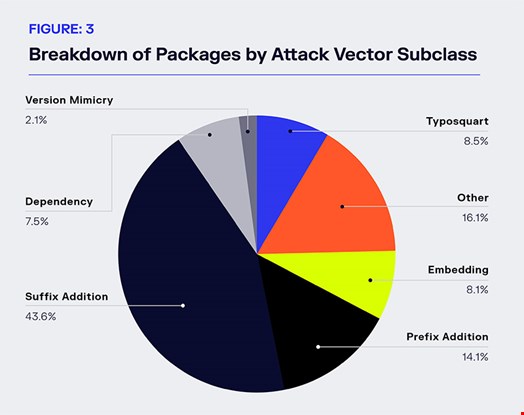
Sonatype recorded suffix addition as the single most common tactic, accounting for 43.6% of cases, alongside prefixes, embedded target terms, dependency-confusion patterns and version mimicry.
Credit: Sonatype.
Credit: Sonatype.

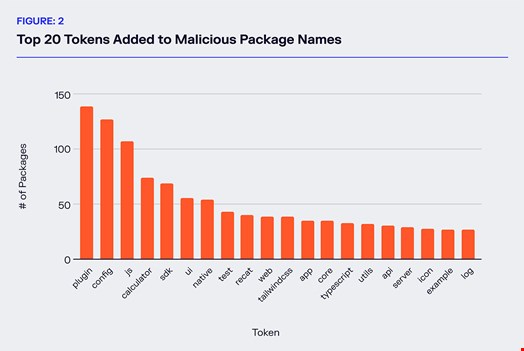
These names work because they feel routine. Developers expect popular frameworks to carry a long tail of plugins, software development kits (SDKs), wrappers and scoped modules, so terms like plugin, config and sdk rarely trigger suspicion, giving attackers room to hide multi-stage behavior in plain sight.

"Typosquatting is table stakes now," said Brian Fox, CTO and co-founder of Sonatype. He added that attackers are copying the language, structure and habits of real software ecosystems, and that a malicious package may already sit on a developer machine by the time it has built a reputation.
Credit: Sonatype.
Credit: Sonatype.

Targeting Trusted Ecosystems

The activity clusters where adjacent packages are already common.

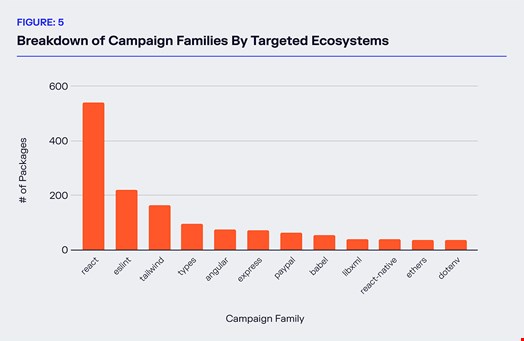
React was the most-targeted ecosystem with 540 malicious packages, ahead of the ESLint plugin and config ecosystem and Tailwind's library of add-ons, with crypto and DeFi tooling also featuring heavily.

Read more on similar threats: Researchers Uncover 454,000+ Malicious Open Source Packages
Credit: Sonatype.
Credit: Sonatype.

Sonatype also pointed to evidence of industrialization, with the same naming tactics, infrastructure and identities reused across multiple package families rather than appearing as one-off attempts. Defenders, the cybersecurity vendor argued, should assess suspicious packages at the campaign and publisher levels, not one package at a time.

The takeaway for security teams is that typo detection and static reputation checks are no longer enough. Sonatype urged organizations to add friction for first-seen dependencies, scrutinize anything that looks framework-adjacent and weigh naming patterns and publisher behavior before a component enters the build.