









Since Light Lens Lab shared its last development update for its black-and-white film project last Summer, it has made significant progress and solved some new problems.
“Since our last development blog, we have continued to make progress on the first iteration of our black-and-white film production line,” Light Lens Lab writes. “Our current objective is to begin testing our production and assembly workflow in 2026, with the goal of producing our first commercially available black-and-white photographic film in 2026.”
The company has previously discussed 135 and 120 film formats, but said this week that its initial production roadmap also includes 127, 126, 4×5, 8×10, and “additional formats.” Light Lens Lab says its ambitions go beyond just making a new black-and-white film, which is a big enough project in and of itself, but to establish a “complete, internally controlled production system that delivers consistent, high-quality results across multiple photographic formats.”
However, as Light Lens Lab admits in its latest update, its initial production testing in late 2025 and early 2026 encountered serious issues.
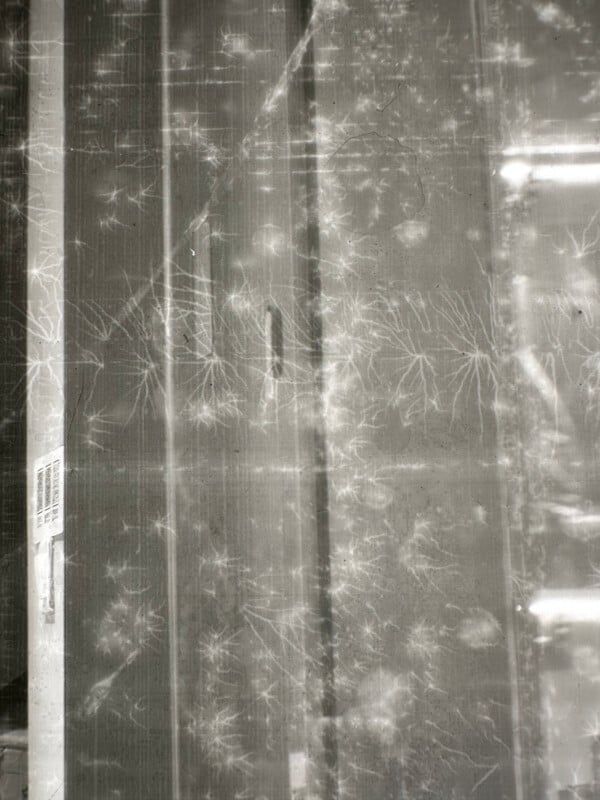
For example, when doing its 8×10 film test, Light Lens Lab experienced issues with static electricity during emulsion coating application and drying. It also exhibited scratches and emulsion damage during 4×5 tabular grain testing. The company is confident these issues have been ironed out and will not be a problem for an eventual production run.

As a result of the issues it experienced, Light Lens Lab decided to delay official release until its quality-control processes became “more consistent, repeatable, and fully automated.”
“This is part of the learning process of building a photographic film production system from the ground up at a commercial scale. We cannot allow unresolved quality-control issues to appear in official production,” Light Lens Lab promises. “Our objective is to produce a film that meets a high standard of consistency and reliability, without creative or technical compromise.”
The company asks photographers to be patient while it works out the kinks.
“Since this project began from scratch, there is no direct reference point for us to follow. Because of this, we have been listening closely to feedback from the photographic community as we continue to define our film’s visual identity,” Light Lens Lab says.
Throughout the entire project, the guiding question has been: What should the film look like? Light Lens Lab says that while it of course targets a consistently high-quality film, it also believes its new film must have “its own recognizable character.”
To that end, it wants the film to deliver consistent contrast across varied lighting conditions, react consistently to different processing conditions, be flexible enough for push processing, and be free from production-related defects.
“Starting from scratch means working in largely uncharted territory. However, this is also the purpose of the project: to develop a film with its own technical foundation, production method, and photographic character,” the Chinese company explains.
As it continues its development, it will be reaching out to selected retail partners, reviewers, and testers to try the new black-and-white film. Light Lens Lab says it will treat the film development process as it handles making new lenses and take community feedback very seriously.
Over the past month, Light Lens Lab has been transferring its film project’s production to its lens project laboratory in Shangrao, during which it renovated both lens and film production facilities to unify the lens and film production lines.
“This transition allows both projects to remain fully in-house, with greater internal control over production, testing, assembly, and quality-control procedures, without external interference. As part of this renovation, we also completed work on a second clean room dedicated to the film project. Due to this facility upgrade, lens production was temporarily delayed; however, lens production has now resumed at maximum capacity,” Light Lens Lab writes.
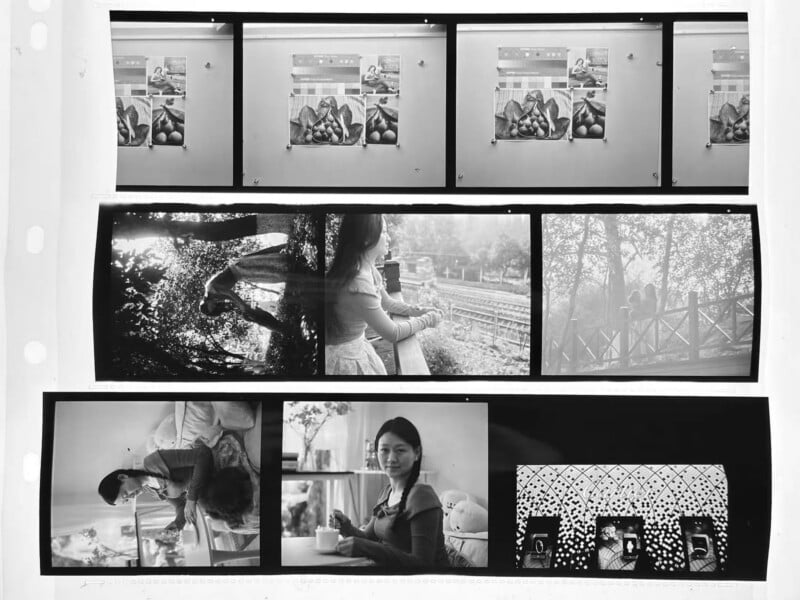

It is currently testing an automated production system that combines numerous dedicated machines, including an emulsion coater, master roll splicer, and 135-format film hole puncher.
Light Lens Lab’s peel-apart film production remains in full swing, too. The company will have more to share about that project very soon.
Film production is a long-term project for Light Lens Lab. To that end, it is developing all its machinery, tools, and parts for film production in-house, without relying on any third-party partners.
“We understand that many photographers have been waiting patiently for this project. We are grateful for the continued support, feedback, and encouragement from the community,” Light Lens Lab concludes. “Film production is a long-term project for Light Lens Lab. We are not approaching it as a short-term release, but as a complete technical platform that can support future photographic and cinematic film products.”
Image credits: Light Lens Lab
此内容由惯性聚合(RSS阅读器)自动聚合整理,仅供阅读参考。 原文来自 — 版权归原作者所有。