



Happy Football Film Friday! Football, soccer, footy… whatever you call it we know what has been captivating your attention these past couple weeks, and will for the days ahead!
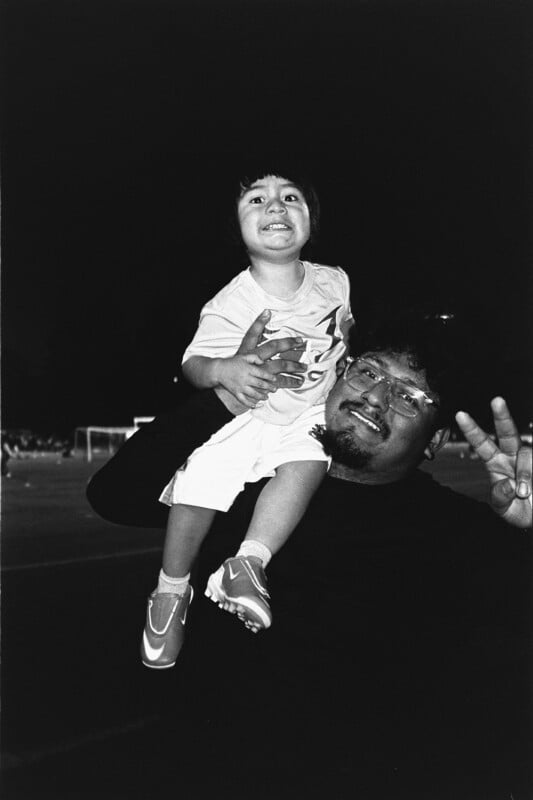
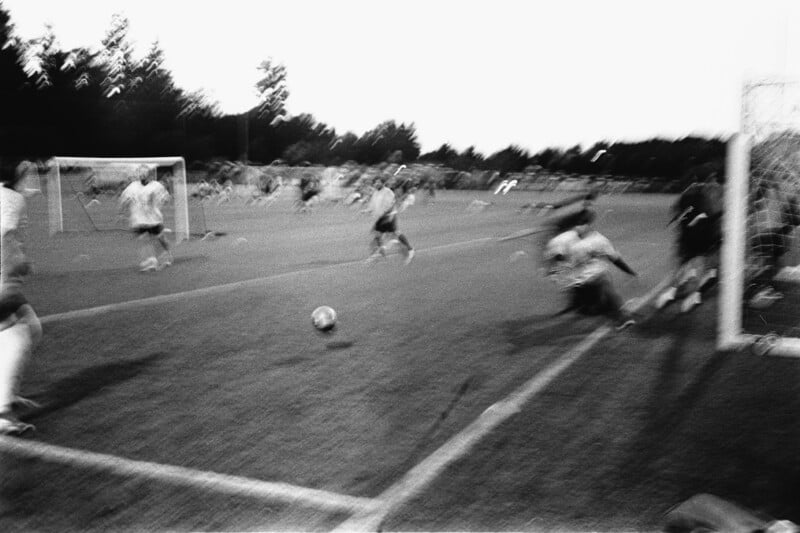
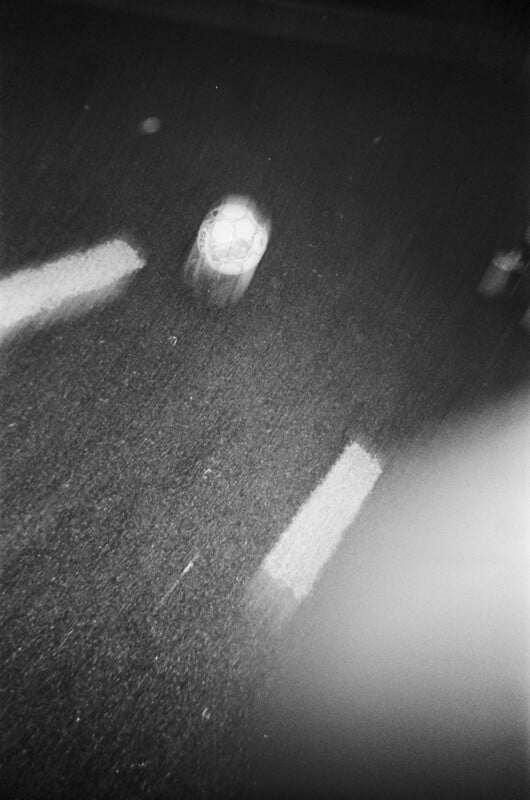
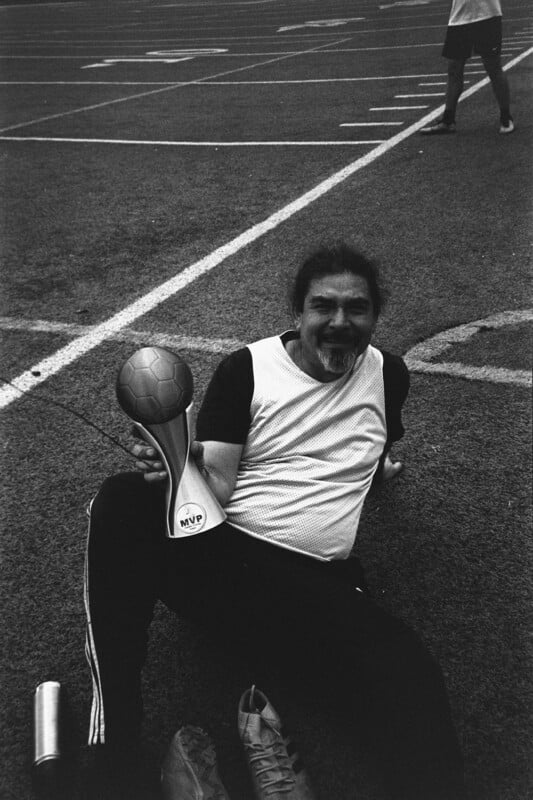
While many on our staff have been excitedly watching the matches on TV, one of our staff has long been an active and passionate football player. He spends his weekends playing matches with local players and has been documenting those mornings with a Tri-X disposable camera. Being a huge football fan, he asked a couple weeks ago if we could do a special football-themed Kodak Tri-X Film Friday since he had so many fun images. We said, of course! So much of Film Friday is about passion after all. Typically that is passion for film photography, but so often our passion for photography gets mixed in with other passions in our life. This is how it should be.
Kodak Tri-X was initially introduced in 1940 as a sheet film. It had been preceded by Panatomic-X in 1938. That first “X” film was quickly followed by Plus-X, Super-X and Super-XX. The following year, 1939, saw the release of Ortho-X and then the world of photography entered a new era with the release of Tri-X in 1940. At the time of Tri-X’s initial release it was one of the fastest films Kodak offered.
It was rated at ASA 200 in daylight (though we have read this “lower” speed was due more to how film speed ratings were determined as opposed to the film being that much slower than its modern counterpart). It took nearly 15 years until Tri-X was made available in 35mm and 120 formats. Its introduction to these two formats in 1954 is commonly cited as the official birthday of Tri-X. At this point in history though, whether you look at Tri-x as being 85+ years old or merely 70+ years old makes little difference.
Tri-X has been around an absurdly long time as a photographic emulsion and it is kind of mind-boggling that all these decades later you can use the same film that has photographed movie stars, wars, presidents, World Series, and everything in between. Henri Cartier-Bresson switched to Tri-X in the 1950s.
Robert Frank captured America on Tri-X. Garry Winogrand and Bruce Gilden prowled the streets of New York with cameras loaded with Tri-X. Mary Ellen Mark used Tri-X for just about every photo she made in her storied career. Sebastião Salgado caught the heart-wrenching scenes of the famine in Ethiopia on Tri-X while Elliott Erwitt used Tri-X to shine a wry light on the world. Even Vivian Maier, operating as an unknown photographer during her life worked largely with Tri-X. In short, unless you have been living in a cave, you have seen a photo made on Tri-X and likely used it yourself.

So what makes Tri-X so beloved? That is a bit hard to point at directly. Maybe it is because Tri-X has been around for so long and so many photographs we have seen have been shot on Tri-X that the film has helped define what we come to think that black and white photography should look like. And because of that, Tri-X feels incredibly familiar, even if you have not shot much of it.
We typically call Tri-X a gritty film. It is not overly grainy per se (nor is it particularly fine grained either) but it has a wonderful grit and texture to it. Many modern films like Ilford Delta or Kodak TMax use a smoother grain structure to help minimize the visual appearance of the grain. Not Tri-X. Tri-X revels in its grain and invites you to get closer to the image so you can enjoy that gritty graininess as well. Tri-X makes film grain look good.
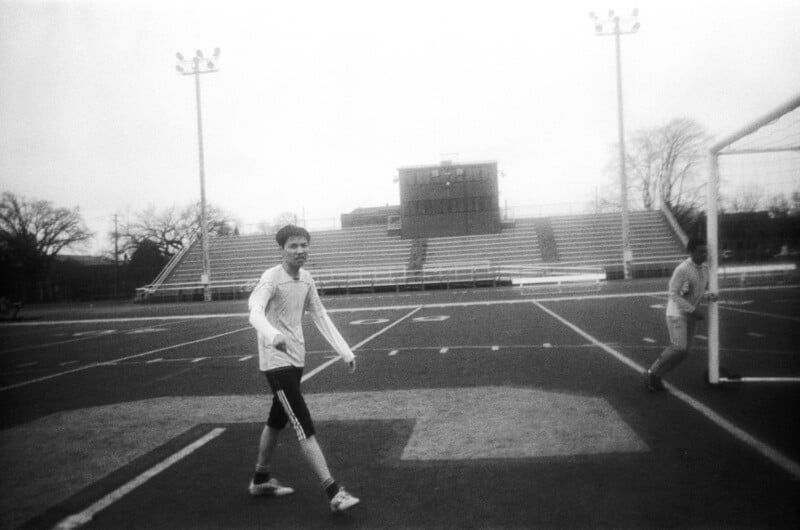
But it isn’t just about film grain. Tri-X is that perfect film speed of ISO 400. This is the speed at which film can handle most situations, making Tri-X very versatile. Heading outdoors in bright light? Tri-X will be fine. Need to step inside for a couple of shots? Tri-X won’t hold you back there either. Sure, there are faster and slower films that handle various lighting conditions better, but Tri-X has a handle on most of them. It is also versatile in how much you can overexpose/underexpose it and/or push process it. Tri-X easily pushes up to ISO 800. ISO 1600 is also not hard to get to. If you are careful and determined we have even heard of photographers shooting Tri-X as ISO 3200 and beyond.
And then there is Tri-X’s lovely contrast. Tri-X tends to have deep, crisp shadows that really add a mood to your images and make the highlights pop. While Tri-X shadows can block up somewhat easily, as long as subtle shadow detail is not super important, Tri-X will deliver a lovely contrast that will have you coming back for more.

We often get asked by customers in the shop which film we recommend them trying as they experiment with their first adventures in black and white photography. Almost without fail we set down a roll of Tri-X in front of them. If you are going to begin somewhere, why not here? There might be more black and white films to choose from now than ever before, but our favorite reference point is still Tri-X. This is made even easier by the fact that Tri-X is still available in so many different formats, including: 35mm, 120, 4×5, 5×7, 8×10, Super and 16mm motion picture. We even have it in 620 and 828! And don’t sleep on the Tri-X disposable cameras, as these images remind us. Having a portable, compact little camera loaded with Tri-X that can be tucked into the pocket of your shorts for snapping shots from the sidelines is almost as valuable as booting in the game winning goal. All that means, no matter which camera you are carrying around, you can likely load it with Tri-X. And you should.
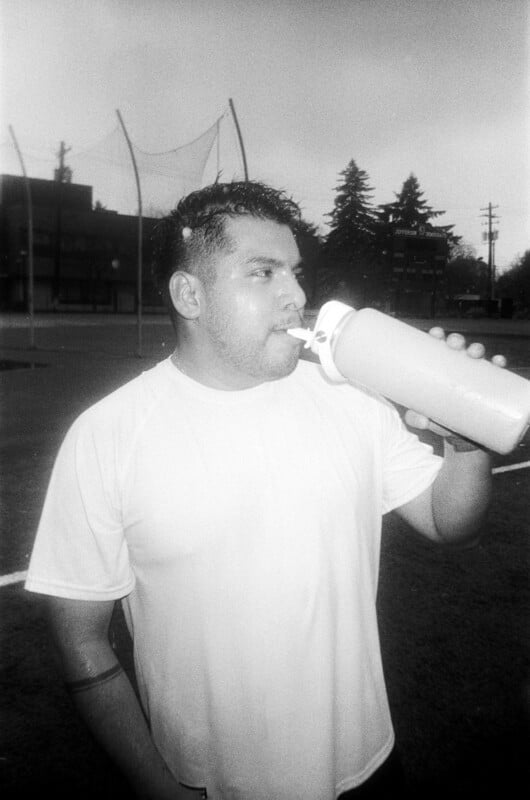
Tri-X is, of course, a beautiful film, much as football is the beautiful game. It is classic. It has drama. Its grain is famous. If there could only ever be one black and white film, Tri-X would be our champion.

And if you are new to our Film Friday series and wondering just what the heck it is, well let us quickly tell you. Every week we take a different film in our inventory and give it a feature that includes a full Film Friday review done by us, plenty of sample images and a discount to help entice you to either try it or to stock up. We started this several years ago as a means of getting away from just using the same three to five film stocks and we have since made it a point to feature practically every film we carry, no matter how esoteric. So join us weekly to see a different film and enjoy some analog inspiration!
We’ll have Tri-X discounted on our site and in our shop all day for you. Stop in, grab a few rolls, and let us know who you are rooting for in the World Cup!
Image credits: All photos courtesy of Jovanni Lopez and Blue Moon Camera and Machine.
This story is brought to you by Blue Moon Camera and Machine in Portland, OR. Blue Moon offers film, development services, printing, and even an ever rotating line of film cameras and lenses. PetaPixel Members receive 10% off all lab services with Blue Moon: Join today! This story is also published here.
此内容由惯性聚合(RSS阅读器)自动聚合整理,仅供阅读参考。 原文来自 — 版权归原作者所有。