

惯性聚合 高效追踪和阅读你感兴趣的博客、新闻、科技资讯
阅读原文 在惯性聚合中打开

推荐订阅源

钛媒体:引领未来商业与生活新知
钛媒体:引领未来商业与生活新知
Application and Cybersecurity Blog
H
Help Net Security
罗磊的独立博客
博客园 - Franky
小众软件
小众软件
博客园 - 三生石上(FineUI控件)
博客园 - 叶小钗
爱范儿
爱范儿
月光博客
月光博客
博客园 - 聂微东
奇客Solidot–传递最新科技情报
奇客Solidot–传递最新科技情报
量子位
GbyAI
GbyAI
freeCodeCamp Programming Tutorials: Python, JavaScript, Git & More
大猫的无限游戏
大猫的无限游戏
Y
Y Combinator Blog
Martin Fowler
Martin Fowler
Hugging Face - Blog
Hugging Face - Blog
The GitHub Blog
The GitHub Blog
T
Threat Research - Cisco Blogs
Spread Privacy
Spread Privacy
Hacker News: Ask HN
Hacker News: Ask HN
B
Blog RSS Feed
Know Your Adversary
Know Your Adversary
T
Troy Hunt's Blog
I
InfoQ
L
Lohrmann on Cybersecurity
Recent Announcements
H
Hacker News: Front Page
Scott Helme
Scott Helme
Jina AI
Jina AI
云风的 BLOG
云风的 BLOG
Engineering at Meta
Engineering at Meta
The Register - Security
C
CERT Recently Published Vulnerability Notes
MongoDB | Blog
MongoDB | Blog
Help Net Security
Help Net Security
MyScale Blog
MyScale Blog
F
Fortinet All Blogs
Project Zero
Project Zero
cs.CV updates on arXiv.org
J
Java Code Geeks
AWS News Blog
AWS News Blog
阮一峰的网络日志
阮一峰的网络日志
T
Threatpost
D
Darknet – Hacking Tools, Hacker News & Cyber Security
Apple Machine Learning Research
B
Blog
Cloudbric
Cloudbric

The Atlantic

A White House Makeover, Brought to You by Struggling National Parks Photos of the Week: Stone Roofs, Football Fans, Soapbox Racers The White House Is the New Green Zone Spencer Pratt’s Reality-TV Playbook The Trump Administration Wants to Frighten Would-Be Whistleblowers How Spain Avoided the Global Populist Backlash The Plight of the Radical’s Children Use It or Lose It Is Socialism the Answer to D.C.’s Woes? Memories of Green Trump’s 250th Celebration Is a Fiasco Los Angeles Voters Have No Good Option Have People Over! The Scariest Monster on Broadway Seven Books You’ll Never Outgrow The Arc of the Voting Rights Act The Hardest Things to Say to One Another Trump’s Approach to Global Leadership The Social Sciences Are in Trouble Pope Leo Is Challenging Much More Than Big Tech How to Make the End of World War II Feel Like a Surprise America Has a Pangram Problem A Crisis of Agency Trump Hasn’t Left Much Kennedy Center to Stay Open The War Trump Can’t End The Apple Car Is Finally Here Democrats Can Do Better Than Graham Platner Why Everyone Hates AI Data Centers Is That Song Stuck in Your Head Actually AI? The Books Briefing: A Book I Wish I’d Read at 22 Photos of the Week: Memorial Day, Spelling Bee, Cheese Rolling ‘The Testaments’: Don’t Follow This Tradwife Curriculum When the President Takes a Cut Trump Lame Duck Status May Have Already Arrived The Trump DOJ Takes a Newly Brazen Step A ‘Promising Democracy’ That Can’t Stop Fighting Itself The U.S. Is Proving the Case for the WHO Words of War Why Aren’t Oil Prices Even Higher? The King of Queens That’s No Way to Run a Railroad History Repeats in Cuba ‘Has He Been Drugged?’ How ‘Hacks’ Redefined Greatness The Lag Between an Iran Deal and Lower Oil Prices ‘We Have Not Seen Ugly Yet’ A Frustrated President Can’t Get the Deal Done America Is Missing Out on the Ultimate Mosquito Weapon The Last of the Jazz Titans Has Trump Corrupted the Military? Images From Yellowstone: America’s First National Park John Cornyn Lost With His Boots Off The Pope’s Defense of Human Imperfection The Allure of the Anti-Screen-Time Toy The Largest Undocumented Disparity in Maternal Health How The Pope's AI Encyclical Defends Humanism Why Iran’s Leaders Think They’ve Won Seven Books to Read Before You Turn 22 The Gas-Tax Reckoning The ‘Backrooms’ Director Found Hell in Empty Hallways Atlantic Trivia, May 27, 2026: Portmanteaus Does Donald Trump Know Men Are Also Allowed to Leave His Cabinet? The Iran Deal Is in the Hands of a Terrible Negotiator The Advice I Hope You’ll Never Need Welcome to the Injection Age The Phrase I Texted My Kids 133 Times Where Are America’s Ambassadors? The Great Depopulation The Antitrust Theory of Everything The Sporting Event Where Everyone Is Doping The Burden They Carry The Magician of the Kremlin I Now Believe Our National Debt Is a Problem Trump’s War Is Staggering to an Incoherent Defeat Why Trump Lost How to Break Cuba The Republican Psychedelics Whisperer The Kardashian-Industrial Complex Americans Refuse To Be Happy A Perfect Show That Doesn’t Make Sense The Unfilmable Author Everyone Should Read This Summer AI-Writing Scandals Are Getting Very Confusing Hegseth’s Leadership of the U.S. Military Putin Can No Longer Hide His Catastrophe The Meanest Tradition in Entertainment Don’t Put Too Much Pressure on Your Summer Vacation Ode to Miller Lite The Real Lesson of Elon Musk’s Outrage at Christopher Nolan There’s Never Been a Better Time to Study Computer Science Barney Frank Was Like No One Else College Should Be Way More Fun Why College Students Are Booing AI Why Would Europeans Believe Trump Now? Some Lawmakers Want a Gerrymandering Truce The Sudden Chumminess of Hunter Biden and Candace Owens Tulsi Gabbard Takes the Exit Ramp The Ahmadinejad Option How Trump’s Culture War Derailed the Women’s History Museum <em>The Sheep Detectives</em> Is More Than Just Fluff The Surprising Lesson of the <em>Granta</em> Controversy
Darwin’s Story Isn’t as Simple as It Seems
Emma Sarappo · 2026-06-26 · via The Atlantic

The best writing leads us to a more complex and more honest understanding of the past.
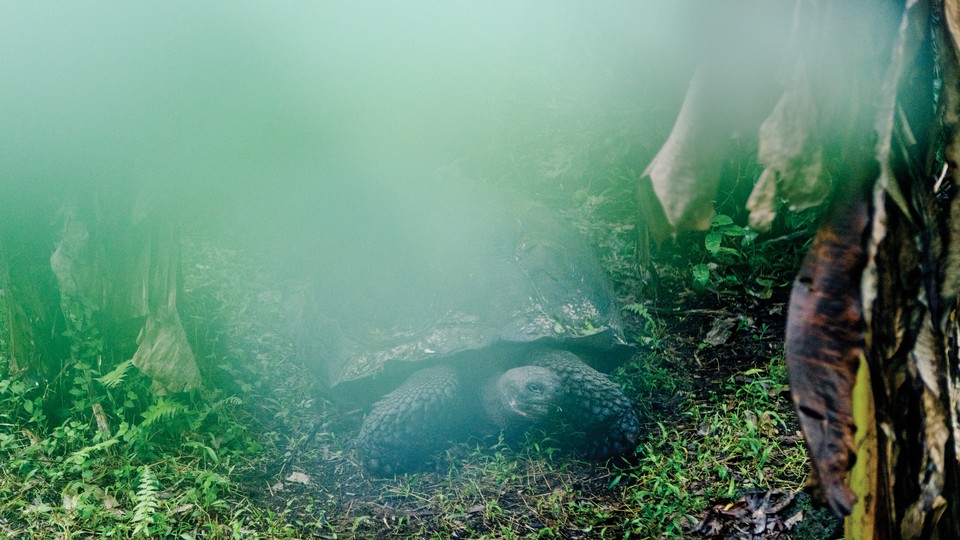
A photo of a tortoise
Will Matsuda for The Atlantic

This is an edition of the Books Briefing, our editors’ weekly guide to the best in books. Sign up for it here.

This week, I learned that Charles Darwin didn’t exactly come up with the theory of evolution by cataloging the finches of the Galápagos Islands. Contrary to the simplified version I’d grown up believing, Darwin spent only a few weeks in the islands that he mentioned in his world-changing book, On the Origin of Species, and he wasn’t labeling his specimens with enough precision to really prove that they exhibited subtle differences based on which island they came from. I found out the complicated truth about Darwin’s journey aboard the H.M.S. Beagle by reading Helen Lewis’s dispatch from the archipelago, recently published in The Atlantic as the latest entry in our series “The Writer’s Way.”

After some reflection, I’m not surprised that the research that brought evolution to light in the 19th century wasn’t as straightforward as I’d thought it was. It reminds me of the first time I realized how the famous Scopes “monkey trial came to pass in Dayton, Tennessee. While growing up in the state, I’d assumed that the 1925 showdown between the firebrand lawyer Clarence Darrow and the pious William Jennings Bryan had resulted from some government raid on the classroom of the unsuspecting teacher John T. Scopes. In reality, Scopes had volunteered to be a test case after the American Civil Liberties Union made clear its intent to challenge Tennessee’s ban on teaching evolution in state-funded schools. What set me straight in that instance was Brenda Wineapple’s 2024 book, Keeping the Faith.

Darwin, the man who set the stage for the scientific revolution that would lead to the Scopes trial, was no less deliberate in his work than Darrow was. A serious thinker and, as Lewis writes, “above all an empiricist,” he didn’t just stumble into a eureka moment—any more than Isaac Newton simply got hit in the head by an apple. And like the vainglorious Darrow, he was an imperfect messenger. By 21st-century standards, he was a strange specimen of naturalist. His logs from his voyage on the Beagle “amount to an animal-murder manual,” Lewis writes, although they have ironically “inspired subsequent generations to keep as many animals alive as they can.” Lewis saw the incredibly diverse fauna and flora of the Galápagos in a totally different way than Darwin did. The scientist “lived in a world where, whatever you did, more animals would be along in a minute,” she adds. In 2026, with global biodiversity in mortal danger, the Galápagos aren’t just a cradle of incredible variation. They’re a symbol of how much we’ve discovered, and how much we’ve destroyed, in the span of hardly more than a century.

Anyone with even a passing interest in Earth’s beauty might feel jealous of Lewis’s sojourn with plentiful tortoises, iguanas, sea lions, and birds, and possibly even more jealous of Darwin’s trip. That’s part of the article’s charm, but Lewis’s real feat is correcting oversimplifications—of how the theory of evolution was shared with the world, of how Darwin traveled to the islands, and what he did there. Like the work of the empiricist who inspired Lewis’s trip, this contemporary story leads us to a more complex and more honest understanding of the past.
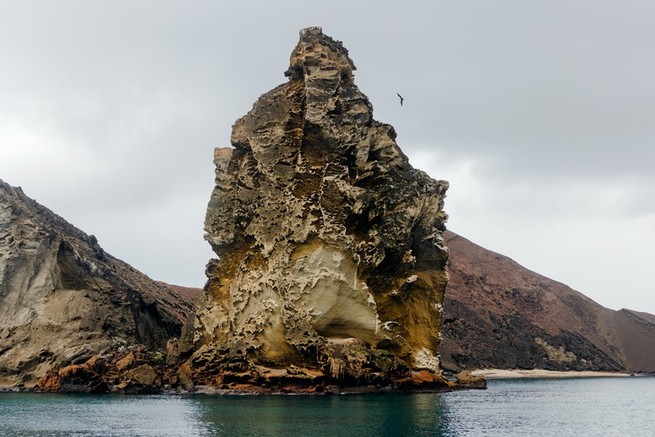

A large stone spire jutting from the ground
Will Matsuda for The Atlantic

Paradise Revisited

By Helen Lewis

What Darwin saw in the Galápagos

Read the full article.


What to Read

Small Town Girl, by LaVyrle Spencer

While researching the country-music career of her main character, Spencer interviewed Reba McEntire to understand the life of an industry star, and the parts of this 1997 novel set in Nashville feel like a behind-the-curtain peek at Music Row. But when Tess—known as “Mac” to colleagues and fans, if not to her family—is forced to take time off from recording her latest album to care for her mother after surgery, she struggles to fit into the role of the novel’s title. At home, she falls back into childhood dynamics with her mother and sisters. Adding to her disorientation is Kenny, the nerdy boy next door who’s now a single father and beloved member of the community. When Tess takes on the role of mentoring Kenny’s daughter, a talented country singer in her own right, the two get reacquainted. As in any good romance novel, their talking turns to flirting, which turns to kissing, which leads to tense conversations about how to merge their very different lives, which ends in—well, you know the rest.  — Karen Ostergren

From our list: Eight romance novels for romance skeptics


Out Next Week

📚 Sex on Murder Island, by Jo Firestone

📚 July Sun, by Aamina Ahmad

Your Weekend Read

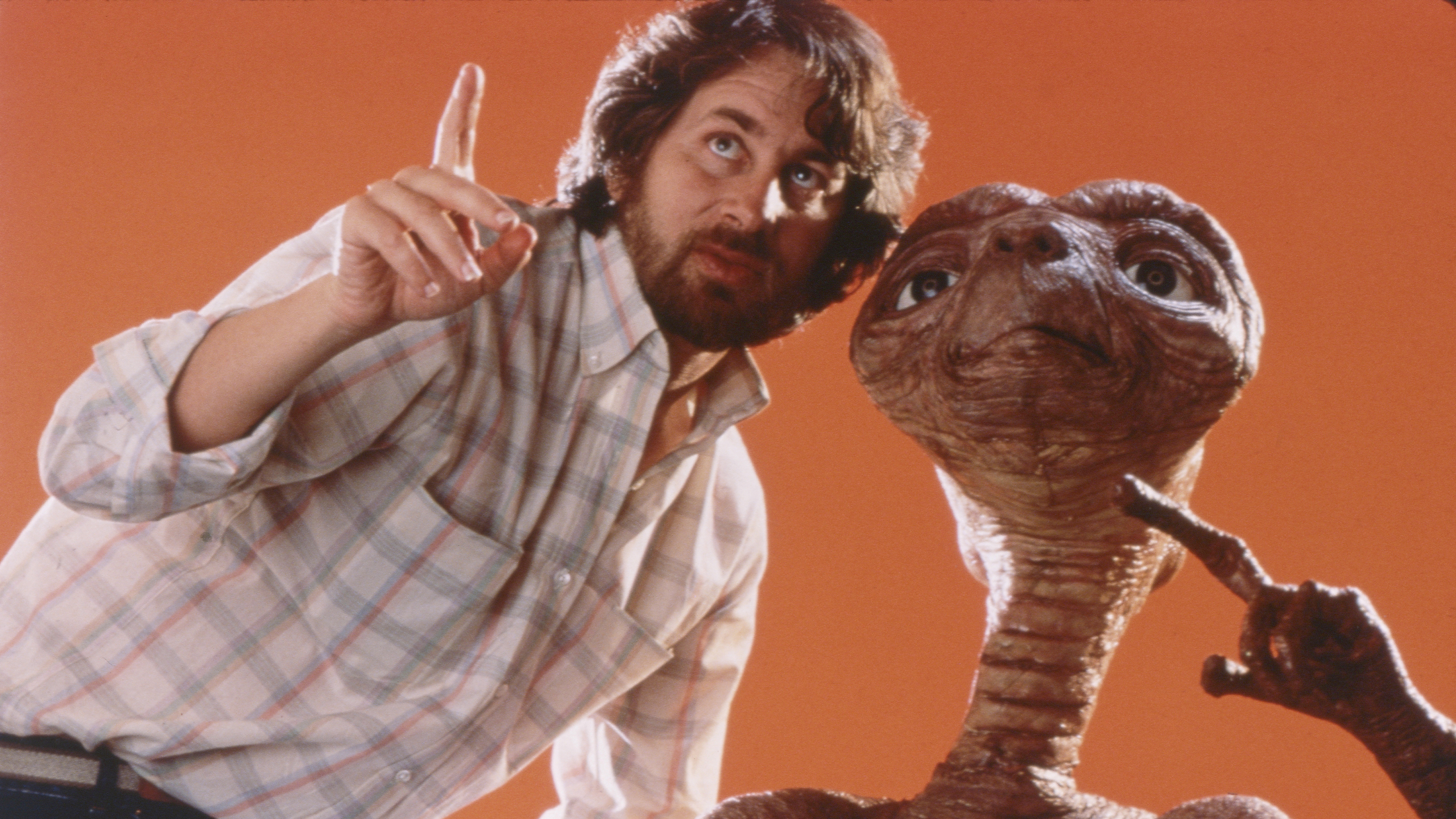
Steven Spielberg with E.T.
Mark Sennet / Getty

The Truth About Steven Spielberg’s Alien Obsession

By Shirley Li

The director seems to rely on extraplanetary visitors as catalysts for particularly heady stories, positioning them as intellectual superiors and at times moral compasses. Whereas Spielberg’s other blockbusters involving impressive creatures—the dinosaurs of Jurassic Park, the great white of Jaws—contend with the question of how to control them, his alien stories consider what humanity can learn from them.

Read the full article.


When you buy a book using a link in this newsletter, we receive a commission. Thank you for supporting The Atlantic.

Sign up for The Wonder Reader, a Saturday newsletter in which our editors recommend stories to spark your curiosity and fill you with delight.