



This is an edition of The Atlantic Daily, a newsletter that guides you through the biggest stories of the day, helps you discover new ideas, and recommends the best in culture. Sign up for it here.
In an interview with The New York Times early this year, Donald Trump was asked, “Do you see any checks on your power on the world stage? Is there anything that could stop you if you wanted to?” “Yeah, there is one thing,” he said. “My own morality. My own mind. It’s the only thing that can stop me, and that’s very good.”
The answer was not very reassuring, especially to anyone familiar with Trump’s ethical or cognitive track record. Last week, the reporter Marc Caputo, of Axios, brought the idea up again: “What have you learned about not just the exercise of power but the limits on your power as a result of the conflict?”
“There are no limits,” Trump replied. “I haven’t learned that lesson yet. I know there are, but, you know, there are no limits. We defeated them totally militarily.”
To say this after his humiliating defeat in the war with Iran suggests delusion, but it also suggests something about Trump’s view of the presidency as a monarchical office. During his first term in the White House, he pushed back repeatedly against the rule of law. In his second term, he has also raged against restraints from other branches of government, his own aides, and even reality. His administration has clashed with and sometimes defied the courts, grabbed powers from Congress, and attempted to establish vassal states in other sovereign countries—or take away parts of them entirely.
This view of the presidency as unlimited doesn’t just go beyond what any other American president has contemplated since 1789, but reaches more than a century earlier, to before Britain’s Glorious Revolution of 1688, which supplanted the old concept of a monarchy guided by divine right and established government by mutual agreement of the people and king. (I have previously drawn parallels between Trumpism and the Jacobite movement, the attempts by supporters of the Stuart family to return them to the throne after William and Mary deposed them in 1688.)
Trump’s rhetoric is also striking because usually leaders become more chastened the longer they stay in office. A typical president comes into office with big plans and an idea of how to execute on them, and he usually enjoys a honeymoon period when Congress and the public are supportive, or at least acquiescent. Then, over time, he starts to find the ways in which his power is circumscribed. After Bill Clinton’s 1993 health-care bill failed, his legislative agenda shrank, in part because Republicans took control of Congress and never surrendered it during Clinton’s tenure. George W. Bush’s peak of power came when he launched a war in Iraq in 2003, but that turned out to be a debacle from which his presidency never recovered. Barack Obama joined an international effort to oust Muammar Gaddafi in 2011, but by 2014, his foreign-policy mantra was the distinctly humble “Don’t do stupid shit.”
Trump has gone through this process in reverse. He came into office in his first term without clear plans or methods of achieving his campaign promises and lashed out in frustration when he failed. Congress in particular bedeviled him, and the House took the extraordinary step of impeaching him twice, though neither attempt ended in conviction. In his second term, however, Trump has been far less fettered. He came in with a blueprint, courtesy of Project 2025, and he has blown through traditional restraints on his power, often by simply acting without seeking or waiting for permission. Congress is now stocked with more MAGA loyalists, and so is the administration—which means aides are more eager and willing to do what Trump wants. The president, like the Mean Girl he can sometimes be, now announces The limit does not exist!
But limitations are important, and not just as a matter of Rousseauian philosophies of government. I have argued that checks and balances are a method of protecting not only the people but also each branch of government from its own excesses and errors. Reality also has a way of enforcing limitations: As I wrote earlier this week, the Reflecting Pool is inarguably green, no matter what Trump might say. And because Trump has claimed unilateral power to act, he struggles to find a way to blame anyone else for the mess on the Mall.
In his heart of hearts, Trump may recognize that limits will eventually have their revenge. “I haven’t learned that lesson yet,” the president told Caputo. Sooner or later, he will.
Related:
Here are four new stories from The Atlantic:
Today’s News
More From The Atlantic
Evening Read

America’s Greatest Food Export
By Ellen Cushing
As far as I can tell, patient zero was a Swedish 24-year-old named Elsa Thora. “Why did no one tell me ranch sauce is like crack?” she posted to X earlier this month, apparently hours after landing in Indianapolis for a monthlong World Cup trip. “EUROPE WE NEED RANCH ASAP.” The post received 49,000 likes and propelled Thora to a very specific kind of fame. (“I guess I’m that Ranch girl now,” says her bio on Instagram, where she is also doing sponsored content for a Curaçao-based online casino that takes only cryptocurrency. She was also, as my colleague Will Oremus recently pointed out, a star of both OnlyFans and the British tabloids before any of this.)
Soon enough, ever more World Cup visitors were being charmed by ranch, and more Americans were being charmed by them being charmed.
Culture Break
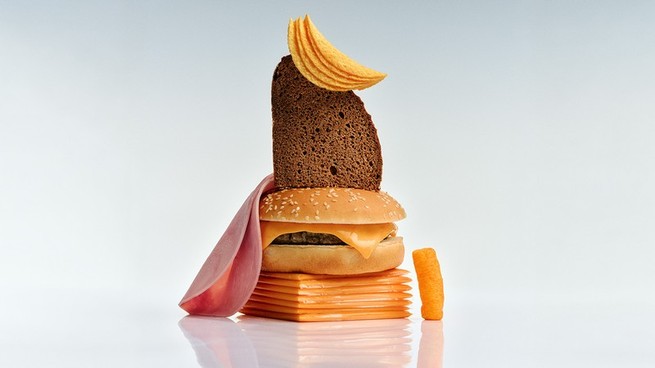
Reassess. Does the war on “ultra-processed foods” make any sense? Gary Taubes investigates.
Examine. Clint Smith profiles Lonnie Bunch, the leader of the Smithsonian Institution, exploring his fight against Donald Trump and how long he can survive in the job.
PS
Earlier this month, I wrote about the joys of looking out of airplane windows and the sorrows of the in-seat entertainment screen. Many readers wrote in with thoughts—more emails than I’ve received about any edition of the Daily, and some of the most I’ve received about any article I’ve written for The Atlantic over the past 14-some years. These were a delight, and I appreciate the responses. Correspondents shared stories of trips long ago and just in the past few days, photographs amateur and professional, poems, and the occasional word of disagreement, which I found thoughtful as well. Last week, I persuaded my children to let me take the window seat for a flight between Reykjavík and RDU. It was a daytime flight, so I didn’t get any dirty looks, but I did get great views of sprawling banks of lupines on the Icelandic tundra, sea ice off Greenland, and a vista of Baltimore and Washington, D.C. — David
Stephanie Bai contributed to this newsletter.
When you buy a book using a link in this newsletter, we receive a commission. Thank you for supporting The Atlantic.
此内容由惯性聚合(RSS阅读器)自动聚合整理,仅供阅读参考。 原文来自 — 版权归原作者所有。