






How to stay safe swimming outdoors - and still have fun

 Getty Images
When temperatures rise, outdoor swimming can be a fun and often free day out - but it is not without risk. During last month's hot weather, at least 18 people died after getting into difficulty in the water, many of them teenagers.
Water safety experts gave BBC News some simple tips for how to stay safe when swimming in open water.
Choose a spot with a lifeguard
 Getty Images
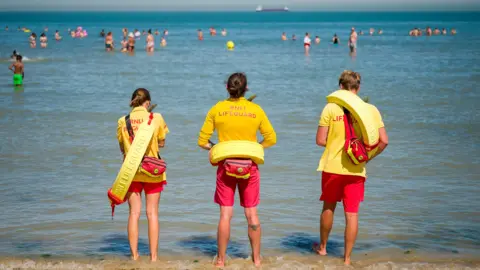
The advice from the experts BBC News spoke to was resounding: the best place to swim is somewhere supervised. You can find a list of UK beaches with lifeguards on the RNLI website.
Steve Hall has been volunteering with lifeboat rescue charity Hornsea Rescue in East Yorkshire for nine years. He has attended countless call-outs for people in difficulty in the sea - and says many risks are avoidable with a few simple precautions.
For example, Halls says he and his daughters - who are aged nine and 11 and strong swimmers - prefer to stick to lifeguarded beaches or designated wild swimming areas rather than swimming in rivers and reservoirs. Swim England keeps a list of open water swimming locations.
Many inland bodies of water can also have hidden dangers.
"It's really difficult to know what's going on beneath the surface," says Becky Hickman, CEO of the Royal Society for the Prevention of Accidents. There could be fast-flowing currents, sharp rocks, debris, sudden drop-offs, or even heavy machinery in reservoirs or canals.
Watch videos of rip currents
 Getty Images
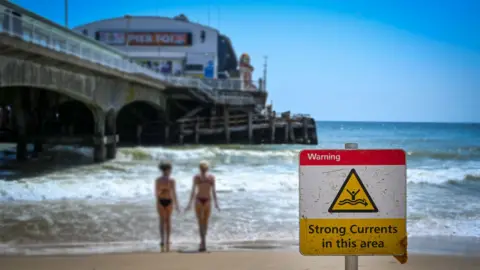
Even if the weather is good, you need to look out for rip currents if you're swimming in the sea, Hall says.
A rip current can quickly pull you away from shore, he says, "and it doesn't need to pull you very far, it just needs to pull you out of your depth". He's rescued families who were only 30 yards from the beach but unable to get back after being caught in one.
The RNLI says rip currents can be difficult to spot, but are sometimes identified by churning, choppy water on the sea's surface. Hall recommends families watch videos of rip currents so they can learn to identify them.
To get out of a rip current, the RNLI advises people to swim parallel to the shore until they are free of the current, rather than swimming directly against it.
It's harder to swim in the sea than a pool
People should think carefully about their own swimming ability before getting into the water, says Sarah Pennicard, who works for the RNLI's water safety team.
Swimming in the sea, lakes and rivers is "very different to a swimming pool" because the water is cold, fast-flowing and unpredictable, she says.
Even if you are a strong swimmer, make sure you are in good physical condition, too, says Dave Oakley-Jenner, who carries out water rescues with North Cumbria Search and Rescue.
Do not go in the water after drinking, taking drugs, eating a large meal or with a hangover, he says.
Keep someone on shore
Make sure everyone in your group knows the name of the beach or body of water you are at and has access to a phone to call 999, Hall says.
"Never go swimming alone," says Oakley-Jenner. Someone from your group should always remain on the shore to keep an eye on those in the water - they can call for help if needed, Hall adds.
Avoid inflatables
 Getty Images
"Inflatables are not for the seaside, they're for pools," Hall says. If the wind changes, you can be blown out to sea "really quickly".
If this happens, and you are not confident you can swim back safely, then stay on the inflatable and attract attention, he says. Inflatables are much easier for rescue services to find than a head, which can be like looking for a needle in a haystack, Hall added.
Get in the water slowly to avoid cold water shock
 Getty Images
Many bodies of water in the UK remain under 15C (59F) all year round, meaning they are "dangerously cold", says Hickman.
Getting into cold water too quickly can cause cold water shock, which restricts your ability to move and affects your breathing. There is a risk of drowning if you inhale water.
You are most likely to get cold water shock if you jump into the water. Instead, you should get in slowly and allow your body to acclimatise.
Oakley-Jenner says his mantra is "ankles, hips and nips", which reminds him to slowly lower each part of his body into the water until he gets used to the temperature.
If you do notice signs of cold water shock, you should try to regulate your breathing and float on your back.
Pennicard advises people should practise floating in swimming pools. In an emergency, make sure you keep your head back, your ears in the water, and calm your breathing before making any decisions.
Jake Butt, lead lifeboat supervisor at the RNLI, says you should shout for attention and wave to show your location - but only use one hand, so you can use the other to help you stay afloat.
What should you do if you see someone in difficulty?
 Getty Images
If you are swimming with friends, make sure you keep an eye on them - if they get into difficulty they may not be able to shout for help.
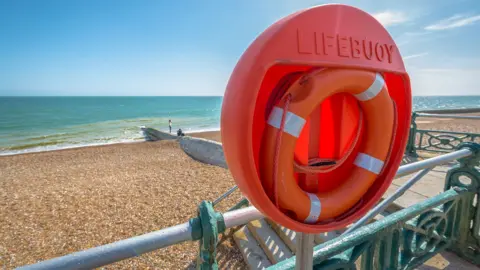
The National Water Safety Forum says if you notice someone in trouble, you should first phone for safety, tell the person to float, and then throw them something to help them - rescue equipment like a life ring, or even a football.
If you do call for help, rescue workers recommend the use of location-finding service What3words to pinpoint your specific location.
The RNLI discourages people from jumping in and trying to save someone in difficulty, Butt says.
Hall adds that during his training, he watched videos about people who drowned trying to save others.
Someone in trouble may panic and unintentionally put you at risk - so it is always safest to help from the shore, Hall says.
"You've got to be very, very, very sure that you can help," he adds.
 Getty Images
With a bit of preparation and awareness, enjoying outdoor swimming safely can still be one of the best parts of the summer - it is a great way to relax, stay active and socialise.
"Outdoor swimming feels mentally and physically cleansing," Hickman, a keen swimmer herself, says. "Being in nature with like-minded friends helps me feel like I'm washing away the stresses of the working week."
But make sure you have taken the time to find a safe place to swim and educated yourself on how to say safe.
"As beautiful as open water can be, especially on a hot day," says Oakley-Jenner, "it's not a safe place to be if you're unprepared."