







Michelle RobertsDigital health editor

 CRY
CRY
Simple checks are spotting young women with silent heart issues that puts them at risk of their heart stopping suddenly, known as sudden cardiac death (SCD), say UK researchers.
The findings come from a review of a voluntary screening service, funded by a charity working with bereaved families, that has been running in the UK since the early 1990s.
From almost 40,000 women aged 14 to 35 who had heart checks, 175 were found to have undiagnosed issues, despite appearing fit and healthy, with 94 at high risk of sudden cardiac death.
Experts say it's not just sporty men who are at risk - young women can also be affected, and an early diagnosis can save lives.
The UK National Screening Committee is reviewing whether all over-14s should be checked for conditions associated with SCD.
The challenge is finding real cases of risky heart problems, balanced against the anxiety caused by carrying out unnecessary checks on lots of young people.
Checks, such as a simple heart trace or ECG, can also miss cases - in this latest study of girls and women, 92 heart issues were overlooked, with 28 of them fairly major.
Some causes of SCD can run in families and the NHS offers free family checks when this is suspected.
'My lips went blue'
 CRY
CRY
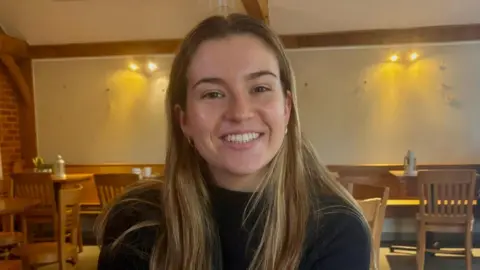
Kaitlin Lawrence, 24, and from Surrey, was diagnosed with a heart rhythm problem two years ago after collapsing on a netball court.
She was about to play a league match when she felt sick.
"Then a few seconds later I just passed out on the sideline," she says.
"My teammates say they couldn't revive me and my lips were going blue, although I was still breathing.
"The next thing I knew I was in an ambulance on the way to hospital.
"I'm lucky I didn't die."
She now has a device, called a defibrillator, fitted in her chest, which has already saved her life twice.
"It can give my heart an electric shock to get it working properly again," she explains.
"It feels like a thump when it happens. I had one recently, in February. It's a bit scary, but it works. I'm on beta-blocker tablets too to help keep my heart in the right rhythm."
Kaitlin says her condition could have been detected using a quick and simple ECG (electrocardiogram) which records the heart's rhythm.
Her family is now getting checked and many of her friends have chosen to as well.
In the UK, SCD kills 12 young people under the age of 35 each week. The risk is higher - around three times - for boys and young men, compared to girls and young women.
People can show no symptoms and look fully fit, with no obvious warning signs.
Simple acts, like walking into a cold shower or playing sport, can be enough of a shock to the heart in someone with an undiagnosed problem to kill them instantly, says charity CRY - Cardiac Risk in the Young - which offers voluntary screening.
It says the real numbers of people affected may be even higher than thought since some sudden cardiac deaths are wrongly recorded as asthma, epilepsy or even drowning.
When investigations are carried out after death, a structural problem or an electrical fault in the heart may be found, often inherited. But in one in 20 cases, no recognised cause can be found.
The latest findings, that cover a decade of the voluntary screening service run by CRY, are being discussed at the annual meeting of the British Cardiovascular Society in Manchester.