








I used to work at Meta.
Not in tech. God no. I was a pastry chef at one of the Meta data centers, which is somehow an even stranger sentence to say out loud now than it was at the time. I worked in the cafes on campus making pastries, desserts, breads, and catering corporate events for the people building the infrastructure of the metaverse.
When I say “the metaverse,” I do not mean that metaphorically. I mean the actual corporate vision of it. The servers. The engineers. The people building the guts of AI and virtual reality while I stood down the hall trying to figure out if the cinnamon rolls needed two more minutes in the oven.
I had interviewed online during Covid, so my first day onsite felt surreal. I remember pulling up and thinking, “holy shit, this looks like a prison.” A really expensive tech prison, but still. Cement buildings. Security gates everywhere. Bleak fluorescent lighting. Stainless steel industrial kitchens. The whole campus had the emotional warmth of a refrigerated Costco.
The inside wasn’t quite as dystopian as the exterior, but it was still obnoxiously sterile in the way modern tech campuses are sterile. Hyper-optimized. Weirdly juvenile. Like if a WeWork and a boys’ dormitory had access to unlimited venture capital.
The break rooms had foosball tables, video game consoles, giant couches, and fully stocked snack areas where employees could grab basically anything they wanted for free. Including alcohol.
Rumor had it Meta software tracked who took what and how much. I have no idea if that was true, but I chose not to care. I pilfered enough sodas, chips, and full-sized candy bars that whoever stopped at my house for Halloween was leaving with the junk food equivalent of a college fund.
One time I was hiding in a couch during my 10 a.m. lunch break trying not to be perceived by another human being for thirty consecutive minutes when a middle-aged white guy walked in, silently took a shot of Jameson, and walked back out to continue building the future.
I genuinely do not think he even knew I was there.
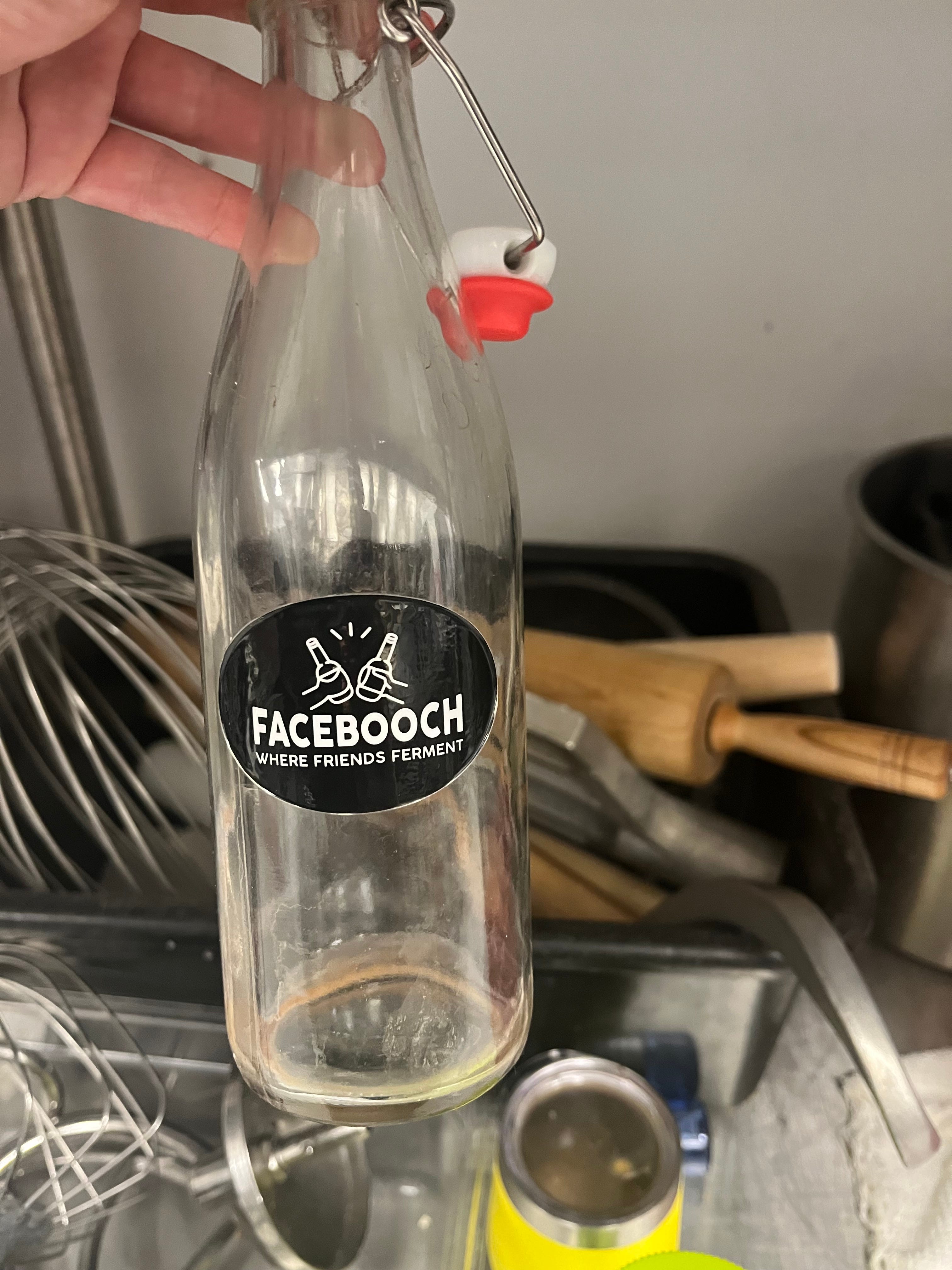
There was also a kombucha club for a select group of engineers called Faceboosh.
These are the people building the future.
The metaverse, for those fortunate enough to have forgotten, was Meta’s attempt to build a digital universe where people would work, socialize, shop, attend events, and generally spend more of their lives online. Like if a video game, a shopping mall, LinkedIn, and a corporate retreat had a baby.
People act like the Metaverse failed because nobody wanted to attend a virtual staff meeting as a legless cartoon. Fair enough. But the broader vision never disappeared. It just dissolved into everything else. And it hasn’t even actually failed. The adults left, children stayed.
The metaverse still attracts more than 700 million monthly visitors. And of those users, tens of millions are kids.
Kids already move seamlessly between virtual worlds, algorithmic entertainment, digital identities, and AI-powered tools. They inhabit online spaces with the same ease previous generations inhabited malls, Denny’s, and food courts.
If you’ve never visited a VR world before, allow me to save you some time: it’s children. An astonishing number of children. Unsupervised. Children running. Children yelling. Children inventing entirely new forms of bad judgment. Children doing whatever the digital equivalent of licking a public handrail is.
The metaverse is not the future of work. It is the present of recess.
The metaverse may not have arrived in the form Meta originally imagined. But the basic premise—that more and more of human life will be mediated through digital systems—is already here.
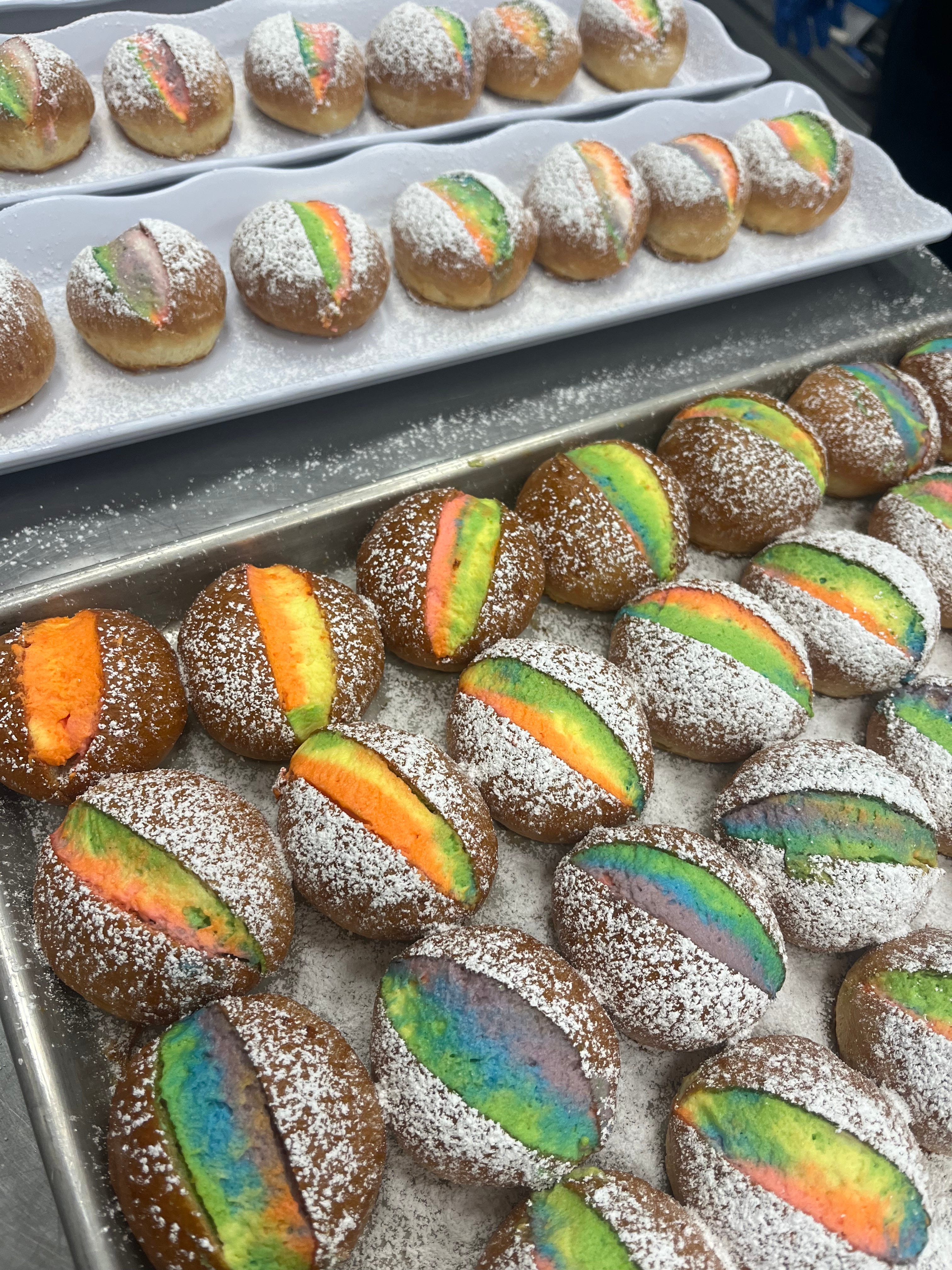
While all this is happening, I was making at least a hundred servings of breakfast pastries every morning. Muffins. Croissants. Scones. Cinnamon rolls. Coffee cakes. Donuts. Breakfast bars. Then two dessert items for lunch service, usually around three hundred portions total. Cheesecakes, brownies, cobblers, custard-based parfaits, cakes, bars, pies, profiteroles. Then warm cookies for the cookie jars around campus in the afternoons. Then breads twice a week. Then happy hour catering twice a month. Everything was individually portioned.
And everything was made from scratch.
Which honestly felt a little ironic for a company obsessed with automation.
The engineers loved steak day. They lined up for steak day with the excited commitment of people waiting for concert tickets in 1987. They also loved cheese to a degree I can only describe as extensively Midwestern. One of the executive chefs kept getting praised for his “innovative menus,” despite the fact that his primary menu innovation was putting more cheese on things.
The salad bar only saw serious traffic for exactly two weeks after New Year’s.
Then back to steak. Or whatever form of meat-and-three the most Midwestern palates would appreciate.
Meanwhile I was back in a corner laminating croissant dough by hand while nearby conference rooms discussed artificial intelligence with the confidence of a man who’s never been told no and the caution of a toddler approaching a puddle.
That’s the thing people don’t really understand about AI. It does not emerge from some neutral supercomputer vacuum. It emerges from offices. From meetings. From corporate hierarchies. From the same mediocre management structures and ego-driven cultures already running the rest of society.
The future still needed to eat.
There was a mural on one wall made entirely of the Facebook reaction emojis.
At first I thought it was kind of stupid in a harmless corporate way. Eventually I realized they perfectly represented my emotional progression working there:
👍 ❤️ 😂 😯 😢 😡
I actually loved the job at first.
Meta had headhunted me from another bakery where I was underpaid and overworked. I kept saying no, mostly because I felt weird about the entire thing. Eventually they doubled my pay and I accepted because I am, at the end of the day, still a person who needs groceries.
And honestly? Working there made me realize I was good at what I did.
I never went to culinary school. I carried around a lot of insecurity about that for years, especially in pastry where people can get very intense and French about it.
But at Meta I realized I was more than competent. I could produce at scale. I could manage volume. I could execute beautiful work consistently. I could hold my own.
Then slowly the place started hollowing me out.
Part of it was the culture itself. The entire environment revolved around employee comfort, but only for the “real” employees. The “real” employees were predominantly men, the kitchen staff and cleaning crew were where you would find most of the women who worked at Meta.
I catered the happy hours but wasn’t invited to attend them because I was part of the help. I made miniature pastries for networking events full of people who would probably describe themselves as “changing the world” while leaving their dirty dishes on tables directly next to the trash can.
And the gender dynamics were impossible to ignore.
The most viral thing I ever posted on Threads was about Meta. At least ninety percent of the employees at my location were men, yet the women’s restroom used more than twice as much hand soap.
Draw your own conclusions.
Share this post with someone who will be horrified by the handwashing thing.
The most sexist workplace I’ve ever experienced was Meta, and my direct boss was a woman.
Actually, she was one of the most competent managers there. Smart, calm under pressure, knowledgeable, respected by employees. Which naturally meant upper management kept insisting she “wasn’t ready” for advancement because she “lacked leadership skills.”
Meanwhile one of the men in leadership got fired for making antisemitic comments about me behind my back.
Another executive chef had previously been fired from a local culinary program after allegedly trying to run over a student he was secretly dating. At Meta he routinely messed up orders, copied menus, fell asleep in meetings, called women “baby,” sent sexts at work, and accumulated complaints from female employees for inappropriate behavior.
Management told us to “keep documenting.”
He eventually got fired after I left because he got caught watching porn during a meeting.
This is what I mean when I say I do not trust the people building AI.
Not because they are uniquely evil geniuses plotting world domination in secret underground bunkers. The real problem is that they are ordinary institutions filled with ordinary failures of character. Ego. Bias. Cowardice. Protectionism. Mediocre men promoting versions of themselves while women quietly keep entire systems functioning underneath them.
And then we act shocked when artificial intelligence reproduces racism, sexism, surveillance, exploitation, and bias at scale.
Who did we think was building it?
Amazon reportedly scrapped an AI hiring tool after it showed bias against women. Facial recognition software repeatedly misidentified Black people at disproportionately high rates. Healthcare algorithms have been found deprioritizing Black patients for care because historical healthcare spending was used as a proxy for need.
The machine inherits its makers.
That’s easy to forget when the conversation stays focused on the technology and policing individuals using it instead of the institutions producing it.
And that’s the part of the conversation that feels completely disconnected from reality to me now.
People still talk about AI like it’s an optional consumer product. Like if enough morally righteous people refuse to touch ChatGPT, the tech industry will simply pack it in and go home.
It won’t. The train has already left the station.
Corporations are integrating AI into everything at industrial scale, and children are already growing up inside the system.
The people building these systems are not sitting around devastated because a twenty-three-year-old on TikTok refuses to generate Studio Ghibli selfies. They already have Gen Alpha.
Kids already treat algorithms like companions. They already inhabit digital worlds more naturally than physical ones. AI companionship, virtual socialization, recommendation systems, algorithmic entertainment — for a lot of children this is not “the future.”
Technology always gets cheaper, more immersive, and harder to opt out of over time.
Nobody asks permission, it just becomes infrastructure. First it’s optional, then it’s normal, then it’s everywhere.
And the people shaping the next generation’s relationship to reality itself are not neutral actors.

Toward the end of my time there, my twenty-three-year-old cat died. His name was Jammie (z”l).
I asked if I could use my sick time or vacation time for bereavement. The answer was no. Pets did not qualify.
I think that was the moment something in me finally snapped loose from the place emotionally.
Not because corporations are supposed to love us. They don’t. But there was something bleakly perfect about working inside one of the most technologically ambitious companies on earth while realizing it still had absolutely no framework for processing ordinary human grief unless it fit neatly inside policy language.
A few weeks later, I went on a bereavement vacation to St. Thomas. My final day at Meta was two days after Trump won reelection.
That period of my life doesn’t feel like a memory as much as it feels like a warning I did not understand yet.
Maybe that’s why all the online discourse about AI feels so small to me now.
People accuse each other of using ChatGPT like they’re exposing a steroid scandal in professional baseball. Someone uses an em dash and suddenly we’re convening a digital ethics tribunal. God forbid you use an antithesis statement.
Meanwhile the people actually building this stuff are moving at corporate scale. Quietly. Casually. Confidently.
I know because I fed them.
I made cheesecake for the metaverse while men discussed artificial intelligence across a counter from me like they were debating fantasy football statistics. I watched mediocre executives fail upward. I watched women get ignored, patronized, screamed at, and passed over. I watched corporations reward ego and punish humanity. I watched an industry convince itself it was inventing the future while reproducing every flaw of the present.
Because underneath all the futuristic branding, the metaverse was still just a workplace. A very ordinary American workplace full of ego, hierarchy, cowardice, bias, loneliness, office politics, protected mediocrity, and men who believed proximity to power made them brilliant.
And those are the people building artificial intelligence.
Not abstract supergeniuses. Not neutral machines. People. People who scream at coworkers. People who fail upward. People who confuse confidence for competence. People who watch porn in meetings. People who schedule meetings to discuss scheduling meetings.
That’s what stays with me now when people talk about AI like it arrived from somewhere outside humanity, as though it descended fully formed from the sky instead of emerging from conference rooms and corporate org charts and the same power structures already governing everything else.
The future is being built by people.
I was there.
And honestly, they didn’t even wash their hands.

此内容由惯性聚合(RSS阅读器)自动聚合整理,仅供阅读参考。 原文来自 — 版权归原作者所有。