








Rita El Khoury / Android Authority
I’ve had the new Google Fitbit Air for about 10 days now, and from the moment I unboxed it, I’ve been wondering what it brings to my use case that my daily-worn Pixel Watch 4 doesn’t already provide. There’s the longer battery life and the quasi-certainty of knowing that, even if I forget to charge my watch on a busy day, I can still track my sleep or activity. There’s also the added freedom of sleeping with a lighter, less intrusive tracker on my wrist. But I wanted something more out of it.
This is when I started thinking about the early days of Fitbit and how some people used to wear the One, Zip, or Flex around their ankles to count steps while exercising. And that made me realize I could solve one of my biggest Pixel Watch 4 problems with the Air. So, I started testing.
280 votes
One of my most frequent home exercises involves walking on a Walking Pad A1 (a foldable treadmill) while I’m working on my computer. It’s a very light exercise at around 2.5-3 kmph, since I can’t bob up and down at higher speeds while keeping my eyes level and reading my computer screen, but it’s a good way to be less sedentary while working long hours in front of a computer. It also lets me get in some steps, no matter the weather.
Because my wrists are mostly steady while typing — just like they would be for anyone gripping the side rails of a regular treadmill — and not swinging back and forth with every step, my Pixel Watch 4 has immense trouble detecting any of those steps. I’ve tried using my phone in my pocket to count the steps, but it never worked well enough. I tried using Health Connect to sync my stats from my Walking Pad’s KS Fit app to my Fitbit app, but it’s limited to one phone or tablet, and since I use my tablet as a fitness dashboard while all my fitness is on my phone, it ended up being a convoluted mess. Not to mention that, for some reason, Google Health is no longer reading some third-party steps data these days, despite it appearing properly in Health Connect.
I don't think I'm the only person who walks on a treadmill and barely moves their arms while doing so. Where do I get my steps, Google?
My ideal solution was always to force my Pixel Watch to detect those steps even when my arms weren’t moving. The March 2025 Pixel Drop was supposed to make that a reality with an improved algorithm that detects when you move without moving your arms too much, but the changes were too aggressive in detecting anything as a step, so Google had to roll them back.
Which brings us to the Fitbit Air and my ankle. Finally, I had a tracker that can technically be strapped to my ankle and works with my Pixel Watch 4. Having both in the app was essential because I didn’t want to give up all the smartwatch features. So I decided to test it on my treadmill.

Rita El Khoury / Android Authority
I strapped the Fitbit Air onto my right ankle, with the tracker on the outer side of my foot. My feet are a bit swollen due to the hot weather these days, so the strap barely closed, but it was still long enough to stick in place for the duration of all my walks. Then, I got onto the treadmill and started walking. Comfort-wise, I wasn’t disturbed by the tracker, its band, or its presence.
My first time wearing the Fitbit Air on my ankle was met with complete astonishment. It wasn’t just good at tracking my steps, it was crazy accurate. I had the Google Health app open on my docked phone at my desk, and I kept glancing at it and seeing the number of steps increase by two each time I took two strides on my treadmill. 1234, 1236, 1238, 1240, and so on.
This forced me to go look into previous Fitbits and whether they were sanctioned by Google for ankle wear. Apparently, they weren’t officially approved by Google, but trackers like the Fitbit One were so accurate on the lower body that independent researchers had used them in mobility studies for the elderly and stroke patients. So Fitbit’s algorithms have been good at detecting stride and step count since the mid-2010s when placed on the lower body, and there’s no reason to believe those algorithms have regressed or lost that ability since then. By my own account, every step I took on my treadmill while the Fitbit Air was strapped to my ankle was properly measured.
My first big question mark around wearing the Fitbit Air as an ankle activity tracker came after my first walk. I noticed that it was actually measuring my heart rate, too, despite that imprecise wear position. But it measured it at 182 bpm at the end of the walk (screenshot above), even though I had kept a very steady pace. By comparison, the Pixel Watch 4, worn at the same time on my wrist, didn’t show any anomalies and only reached 129 bpm.
This didn’t happen again during four other walks, as the graphs above show a normal heart rate evolution on the Air, so I don’t know if it was a fluke in how I’d worn the tracker that day or what. Still, it doesn’t instill confidence in the heart rate data collected at the ankle. I will have to test different wearing positions — my money is on the front of my foot, where the anterior tibial artery passes, similar to how wrist-worn trackers use the ulnar and radial arteries on the top of the wrist. But hey, just keep this in mind if you intend to use the heart rate data for your analysis!
Besides this, there’s a lot of friction now in using both a Pixel Watch and a Fitbit Air, especially if you wear them at the same time. Each time I did, Google Health prioritized my Pixel Watch steps — which were too few — over the higher number detected by the Fitbit Air (screenshots above). I could still see the Air’s stats by tapping the three-button overflow ⋮ menu at the top right under Steps and choosing View sources, but I couldn’t do anything about that data. I couldn’t make it the primary source for that particular bout of time, or force Fitbit to recognize it as an exercise. Even if I manually added an activity for that period, it only took into consideration the watch’s steps.
To combat this, I have to remember to take off the Pixel Watch each time I strap the Fitbit Air on my wrist, forcing the latter’s data to be used by Google Health. When I do that, it works (screenshots above). The downside is giving up on all the features the Pixel Watch offers that the Fitbit Air doesn’t, like fall detection, pulse oximetry, and stress management features. I just wish Google would let me select a time range and tell the Health app to prioritize certain data sources over others. Supposedly, a capability like this is coming later, but it’s not live yet.
Now, obviously, this wouldn’t be an issue if you only own the Air and wear it on your ankle, but I think it’s worth mentioning for those who are considering getting both.
All that said, I’ll continue to wear the Air for my daily work walks and take off the Pixel Watch during that time to ensure the data is properly tallied. It’s the most straightforward solution I’ve found to tracking my steady-hands treadmill walks that doesn’t involve relying on Health Connect or other sorcery. I’m just waiting for cheaper third-party bands to show up on Amazon so I can get a larger one that fits better on my ankle.
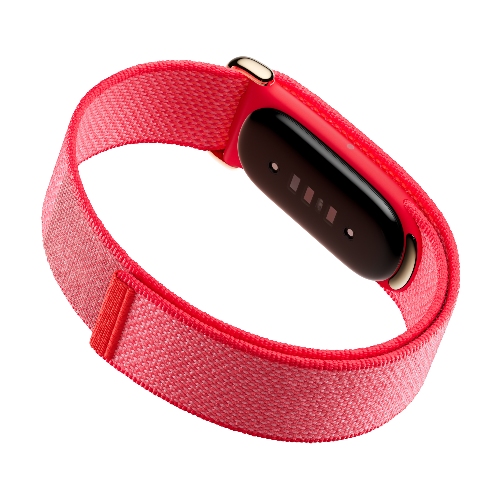

Screen-free fitness tracker • Affordable price • Excellent sleep tracking
The Google Fitbit Air is the company's first screenless fitness band.
The Google Fitbit Air combines Fitbit's trusted health tracking with Google's smarter insights in one app. It works with both Android and iPhone and brings fitness, sleep, medical records, meals, and hydration tracking into a single, easy-to-use health hub.
Thank you for being part of our community. Read our Comment Policy before posting.
此内容由惯性聚合(RSS阅读器)自动聚合整理,仅供阅读参考。 原文来自 — 版权归原作者所有。