








Claude Opus 4.7 is Anthropic's newest flagship model — the most capable entry in the Opus line to date. It delivers stronger reasoning, improved instruction following, and better performance on complex coding and analysis tasks compared to its predecessor, Opus 4.6.
But there's a catch that every developer needs to understand before switching: Opus 4.7 ships with a completely new tokenizer. The same text that cost you X tokens on Opus 4.6 may now consume up to 35% more tokens on Opus 4.7. That means your effective cost per request can jump significantly, even though the per-token price hasn't changed.
This guide breaks down everything you need to know about Claude Opus 4.7 pricing — base rates, the tokenizer impact, prompt caching strategies, Batch API discounts, data residency surcharges, and how to cut your total bill by 45% using Crazyrouter.
This is the single most important thing to understand about Opus 4.7 pricing.
Anthropic introduced a new tokenizer with Opus 4.7 that changes how text is split into tokens. For many common inputs — especially English prose, structured data, and code — the new tokenizer produces up to 35% more tokens for the same text compared to the tokenizer used by Opus 4.6 and earlier Claude models.
Consider a system prompt that tokenized to 1,000 tokens on Opus 4.6. On Opus 4.7, that same prompt might tokenize to 1,200–1,350 tokens. The per-token price is identical, but you're paying for more tokens per request.
Effective cost increase example:
Before migrating production workloads to Opus 4.7, run your typical prompts through Anthropic's token counting endpoint to compare:
Compare this against the same prompt on claude-opus-4-6 to see the exact difference for your use case. The 35% figure is a worst case — your actual increase depends on the language, structure, and content of your prompts.
Here's the official pricing for Claude Opus 4.7 from Anthropic:
| Component | Price per MTok | Notes |
|---|---|---|
| Input tokens | $5.00 | Base rate |
| Output tokens | $25.00 | Base rate |
| 5-min cache write | $6.25 | 1.25× input price |
| 1-hour cache write | $10.00 | 2.0× input price |
| Cache hit (read) | $0.50 | 0.1× input price |
| Batch API input | $2.50 | 50% off base |
| Batch API output | $12.50 | 50% off base |
For quick mental math:
Remember: these per-token prices are identical to Opus 4.6. The cost difference comes entirely from the new tokenizer producing more tokens for the same text.
Prompt caching is the most effective way to reduce Opus 4.7 costs, especially given the tokenizer overhead. Anthropic offers two cache tiers:
| Cache Type | Write Cost | Read Cost (Hit) | TTL |
|---|---|---|---|
| 5-minute cache | $6.25/MTok (1.25×) | $0.50/MTok (0.1×) | 5 minutes |
| 1-hour cache | $10.00/MTok (2.0×) | $0.50/MTok (0.1×) | 1 hour |
Both tiers share the same cache hit price of $0.50/MTok — a 90% discount on input tokens.
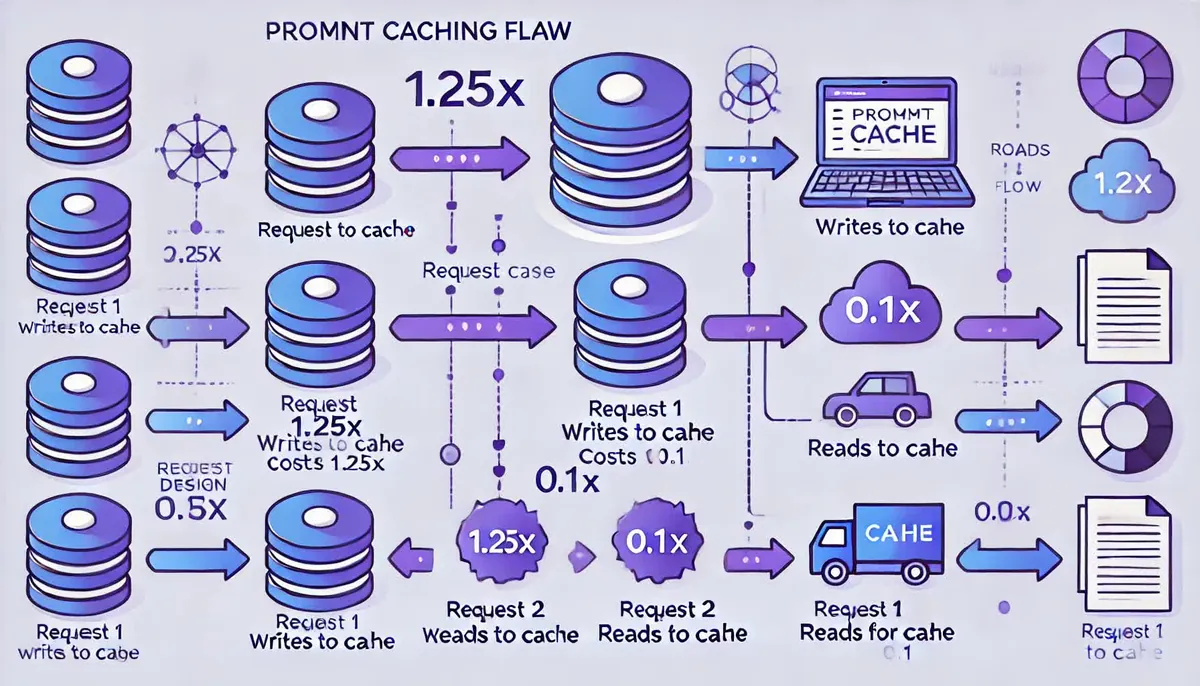
5-minute cache (1.25× write cost):
1-hour cache (2.0× write cost):
For most production workloads with shared system prompts, caching pays for itself almost immediately.
For the 1-hour cache, use {"type": "ephemeral", "ttl": "3600"} instead.
The Batch API gives you a flat 50% discount on all token prices. Requests are processed asynchronously with a turnaround time of up to 24 hours (though typically much faster).
| Component | Standard | Batch API | Savings |
|---|---|---|---|
| Input | $5.00/MTok | $2.50/MTok | 50% |
| Output | $25.00/MTok | $12.50/MTok | 50% |
| 5-min cache write | $6.25/MTok | $3.125/MTok | 50% |
| 1-hour cache write | $10.00/MTok | $5.00/MTok | 50% |
| Cache hit | $0.50/MTok | $0.25/MTok | 50% |
Batch + Caching stacks. If you're running batch jobs with shared system prompts, you get the cache discount on top of the 50% batch discount. A cache hit through the Batch API costs just $0.25/MTok — that's 95% off the standard input price.
The Batch API is ideal for content generation, data extraction, classification tasks, and any workload where you don't need real-time responses.
Anthropic offers a US-only data residency option for organizations with compliance requirements. This guarantees that your data is processed and stored exclusively within the United States.
Cost: 1.1× surcharge on all token prices.
| Component | Standard | With Data Residency |
|---|---|---|
| Input | $5.00/MTok | $5.50/MTok |
| Output | $25.00/MTok | $27.50/MTok |
| Cache hit | $0.50/MTok | $0.55/MTok |
The surcharge applies uniformly across all pricing tiers, including cached and batch tokens. For most developers, the standard multi-region setup is sufficient. Only enable data residency if your compliance requirements specifically mandate it.
Crazyrouter offers Claude Opus 4.7 at 55% of Anthropic's official price — a straight 45% discount on every token.
| Component | Anthropic Official | Crazyrouter | You Save |
|---|---|---|---|
| Input | $5.00/MTok | $2.75/MTok | 45% |
| Output | $25.00/MTok | $13.75/MTok | 45% |
This discount effectively neutralizes the new tokenizer's cost impact. Even with 35% more tokens, your total bill through Crazyrouter is still lower than what you'd pay on Anthropic direct with the old tokenizer.

Crazyrouter supports both OpenAI-compatible and Anthropic-native API formats. Just swap the base URL and use your Crazyrouter API key.
OpenAI-compatible (Python):
Anthropic-native (Python):
cURL:
No code changes beyond the base URL and API key. Your existing prompts, parameters, and workflows work as-is.
Let's look at three common scenarios to see how costs play out across different setups. All scenarios account for the new tokenizer's ~35% token increase.
Each conversation averages 3,000 input tokens and 1,500 output tokens (Opus 4.7 token counts, post-tokenizer).
| Setup | Daily Input Cost | Daily Output Cost | Daily Total | Monthly (30d) |
|---|---|---|---|---|
| Anthropic direct | $7.50 | $18.75 | $26.25 | $787.50 |
| Anthropic + 5-min cache | ~$2.25 | $18.75 | ~$21.00 | ~$630.00 |
| Crazyrouter | $4.13 | $10.31 | $14.44 | $433.13 |
| Crazyrouter + cache | ~$1.24 | $10.31 | ~$11.55 | ~$346.50 |
Cache assumes 70% hit rate on system prompts.
Each document: 8,000 input tokens, 2,000 output tokens (post-tokenizer). Using Batch API.
| Setup | Daily Cost | Monthly (30d) |
|---|---|---|
| Anthropic Batch | $750.00 | $22,500 |
| Anthropic Batch + 1-hr cache | ~$412.50 | ~$12,375 |
| Crazyrouter | $412.50 | $12,375 |
| Crazyrouter + Batch | $206.25 | $6,188 |
Heavy system prompt (5,000 tokens), user code (3,000 tokens), output (2,000 tokens). All post-tokenizer counts.
| Setup | Daily Cost | Monthly (30d) |
|---|---|---|
| Anthropic direct | $90.00 | $2,700 |
| Anthropic + 1-hr cache | ~$55.50 | ~$1,665 |
| Crazyrouter | $49.50 | $1,485 |
| Crazyrouter + cache | ~$30.53 | ~$915.75 |
Across all three scenarios, Crazyrouter delivers the lowest cost — and when combined with caching, the savings are substantial.
On paper, Opus 4.7 and Opus 4.6 have identical per-token pricing:
| Opus 4.6 | Opus 4.7 | |
|---|---|---|
| Input | $5.00/MTok | $5.00/MTok |
| Output | $25.00/MTok | $25.00/MTok |
But the new tokenizer changes the equation entirely.
Because Opus 4.7's tokenizer produces up to 35% more tokens for the same input text, the effective cost per character of text is higher:
| Metric | Opus 4.6 | Opus 4.7 | Difference |
|---|---|---|---|
| Tokens for 1,000 words | ~1,300 | ~1,755 | +35% |
| Input cost for 1,000 words | $0.0065 | $0.0088 | +35% |
| Output cost for 500 words | $0.0163 | $0.0219 | +35% |
Opus 4.7 is worth the effective cost increase if:
Opus 4.7 is not worth upgrading if:
Here's the math that matters: Opus 4.7 through Crazyrouter at 5.00/MTok — even after the tokenizer overhead.
You get the better model for less money. That's the play.
The new tokenizer is the headline story. Same per-token price, but up to 35% more tokens means Opus 4.7 is effectively ~35% more expensive than Opus 4.6 for the same workload.
Prompt caching is essential. With cache hits at $0.50/MTok (90% off), caching is the most impactful optimization. The 5-minute cache breaks even after just 2 hits; the 1-hour cache after 3.
Batch API halves everything. If you don't need real-time responses, the 50% Batch API discount stacks with caching for up to 95% savings on input tokens.
Data residency adds 10%. Only enable it if compliance requires it.
Crazyrouter saves 45% across the board. At 13.75 per MTok, Opus 4.7 through Crazyrouter costs less than Opus 4.6 at Anthropic's official rates — even with the tokenizer overhead.
Always benchmark your tokenizer impact. The 35% figure is a maximum. Run your actual prompts through the token counting API before budgeting.
Ready to cut your Claude Opus 4.7 costs by 45%? Get started at crazyrouter.com — swap your base URL, keep your code, and start saving on every request.
Last updated: April 27, 2026. Pricing data sourced from Anthropic's official documentation. Actual costs may vary based on usage patterns, token counts, and caching behavior. The 35% tokenizer increase is a reported maximum — your actual increase depends on your specific input content. Crazyrouter pricing subject to change; check crazyrouter.com for current rates.
此内容由惯性聚合(RSS阅读器)自动聚合整理,仅供阅读参考。 原文来自 — 版权归原作者所有。