


惯性聚合 高效追踪和阅读你感兴趣的博客、新闻、科技资讯
阅读原文 在惯性聚合中打开

推荐订阅源

N
News and Events Feed by Topic
OSCHINA 社区最新新闻
OSCHINA 社区最新新闻
Hugging Face - Blog
Hugging Face - Blog
S
SegmentFault 最新的问题
IT之家
IT之家
M
MIT News - Artificial intelligence
博客园_首页
aimingoo的专栏
aimingoo的专栏
C
Check Point Blog
B
Blog
人人都是产品经理
人人都是产品经理
爱范儿
爱范儿
宝玉的分享
宝玉的分享
Martin Fowler
Martin Fowler
L
LangChain Blog
Last Week in AI
Last Week in AI
Engineering at Meta
Engineering at Meta
Microsoft Security Blog
cs.CV updates on arXiv.org
F
Fortinet All Blogs
罗磊的独立博客
博客园 - 叶小钗
H
Help Net Security
Google Online Security Blog
Application and Cybersecurity Blog
The Last Watchdog
The Last Watchdog
S
Security @ Cisco Blogs
Google DeepMind News
Cyberwarzone
Cyberwarzone
月光博客
月光博客
C
Cybersecurity and Infrastructure Security Agency CISA
博客园 - 司徒正美
S
Schneier on Security
V
Vulnerabilities – Threatpost
T
Troy Hunt's Blog
cs.CL updates on arXiv.org
博客园 - 【当耐特】
K
KPMG report finds enterprise disconnect between AI and its ROI | CIO
Forbes - Security
Forbes - Security
D
Darknet – Hacking Tools, Hacker News & Cyber Security
雷峰网
雷峰网
Hacker News - Newest:
Hacker News - Newest: "LLM"
S
Secure Thoughts
V
Visual Studio Blog
钛媒体:引领未来商业与生活新知
钛媒体:引领未来商业与生活新知
云风的 BLOG
云风的 BLOG
T
Tailwind CSS Blog
Security Archives - TechRepublic
Hacker News: Ask HN
Hacker News: Ask HN
The GitHub Blog
The GitHub Blog

Crazyrouter Blog (English)

Ideogram AI Guide 2026: Product Mockups, Text Rendering, and API Automation Akool AI Voice Generator Review 2026: API Alternatives for Developers GLM 4.6 API Guide 2026: Build Chinese-English Agents with Tool Calling Google Veo3 API Guide 2026: Batch Video Generation, QA, and Fallbacks AI Lip Sync Tools Comparison 2026: Developer Guide for Localization Pipelines Claude Opus 4.8 vs Opus 4.7: Real API Benchmark Results for Developers Opus 4.8 vs Opus 4.7 Coding Test: What Changed for Developers? Opus 4.8 vs Opus 4.7 for Agents: JSON, Tool Use, and Structured Output Gemini 2.5 Flash-Lite for RAG, Agent Routing, and Cost per Successful Task Gemini 2.5 Flash-Lite for Support Automation and Ticket Triage Gemini 2.5 Flash-Lite Use Cases: The Practical Automation Tier for Developers Claude Jupiter v1-p vs GPT-5.5 Benchmark: Real API Test on Reasoning and Coding Claude Jupiter v1-p vs Claude Opus 4.7 vs Sonnet 4.6: Live API Test Claude Jupiter v1-p vs Claude Opus 4.7 vs Sonnet 4.6: Live API Test Claude Code Pricing 2026: Pro vs Max vs Team vs API Costs Claude Opus 4.7 vs DeepSeek V4 Pro: Real API Compatibility and Coding Benchmark Gemini CLI Complete Guide 2026: Repo Automation, CI Agents, and Multi-Model Routing Ideogram AI Guide 2026: Brand Design Automation, API Workflows, and Alternatives GLM 4.6 API Guide 2026: Agents, RAG, Tool Calling, and Bilingual Apps WAN 2.2 Animate Tutorial 2026: Character Consistency, Shot Control, and API Workflows Google Veo3 API Guide 2026: Production Video Pipelines, Prompts, Pricing, and Fallbacks AI API Pricing Comparison 2026: Text, Image, Video, Caching, and Router Costs Codex CLI Installation Guide 2026: Windows, macOS, Linux, Proxies, and CI Setup How to Get a Claude API Key in 2026: Secure Setup for Teams, CI, and Alternatives Gemini Advanced Review 2026: Is It Worth It for Coding, Research, and API Teams? Claude Code Pricing Guide 2026: Team Agent Budgets, API Fallbacks, and Cost Control Seedance 2.0 Pricing: Convert 46 CNY per Million Tokens to Cost per Second Qwen2.5-Omni Guide 2026: Real-Time Voice, Vision, and Multimodal Agents Kimi K2 Thinking Guide 2026: Reasoning Workflows, Evals, and Cost Control Google Veo3 API Guide 2026: Batch Video Pipelines, Pricing, and Fallbacks Codex CLI Installation Guide 2026: macOS, Linux, WSL, Proxies, and Dev Containers How to Get a Claude API Key in 2026: Safe Production Setup and Alternatives AI API Pricing Comparison 2026: GPT, Claude, Gemini, Video, and Agent Workloads Gemini Advanced Review 2026: Is It Worth It for Developer Teams? Claude Code Pricing Guide 2026: API Fallbacks, Team Seats, and Budget Control Seedream 4.0 API Tutorial 2026: Batch Image Generation, Product Creative, and Pricing Qwen2.5-Omni Guide 2026: Real-Time Voice, Vision, Text Agents, and API Integration Kimi K2 Thinking Guide 2026: Reasoning Agents, Evaluation Workflows, and API Cost Control WAN 2.2 Animate Tutorial 2026: Character Motion, Shot Control, API Pipelines, and Pricing Google Veo3 API Guide 2026: Production Video Workflows, Prompts, Pricing, and Fallbacks AI API Pricing Comparison 2026: OpenAI, Claude, Gemini, DeepSeek, and Router Costs How to Get a Claude API Key in 2026: Setup, Security, Rotation, and Alternatives Codex CLI Installation Guide 2026: macOS, Linux, WSL, Proxies, and Devcontainers Gemini Advanced Review 2026: Is It Worth It for Developers and API Builders? Claude Code Pricing Guide 2026: CI Agents, Team Seats, and API Budget Planning AI API Gateway for Singapore and Malaysia Developers: One Endpoint for GPT, Claude and Gemini AI API Gateway for Thai Developers: Use GPT, Claude and Gemini with One Key One API Key for GPT, Claude and Gemini: A Practical Setup for Central Asia Developers Gemini 3.5 Flash vs Claude Response-Tier Models: Which One Should Developers Use? Gemini 3.5 Flash vs Gemini 3 Flash vs Gemini 2.5 Flash: Real API Benchmark "How to Test Multiple AI Image Models with One API Key" Codex CLI Installation Guide: Setup on macOS, Linux, Windows WSL and CI/CD Seedream 4.0 API Tutorial: ByteDance Image Generation for Production Pipelines Kimi K2 Thinking Model: Complete Developer Guide for Reasoning Workflows Luma Ray 2 Review: AI Video Generation Quality, Speed, and API Guide Pika 2.2 New Features Review: Scene Director, Sound Design, and API Updates Google Veo 3 API Guide: Video Generation with Audio for Developers AI Lip Sync Tools Comparison 2026: Best APIs for Talking Avatars and Video Dubbing Gemini Advanced Review May 2026: Is It Worth $20/Month for AI Power Users? Claude Code Pricing in May 2026: Max Plan, Opus 4, and Real Cost Breakdown Hermes Agent + Crazyrouter: One-Click Setup for 627+ AI Models Text-Embedding-3-Small: Complete Guide to OpenAI's Most Popular Embedding Model (2026) AI Meme Generator & Coloring Book Creator with GPT-image-2 — Fun Projects That Actually Make Money AI Future Baby Prediction with GPT-image-2 — See What Your Child Might Look Like Ghibli Style Photo Transformation with GPT-image-2 — Turn Any Photo Into Anime Art AI Action Figure Generator with GPT-image-2 — Turn Anyone Into a Boxed Toy AI Face Reading & Personal Color Analysis with GPT-image-2 — Two Viral Use Cases in One Guide AI Palm Reading with GPT-image-2 — Generate Professional Palmistry Analysis from a Single Photo Gemini 2.5 Flash-Lite Pricing Explained — The Cheapest Gemini Model for High-Volume Workloads Claude Sonnet 4.6 Pricing Explained — Caching, Tiers, and How to Save 45% with Crazyrouter Gemini Free vs Gemini Advanced: Pricing, Limits, Features, and Is It Worth Paying For? AI Context Window Comparison (2026): GPT, Claude, Gemini Token Limits by Model Claude Sonnet 4.5 Pricing Explained — Caching, Batch API, and How to Save 45% with Crazyrouter Claude Opus 4.7 Pricing Explained — New Tokenizer, Caching, and How to Save 45% with Crazyrouter Best AI Models for RAG Applications 2026: Embeddings, Retrieval, and Generation Seedance 2.0 vs Kling 2.1 vs Runway Gen 4 Turbo: Video AI API Comparison 2026 AI Video Generation API Pricing May 2026: Veo3 vs Kling vs Runway vs Sora How to Get Claude API Key in China 2026: Complete Setup Guide AI Coding Tools ROI Calculator: Claude Code vs Codex CLI vs Gemini CLI Cost Analysis 2026 AI API Pricing Comparison May 2026 - Complete Developer Guide Grok 4 API Pricing Complete Guide 2026 DeepSeek R2: The 32B Reasoning Model That Runs on a Single GPU — Complete Guide for Developers "GPT-5.1 Codex Max Pricing Explained — The Code-Specialized Model and How to Save with Crazyrouter" GPT-4o Pricing Explained — The Legacy Flagship That's Still Worth Using GLM-5 Pricing Explained — Zhipu AI's Flagship Model and How to Access via Crazyrouter Gemini 3 Flash Pricing Explained — Balanced Speed and Cost with Crazyrouter Savings "Gemini 3.1 Pro Pricing Explained — Context Tiers, Caching, and How to Save with Crazyrouter" GPT-5.5 Pricing Explained — OpenAI's Latest Flagship, Reasoning Tokens, and How to Save with Crazyrouter AI Model Pricing Guide 2026: What Every Model Costs on Crazyrouter (and How Much You Save) MiniMax M2 Pricing Explained — China's Competitive AI Model and How to Access via Crazyrouter Grok 4.1 Thinking Pricing Explained — Reasoning Tokens, Caching, and How to Save with Crazyrouter Grok 4.1 Pricing Explained — 2M Context, Caching, Tool Costs, and How to Save with Crazyrouter GPT-5 Pricing Explained — Reasoning Tokens, Caching, Batch API, and How to Save with Crazyrouter GPT-5-nano Pricing Explained — The Cheapest GPT Model for High-Throughput Workloads GPT-5-mini Pricing Explained — Ultra-Low Cost AI with Caching and Batch Discounts GPT-5.4 Pricing Explained — Cached Input, Context Tiers, Batch API, and How to Save with Crazyrouter GPT-5.2 Pricing Explained — Caching, Batch API, and How to Save with Crazyrouter OpenRouter vs Crazyrouter (2026): Pricing, Models, and Which API Gateway Fits Developers Better Suno v4 vs v5 vs v4.5: Which Version Sounds Better and Is Worth Using in 2026? How to Use Claude Code with Crazyrouter: Base URL Setup, Model Routing, and Cost Savings
Claude Opus 4.6 Pricing Explained — Caching, Tiers, and How to Save 45% with Crazyrouter
Crazyrouter · 2026-05-01 · via Crazyrouter Blog (English)

Claude Opus 4.6 Pricing Explained — Caching, Tiers, and How to Save 45% with Crazyrouter#

Claude Opus 4.6 is Anthropic's premium-tier model, sitting alongside Opus 4.5 and Opus 4.7 in the same generation of frontier AI. It's built for the tasks where you need the absolute best: complex multi-step reasoning, large-scale code generation, deep research synthesis, and nuanced document analysis. If you're reaching for Opus, you already know you need top-shelf intelligence — the question is how much it costs and how to keep that cost under control.

This guide breaks down every dimension of Claude Opus 4.6 pricing: base tokens, prompt caching (both 5-minute and 1-hour tiers), Batch API discounts, data residency surcharges, and how routing through Crazyrouter can cut your total bill by 45%. Every number here is verified against Anthropic's official pricing as of April 2026.

Let's get into it.

Base Token Pricing#

Claude Opus 4.6 uses a straightforward per-token pricing model. You pay separately for input tokens (what you send) and output tokens (what the model generates).

ComponentPrice per Million Tokens (MTok)
Input tokens$5.00
Output tokens$25.00

Output tokens cost 5× more than input tokens. This ratio matters — if your workload is output-heavy (code generation, long-form writing), your costs will skew toward the output side.

Quick Cost Reference#

To give you a feel for real-world costs at base pricing:

Use CaseInput TokensOutput TokensEstimated Cost
Short chat (single turn)~1,000~500$0.0175
Code review (medium file)~8,000~2,000$0.09
Document summary (10 pages)~15,000~3,000$0.15
Heavy coding session (1 hour)~200,000~100,000$3.50
Production pipeline (per day)~5,000,000~2,000,000$75.00

These are base prices without any caching or batch discounts. As you'll see below, the actual cost can drop dramatically with the right optimization strategy.

Prompt Caching Deep Dive#

Prompt caching is where Opus 4.6 pricing gets interesting — and where the biggest savings live. Anthropic offers two caching tiers: a 5-minute cache and a 1-hour cache. Both let you avoid re-processing repeated content (system prompts, large documents, few-shot examples) across multiple requests.
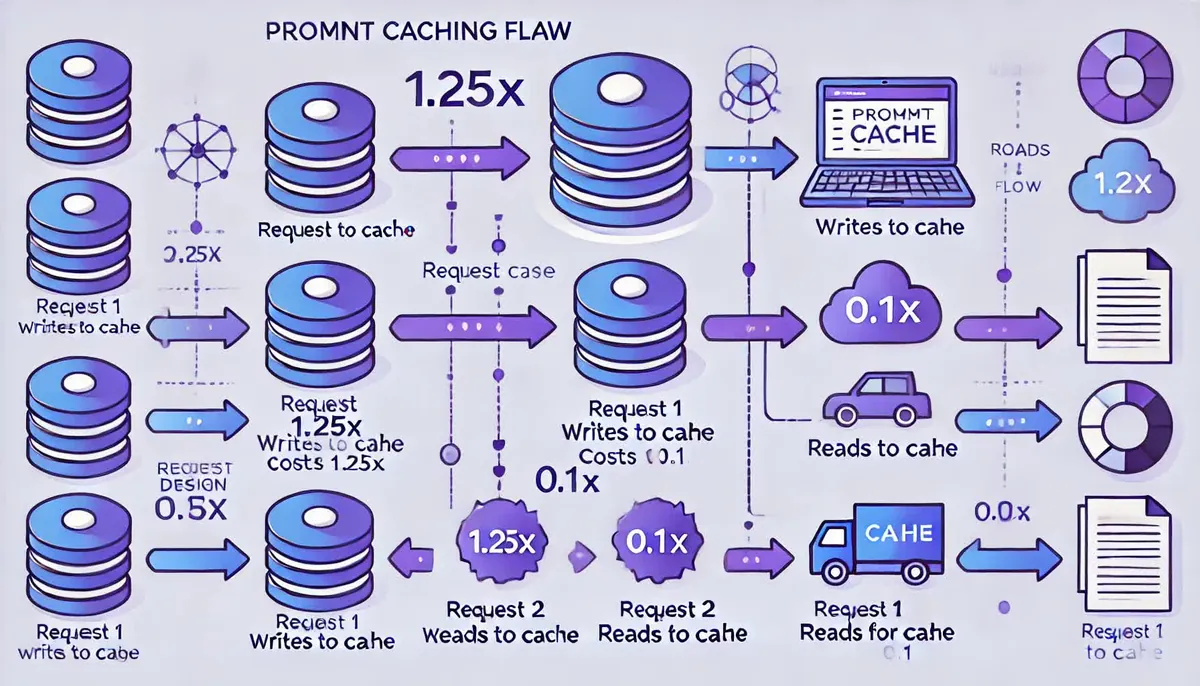
Claude Prompt Caching Flow

How It Works#

When you mark content as cacheable, Anthropic stores the processed representation of those tokens. Subsequent requests that include the same cached content pay the much cheaper "cache hit" rate instead of the full input rate.

Cache OperationPrice per MTokMultiplier vs Base Input
Base input (no cache)$5.001.0×
5-minute cache write$6.251.25×
1-hour cache write$10.002.0×
Cache hit (read)$0.500.1×

The key insight: cache hits cost just 10% of base input price. That's a 90% discount on every token that hits the cache.

5-Minute vs 1-Hour Cache: When to Use Which#

5-minute cache ($6.25/MTok write) is ideal for:

  • Interactive chat sessions where the user sends multiple messages in quick succession
  • Rapid iteration loops (code → test → fix → test)
  • Short-lived workflows that complete within a few minutes

1-hour cache ($10.00/MTok write) is ideal for:

  • Production pipelines processing many requests against the same system prompt
  • Document Q&A where multiple users query the same uploaded document
  • Batch-like workloads spread over tens of minutes

Break-Even Math#

The cache write costs more than a regular input read, so you need enough cache hits to recoup that upfront cost.

5-minute cache break-even:

  • Cache write cost: 6.25/MTok(extra6.25/MTok (extra 1.25 vs base $5.00)
  • Savings per cache hit: 4.50/MTok(4.50/MTok (5.00 − $0.50)
  • Break-even: 1.25÷1.25 ÷ 4.50 = 0.28 hits → you break even after just 1 cache hit

1-hour cache break-even:

  • Cache write cost: 10.00/MTok(extra10.00/MTok (extra 5.00 vs base $5.00)
  • Savings per cache hit: 4.50/MTok(4.50/MTok (5.00 − $0.50)
  • Break-even: 5.00÷5.00 ÷ 4.50 = 1.11 hits → you break even after 2 cache hits

In practice, if you're making 2+ requests with the same prefix within the cache window, caching saves money. For most production workloads, this is a no-brainer.

Code Examples#

Automatic caching — Anthropic automatically caches system prompts and long prefixes when the content exceeds a minimum length:

Explicit caching — Use cache_control to mark specific content blocks for caching:

Reading Cache Usage in the Response#

The API response includes cache diagnostics in the usage object:

On subsequent requests with the same cached prefix:

When cache_read_input_tokens is high and cache_creation_input_tokens is zero, your cache is working. Those 50,000 tokens are being read at 0.50/MTokinsteadof0.50/MTok instead of 5.00/MTok — saving you $0.225 per request.

Batch API — 50% Off Everything#

Anthropic's Batch API offers a flat 50% discount on all token prices. The trade-off: requests are processed asynchronously with up to 24 hours of latency (though most complete much faster).

ComponentStandard PriceBatch API Price
Input tokens$5.00/MTok$2.50/MTok
Output tokens$25.00/MTok$12.50/MTok
5-min cache write$6.25/MTok$3.125/MTok
1-hour cache write$10.00/MTok$5.00/MTok
Cache hit$0.50/MTok$0.25/MTok

Batch API discounts stack with caching. A cached batch request with cache hits pays just $0.25/MTok for those cached input tokens — that's 95% off the base input price.

When to Use Batch API#

  • Bulk document processing (summarization, classification, extraction)
  • Evaluation pipelines and benchmarks
  • Nightly data processing jobs
  • Any workload where you don't need real-time responses

Data Residency Surcharge#

If you require data residency guarantees — specifically US-only processing — Anthropic applies a 1.1× surcharge on all token prices.

ComponentStandardUS Data Residency (1.1×)
Input tokens$5.00/MTok$5.50/MTok
Output tokens$25.00/MTok$27.50/MTok
5-min cache write$6.25/MTok$6.875/MTok
1-hour cache write$10.00/MTok$11.00/MTok
Cache hit$0.50/MTok$0.55/MTok

This surcharge applies to organizations that need compliance with data sovereignty requirements (HIPAA, FedRAMP, certain enterprise policies). If you don't have a regulatory requirement for US-only processing, you can skip this and save 10%.

Crazyrouter Pricing — Save 45%#

Crazyrouter offers Claude Opus 4.6 at 55% of Anthropic's official price — a straight 45% discount with no usage caps, no rate limit downgrades, and full API compatibility.
Claude Cost Comparison

ComponentAnthropic DirectCrazyrouter (45% off)
Input tokens$5.00/MTok$2.75/MTok
Output tokens$25.00/MTok$13.75/MTok
5-min cache write$6.25/MTok$3.4375/MTok
1-hour cache write$10.00/MTok$5.50/MTok
Cache hit$0.50/MTok$0.275/MTok

Code Examples#

OpenAI-compatible SDK — drop-in replacement, just change the base URL:

Anthropic-native SDK — use the Anthropic Python library with Crazyrouter's endpoint:

cURL — direct HTTP call:

Switching takes about 30 seconds — change your base_url and API key, and you're done.

Real-World Cost Comparison#

Let's look at three realistic scenarios and compare costs across pricing tiers.

Scenario 1: Customer Support Bot#

A support bot handling 500 conversations/day, each averaging 3,000 input tokens and 1,500 output tokens. System prompt (2,000 tokens) is cached across all requests.

Pricing TierDaily Input CostDaily Output CostDaily TotalMonthly (30d)
Anthropic base (no cache)$7.50$18.75$26.25$787.50
Anthropic + 5-min cache$2.99$18.75$21.74$652.20
Crazyrouter (no cache)$4.13$10.31$14.44$433.13
Crazyrouter + 5-min cache$1.64$10.31$11.96$358.71

Savings with Crazyrouter + caching vs Anthropic base: $428.79/month (54%)

Scenario 2: Code Review Pipeline#

A CI/CD pipeline running 200 code reviews/day. Each review sends 20,000 input tokens (code + context) and receives 5,000 output tokens. A shared 8,000-token system prompt is cached with 1-hour TTL.

Pricing TierDaily Input CostDaily Output CostDaily TotalMonthly (30d)
Anthropic base (no cache)$20.00$25.00$45.00$1,350.00
Anthropic + 1-hr cache$13.20$25.00$38.20$1,146.00
Crazyrouter (no cache)$11.00$13.75$24.75$742.50
Crazyrouter + 1-hr cache$7.26$13.75$21.01$630.30

Savings with Crazyrouter + caching vs Anthropic base: $719.70/month (53%)

Scenario 3: Batch Document Processing#

A weekly batch job processing 10,000 documents. Each document averages 8,000 input tokens and 2,000 output tokens. Uses Batch API.

Pricing TierPer-Batch Input CostPer-Batch Output CostPer-Batch TotalMonthly (4 batches)
Anthropic base (no batch)$400.00$500.00$900.00$3,600.00
Anthropic Batch API (50% off)$200.00$250.00$450.00$1,800.00
Crazyrouter base (no batch)$220.00$275.00$495.00$1,980.00
Crazyrouter + Batch API$110.00$137.50$247.50$990.00

Savings with Crazyrouter + Batch vs Anthropic base: $2,610.00/month (73%)

Pricing Summary Table#

All Claude Opus 4.6 pricing tiers in one place:

ComponentAnthropic DirectBatch API (50% off)Crazyrouter (45% off)Crazyrouter + Batch
Input$5.00/MTok$2.50/MTok$2.75/MTok$1.375/MTok
Output$25.00/MTok$12.50/MTok$13.75/MTok$6.875/MTok
5-min cache write$6.25/MTok$3.125/MTok$3.4375/MTok$1.71875/MTok
1-hr cache write$10.00/MTok$5.00/MTok$5.50/MTok$2.75/MTok
Cache hit$0.50/MTok$0.25/MTok$0.275/MTok$0.1375/MTok
Data residency1.1× surcharge1.1× surchargeN/AN/A

Key Takeaways#

  1. Base pricing is 5/5/25 per MTok (input/output). Output tokens are 5× more expensive — optimize for concise outputs when possible.

  2. Prompt caching pays for itself after 1-2 cache hits. If you're making repeated requests with shared context, enable caching immediately. The 5-minute cache is nearly free to use; the 1-hour cache needs just 2 hits to break even.

  3. Batch API cuts everything in half. If your workload can tolerate async processing, the 50% discount is the single biggest lever available directly from Anthropic.

  4. Caching + Batch stack together. Cached batch requests can bring input costs down to $0.25/MTok — a 95% reduction from base price.

  5. Data residency adds 10%. Only opt in if you have a genuine compliance requirement.

  6. Crazyrouter saves 45% on every token. No usage caps, full API compatibility, and it takes 30 seconds to switch. For a production workload spending 1,000/monthonAnthropicdirect,thats1,000/month on Anthropic direct, that's 450/month back in your pocket.

  7. Stack all three for maximum savings. Crazyrouter + caching + Batch API can reduce costs by 70-95% compared to base Anthropic pricing.

Start Saving Today#

Claude Opus 4.6 is a powerful model — but power doesn't have to mean expensive. With the right combination of prompt caching, Batch API, and Crazyrouter's 45% discount, you can run Opus-class intelligence at a fraction of the sticker price.

Get started at crazyrouter.com — create an API key, swap your base URL, and start saving on your next API call.


Last updated: April 27, 2026. Prices reflect Anthropic's published rates at the time of writing. Anthropic may adjust pricing at any time — check anthropic.com/pricing for the latest official rates. Crazyrouter discount is subject to current promotional terms.