


惯性聚合 高效追踪和阅读你感兴趣的博客、新闻、科技资讯
阅读原文 在惯性聚合中打开

推荐订阅源

Know Your Adversary
Know Your Adversary
小众软件
小众软件
L
LangChain Blog
月光博客
月光博客
博客园 - Franky
Microsoft Azure Blog
Y
Y Combinator Blog
有赞技术团队
有赞技术团队
奇客Solidot–传递最新科技情报
奇客Solidot–传递最新科技情报
MongoDB | Blog
MongoDB | Blog
Recorded Future
Recorded Future
V
Visual Studio Blog
TaoSecurity Blog
TaoSecurity Blog
S
Schneier on Security
C
Cybersecurity and Infrastructure Security Agency CISA
P
Privacy & Cybersecurity Law Blog
T
Threat Research - Cisco Blogs
D
DataBreaches.Net
L
LINUX DO - 热门话题
C
Check Point Blog
F
Fortinet All Blogs
Hugging Face - Blog
Hugging Face - Blog
The Hacker News
The Hacker News
钛媒体:引领未来商业与生活新知
钛媒体:引领未来商业与生活新知
Microsoft Security Blog
酷 壳 – CoolShell
酷 壳 – CoolShell
V
V2EX
让小产品的独立变现更简单 - ezindie.com
The GitHub Blog
The GitHub Blog
P
Proofpoint News Feed
L
Lohrmann on Cybersecurity
博客园 - 司徒正美
T
Threatpost
P
Palo Alto Networks Blog
A
About on SuperTechFans
Spread Privacy
Spread Privacy
Engineering at Meta
Engineering at Meta
N
News | PayPal Newsroom
T
Tailwind CSS Blog
The Last Watchdog
The Last Watchdog
Blog — PlanetScale
Blog — PlanetScale
A
Arctic Wolf
量子位
Exploit-DB.com RSS Feed
博客园 - 聂微东
Google Online Security Blog
Google DeepMind News
www.infosecurity-magazine.com
V
Vulnerabilities – Threatpost
H
Hacker News: Front Page

Crazyrouter Blog (English)

Ideogram AI Guide 2026: Product Mockups, Text Rendering, and API Automation Akool AI Voice Generator Review 2026: API Alternatives for Developers GLM 4.6 API Guide 2026: Build Chinese-English Agents with Tool Calling Google Veo3 API Guide 2026: Batch Video Generation, QA, and Fallbacks AI Lip Sync Tools Comparison 2026: Developer Guide for Localization Pipelines Claude Opus 4.8 vs Opus 4.7: Real API Benchmark Results for Developers Opus 4.8 vs Opus 4.7 Coding Test: What Changed for Developers? Opus 4.8 vs Opus 4.7 for Agents: JSON, Tool Use, and Structured Output Gemini 2.5 Flash-Lite for RAG, Agent Routing, and Cost per Successful Task Gemini 2.5 Flash-Lite for Support Automation and Ticket Triage Gemini 2.5 Flash-Lite Use Cases: The Practical Automation Tier for Developers Claude Jupiter v1-p vs GPT-5.5 Benchmark: Real API Test on Reasoning and Coding Claude Jupiter v1-p vs Claude Opus 4.7 vs Sonnet 4.6: Live API Test Claude Jupiter v1-p vs Claude Opus 4.7 vs Sonnet 4.6: Live API Test Claude Code Pricing 2026: Pro vs Max vs Team vs API Costs Claude Opus 4.7 vs DeepSeek V4 Pro: Real API Compatibility and Coding Benchmark Gemini CLI Complete Guide 2026: Repo Automation, CI Agents, and Multi-Model Routing Ideogram AI Guide 2026: Brand Design Automation, API Workflows, and Alternatives GLM 4.6 API Guide 2026: Agents, RAG, Tool Calling, and Bilingual Apps WAN 2.2 Animate Tutorial 2026: Character Consistency, Shot Control, and API Workflows Google Veo3 API Guide 2026: Production Video Pipelines, Prompts, Pricing, and Fallbacks AI API Pricing Comparison 2026: Text, Image, Video, Caching, and Router Costs Codex CLI Installation Guide 2026: Windows, macOS, Linux, Proxies, and CI Setup How to Get a Claude API Key in 2026: Secure Setup for Teams, CI, and Alternatives Gemini Advanced Review 2026: Is It Worth It for Coding, Research, and API Teams? Claude Code Pricing Guide 2026: Team Agent Budgets, API Fallbacks, and Cost Control Seedance 2.0 Pricing: Convert 46 CNY per Million Tokens to Cost per Second Qwen2.5-Omni Guide 2026: Real-Time Voice, Vision, and Multimodal Agents Kimi K2 Thinking Guide 2026: Reasoning Workflows, Evals, and Cost Control Google Veo3 API Guide 2026: Batch Video Pipelines, Pricing, and Fallbacks Codex CLI Installation Guide 2026: macOS, Linux, WSL, Proxies, and Dev Containers How to Get a Claude API Key in 2026: Safe Production Setup and Alternatives AI API Pricing Comparison 2026: GPT, Claude, Gemini, Video, and Agent Workloads Gemini Advanced Review 2026: Is It Worth It for Developer Teams? Claude Code Pricing Guide 2026: API Fallbacks, Team Seats, and Budget Control Seedream 4.0 API Tutorial 2026: Batch Image Generation, Product Creative, and Pricing Qwen2.5-Omni Guide 2026: Real-Time Voice, Vision, Text Agents, and API Integration Kimi K2 Thinking Guide 2026: Reasoning Agents, Evaluation Workflows, and API Cost Control WAN 2.2 Animate Tutorial 2026: Character Motion, Shot Control, API Pipelines, and Pricing Google Veo3 API Guide 2026: Production Video Workflows, Prompts, Pricing, and Fallbacks AI API Pricing Comparison 2026: OpenAI, Claude, Gemini, DeepSeek, and Router Costs How to Get a Claude API Key in 2026: Setup, Security, Rotation, and Alternatives Codex CLI Installation Guide 2026: macOS, Linux, WSL, Proxies, and Devcontainers Gemini Advanced Review 2026: Is It Worth It for Developers and API Builders? Claude Code Pricing Guide 2026: CI Agents, Team Seats, and API Budget Planning AI API Gateway for Singapore and Malaysia Developers: One Endpoint for GPT, Claude and Gemini AI API Gateway for Thai Developers: Use GPT, Claude and Gemini with One Key One API Key for GPT, Claude and Gemini: A Practical Setup for Central Asia Developers Gemini 3.5 Flash vs Claude Response-Tier Models: Which One Should Developers Use? Gemini 3.5 Flash vs Gemini 3 Flash vs Gemini 2.5 Flash: Real API Benchmark "How to Test Multiple AI Image Models with One API Key" Codex CLI Installation Guide: Setup on macOS, Linux, Windows WSL and CI/CD Seedream 4.0 API Tutorial: ByteDance Image Generation for Production Pipelines Kimi K2 Thinking Model: Complete Developer Guide for Reasoning Workflows Luma Ray 2 Review: AI Video Generation Quality, Speed, and API Guide Pika 2.2 New Features Review: Scene Director, Sound Design, and API Updates Google Veo 3 API Guide: Video Generation with Audio for Developers AI Lip Sync Tools Comparison 2026: Best APIs for Talking Avatars and Video Dubbing Gemini Advanced Review May 2026: Is It Worth $20/Month for AI Power Users? Claude Code Pricing in May 2026: Max Plan, Opus 4, and Real Cost Breakdown Hermes Agent + Crazyrouter: One-Click Setup for 627+ AI Models Text-Embedding-3-Small: Complete Guide to OpenAI's Most Popular Embedding Model (2026) AI Meme Generator & Coloring Book Creator with GPT-image-2 — Fun Projects That Actually Make Money AI Future Baby Prediction with GPT-image-2 — See What Your Child Might Look Like Ghibli Style Photo Transformation with GPT-image-2 — Turn Any Photo Into Anime Art AI Action Figure Generator with GPT-image-2 — Turn Anyone Into a Boxed Toy AI Face Reading & Personal Color Analysis with GPT-image-2 — Two Viral Use Cases in One Guide AI Palm Reading with GPT-image-2 — Generate Professional Palmistry Analysis from a Single Photo Gemini 2.5 Flash-Lite Pricing Explained — The Cheapest Gemini Model for High-Volume Workloads Gemini Free vs Gemini Advanced: Pricing, Limits, Features, and Is It Worth Paying For? AI Context Window Comparison (2026): GPT, Claude, Gemini Token Limits by Model Claude Sonnet 4.5 Pricing Explained — Caching, Batch API, and How to Save 45% with Crazyrouter Claude Opus 4.7 Pricing Explained — New Tokenizer, Caching, and How to Save 45% with Crazyrouter Claude Opus 4.6 Pricing Explained — Caching, Tiers, and How to Save 45% with Crazyrouter Best AI Models for RAG Applications 2026: Embeddings, Retrieval, and Generation Seedance 2.0 vs Kling 2.1 vs Runway Gen 4 Turbo: Video AI API Comparison 2026 AI Video Generation API Pricing May 2026: Veo3 vs Kling vs Runway vs Sora How to Get Claude API Key in China 2026: Complete Setup Guide AI Coding Tools ROI Calculator: Claude Code vs Codex CLI vs Gemini CLI Cost Analysis 2026 AI API Pricing Comparison May 2026 - Complete Developer Guide Grok 4 API Pricing Complete Guide 2026 DeepSeek R2: The 32B Reasoning Model That Runs on a Single GPU — Complete Guide for Developers "GPT-5.1 Codex Max Pricing Explained — The Code-Specialized Model and How to Save with Crazyrouter" GPT-4o Pricing Explained — The Legacy Flagship That's Still Worth Using GLM-5 Pricing Explained — Zhipu AI's Flagship Model and How to Access via Crazyrouter Gemini 3 Flash Pricing Explained — Balanced Speed and Cost with Crazyrouter Savings "Gemini 3.1 Pro Pricing Explained — Context Tiers, Caching, and How to Save with Crazyrouter" GPT-5.5 Pricing Explained — OpenAI's Latest Flagship, Reasoning Tokens, and How to Save with Crazyrouter AI Model Pricing Guide 2026: What Every Model Costs on Crazyrouter (and How Much You Save) MiniMax M2 Pricing Explained — China's Competitive AI Model and How to Access via Crazyrouter Grok 4.1 Thinking Pricing Explained — Reasoning Tokens, Caching, and How to Save with Crazyrouter Grok 4.1 Pricing Explained — 2M Context, Caching, Tool Costs, and How to Save with Crazyrouter GPT-5 Pricing Explained — Reasoning Tokens, Caching, Batch API, and How to Save with Crazyrouter GPT-5-nano Pricing Explained — The Cheapest GPT Model for High-Throughput Workloads GPT-5-mini Pricing Explained — Ultra-Low Cost AI with Caching and Batch Discounts GPT-5.4 Pricing Explained — Cached Input, Context Tiers, Batch API, and How to Save with Crazyrouter GPT-5.2 Pricing Explained — Caching, Batch API, and How to Save with Crazyrouter OpenRouter vs Crazyrouter (2026): Pricing, Models, and Which API Gateway Fits Developers Better Suno v4 vs v5 vs v4.5: Which Version Sounds Better and Is Worth Using in 2026? How to Use Claude Code with Crazyrouter: Base URL Setup, Model Routing, and Cost Savings
Claude Sonnet 4.6 Pricing Explained — Caching, Tiers, and How to Save 45% with Crazyrouter
Crazyrouter · 2026-05-01 · via Crazyrouter Blog (English)

Claude Sonnet 4.6 Pricing Explained — Caching, Tiers, and How to Save 45% with Crazyrouter#

Claude Sonnet 4.6 Pricing Guide

Claude Sonnet 4.6 is Anthropic's latest mid-range model — released in February 2026. It sits between the budget-friendly Haiku line and the premium Opus tier, making it the default choice for most production workloads: coding, chat, document analysis, and tool use.

But Anthropic's pricing isn't just "input + output." There's a layered caching system with two TTL tiers, a Batch API discount, and a data residency surcharge that can all stack on top of each other. This guide breaks down every component so you know exactly what you're paying — and how to pay less.

Last updated: April 27, 2026

Disclaimer: Prices in this article are accurate as of the publication date. Anthropic may adjust pricing at any time. Always verify on the official Anthropic pricing page before making production decisions.


Base Token Pricing#

The foundation of Claude Sonnet 4.6 pricing is straightforward:

Token TypePrice per 1M Tokens
Input (base)$3.00
Output$15.00

That's a 5:1 output-to-input ratio. For every dollar you spend on input tokens, you'd spend five dollars on the same number of output tokens. This ratio matters — if your workload is output-heavy (code generation, long-form writing), output costs will dominate your bill.

Quick reference: what does this actually cost?#

WorkloadTokensCost
1 short chat turn (500 in / 200 out)700 total$0.0045
1 code review (2K in / 1K out)3K total$0.021
1 document summary (10K in / 2K out)12K total$0.06
1 hour of chatbot traffic (500K in / 200K out)700K total$4.50
1 day of heavy API usage (5M in / 2M out)7M total$45.00

Prompt Caching: The Biggest Cost Lever#

Prompt caching is where Anthropic's pricing gets interesting — and where the real savings live.
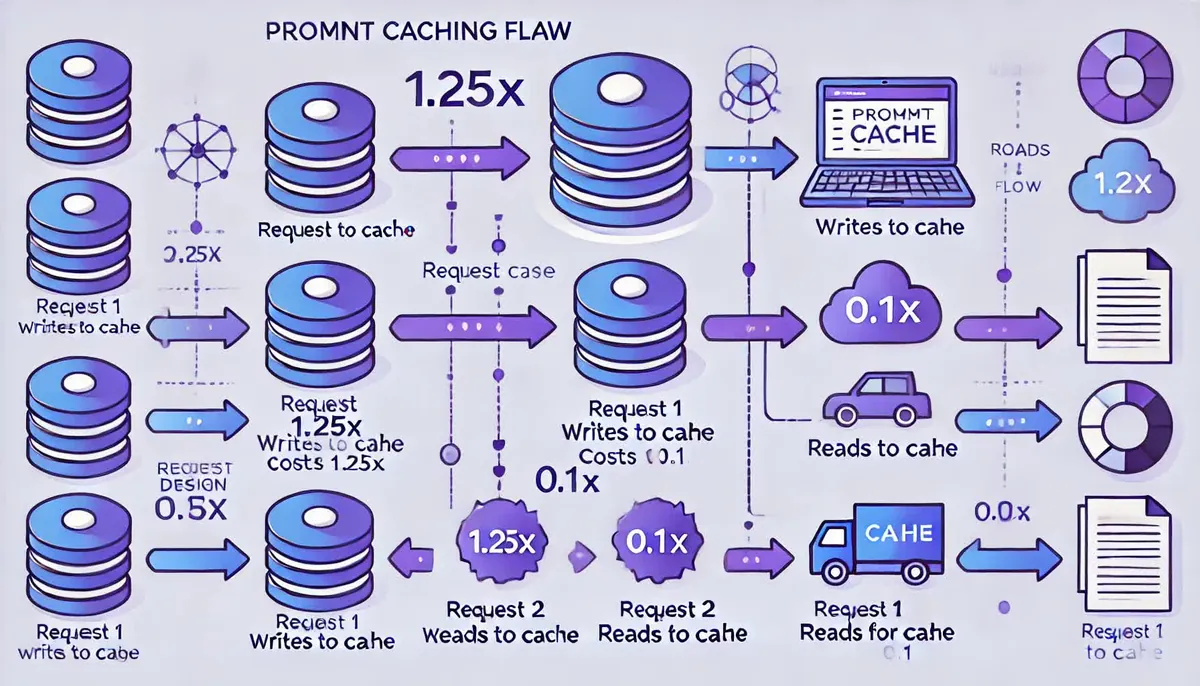
How Claude prompt caching works — write once, read cheap

How it works#

When you send a request with cache_control enabled, Anthropic stores the computed state of your prompt prefix. On subsequent requests that start with the same bytes (same system prompt, same few-shot examples, same preamble), those tokens are served from cache instead of being reprocessed.

There are two cache duration tiers:

Cache OperationPrice per 1M TokensMultiplier vs Base InputDuration
5-minute cache write$3.751.25x5 minutes
1-hour cache write$6.002.0x1 hour
Cache hit (read)$0.300.1x

The math: when does caching pay off?#

5-minute cache (1.25x write):

  • Write cost: $3.75/M (you pay 25% more than base input on the first request)
  • Read cost: $0.30/M (you pay 90% less on every subsequent request)
  • Break-even: 1 cache read. After just one cache hit, you've saved money.
    • Write: 3.75Read:3.75 → Read: 0.30 → Total for 2 requests: $4.05
    • Without cache: 3.00×2=3.00 × 2 = 6.00
    • Savings: $1.95 (32.5%)

1-hour cache (2.0x write):

  • Write cost: $6.00/M (you pay double on the first request)
  • Read cost: $0.30/M (same 90% discount on reads)
  • Break-even: 2 cache reads. After two hits, you're ahead.
    • Write: 6.002Reads:6.00 → 2 Reads: 0.60 → Total for 3 requests: $6.60
    • Without cache: 3.00×3=3.00 × 3 = 9.00
    • Savings: $2.40 (26.7%)

When to use which cache tier#

ScenarioRecommended CacheWhy
Real-time chatbot (many requests/minute)5-minuteHigh request frequency, cache stays warm
Batch processing (bursts every few minutes)5-minuteRequests cluster within 5-min windows
Long-running agent sessions1-hourRequests spread over 10-60 minutes
Scheduled jobs (hourly reports)1-hourPredictable hourly pattern
One-off requestsNo cacheNo reuse opportunity

How to enable caching#

Automatic caching (recommended for most cases):

Explicit cache breakpoints (fine-grained control):

Reading your cache usage in the response#

Every response includes cache metrics in the usage object:

  • cache_creation_input_tokens: tokens written to cache (charged at 1.25x or 2x)
  • cache_read_input_tokens: tokens read from cache (charged at 0.1x)
  • input_tokens: tokens processed normally (charged at base rate)

Your actual input cost for a request is:


Batch API Discount#

Anthropic offers a Batch API for asynchronous processing. You submit requests in bulk, and results are returned within 24 hours. The tradeoff: no real-time responses, but you get a 50% discount on all token types.

Token TypeStandardBatch API
Input$3.00/M$1.50/M
Output$15.00/M$7.50/M
5-min cache write$3.75/M$1.875/M
1-hour cache write$6.00/M$3.00/M
Cache hit$0.30/M$0.15/M

The Batch discount stacks with caching. If you're running a nightly batch job with a consistent system prompt, you get both the 50% batch discount AND the 0.1x cache read discount on repeated prefixes. That's $0.15/M for cached input tokens in batch mode — 95% cheaper than standard base input.

When to use Batch API#

  • Bulk content generation (product descriptions, summaries)
  • Large-scale data extraction or classification
  • Evaluation runs across hundreds of test prompts
  • Any workload where latency doesn't matter

Data Residency Surcharge#

Starting with Claude Sonnet 4.5 and newer models (including Sonnet 4.6), Anthropic charges a 1.1x multiplier if you specify US-only inference via the inference_geo parameter.

Token TypeGlobal (default)US-only (1.1x)
Input$3.00/M$3.30/M
Output$15.00/M$16.50/M
Cache write (5min)$3.75/M$4.125/M
Cache hit$0.30/M$0.33/M

This surcharge stacks with everything else. If you use US-only + Batch + caching, all multipliers apply.

Most users don't need this — global routing is the default and has no surcharge. Only enable inference_geo if you have strict data residency requirements.

Crazyrouter Pricing: 45% Off#

Comparing direct Anthropic pricing vs Crazyrouter discounted pricing

Through Crazyrouter, Claude Sonnet 4.6 is available at 55% of official pricing — a 45% discount on base token rates.

Token TypeAnthropic OfficialCrazyrouter (55%)
Input$3.00/M$1.65/M
Output$15.00/M$8.25/M

Crazyrouter supports both OpenAI-compatible and native Anthropic API formats, so you can use whichever SDK you prefer.

Code example: using Claude Sonnet 4.6 via Crazyrouter#

OpenAI-compatible format:

Anthropic-native format:

curl:


Real-World Cost Comparison#

Let's compare costs for three common workloads: Anthropic direct vs Crazyrouter.

Scenario 1: Chatbot — 1M input + 500K output tokens per day#

Anthropic DirectCrazyrouter
Input cost$3.00$1.65
Output cost$7.50$4.125
Daily total$10.50$5.775
Monthly (30 days)$315.00$173.25
Monthly savings$141.75 (45%)

Scenario 2: Code generation — 500K input + 2M output tokens per day#

Anthropic DirectCrazyrouter
Input cost$1.50$0.825
Output cost$30.00$16.50
Daily total$31.50$17.325
Monthly (30 days)$945.00$519.75
Monthly savings$425.25 (45%)

Scenario 3: Chatbot with 60% cache hit rate — 1M input + 500K output per day#

With caching on Anthropic direct:

  • 400K cache write tokens (5min): 400K × 3.75/M=3.75/M = 1.50
  • 600K cache hit tokens: 600K × 0.30/M=0.30/M = 0.18
  • 500K output tokens: 500K × 15.00/M=15.00/M = 7.50
  • Daily total: $9.18

With Crazyrouter (no native cache, but 45% off base):

  • 1M input tokens: 1M × 1.65/M=1.65/M = 1.65
  • 500K output tokens: 500K × 8.25/M=8.25/M = 4.125
  • Daily total: $5.775

Even with Anthropic's caching at 60% hit rate, Crazyrouter's flat 45% discount still comes out cheaper for this workload. The gap narrows at very high cache hit rates (80%+), where Anthropic's cache reads at $0.30/M become extremely cheap.

Break-even analysis: when is Anthropic direct + caching cheaper?#

At what cache hit rate does going direct to Anthropic beat Crazyrouter?

For a pure input workload (ignoring output for simplicity):

  • Crazyrouter cost per 1M input: $1.65
  • Anthropic with cache: (1 - hit_rate) × 3.75+hitrate×3.75 + hit_rate × 0.30

Solving: 1.65=(1x)×1.65 = (1 - x) × 3.75 + x × $0.30

  • 1.65=1.65 = 3.75 - $3.45x
  • 3.45x=3.45x = 2.10
  • x = 60.9%

At cache hit rates above ~61%, going direct to Anthropic with 5-minute caching is cheaper for input tokens. But remember: output tokens have no caching discount, and Crazyrouter's 45% off applies to output too. For output-heavy workloads, Crazyrouter wins at any cache hit rate.


Pricing Summary Table#

ComponentAnthropic OfficialCrazyrouter
Base input$3.00/M$1.65/M
Base output$15.00/M$8.25/M
5-min cache write$3.75/M (1.25x)
1-hour cache write$6.00/M (2.0x)
Cache hit$0.30/M (0.1x)
Batch input$1.50/M (50% off)
Batch output$7.50/M (50% off)
US-only surcharge1.1x all prices
Supported formatsAnthropic APIOpenAI + Anthropic

Key Takeaways#

  1. Base pricing is 3/Minput,3/M input, 15/M output. Output is 5x more expensive — optimize for shorter outputs when possible.

  2. Prompt caching saves up to 90% on input tokens. The 5-minute cache pays for itself after just 1 reuse. The 1-hour cache needs 2 reuses.

  3. Batch API cuts everything by 50%. Stack it with caching for up to 95% savings on cached input tokens.

  4. Crazyrouter offers a flat 45% discount on base token rates, with no caching complexity to manage. For output-heavy workloads, this is often the better deal.

  5. The optimal strategy depends on your workload. High cache hit rates + input-heavy = go direct. Output-heavy or unpredictable traffic = Crazyrouter wins.


Get Started#

Sign up at crazyrouter.com to access Claude Sonnet 4.6 at 45% off — along with 300+ other models from OpenAI, Google, xAI, and more, all through one API key.

Try Claude Sonnet 4.6 on Crazyrouter →