

惯性聚合 高效追踪和阅读你感兴趣的博客、新闻、科技资讯
阅读原文 在惯性聚合中打开

推荐订阅源

AWS News Blog
AWS News Blog
Schneier on Security
P
Palo Alto Networks Blog
T
Threat Research - Cisco Blogs
NISL@THU
NISL@THU
S
Secure Thoughts
L
LINUX DO - 最新话题
S
Securelist
C
CXSECURITY Database RSS Feed - CXSecurity.com
C
Cybersecurity and Infrastructure Security Agency CISA
Recent Announcements
S
Schneier on Security
Exploit-DB.com RSS Feed
OSCHINA 社区最新新闻
OSCHINA 社区最新新闻
T
Tailwind CSS Blog
Application and Cybersecurity Blog
Cyberwarzone
Cyberwarzone
宝玉的分享
宝玉的分享
Last Week in AI
Last Week in AI
月光博客
月光博客
奇客Solidot–传递最新科技情报
奇客Solidot–传递最新科技情报
酷 壳 – CoolShell
酷 壳 – CoolShell
雷峰网
雷峰网
Security Archives - TechRepublic
V
Vulnerabilities – Threatpost
T
Tor Project blog
GbyAI
GbyAI
B
Blog
博客园 - 司徒正美
博客园 - 叶小钗
Recorded Future
Recorded Future
F
Fortinet All Blogs
Spread Privacy
Spread Privacy
IT之家
IT之家
Forbes - Security
Forbes - Security
L
Lohrmann on Cybersecurity
有赞技术团队
有赞技术团队
博客园 - 聂微东
A
Arctic Wolf
D
Darknet – Hacking Tools, Hacker News & Cyber Security
T
The Blog of Author Tim Ferriss
N
News and Events Feed by Topic
O
OpenAI News
Apple Machine Learning Research
Help Net Security
Help Net Security
Martin Fowler
Martin Fowler
WordPress大学
WordPress大学
Threat Intelligence Blog | Flashpoint
TaoSecurity Blog
TaoSecurity Blog
K
KPMG report finds enterprise disconnect between AI and its ROI | CIO

Crazyrouter Blog (English)

Ideogram AI Guide 2026: Product Mockups, Text Rendering, and API Automation Akool AI Voice Generator Review 2026: API Alternatives for Developers GLM 4.6 API Guide 2026: Build Chinese-English Agents with Tool Calling Google Veo3 API Guide 2026: Batch Video Generation, QA, and Fallbacks AI Lip Sync Tools Comparison 2026: Developer Guide for Localization Pipelines Claude Opus 4.8 vs Opus 4.7: Real API Benchmark Results for Developers Opus 4.8 vs Opus 4.7 Coding Test: What Changed for Developers? Opus 4.8 vs Opus 4.7 for Agents: JSON, Tool Use, and Structured Output Gemini 2.5 Flash-Lite for RAG, Agent Routing, and Cost per Successful Task Gemini 2.5 Flash-Lite for Support Automation and Ticket Triage Gemini 2.5 Flash-Lite Use Cases: The Practical Automation Tier for Developers Claude Jupiter v1-p vs GPT-5.5 Benchmark: Real API Test on Reasoning and Coding Claude Jupiter v1-p vs Claude Opus 4.7 vs Sonnet 4.6: Live API Test Claude Jupiter v1-p vs Claude Opus 4.7 vs Sonnet 4.6: Live API Test Claude Code Pricing 2026: Pro vs Max vs Team vs API Costs Claude Opus 4.7 vs DeepSeek V4 Pro: Real API Compatibility and Coding Benchmark Gemini CLI Complete Guide 2026: Repo Automation, CI Agents, and Multi-Model Routing Ideogram AI Guide 2026: Brand Design Automation, API Workflows, and Alternatives GLM 4.6 API Guide 2026: Agents, RAG, Tool Calling, and Bilingual Apps WAN 2.2 Animate Tutorial 2026: Character Consistency, Shot Control, and API Workflows Google Veo3 API Guide 2026: Production Video Pipelines, Prompts, Pricing, and Fallbacks AI API Pricing Comparison 2026: Text, Image, Video, Caching, and Router Costs Codex CLI Installation Guide 2026: Windows, macOS, Linux, Proxies, and CI Setup How to Get a Claude API Key in 2026: Secure Setup for Teams, CI, and Alternatives Gemini Advanced Review 2026: Is It Worth It for Coding, Research, and API Teams? Claude Code Pricing Guide 2026: Team Agent Budgets, API Fallbacks, and Cost Control Seedance 2.0 Pricing: Convert 46 CNY per Million Tokens to Cost per Second Qwen2.5-Omni Guide 2026: Real-Time Voice, Vision, and Multimodal Agents Kimi K2 Thinking Guide 2026: Reasoning Workflows, Evals, and Cost Control Google Veo3 API Guide 2026: Batch Video Pipelines, Pricing, and Fallbacks Codex CLI Installation Guide 2026: macOS, Linux, WSL, Proxies, and Dev Containers How to Get a Claude API Key in 2026: Safe Production Setup and Alternatives AI API Pricing Comparison 2026: GPT, Claude, Gemini, Video, and Agent Workloads Gemini Advanced Review 2026: Is It Worth It for Developer Teams? Claude Code Pricing Guide 2026: API Fallbacks, Team Seats, and Budget Control Seedream 4.0 API Tutorial 2026: Batch Image Generation, Product Creative, and Pricing Qwen2.5-Omni Guide 2026: Real-Time Voice, Vision, Text Agents, and API Integration Kimi K2 Thinking Guide 2026: Reasoning Agents, Evaluation Workflows, and API Cost Control WAN 2.2 Animate Tutorial 2026: Character Motion, Shot Control, API Pipelines, and Pricing Google Veo3 API Guide 2026: Production Video Workflows, Prompts, Pricing, and Fallbacks AI API Pricing Comparison 2026: OpenAI, Claude, Gemini, DeepSeek, and Router Costs How to Get a Claude API Key in 2026: Setup, Security, Rotation, and Alternatives Codex CLI Installation Guide 2026: macOS, Linux, WSL, Proxies, and Devcontainers Gemini Advanced Review 2026: Is It Worth It for Developers and API Builders? Claude Code Pricing Guide 2026: CI Agents, Team Seats, and API Budget Planning AI API Gateway for Singapore and Malaysia Developers: One Endpoint for GPT, Claude and Gemini AI API Gateway for Thai Developers: Use GPT, Claude and Gemini with One Key One API Key for GPT, Claude and Gemini: A Practical Setup for Central Asia Developers Gemini 3.5 Flash vs Claude Response-Tier Models: Which One Should Developers Use? Gemini 3.5 Flash vs Gemini 3 Flash vs Gemini 2.5 Flash: Real API Benchmark "How to Test Multiple AI Image Models with One API Key" Codex CLI Installation Guide: Setup on macOS, Linux, Windows WSL and CI/CD Seedream 4.0 API Tutorial: ByteDance Image Generation for Production Pipelines Kimi K2 Thinking Model: Complete Developer Guide for Reasoning Workflows Luma Ray 2 Review: AI Video Generation Quality, Speed, and API Guide Pika 2.2 New Features Review: Scene Director, Sound Design, and API Updates Google Veo 3 API Guide: Video Generation with Audio for Developers AI Lip Sync Tools Comparison 2026: Best APIs for Talking Avatars and Video Dubbing Gemini Advanced Review May 2026: Is It Worth $20/Month for AI Power Users? Claude Code Pricing in May 2026: Max Plan, Opus 4, and Real Cost Breakdown Hermes Agent + Crazyrouter: One-Click Setup for 627+ AI Models Text-Embedding-3-Small: Complete Guide to OpenAI's Most Popular Embedding Model (2026) AI Meme Generator & Coloring Book Creator with GPT-image-2 — Fun Projects That Actually Make Money AI Future Baby Prediction with GPT-image-2 — See What Your Child Might Look Like Ghibli Style Photo Transformation with GPT-image-2 — Turn Any Photo Into Anime Art AI Action Figure Generator with GPT-image-2 — Turn Anyone Into a Boxed Toy AI Face Reading & Personal Color Analysis with GPT-image-2 — Two Viral Use Cases in One Guide AI Palm Reading with GPT-image-2 — Generate Professional Palmistry Analysis from a Single Photo Gemini 2.5 Flash-Lite Pricing Explained — The Cheapest Gemini Model for High-Volume Workloads Claude Sonnet 4.6 Pricing Explained — Caching, Tiers, and How to Save 45% with Crazyrouter Gemini Free vs Gemini Advanced: Pricing, Limits, Features, and Is It Worth Paying For? AI Context Window Comparison (2026): GPT, Claude, Gemini Token Limits by Model Claude Opus 4.7 Pricing Explained — New Tokenizer, Caching, and How to Save 45% with Crazyrouter Claude Opus 4.6 Pricing Explained — Caching, Tiers, and How to Save 45% with Crazyrouter Best AI Models for RAG Applications 2026: Embeddings, Retrieval, and Generation Seedance 2.0 vs Kling 2.1 vs Runway Gen 4 Turbo: Video AI API Comparison 2026 AI Video Generation API Pricing May 2026: Veo3 vs Kling vs Runway vs Sora How to Get Claude API Key in China 2026: Complete Setup Guide AI Coding Tools ROI Calculator: Claude Code vs Codex CLI vs Gemini CLI Cost Analysis 2026 AI API Pricing Comparison May 2026 - Complete Developer Guide Grok 4 API Pricing Complete Guide 2026 DeepSeek R2: The 32B Reasoning Model That Runs on a Single GPU — Complete Guide for Developers "GPT-5.1 Codex Max Pricing Explained — The Code-Specialized Model and How to Save with Crazyrouter" GPT-4o Pricing Explained — The Legacy Flagship That's Still Worth Using GLM-5 Pricing Explained — Zhipu AI's Flagship Model and How to Access via Crazyrouter Gemini 3 Flash Pricing Explained — Balanced Speed and Cost with Crazyrouter Savings "Gemini 3.1 Pro Pricing Explained — Context Tiers, Caching, and How to Save with Crazyrouter" GPT-5.5 Pricing Explained — OpenAI's Latest Flagship, Reasoning Tokens, and How to Save with Crazyrouter AI Model Pricing Guide 2026: What Every Model Costs on Crazyrouter (and How Much You Save) MiniMax M2 Pricing Explained — China's Competitive AI Model and How to Access via Crazyrouter Grok 4.1 Thinking Pricing Explained — Reasoning Tokens, Caching, and How to Save with Crazyrouter Grok 4.1 Pricing Explained — 2M Context, Caching, Tool Costs, and How to Save with Crazyrouter GPT-5 Pricing Explained — Reasoning Tokens, Caching, Batch API, and How to Save with Crazyrouter GPT-5-nano Pricing Explained — The Cheapest GPT Model for High-Throughput Workloads GPT-5-mini Pricing Explained — Ultra-Low Cost AI with Caching and Batch Discounts GPT-5.4 Pricing Explained — Cached Input, Context Tiers, Batch API, and How to Save with Crazyrouter GPT-5.2 Pricing Explained — Caching, Batch API, and How to Save with Crazyrouter OpenRouter vs Crazyrouter (2026): Pricing, Models, and Which API Gateway Fits Developers Better Suno v4 vs v5 vs v4.5: Which Version Sounds Better and Is Worth Using in 2026? How to Use Claude Code with Crazyrouter: Base URL Setup, Model Routing, and Cost Savings
Claude Sonnet 4.5 Pricing Explained — Caching, Batch API, and How to Save 45% with Crazyrouter
Crazyrouter · 2026-05-01 · via Crazyrouter Blog (English)

Claude Sonnet 4.5 Pricing Explained — Caching, Batch API, and How to Save 45% with Crazyrouter#

Claude Sonnet 4.5 (claude-sonnet-4-5-20250929) is Anthropic's previous-generation Sonnet model. Even after the release of Claude Sonnet 4.6, Sonnet 4.5 remains one of the most widely deployed models in production — powering everything from customer support chatbots to complex code generation pipelines. It shares the same pricing tier as its successor, making it a reliable and well-understood choice for teams that haven't yet migrated.

But understanding the full pricing picture goes far beyond the base per-token rates. Between prompt caching tiers, Batch API discounts, data residency multipliers, and third-party routing options, the actual cost of running Sonnet 4.5 can vary dramatically depending on how you use it.

This guide breaks down every pricing dimension of Claude Sonnet 4.5, walks through real-world cost scenarios, and shows you how to cut your API bill by up to 45% using Crazyrouter.

Last updated: April 27, 2026.


Base Pricing#

Claude Sonnet 4.5 follows Anthropic's standard Sonnet-tier pricing:

ComponentPrice per Million Tokens (MTok)
Input tokens$3.00
Output tokens$15.00

A few things to note:

  • Input tokens include your system prompt, user messages, tool definitions, and any conversation history you pass in.
  • Output tokens are everything the model generates — the assistant's response, tool calls, and any chain-of-thought reasoning.
  • Output tokens cost 5× more than input tokens, which means optimizing your output length has an outsized impact on your bill.

For context, 1 million tokens is roughly 750,000 words — about 10 full-length novels. A typical API call with a moderate system prompt and a few-turn conversation might use 2,000–5,000 input tokens and 500–2,000 output tokens.

Quick cost example: A single request with 3,000 input tokens and 1,000 output tokens costs:

At 10,000 requests per day, that's 240/dayorroughly240/day** or roughly **7,200/month — before any optimizations.


Prompt Caching — The Biggest Cost Lever#

Prompt caching is where the real savings happen. If you're sending the same system prompt, tool definitions, or few-shot examples across multiple requests, you're paying full price for identical tokens every single time — unless you enable caching.

Anthropic offers two caching tiers for Claude Sonnet 4.5:
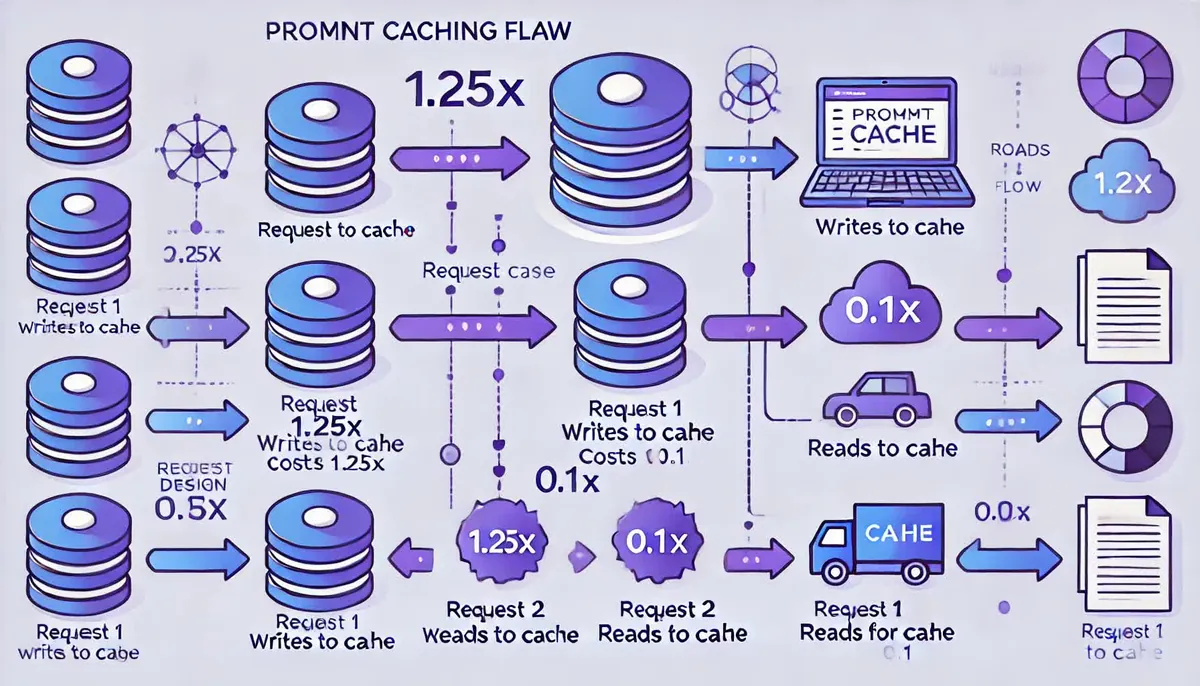
Prompt caching flow diagram showing cache write, cache hit, and expiration

Cache Pricing Breakdown#

OperationPrice per MTokMultiplier vs Base Input
Base input (no cache)$3.001.0×
5-minute cache write$3.751.25×
1-hour cache write$6.002.0×
Cache hit (read)$0.300.1×

Here's how it works:

  1. Cache write — The first request with a cacheable prefix pays a write premium (1.25× for 5-minute TTL, or 2.0× for 1-hour TTL).
  2. Cache hit — Subsequent requests that match the cached prefix pay only $0.30/MTok — a 90% discount on input tokens.
  3. Cache miss — If the cache expires or the prefix doesn't match, you pay the full write cost again.

Which Cache TTL Should You Choose?#

  • 5-minute cache ($3.75/MTok write): Best for bursty workloads — chatbots handling multiple concurrent users, real-time coding assistants, or any scenario where requests come in clusters.
  • 1-hour cache ($6.00/MTok write): Best for steady, continuous workloads — background processing pipelines, scheduled tasks, or applications with consistent traffic throughout the hour.

Break-Even Math#

The key question: How many cache hits do you need to break even on the cache write cost?

For 5-minute cache:

You break even after just 1 additional cache hit within the 5-minute window. If your cached prefix is 4,000 tokens and you make 2+ requests in 5 minutes, caching saves money.

For 1-hour cache:

You need 2 cache hits within the hour to break even. For any application making more than 2 requests per hour with the same prefix, the 1-hour cache pays for itself.

Caching Code Example (Python)#

For 1-hour caching, change the cache control type:

Caching Best Practices#

  • Put stable content first. System prompts, tool definitions, and few-shot examples should be at the beginning of your message — the cache matches from the start of the prefix.
  • Minimum cacheable length is 1,024 tokens for Sonnet models. Shorter prefixes won't be cached.
  • Monitor your cache hit rate. If it's below 50%, reconsider your caching strategy or switch TTL tiers.
  • Combine with conversation management. For multi-turn chats, cache the system prompt + tool definitions, and append new turns outside the cached prefix.

Batch API — 50% Off for Async Workloads#

If your workload doesn't need real-time responses, the Batch API cuts your costs in half:

ComponentStandard PriceBatch API PriceSavings
Input tokens$3.00/MTok$1.50/MTok50%
Output tokens$15.00/MTok$7.50/MTok50%

The Batch API processes requests asynchronously with a guaranteed completion window of 24 hours (though most batches finish much faster). It's ideal for:

  • Data processing and classification — Categorizing thousands of support tickets or documents.
  • Content generation — Generating product descriptions, summaries, or translations in bulk.
  • Evaluation and testing — Running model evaluations across large test sets.
  • Embeddings and analysis — Processing large datasets where latency doesn't matter.

Batch API Example#

Pro tip: You can combine Batch API with prompt caching for even deeper savings. Cached input tokens in a batch cost just **0.15/MTok(500.15/MTok** (50% off the 0.30 cache hit price).


Data Residency — US-Only Processing#

For organizations with data sovereignty requirements, Anthropic offers a US data residency option that guarantees all processing occurs within the United States.

ComponentStandardUS Data Residency
Input tokens$3.00/MTok$3.30/MTok
Output tokens$15.00/MTok$16.50/MTok
Multiplier1.0×1.1×

The 10% premium applies to all token types, including cached tokens. This is primarily relevant for healthcare, finance, and government applications subject to US data handling regulations.


Crazyrouter Pricing — Save 45% on Every Request#

Here's where it gets interesting. Crazyrouter offers Claude Sonnet 4.5 at 55% of Anthropic's official pricing — a flat 45% discount on both input and output tokens.
Cost comparison chart showing Anthropic direct vs Crazyrouter pricing

ComponentAnthropic DirectCrazyrouterYou Save
Input tokens$3.00/MTok$1.65/MTok45%
Output tokens$15.00/MTok$8.25/MTok45%

Crazyrouter is a unified API gateway that's fully compatible with both the OpenAI SDK format and Anthropic's native SDK. You switch by changing your base URL — no code rewrite needed.

OpenAI-Compatible SDK (Python)#

Anthropic-Native SDK (Python)#

cURL#

Why Crazyrouter?#

  • No code changes — Drop-in replacement. Change the base URL and API key, keep everything else.
  • OpenAI-compatible — Works with any tool or framework that supports the OpenAI API format (LangChain, LlamaIndex, Vercel AI SDK, etc.).
  • All Claude models — Access Opus, Sonnet, and Haiku across all generations.
  • Streaming support — Full SSE streaming, function calling, and tool use.
  • Pay-as-you-go — No minimums, no commitments. Top up and start saving.

Real-World Cost Comparison — 3 Scenarios#

Let's put real numbers to three common use cases and compare Anthropic direct pricing vs. Crazyrouter.

Scenario 1: Customer Support Chatbot#

A mid-size SaaS company handling 5,000 conversations/day, averaging 4 turns each.

MetricValue
Requests/day20,000
Avg input tokens/request3,500 (with system prompt + history)
Avg output tokens/request800
Cache hit rate70% (system prompt cached)
Cacheable prefix2,000 tokens

Monthly cost (Anthropic direct):

Monthly cost (Crazyrouter at 45% off):

Scenario 2: Code Review Pipeline (Batch API)#

A development team running nightly batch code reviews on 500 pull requests.

MetricValue
Batch requests/night500
Avg input tokens/request8,000 (code + context)
Avg output tokens/request2,000 (detailed review)
FrequencyNightly (30×/month)

Monthly cost (Anthropic Batch API):

Monthly cost (Crazyrouter, standard API at 45% off):

In this case, Anthropic's Batch API is slightly cheaper (405vs405 vs 445.50) — but Crazyrouter gives you real-time responses instead of waiting up to 24 hours. If latency matters at all, Crazyrouter wins.

Scenario 3: High-Volume Content Generation#

A content platform generating 2,000 articles/day with heavy system prompts and few-shot examples.

MetricValue
Requests/day2,000
Avg input tokens/request12,000 (system + examples + instructions)
Avg output tokens/request3,000 (full article)
Cache hit rate90% (stable system prompt)
Cacheable prefix8,000 tokens

Monthly cost (Anthropic direct with caching):

Monthly cost (Crazyrouter at 45% off):


Claude Sonnet 4.5 vs Sonnet 4.6 — Which Should You Use?#

Here's the straightforward comparison:

AspectSonnet 4.5Sonnet 4.6
Model IDclaude-sonnet-4-5-20250929claude-sonnet-4-6-20250514
Input price$3.00/MTok$3.00/MTok
Output price$15.00/MTok$15.00/MTok
Cache pricingSameSame
Context window200K tokens200K tokens
Max output16,384 tokens16,384 tokens
StatusPrevious generationCurrent generation

The pricing is identical. Sonnet 4.6 is the newer model with improved reasoning, better instruction following, and reduced hallucination rates. Unless you have a specific regression concern or a production pipeline that's been extensively validated on 4.5, we recommend upgrading to Sonnet 4.6.

The migration is a one-line change:

Both models are available on Crazyrouter at the same 45% discount.


Key Takeaways#

  1. Base pricing is 3/3/15 per MTok (input/output). Output tokens are 5× more expensive — optimize response length first.

  2. Prompt caching is a must for any production workload. The 5-minute cache breaks even after just 1 hit; the 1-hour cache after 2 hits. At a 70%+ cache hit rate, you're saving 60–80% on input token costs.

  3. Batch API saves 50% but adds latency (up to 24 hours). Use it for offline processing where real-time responses aren't needed.

  4. Data residency adds 10% — only pay this if you have a regulatory requirement.

  5. Crazyrouter saves 45% across the board with zero code changes. For a typical production workload, that's 5,0005,000–60,000+ in annual savings.

  6. Sonnet 4.5 and 4.6 are priced identically. Upgrade to 4.6 for better performance at no extra cost.


Start Saving Today#

Getting started with Crazyrouter takes about 2 minutes:

  1. Sign up at crazyrouter.com
  2. Get your API key from the dashboard
  3. Change your base URL to https://crazyrouter.com/v1
  4. That's it. Every Claude API call now costs 45% less.

No contracts. No minimums. No vendor lock-in. Just cheaper tokens.

Get your API key at crazyrouter.com


Disclaimer: Pricing information is accurate as of April 27, 2026. Anthropic may update their pricing at any time. Always verify current rates on Anthropic's official pricing page and Crazyrouter's pricing page. The cost scenarios presented are estimates based on typical usage patterns and may vary depending on your specific implementation. Crazyrouter is an independent API gateway and is not affiliated with Anthropic.