





Everything before this tool was real art. Everything after it is cheating.
From Seth Godin who appears to be making a case for including AI in the creative process:
Real artists do all the painting themselves, not like Rembrandt
Real artists use brushes, not technology like Cartier-Bresson
Real writers write it out by hand, not like Jack Kerouac
Real musicians record it live, not like Steely Dan
Real singers sing without processing, not like Kanye West and Daft Punk
Real directors do the prep without AI, not like Martin Scorsese
It turns out that real artists have always used technology. What they have in common is intent, responsibility, and the ability to create a feeling in the audience.
“Here, I made this.”
- Real artists…
I had related questions during a recent discussion about using AI. It’s been common for me to start with a need, which leads to an idea, which leads to a written brief. I then hand that brief to a designer, artist, photographer, illustrator, or other creative professional. I take ownership of the result, while still giving credit where credit is due.
What changes if, instead of involving another person, I use a computer? If I need new headshots, is it acceptable to use software to take an existing photo and make it suitable for that purpose, or must I hire a photographer every single time?
At what point does using a tool become fundamentally different from directing another person to help create the result?
Rainy day thoughts
For me the day starts with quiet and coffee. Time to prepare slowly for what's ahead. It takes about 5 minutes to make good coffee, a little longer to open the book I'm learning from - the second habit of the day, reading to learn. Lately the house has been noisy and so has my mind. I have no patience for good coffee, and it takes much longer to open the book. I read but I'm not reading. I'm not working, and yet distraction finds me anyway. My mind races, concentration is fleeting, and nothing seems to work. It's likely burnout, which has been a fairly consistent companion these past few years.
I find habit stacking effective - a term that may have appeared in Atomic Habits but was surely an idea long before the book. Starting one habit, then another, then another, until you fill a period of time with things you need or want to do - it works far more effectively for me than a rigid schedule. Until it doesn't. Until you're sitting in front of a piece of writing you're supposed to finish and you simply can't.
I thought I'd shake up the habits - put exercise first. Running is like meditation for me, good training for the mind. But my resistance to running is stronger than almost any other activity. I rarely want to start, but I always love finishing. Today I failed, and found myself doing things of little importance just so I wouldn't feel guilty for doing nothing.
All my life I have found creative work to be full of struggle, full of a desire for flow states that last weeks on end - though at this point I would settle for an hour a day. Four would be better.
Canada Clark MacLeod Canada Clark MacLeod
Mobs
Some quick and disjointed thoughts.
I am sitting here looking out my dining room window at blue skies and swaying trees, devoid of any interest in writing. I need to write — that's the rule. Maybe I should abandon the story I can't seem to progress on and return to an old trope. At least something will get done. My lack of desire might also have something to do with a brief flirtation with the news via social media.
It's possible, I think, to go through your life without meeting someone truly angry. There are plenty of grumps — I am one of them — but I can't recall anyone in my life who stayed angry for more than a minute. My mother might have been, on account of my father. My father complained a lot, which could be construed as anger — he blamed immigrants for his own failings, railed against the rich, which was deserved and still is. There were people you'd have a beer with who held weird theories, or made off-colour remarks about a person or group, but it never became all-consuming. You didn't pay them much credence beyond a laugh.
Now it seems I can't wake up without some angry mob making problems for the rest of us, who mostly just want to live and laugh and see change built on some kind of shared reality. These mobs appear consumed by an anger that nothing will extinguish — not even victory. It's like a game with no consequences and no end. No strategy, no empathy, no second-order thinking. Every decision driven by emotion and the identity of the in-group. I can sympathize, to a point. I am influenced by social media too, but I recognize it as such, take a breath, and seek out a range of sources before forming an opinion. I would never make a serious decision based on a Facebook post, or on a speech by someone assuring the audience that he has their best interests at heart.
I'm oversimplifying. But I had hoped we were done with this — that the mob was largely an American problem, something containable, something we could observe from a distance. We have our local version: people protesting an "Asian Invasion," led by a once-prominent Islander who has gone badly off the rails. They have little effect. Their loud remarks are drowned out by the quiet of the reasonable. But the new mob out west — festering for years, fueled by American money and the interests of the few who know how to light the match — will be much harder to stop.
Maybe we should all just tell them to sit down and let the rest of us get on with our lives.
Authenticity
I am reading Creative Authenticity by Ian Roberts. I’ve only just started, so I haven’t made up my mind about it yet — perhaps it will improve as I wade deeper. One quote from the first chapter on searching for beauty aligns with my thinking of late:
“Beauty doesn’t flourish in a culture that honors the bottom line above all. How can a significant architecture result when a corporation’s quarterly report, reflecting the sensible use of resources to build a new factory-a metal rectangle one-thousand feet by four-hundred feet by twenty feet—must first and foremost satisfy shareholders? It’s unthinkable that shareholders, instead of being concerned only with profit and performance, would be proud that their corporation built the most stunning corporate headquarters in fifty years in downtown Seattle or Minneapolis at the expense of their shares’ appreciation. Corporations serve a specific function, but because of how all-pervasive they’ve become, with their short-term profit mentality, often aided by government complicity, we have an urban, rural and industrial environment that is not just ugly-it’s killing us.
This point has a lot to do with the current art world, and with our own impatience when we make and view art. Beauty seems to need quiet and take patience, both to create it and to experience it.”
This could be read as commentary on 99% of all architecture on Prince Edward Island — a sea of cheaply designed wooden and metal boxes. But the rest of the chapter turns toward something more personal: the need for time and patience to create something worth looking at, or in my case, worth reading.
Time and patience are in short supply in my work. I have been, unfortunately, influenced by those who view the world through the lens of a spreadsheet.
Life Clark MacLeod Life Clark MacLeod
21k
Sheryl and I drove to Fredericton on Saturday so I could run the marathon yesterday. It’s a long drive — four hours feels like a journey these days — but we arrived with plenty of time to walk the whole downtown. Finding somewhere to eat proved difficult, and we ultimately ended up at some nondescript pub where I ate something purposefully bland. I’ve been having trouble with my stomach, and it was the kind of meal I hope to forget by tomorrow.
I find it hard not to be critical of any performance. But I ran the 21k and addressed all my worries - I didn’t have to stop, didn’t feel pain, kept my ego in check. Run with the body you have today, not the one you had ten years ago. I managed to sprint the final three kilometres.
I found a race buddy around the 7k mark and stuck with her for most of the race. She was running slightly slower than I wanted, which gave me discipline I might not have found on my own. Around the final 5k mark I came up beside her, thanked her for being a great pacer, and pushed on. It was raining, cold, the trail portions muddy and slippery. The final 1.5 kilometres were miserable - strong winds, heavy rain - and it was my favourite part.
I’m giving my Achilles a rest today. Tomorrow I start training for a Hyrox competition in July. Some of those movements I can hardly perform, so I have a great deal of work to do.
Life Clark MacLeod Life Clark MacLeod
Frog hops
I was reminded of public school gym class last week. There is not a lot I remember about it other than emotion — the feeling of embarrassment for not earning an award, like the Standard of Excellence or some such. Bronze, silver, and gold as well, I think. This was a completely different age, where rope climbing and a general lack of accommodation for different abilities were simply the norm. Rope climbing was not something I could do without considerable extra effort, and the only instructional method available was beratement.
Many movements from childhood gym class are still genuinely useful, and as a middle-aged adult, rather challenging to sustain for long. This week we did something akin to frog hops — dropping into a deep squat, close to the ground, and while holding a wall ball, jumping as far forward as you can. You repeat this across the length of the gym and back, then do it again as many times as the workout calls for. I am absolutely certain I looked ridiculous. But everyone laughed, including the coach, at our shared embarrassment. No hiding from it, just the shared fun of looking silly in service of something good. Everyone attempts it from wherever they are — some struggle with the deep squat, some lack power under load, and some, like the coach, are just plain excellent.
Back On After A Bit
There are a number of adjustments we’ve made since moving home, back to the old country. I think of PEI the way characters in films or books talk about returning to some small town in Italy or a quiet corner of Europe after decades living in what was once considered modern — America.
PEI is quaint, quiet, and slow. Which can be nice.
I know I’ve written somewhere about how the medical system fails patients and professionals alike, and how entrenched the bureaucracy and fiefdoms are that resist any change. The prevailing attitude isn’t how can we make this work — it’s simply no. Not just PEI, but all across Atlantic Canada. We are the have-nots because, on some level, that’s how we want to be. Unless, of course, we’re talking about a Costco or a possible fast food franchise. Bad food, apparently, spurs us to collaboration.
The electric utility and the medical system are two common complaints here, and neither has changed meaningfully in the eight years I’ve been back.
—-
There is a large crew of Maritime Electric workers up the street, beginning what looks like necessary work. A pole has developed a lean that suggests it’s eyeing my neighbour’s roof. That pole is also surrounded by his prized garden, which the crew are unceremoniously stomping through.
Maritime Electric has a habit — if not a policy — of showing up and doing work without any notice. Imagine coming home to find your prized fruit trees cut to the stump. No warning, no negotiation, just stumps to dig up at your own cost and no more fruit. That happened.
The last time they were on our street I hadn’t noticed them at first. The power went out while I was working and I went around the house to see what was going on. It’s an old house with only a 100-amp panel — lots could happen. It wasn’t the house. It was Maritime Electric doing servicing. Back on after a bit, one of the workers said with a smile, likely puzzled by my expression. I mean, it’s not like people need electricity to work from home in 2026.
Imagine moving here thinking you could work from the seaside, running your company remotely, only to discover that during a critical call you have no power. The romance of that old seaside house fades when you realize the utility is run like a thrift store — you just never know what you’re going to get.
My daughter Catriona works from home as an interpreter. Her calls range from someone charged with terrorism in the UK to someone giving birth in the US. Imagine losing power and internet in the middle of either one.
This is why I am constantly buying batteries — so we can stay connected to the outside world while Maritime Electric mismanages the grid.
I know comparison is the thief of joy, but I can’t help it. I lived overseas for over twenty years. I can remember two power outages in that time. One was after the earthquake of a lifetime, 921, and it was so strong a whole town disappeared. We were in the dark all night but by the time the sun came up power was back on and life returned to normal. The other was a planned annual outage in the science park — one day to do all maintenance for a district of 300,000 people.
Maritime Electric can’t manage a sticky note on your door the day before.
Saturday morning cartoons
I haven't quite made up my mind about AI. I am influenced by many who think it's a greater scourge on our lives than any technology previously introduced, and I'm not entirely sure they're wrong. Working alone, though, I do find it has some uses — mostly in being able to run ideas past it, particularly when it reminds me to suspend my desire to tell partners they are wrong in ways that don't actually help.
For instance, it talked me out of sending this: This reads like a Nickelodeon bumper from 2003 and doesn't fit our register at all. Our voice isn't peppy or interruptive; it's warm and steady.
I had other comments too — about tone, about the manner of some messaging around requirements — all of which I thought felt satisfying to write but wouldn't have moved anything forward, and would likely have made things worse.
In that sense, AI can be like a colleague who reminds you of the stoic values you last discussed over coffee, then leaves you to make the decisions yourself — saving you from the mistakes you most want to make.
Life Clark MacLeod Life Clark MacLeod
Memories
I have had the pleasure of interacting with a great many writers these past couple of years, many of whom are interested in memoir. Writing, I have seen, is a creative pursuit that people put off most of their lives until they reach an age where their schedules open up and allow them to work on things that have no relation to family or work responsibilities.
Memoir is not something I have a great deal of interest in, nor even a slight bit of talent for. If you are to write about the events of your life, one of the first things you need is not just something to write about but the ability to actually remember it. I don't know how others do it — it's not that they've necessarily led more interesting lives than I have, though that's a real possibility, but that they can remember.
On Saturday I attended a local writing meetup. I haven't been in months — my critique group keeps me busy and I seldom have a free afternoon. One of the members, a woman in her 90s, shared a story she'd gotten up in the middle of the night to write. Handwritten, completely unedited, which I find precious. It was from her childhood, or at least from times long since past. Well structured, meaningful, and with some revision would be an excellent addition to a larger body of work. What amazes me is not the quality of her writing so much as the fact that she could remember any of it at all — the names, the location, the food that was eaten, all of it in detail.
My mother passed nine years ago this month. I flew home from China to spend her last couple of months with her while she waited in palliative care. I have pictures — I took many — and a general sense of that time, but not a lot of detail. The pictures in my mind are fading. I don't remember much of our time together before that either, which was limited because I lived a 24-hour plane ride away.
The same with my kids. I can't remember our life together with any real vividness. I remember some things, and I can tell you about them, but how much of the imagery in my mind is actually from the tens of thousands of photographs I took? The picture of Camren planting rice - I was there. Catriona reading at Ink Café, a pot of tea in front of her. Do I remember the events or the photographs? I can't tell, which I find incredibly annoying — wishing I could somehow go back and read to them in bed one more time.
Writing Clark MacLeod Writing Clark MacLeod
Mostly About Groceries
I'm reading On Writing And Failure by Stephen Marche — it's a book you could finish over a couple of cups of coffee if you're so inclined. One of its benefits is that it was published in 2023 — newer than most books on writing or the creative life I've read.
Even only two-thirds of the way through, during my morning coffee, I find it capable of giving new perspective on what I'm so fortunate to fill my days with — a mediocre writer making a living writing.
The fact that he can fill a book about failure and still keep you reading says something about his ability to write.
It reminds me of the past too. I swear half of my music school education focused on the fact that you can't make a living playing music. Most people can't. DJs, MIDI, changing tastes — all of it supposedly changed live music for the worse. That was the mantra. Now AI is the demon. I was surrounded by smart, often extremely talented artists, but I can't think of one who is making a good living playing jazz clubs, which was one of many dreams. A few made it to orchestras. Others had careers in pit orchestras. The pit was a dream, but the reality was mind-numbing. It was mostly about the relief of being able to shop for groceries and pay rent. And having the respect — or envy — of others who were working odd jobs to cover theirs.
Most people from those days became teachers, or wandered into a myriad of other professions. One of Canada's most talented jazz flutists became an accountant. That relegates your art to the realm of hobby — and being called a hobbyist feels like an insult when you started out calling yourself an artist.
I've never stayed in one discipline too long, which — if I wanted to elevate my status to a high level of snobbery — would make me a "multi-disciplinary artist" or some other such term. One thing I'm sure of: the economics of being a "creative" require that you become an expert in marketing and entrepreneurship, essentially selling your soul for an ever-changing business plan. As Stephen Marche puts it, "The principal question of the life of the mind has become how to make a living at the life of the mind. It is unfathomably anxiety-making and boring."
It is.
True story
From an email I sent out earlier.
We live in an old, rickety house on a small lot - about seven-tenths of an acre - up on a hill by the Montague River in Brudenell. The house and property are over 125 years old. Trees on one side, the river and trees on the other.
Last year, before the snow set in, a couple of trees came down in high winds. One landed across our red shed. Another old tree on the abatement - the strip separating our property from the neighbours' - leaned toward the house at an angle that felt threatening. So we hired a man with a chainsaw. He came, he cut, he left without saying much. But it seems he found something.
When I dig holes to plant shrubs or trees, I find what people buried here before us - old bottles, china, nails, long coils of wire. I don't know the full history of this place, but whoever lived here had a habit of burying things they no longer wanted.
When we were raking this spring, we found a stone near where the man had cleared the fallen tree. We didn’t look closely. The snow had hidden it all winter, and we were tired, and sometimes you just don’t want to examine what winter returns to you.
Yesterday after dinner I went back. It's a fine granite tombstone. No name. No inscription. But heavy - around 100 pounds when I tested it, which I had to do, because you do. The man must have uncovered it by the tree and moved it to the lawn without mentioning it, the way people sometimes move things they'd rather not be responsible for.
I went back to the shallow hole near the stump - the earth still disturbed from where he'd worked.
I wasn't wearing gloves, so I dug carefully around the hole with my hands and pulled out part of a rotten rectangular box. Gray stone was packed around it and on top - arranged, not scattered. The stone isn't native. PEI doesn't produce rock like this. Someone brought it from away, and no one in this neighbourhood puts fancy stone around their yard for decoration.
The hole exhaled when I dug. Rot and cold. Maybe something else.
To the right of the first box, there were more of them.
I haven't dug deeper. I haven't touched the others. Yet.
Last night I told my daughter not to open her bedroom window. And if anyone knocked - anyone at all, no matter how familiar the voice - to leave it closed.
She asked why.
I told her the ground had given something up,
and I wasn't sure yet
what it expected
in return.
I made this
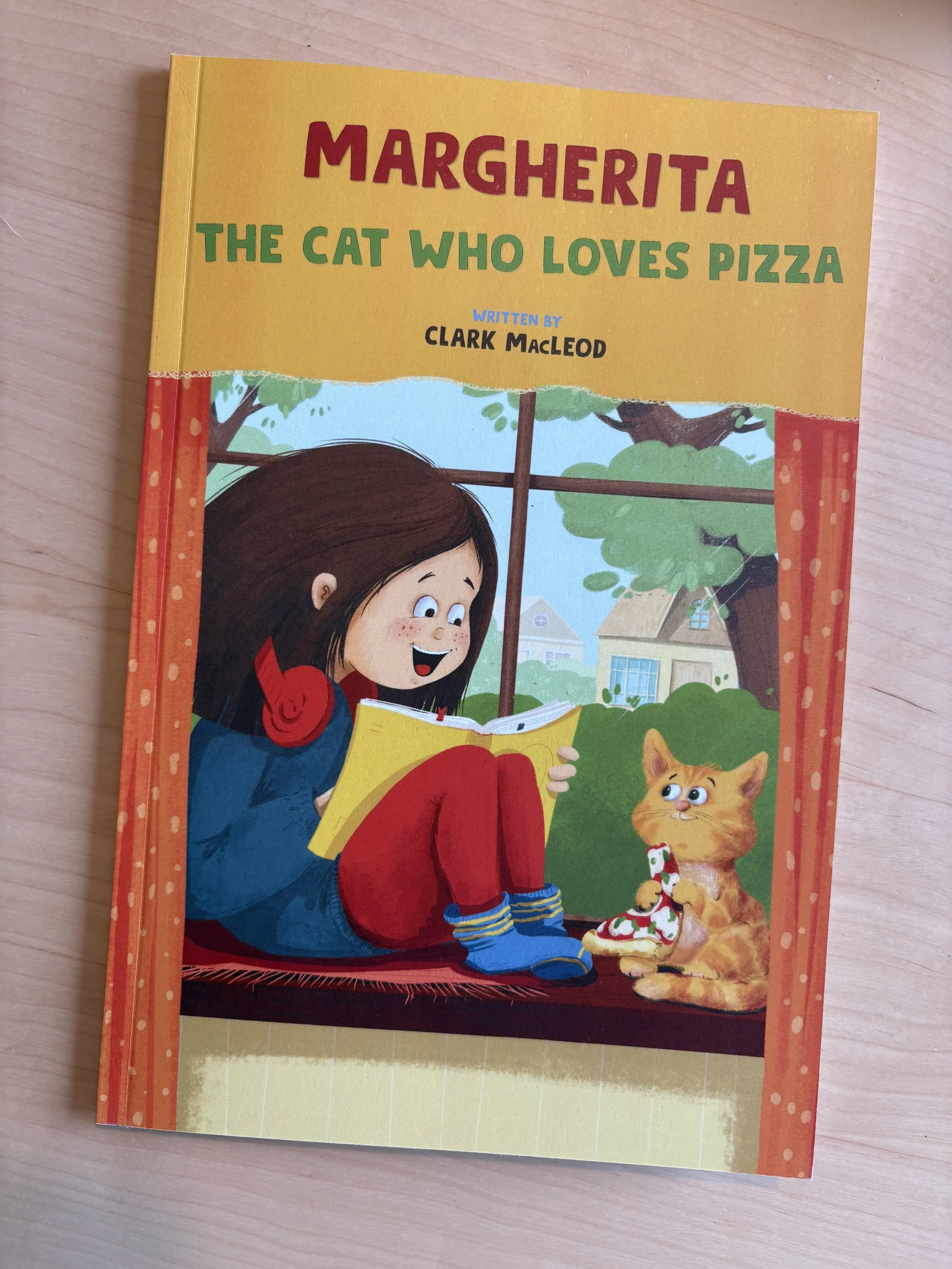
An early proof arrived in the mail this week from England, where it was printed. There are many changes to make, including the cover. The inside reminds me of my very brief career designing a magazine—it’s clean and very magazine-like. Probably not suitable for kids, but it’s easy to tell that I made it.
After fixing typos and making some type adjustments, I’ll order another proof and then a limited run to gauge interest. I have a few more books I plan to self-publish this year, and maybe I’ll start querying in a year or so.
Nice to finally escape procrastination and make some progress.
Life Clark MacLeod Life Clark MacLeod
Soreness
Soreness is a tipping point. Constant soreness leads to injury, and at my age, there's no question more recovery time is needed — whether I like it or not.
Running on a treadmill — this very expensive machine that sits adjacent to my desk in what is an extremely messy office — is not the same as running on pavement. That would seem obvious to most, but it wasn't to me. I realized quickly that staring at an electrical panel is not nearly as enjoyable as running through the countryside, but that's all mental, not physical. I run on it like a weeble wobble toy, though I don't fall down, which is an indication of really underdeveloped supporting musculature. It's improved.
I didn't really understand the difference until we had a couple days of actual spring-like weather and I ran out the road toward Lower Montague, past the orchard, toward the house on the hill that sits at a juncture in the road. In total it was only 9k — short of what I was supposed to run. It felt laboured — which the scale says I am. So I did it again the next day and added a workout at the gym. It's called Express. I call it CrossFit-lite. That evening, I was sore as hell and had to take the next day off. My glutes haven't been this sore since I got a massage from a masseuse in Thailand who must have been 70 and had the strongest thumbs of any person imaginable.
I was planning to run the Fredericton marathon in a month, then settled on the half. Even that distance is giving me pause. Will I be able to walk afterwards? Or perhaps since it's my glutes, will I be able to sit for the long drive home?
Clark MacLeod Clark MacLeod
Soon
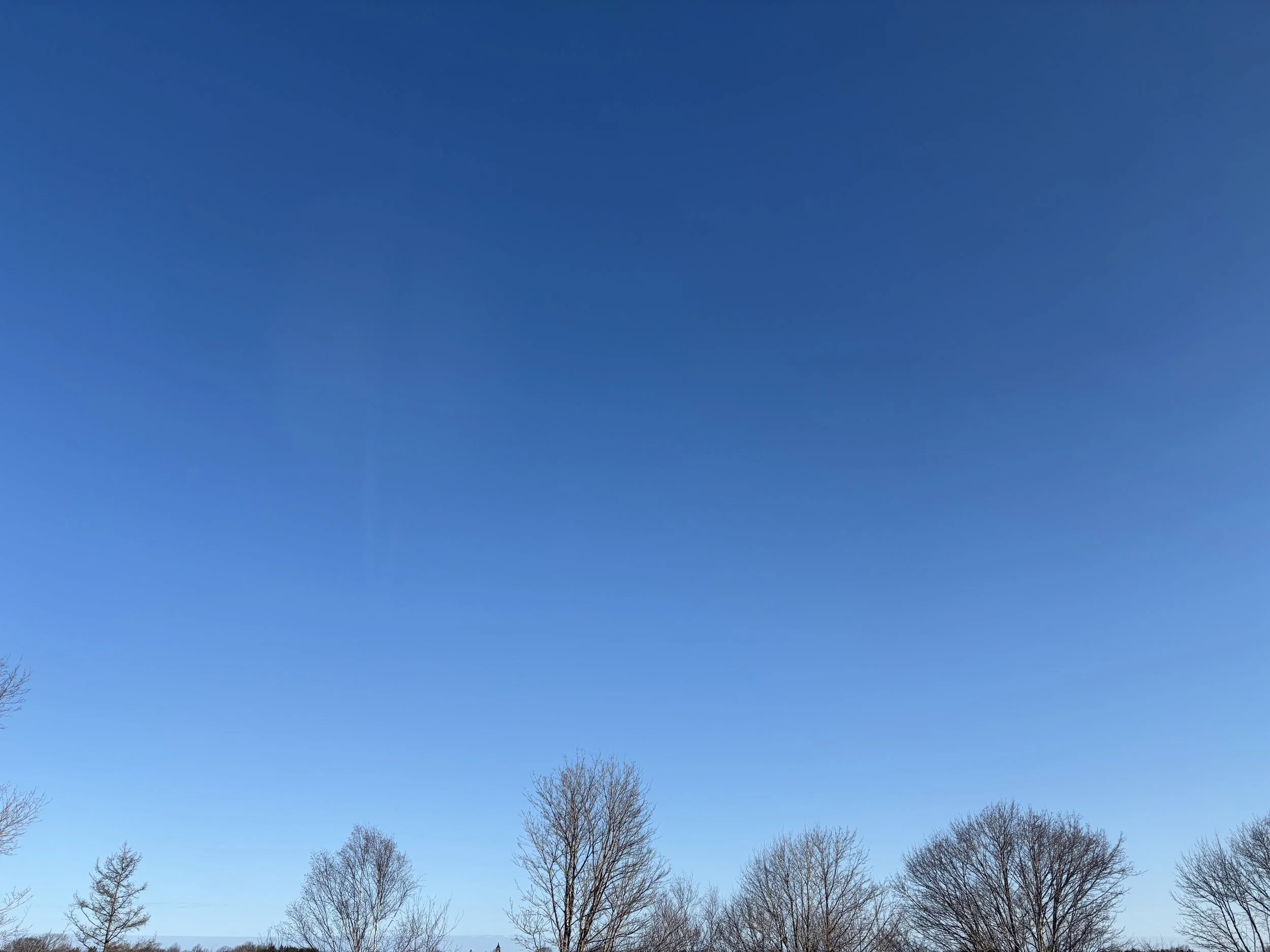
It's a beautiful day. The sky is a wonderful clear blue, the trees stark against it, not yet ready to bud. The air is crisp and clean. I can hear a few small birds being noisy. It almost feels like we are on the cusp of our yard reawakening - with a blink it will be all green again.
Slow work
I finished, or mostly finished, Robert Caro’s book Working. It came recommended as a book on writing craft, and while there turned out to be little of that in the sense of an author telling you to do this or that, one point is repeated endlessly by example: good work takes time.
Caro would spend a week trying to experience what his protagonist experienced, so that a few sentences would be as accurate as possible. He would spend years working full-time before releasing his books on Robert Moses or Lyndon Johnson.
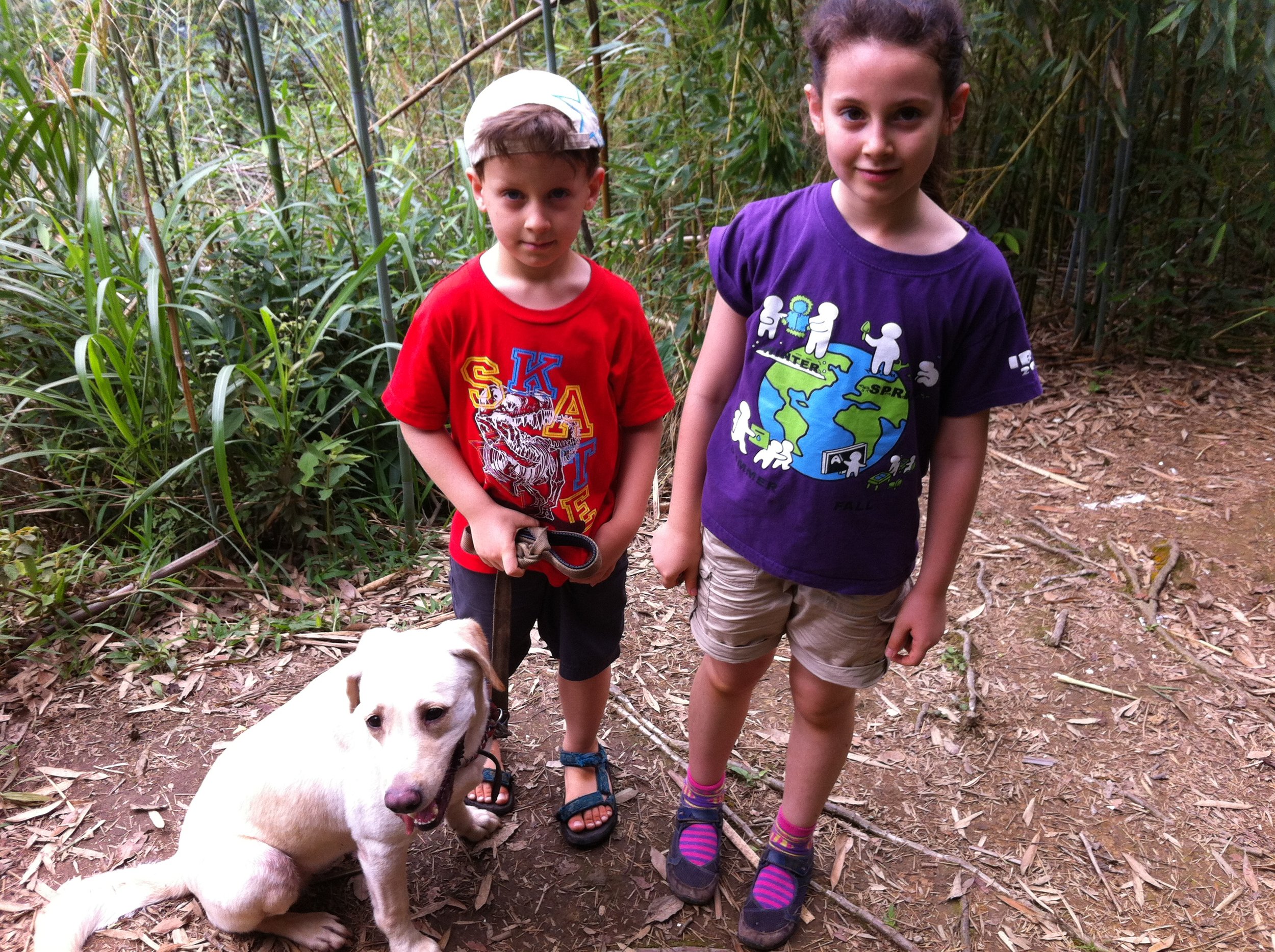
Many years ago, one of my main creative outlets was photography. Street photography, as I think it was called then. I spent my weekends exploring the back streets of Hsinchu, and later Bangkok, judiciously taking photos with one of the many Lomos or SLR cameras I had at the time. Finding interesting subjects wasn’t difficult, but because each picture had value, unlike a photo taken on an iPhone, it might take me a full weekend to fill a roll of film. Then I would take that roll to the developer that bordered the East Gate in downtown Hsinchu — he would digitize them too, put the copies on a CD. Before that, I used a scanner at work. Processing wasn’t instant; I think it took a couple of weeks. The developer had a lot of customers. Afterward, I would review what I’d taken, and hopefully a few shots out of that roll would turn out okay. I would share them on a blog I’d built myself. Eventually that blog ran on Movable Type, which saved a great deal of time, though sometimes I still built slideshows by hand — designing the layout, the transitions — another vehicle of self-expression. Later came Flickr, and Instagram after that, forever changing how I shared photos. With the iPhone, everything became instantaneous, and I became addicted to filters that made my photos look like they’d been taken on a Lomo.
A lot has been lost in that process, not least the joy of the slow act of creation itself.
I no longer build my own websites, a practice that once took me a month or more to complete, even for something as simple as this blog. I moved to Squarespace because WordPress was rife with security issues and getting expensive. But mostly I just wanted it done. I wanted to hand Squarespace my font choices, my color palette, and what resembles a logo above, and be finished. It hasn’t worked out — there are mistakes everywhere. I lack patience, and time, because I am doing far more today, more busy things than deep things, than I ever did before.
I am trying to change. Every morning is the same, regardless of weekend or holiday. After a few other habits, I open this iPad to a white page and tell myself: write something. When it was just a sentence, or a short bit of microfiction, or a blog post, it worked well. Lately I’ve been trying to expand that time from a short stint to hours, and I am failing.
I sit in our dining room looking at the white screen, then out the window, then getting up to make toast I don’t need, then sitting down again. It used to work. Now it feels like my brain is broken.
On Monday, I wrote a particularly flat 700 words — the start of a children’s story. It was a mess, more of a mess than usual. I have deadlines, and I need to produce well over 10,000 words a week. Every week. So I put the draft into an AI agent that knows my work, and it transformed that flat, lifeless passage into something with life, almost instantaneously. And I hate that. It did what I couldn’t do, at least not on Monday. What would that passage have become if I had left it, or toiled over it all day, improving it rewrite by rewrite? Would the words carry the weight of that effort?
There is no joy in fast work. Yes, I am fortunate to have an imagination, I can tell stories, and I could sketch out a story guide, hand it to an AI assistant, and be done in thirty minutes. The joy comes not from the idea alone, but from putting in the work to bring it to life — from spending a week inside your protagonist’s experience so that one paragraph can breathe, can carry a sense of space and weight. Modern life pushes harder against this all the time. Much is lost when we remove toil and effort. Clearing obstacles has value. But quick is not better.
I think back to those Saturday mornings in Hsinchu, or the trips to Bangkok. Walking around with my camera bag, sweating in the heat, no map, just exploration — and eventually something would reveal itself. I wasn’t a great photographer. But it was me.
Brown
The snow has largely melted, but for a few stubborn piles here and there. It’s Prince Edward Island, so that means nothing. It could snow in June. Last weekend an incredible amount fell in a single afternoon, hardened overnight, and became a serious chore to move. Winter here doesn’t leave so much as it retreats.
I don’t like this time of year much. If I had my way, the calendar would go summer, fall, summer again. Spring earns its place mostly because it means growth, and summer is close behind.
Looking out the window, I see a lack of colour. Brown ground in need of work I didn’t get around to before the snow came. Trees that are nothing but spindly sticks against a flat sky.
And yet. By July, maybe August, I’ll be tired of it — the weeding, the hauling, the endless small tasks a garden invents for you. I know this about myself. But right now I’m looking forward to the sweat and the dirt, and the return of the raccoons and the birds and the snakes.
The skunks can stay away.
Good people
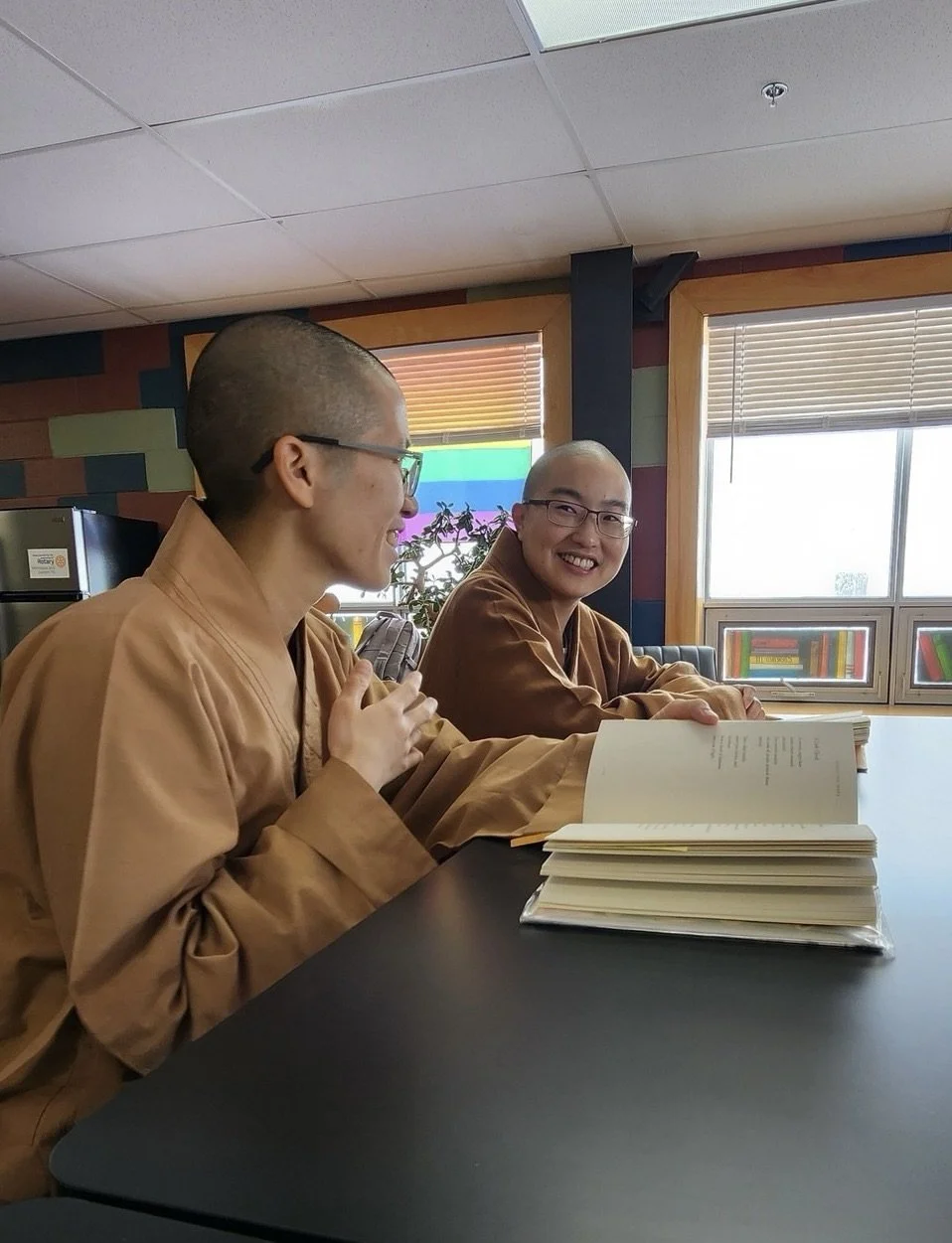
These are good people whose work generally goes unrecognized. Whenever I get the chance I listen to their thoughts, maybe share mine, but mostly listen. I always come away with a small feeling of hope, and some idea of how to be better in the world.
Writing Clark MacLeod Writing Clark MacLeod
Low Bar
Last year in workshop I related how I hated editing. Not just because rewriting a piece numerous times is hard, but because with each attempt at fixing things, something gets taken away. The paragraph loses its roughness, its edge, its imperfection. I see people rewriting whole novels multiple times and I just cringe.
That's one of the reasons I like writing for this blog. I'll open a white page on the iPad and just scribble down my thoughts — like I'm doing right now — and not worry about things. Sometimes I use Grammarly, but it's horrible for fiction, and maybe just horrible period. I tried AI, and at first it was heavy-handed and didn't save any time at all. Then it progressed, and with the right prompt became useable — but still far too perfect. Perfection is overrated. And I still haven't made up my mind about this tool anyway.
The post "Far Removed" I wrote about six times — not that you would notice — and each time I rewrote it and got suggestions to improve, it became far removed from the fragmented rant it started as. I was upset about the rampant killing, the state of the world, and people on the Island spending all their energy salivating over the possibility of a Costco.
Anyway, my editing skills are worse than my writing, which is a bit of a low bar.
Life Clark MacLeod Life Clark MacLeod
Far Removed
Perhaps it’s the images of children huddling in fear as bombs fall. Or the picture of a young boy mourning his sister in an elementary school that was likely deliberately targeted. Lately I find my sense of calm replaced with grief.
Each time I make the mistake of checking the news it’s the same uninformed nonsense. The same twisted worldview. Endless chatter about lack of strategy, stupid decisions, effects on the economy, rising gas prices, how the women of Iran will be free — after they dig themselves and their children out of the rubble — how superior the American war machine is. War as sports. Everyone is an expert, except those running the show.
All I can think about are children with vacant stares. Mothers pulling their kids close as another missile lands nearby. You’d think I’d be immune to it by now, after Ukraine and countless other places.
On the Island we are far removed from all of this. We talk about Costco. A Taco Bell. A few other chains coming to town. Each dollar sent back to corporate headquarters. Each tax paid quietly upstream — somewhere near the end of the line where the bombs get made.
I mentioned previously we received emails from families in Iran. They were curious about science. Wanted shoutouts for their kids on the show. Had story ideas they hoped might be written. They were just families.
I still think of them often.