

惯性聚合 高效追踪和阅读你感兴趣的博客、新闻、科技资讯
阅读原文 在惯性聚合中打开

推荐订阅源

人人都是产品经理
人人都是产品经理
Stack Overflow Blog
Stack Overflow Blog
L
LINUX DO - 最新话题
Google Online Security Blog
Schneier on Security
Spread Privacy
Spread Privacy
www.infosecurity-magazine.com
雷峰网
雷峰网
Google DeepMind News
Microsoft Azure Blog
IT之家
IT之家
V
Vulnerabilities – Threatpost
K
Kaspersky official blog
S
Schneier on Security
B
Blog
The Register - Security
SecWiki News
SecWiki News
Hacker News: Ask HN
Hacker News: Ask HN
cs.AI updates on arXiv.org
S
Security Affairs
T
The Blog of Author Tim Ferriss
G
Google Developers Blog
T
Tenable Blog
P
Proofpoint News Feed
Apple Machine Learning Research
D
DataBreaches.Net
S
Secure Thoughts
Security Latest
Security Latest
H
Heimdal Security Blog
The Hacker News
The Hacker News
O
OpenAI News
AWS News Blog
AWS News Blog
量子位
Exploit-DB.com RSS Feed
腾讯CDC
U
Unit 42
L
Lohrmann on Cybersecurity
cs.CL updates on arXiv.org
L
LangChain Blog
阮一峰的网络日志
阮一峰的网络日志
T
The Exploit Database - CXSecurity.com
NISL@THU
NISL@THU
cs.CV updates on arXiv.org
Application and Cybersecurity Blog
Hugging Face - Blog
Hugging Face - Blog
The Last Watchdog
The Last Watchdog
Recorded Future
Recorded Future
V2EX - 技术
V2EX - 技术
爱范儿
爱范儿
F
Full Disclosure

Ye Olde Blogroll — Firehose

kottke.org Outside My Window | A Blog of Birds & Nature with Kate St. John Via Negativa The Wallflower Digest baty.net Miskatonic University Press | William Denton Transactions with Beauty Britney Winthrope — Personal blog Z1NZ0L1N Amerpie by Lou Plummer 75CentralPhotography Home :: Sacha Chua Blog – Harold Jarche Doug Jones Tom Van Winkle's Return to Gaming Adactio: Jeremy Keith ooh.directory: a place to find good blogs that interest you Sal's whygodwhy – idk! fine! whatever! who cares! shut up! uncountable thoughts Murmurs Dr Robert N. Winter Who's the Real Loser? Shady Characters Ludicity Notes Without a Thesis Robin Monks - Technologist, AI/ML, Healthtech David Smith, Independent iOS Developer Homepage - blakewatson.com Ploum.net Oatmeal Midnight Reading oh, hey Brian | Brian Bennett blog 2026 | baccyflap.com - a delicate blend of bakelite and fear Our Adventures in Japan Jack's Space | Everything happens for the best Matt Lakeman jzhao.xyz Home - Stephanie Stimac's Blog マリウス Gingerly Winter White blast-o-rama. Quiet System - sink on uwu SchwarzTech Home ophanim's chariot Navendu Pottekkat - The Open Source Absolutist …time is what you make of it… Ron Seems Sentient Stuffed Crocodile Notes Sympolymathesy, by Chris Krycho Hosentaschenblog Charlie's Diary meyerweb.com Paul Johnson Refugio Norte linkedlist → bits and bytes about the Web New Ideas Blog - Gustavo Ribeiro Marius Masalar Mi blog Domain registered at WHC.ca Tyler Hellard - Pop Loser cedmax Jean Kapsa https://www.feadin.eu/en/ Garbage Collector Brian DeVries Grant Petersen's Blog The Artist’s Notebook Dan Cohen – Vice Provost, Dean, and Professor at Northeastern University 12XU | Verspannungsmusik! denisdefreyne.com Welcome | Chris Smaje Alex – Le site Internet d'Alex Sirac. cultural snow fLaMEd fury homepage A Shroud of Thoughts Ryan Reid Illustration + Design Don't Worry About the Vase Amy Goodchild Songs on the Security of Networks Protesilaos, also known as “Prot” GitHub - uxai/non-profit-bloggers: A repository of blogs by bloggers who blog for the joy of writing. 👋 Hi! Joe Van Cleave's Blog Amit Gawande Paul's Beer & Travel Blog Steve Best West Coast Stat Views (on Observational Epidemiology and more) Darknet Diaries – True stories from the dark side of the Internet. SEAN BONNER Artist, Instructor, using only Free/Libre and Open-Source software since 2009. Along the Ray Chris Aldrich | BoffoSocko 印记 | Live a life you will remember. Herman's blog
The True Expense Of Nature
by Brian Schrader · 2026-04-04 · via Ye Olde Blogroll — Firehose

It's Saturday morning, and you have no plans. Perhaps your schedule happened to line up that way, perhaps the kids are gone, or maybe it's just luck. Regardless, it's glorious. You bask in the glow of a lazy morning while you decide just how you're going to spend today. In your mind you go over different ideas, considering each and its consequences.

You could go to the beach! No, too much effort. You could stay in and read a book, but it's a nice day. You could read outside. Perhaps though it's better to go for a long walk first, grab a coffee maybe? You need to grab some things at the store, and that's on the way. Eventually you arrive at a plan: walk to get coffee, read for a while at the café, then stop by the store on the way home! An excellent plan—efficient and relaxing!

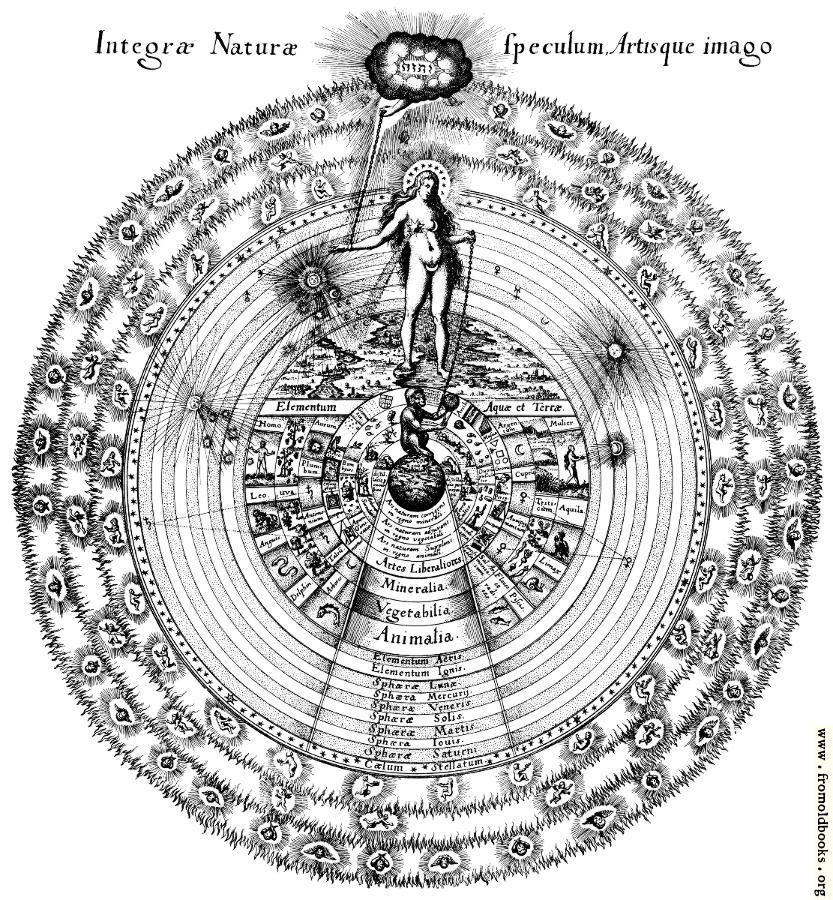
What have you just done? How did you arrive at this decision? There were so many variables, a nearly infinite possibility space, yet you managed to make do. Perhaps Nature itself is not so dissimilar.

A Field Guide To Learning

Let's say you're someone who wants to learn about an academic discipline. Perhaps advanced Physics, Sociology, Early-Modern History, or Cognition Science. Of course, there's YouTube pop-sci videos (which I love) and no shortage of products and services that purport to teach you the basics. But what do you do when you want to go beyond those basics?

I'm not an expert, but I have been on a few of these journeys myself and so I want to lay out the paths I've taken and offer some advice to those who, like me starting out, had a very hazy view of the terrain and no idea who to trust with your education.

For anything vaguely academic in nature, I highly recommend trying out one of the books in the Very Short Introduction series.

Why You Can't Write That Book

I could do that, I just need more time.

In life we are constantly wishing we had more of something: time, money, friends, energy, etc., and we develop plans to try and meet these goals. We alter our diets, our schedules, we start exercising or reading more. Often times these changes result in significant improvements to our lives. Yet, we never have the energy, the time, or the money that we want. Even when we do succeed in making changes, something else comes up and blocks further progress.

Let's say you want to write a book. You change your schedule to allow for dedicated writing time. However during that time, you're unmotivated. You diet and exercise and read interesting books, trying to kindle the enthusiasm you know you have, but now you have no energy left to write. You have the time, but only to spend staring at a blank page.

Mailing Things Is Fun

Sometimes I can't tell if I'm discovering a cool new hobby, or just getting old. Regardless, today I come to you with a tale of a little endeavor of mine.

In early 2020, a family member took a job far from home and, because of the nature of the work, would therefore be out of cell service for large swaths of time. As a gag, we decided to communicate via long-form letters over email as well as the occasional postcard. Later that year, in the grips of a pandemic, my D&D group went virtual, but that came with several drawbacks—including the sudden lack of the ability to pawn chewing gum off of me during games.1 So, before our first virtual game, I mailed every one a pack of gum, to be opened on the call.

It was fun, a cheap little laugh. However in the time since, my occasional appreciation for the mail has become nothing short of a deep and profound predilection.

Take Better Notes, By Hand

Researching a topic is hard, because not only are you trying to puzzle together the causes and effects of a given problem or historical series of events, you're also looking out carefully for leads and new threads to pull. Falling down rabbit holes is common—and encouraged—but eventually you need to pull yourself back out and collect your thoughts. What's more, if you're reading books you don't own, you'll need some way to record the interesting bits to recall later.

Of course, there are a lot of different ways to take notes and organize your thoughts. I've settled on this four-part system, here organized from least important to most important:

  1. Pinboard: for links to PDFs & webpages + full-text search.
  2. Books.app: the iOS/macOS app for importing PDFs & organizing them into Collections.
  3. Book Tracker: an app that's great for saving long quotes via OCR.
  4. Good, old-fashioned paper notebooks.

You Have Access To Almost Any Book

I read a fair bit of non-fiction that spans a number of different genres. But the trouble with non-fiction is that it never answers a question without raising further questions. Non-fiction comes replete with footnotes: a ponzi-scheme for the curious mind.

Of course, this leads very quickly to a fundamental problem. The deeper down the rabbit hole you go, the more likely you are to find that the cited works are academic, rather than consumer texts. Reading non-fiction, especially when it comes to history or science, you very quickly leave the realm of what you can easily find on a bookstore shelf. Sometimes you get lucky. Sometimes these academic books are relatively cheap, other times it's stamped with a textbook-level price tag or the book is simply out of print.

The Internet Archive exists of course, and if the book is really old then that's a good place to start. However, it will never be the full solution.

Load-Bearing Walls

We like to believe that we can predict the future. We believe it because it's true, at least in part. Physical systems obey known physical laws and so even fairly complex systems can be understood and predicted with stunning accuracy. Every branch of science makes predictions. Planes fly, servers compute, and dams generate power all through the strength we have to predict the future, if only in the short term. In our human world, we see pollsters predict elections with better-than-random odds, doctors performing research and intervention at global scales, and even disease propagating at predictable rates.

It's stunning just how good we are at this in the modern world. We're so good at predicting the future that much of the financial world relies on it as a hedge against the unforeseen. Short term catastrophe is easier to bear when you can predict that good times can and will return.

Yet there is, of course, much we cannot predict and two main reasons why.

An Age Of Promethean Ambitions

In a recent post, I wrote the following:

[Without] the context of history, we're blind to the reality that we live in a world… deeply connected and familiar to the worlds of the past.

Perhaps it is just my brain seeing patterns where they don't exist, but this sentence really describes for me a truth about the world that helps me better understand our time and place. Take, for example, the questions of A.I. and the Longevity movement.

Words Are A Leaky Abstraction

Something about hearing the phrase "Claude's Soul Document" got me thinking again about a problem I've long pondered. Software folks, like myself, have a long and proud history of taking words that exist and coopting them, manipulating the meaning of those words into feeble shadows of their former selfs. Tech people and tech companies do this on accident and on purpose, both because it can be useful to reduce a human concept to something simpler to quantify and because its easier to market and sell. Machine Learning, an academic term, becomes Artificial Intelligence and the word "Intelligence" is defined down in order to be achievable.

But before we get too far down the Current Events rabbit hole, let's take a step back.

Personally, I love it when Computer Science research accidentally stumbles on human truths, like this gem from an IEEE paper in 1995:

On The Lies Depression Tells

I'm no stranger to depressive episodes, though thankfully mine are sparse and usually brief: sometimes a day or two, though on rare occasions perhaps a week or more. I'm thankful mine have never progressed into anything serious. That said, I'd like to discuss something that's become somewhat of a theme in my conversations lately about depression, and something I hope you, the reader, might find useful when combatting this Great and Terrible Beast yourself.

To begin, I'd like to draw a distinction between depression and melancholy. There's a beauty to melancholy1 that there simply isn't with depression. One begets yearning, the other smothers everything in its path. I love melancholy, I really do, enough that sometimes I work to keep it going a little longer. Melancholy is a mourning wistfulness, the loss of something dearly loved, a cousin of grief and dour predilections.

Depression is a plastic bag, thrown over your head to choke off every breath of air until you succumb to its will. It's insidious, and it lies to you.