





“Get a bicycle. You will not regret it, if you live.” Mark Twain, Taming the Bicycle
Riding a bike is like flying. I shift my center of gravity and the bike beneath me responds, changing trajectory. I imagine I am like a bird. I am adjusting my wings to cup a rising thermal, effortlessly carried upwards. On my feet I am not graceful. I have been accused many times of being clumsy. Off-kilter. You wouldn’t pick me first for your beer league kickball team and you’d be right for doing so. (It’s ok.) When I am riding my bike, though, I feel like I can taste what it means to be graceful.
“I began to feel that myself plus the bicycle equaled myself plus the world, upon whose spinning-wheel we must all learn to ride, or fall into the sluiceways of oblivion and despair. That which made me succeed with the bicycle was precisely what had gained me a measure of success in life: it was the hardihood of spirit that led me to begin, the persistence of will that held me to my task, and the patience that was willing to begin again when the last stroke had failed.” Frances E. Willard, A Wheel Within a Wheel: How I Learned to Ride the Bicycle, with Some Reflections by the Way
I wouldn’t say I am a great cyclist. I can’t do a wheelie as much as I try. You won’t catch me zipping coolly down a mountain bike course either. But in my years of biking I’ve built up a trust in my body that I haven’t found anywhere else. Can I climb this hill and go another 40 miles? Slowly and out of breath, but definitely. More times than I can count, I’ve found myself barreling towards disaster only for my body to take control. Unconsciously driven, a palm shifts my bars to the left, and my core stretches out, weight lifting off the seat – transforming my reckless bombing down a rocky trail on a loaded touring bike from a prelude to the hospital into a controlled dance. I hurtle over rocks and around holes my mind hasn’t had a chance to process.
“It is by riding a bicycle that you learn the contours of a country best, since you have to sweat up the hills and can coast down them. Thus you remember them as they actually are, while in a motorcar only a high hill impresses you, and you have no such accurate remembrance of country you have driven through as you gain by riding a bicycle.” Ernest Hemingway, dispatch in Collier’s, September 30, 1944
I love bikes. I’d been smitten with them for years, but I remember the very day I fell in love. It was an autumn day and the afternoon was warm when I descended from the trees of Forest Park into the rolling farms of the Willamette Valley west of Portland. I pulled my new bike over to the shoulder of the road and looked around, unabashedly beaming. I rode myself here. I took my bike out the front door of my house and under my own power climbed up the winding trails of Forest Park and out into the valley beyond the city. I had never taken myself so far before. I still had miles to go but I was buzzing with the joy of it. The joy of my own freedom.
I don’t think it is a controversial statement to say that cycling advocacy has a loud and engaged population of white men. As a white man, I can’t help but think this might be in part because riding a bike is often the first time folks like me have encountered structural inequities first hand. The experience can be especially jarring for those who’ve grown up reaping the benefits of male and white privilege.
Being on a bike engenders a sense of personal freedom. At the same time riding a bicycle in America places you squarely in a world that does not prioritize your safety. You’ll encounter infrastructure that serves to protect people in multi-ton machines and dismisses the danger faced by bike riders. It’s not hard to find people who reject bicycles as equal users of the road (check the Portland subreddit if you haven’t had the pleasure of meeting these people.) Worse, it is sadly common to pin the blame on cyclists murdered by cars, even when the driver has been grossly negligent. One study in America shows that only 12% of drivers face criminal penalties when their actions resulted in the death of a cyclist. (League of American Bicyclists, 2012)
It isn’t inherently bad that bicycles are an entry point for many white men into the world of injustices, but it is critical that they use that experience to build allyship with broader communities who face discrimination and the movements to right these injustices. The lens of being a cyclist can be a gateway that makes it easier to understand the needs of others who face different discrimination in mobility or transportation access and to rally individuals to use their privilege to provide support for their causes. (Interested in this? Check out Bicycle/Race: Transportation, Culture & Resistance by Adonia E. Lugo, PhD)
Bicycles have long had a place in resistance and equal rights movements. There is a rich and powerful history of bicycles in women’s liberation. I couldn’t begin to capture the depth of this in my love letter, but I recommend Revolutions by Hannah Ross or Portland-local Elly Blue’s Bikenomics as great places to start learning.
Bicycles have a power that builds intersectionality. They’ve been tools in the struggle for Black liberation. (See Kittie Knox) They’ve been tools to support resistance across the globe. (As seen in Mexico) They’ve been a pathway for allies and supporters to protect groups pushing to be heard in protests and movements. (Thank your corker.)
“Let me tell you what I think of bicycling. I think it has done more to emancipate women than anything else in the world. I stand and rejoice every time I see a woman ride by on a wheel. It gives a woman a feeling of freedom and self-reliance. It makes her feel as if she were independent… the picture of free, untrammelled womanhood.” Susan B. Anthony, interview with Nellie Bly, “Champion of Her Sex,” New York World, February 2, 1896
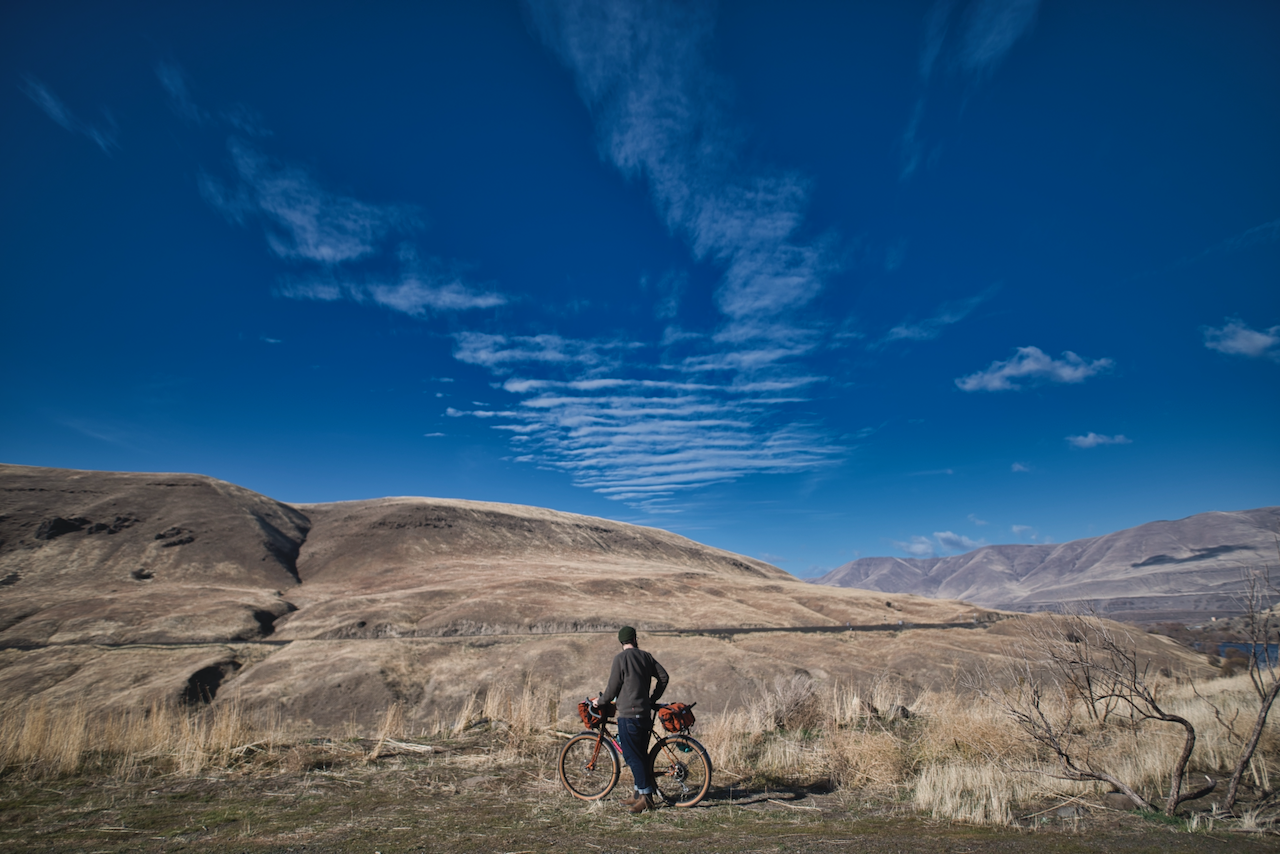
I love my bike and the many bikes I’ve had. I love the many people I’ve met through bicycling—people I’d never have crossed paths with otherwise. I love the person I’ve become because of it. I love riding to meet my friends for dinner and I love riding across the eastern Oregon high desert.
I hope that you too might love bikes.
“My favorite thing to do is ride a bicycle. I ride road bikes. And for me, it’s mobile meditation.” Robin Williams, Reddit “Ask Me Anything” session, September 25, 2013
此内容由惯性聚合(RSS阅读器)自动聚合整理,仅供阅读参考。 原文来自 — 版权归原作者所有。