InertiaRSS Track and read blogs, news, and tech you care about
Read Original Open in InertiaRSS

Recommended Feeds

freeCodeCamp Programming Tutorials: Python, JavaScript, Git & More
量子位
Hugging Face - Blog
Hugging Face - Blog
M
MIT News - Artificial intelligence
GbyAI
GbyAI
Last Week in AI
Last Week in AI
WordPress大学
WordPress大学
云风的 BLOG
云风的 BLOG
阮一峰的网络日志
阮一峰的网络日志
宝玉的分享
宝玉的分享
V
Visual Studio Blog
博客园 - 【当耐特】
罗磊的独立博客
L
LangChain Blog
钛媒体:引领未来商业与生活新知
钛媒体:引领未来商业与生活新知
OSCHINA 社区最新新闻
OSCHINA 社区最新新闻
小众软件
小众软件
Y
Y Combinator Blog
Jina AI
Jina AI
有赞技术团队
有赞技术团队

InfoQ - 促进软件开发领域知识与创新的传播

Meta 收购 Manus 这事儿泡汤了 5.5万 Star 开源项目 Ghostty 被迫出走,GitHub 正在终结一代技术人的乌托邦 Slack 长时运行多智能体系统的上下文管理方案 从 T+1 到分钟级:金城银行基于 Apache Doris 构建高可靠、强一致的实时数据平台 谷歌云推出 Agents CLI,简化 AI 智能体开发全流程 Claude官方击穿高薪、高学历的安全防线!Anthropic点名10大高危职业,但有群人暂时稳了 亚马逊云科技终止 WorkMail 服务,并将 App Runner 转入维护模式 OPPO小布记忆:全模态碎片化内容的理解与智能整理实践|AICon上海 模力工场038周AI应用周榜:工具在消失,工作流在出现 Akamai CEO Tom Leighton:Agent 时代来临,云基础设施正从“中心化”转向“分布式边缘” 日均数百亿入库背后:从“人肉调度”到K8s弹性架构,度小满金融基于OceanBase重构入库架构实践 百度文库网盘发布GenFlow 4.0:月活用户超1亿,要把网盘变成全端AI工作台 Altman 投的 Agent 终端 Warp 开源了!斩获3.5万star 哪些客户需要拒, 敢让龙虾决定吗?_AI&大模型_InfoQ 中文站_InfoQ精选视频 从开发到生产:为什么越来越多的机器学习团队纷纷迁移到 Snowflake | BUILD 2025_AI&大模型_王玮_InfoQ精选视频 探索多智能体工作流:LangGraph Snowflake Cortex AI | BUILD 2025_AI&大模型_王玮_InfoQ精选视频 腾讯云分布式缓存数据库:AI Agent - 从提示词工程到 Harness 工程 | 腾讯云数据库 DBTalk_腾讯_凌敏_InfoQ精选视频 基于 Streamlit 为 CSV 数据构建分析智能体 | BUILD 2025_AI&大模型_王玮_InfoQ精选视频 AI 智能体:告别文档缺漏 | BUILD 2025_AI&大模型_王玮_InfoQ精选视频 构建 AI 驱动的数据管道:深度探讨 Snowflake Openflow 与非结构化数据 | BUILD 2025_AI&大模型_王玮_InfoQ精选视频 云端太贵、本地不够聪明,英特尔押注“端云混合AI”:智能体PC会替人完成工作 不到10%的存储投入,可能拖垮90%的GPU投资!IBM把AI Agent塞进存储系统,算清企业最容易忽略的一笔账 Snowpark 上手实战 | BUILD 2025_大数据_王玮_InfoQ精选视频 ClickHouse + Langfuse,构建 Agent 可观测基石 腾讯云分布式缓存数据库:Cluster Proxy 共享连接架构深度解析 | 腾讯云数据库 DBTalk_腾讯_凌敏_InfoQ精选视频 AI 写代码太烧钱了:Copilot、Claude 一起涨价,不如把程序员请回来? 英特尔发布至强600系列工作站处理器与锐炫Pro B70 GPU,全新AI工作站来了 腾讯云分布式缓存数据库:从 Redis 到 Valkey - 开源社区如何快速创新 | 腾讯云数据库 DBTalk_腾讯_凌敏_InfoQ精选视频 印奇这次要“从0重做”智驾模型!首谈阶跃和千里双公司布局:中国AI商业闭环要靠车跑出来 从Cursor返聘归来,90后华裔女高管带Claude开启日更模式:token成本比工程师工资低多了! 从 Coding 到 Agent:QCon 北京 2026 全景复盘,优秀出品人 & 明星讲师名单揭晓 全链路支撑大模型国产化“Day 0适配”,商汤大装置构建全栈能力底座 凌晨,OpenAI 与亚马逊云科技史上最大联合发布来了 HashiCorp Vault 2.0 发布:引入新身份联邦机制,迈入 IBM 生命周期体系 Yelp 实现超 1,000 个 Cassandra 节点零停机升级 写了 17 年开源代码,我为什么认为 Coding Agents 堆功能是在瞎折腾? 基于 Apache Camel 编排智能体与多模态 AI 管道 面向智能体与人类用户的AI记忆系统:架构设计与核心场景实践|AICon上海 Anthropic 推出 Managed Agents,简化 AI 代理部署流程 阿里HappyHorse开启灰测,720P视频生成低至0.44元/秒 讯飞联合清华团队押注量子AI:不看营收、不设KPI,一群“无人区”科学家,抢夺下代AI算力入口 小米万亿模型全面开源:MIT 协议、1M 上下文,但还是打不过 DeepSeek Cortex Code 入门指南:面向数据工程师的实践路径 | 技术实践 openJiuwen社区首发Team Skills,定义Coordination Engineering新范式 用 Snowflake Cortex Agents 释放结构化数据的最大价值 | 技术实践 Grafana 利用 Kafka 对 Loki 进行了架构重构,并发布了一款命令行工具,旨在将可观测性引入编码代理 ClickHouse重构全文索引:对象存储上跑出高性能 Full-Text Search 可观测性和遥测技术如何提升软件工程实践 Dropbox 与 GitHub 合作,将单体库大小从 87GB 缩减至 20GB Agent 的下一站:基于长期记忆系统 EverOS 的自我演进|AICon上海
ChatGPT can help you manage your finances, but it also knows your entire balance! User: No thanks.
李冬梅 · 2026-05-17 · via InfoQ - 促进软件开发领域知识与创新的传播

ChatGPT can now help you manage your finances, but it also uses your data to train models.

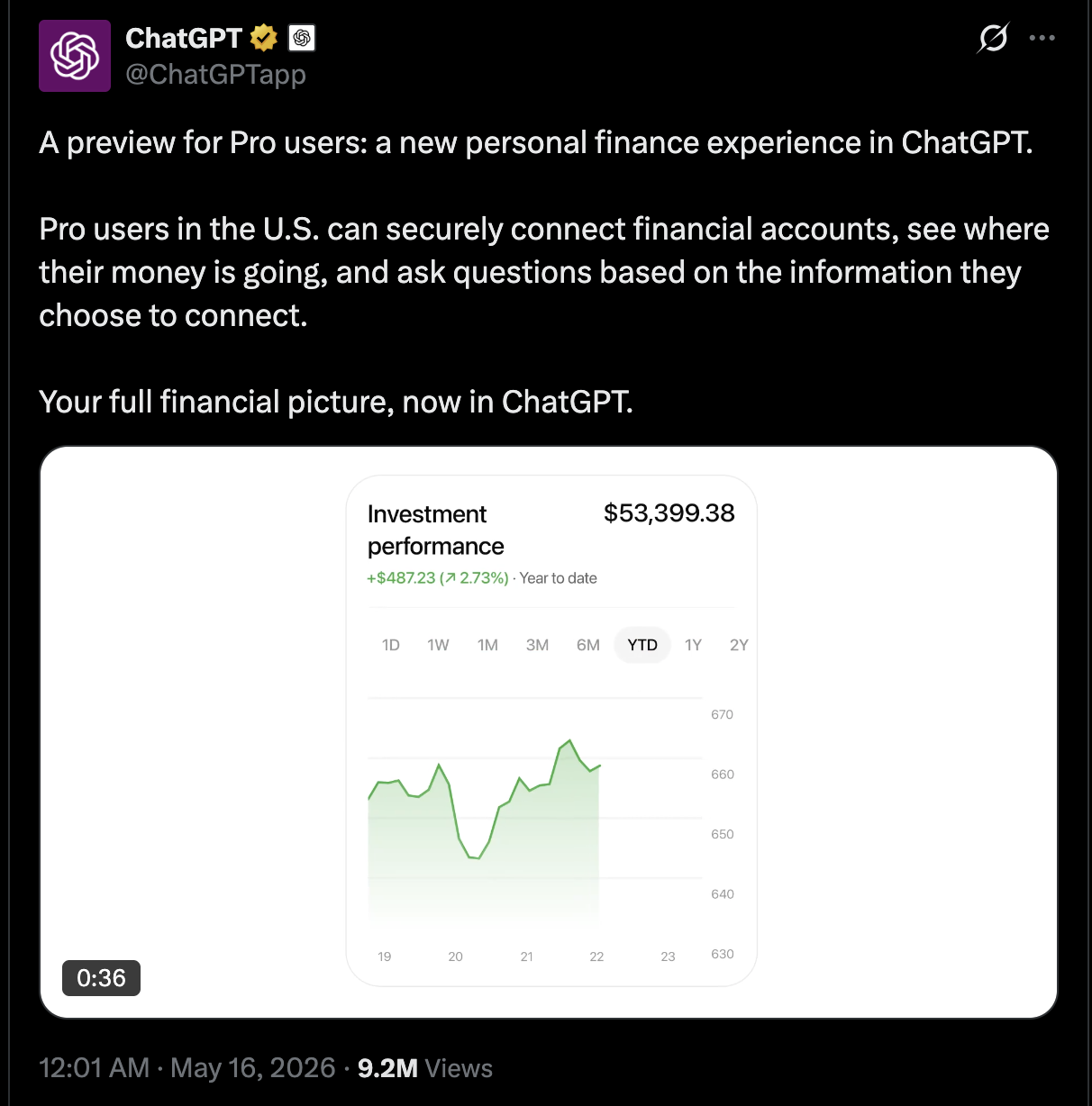
Last night, OpenAI officially launched a new personal finance experience preview for ChatGPT Pro users in the United States. 

This feature allows users to securely connect personal financial accounts, view fund flows through a dedicated dashboard, and ask ChatGPT for personalized advice based on their financial situation. Users retain control over core information throughout the process. It is currently being piloted with a small group of users and will be gradually optimized and expanded.

OpenAI stated that conversations with linked financial accounts will follow the same model training settings as regular ChatGPT. This means that unless users opt out, OpenAI can use these conversations as training data.

OpenAI stated that money profoundly affects every aspect of people's lives, from housing choices and family care to future planning, all closely tied to financial status. However, in the current financial management landscape, users often need to consolidate multiple accounts, applications, credit cards, and loan information, even resorting to spreadsheets, just to barely grasp their overall financial picture, let alone make subsequent planning decisions.

So the core highlight of the newly launched personal finance feature is that it combines GPT-5.5's reasoning capabilities with users' actual financial situations, personal goals, lifestyle, and priorities, helping users discover financial patterns, weigh the pros and cons of decisions, and provide more personalized and comprehensive financial planning advice. Users can consult this feature for various specific financial issues, such as consumption change analysis, medium- and long-term savings plan formulation, etc. However, OpenAI explicitly states that this feature is for informational reference only and cannot replace professional financial advice.

OpenAI gave some specific examples:

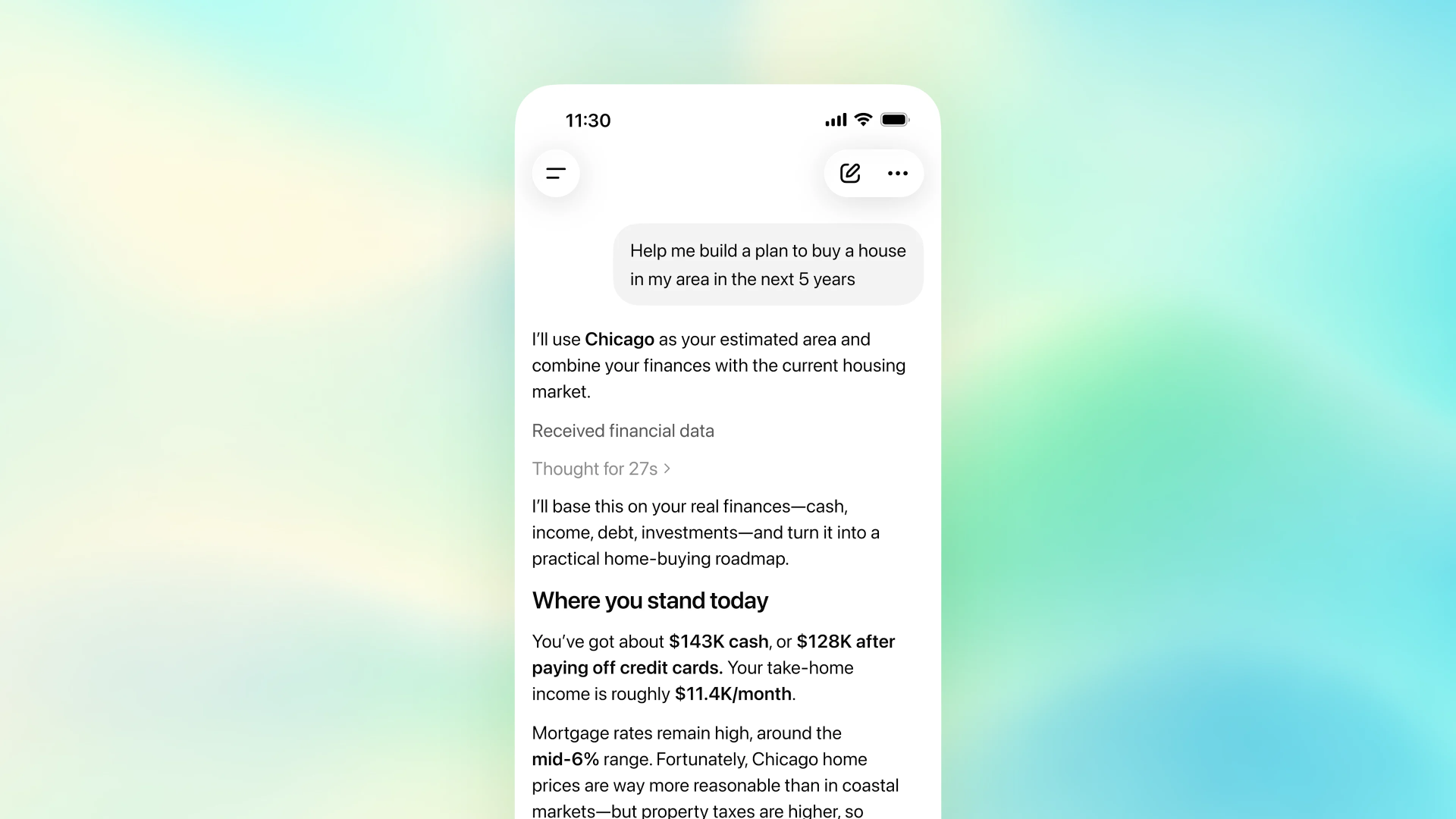
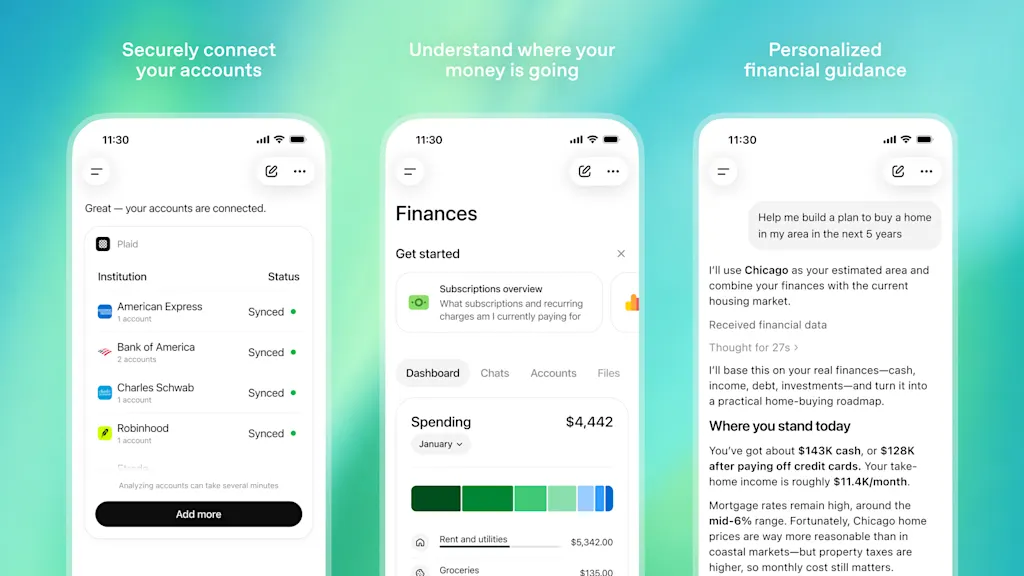
This personal finance assistant can help you plan your expenses. For example, if you want to buy a house within 5 years, you can ask it for advice.

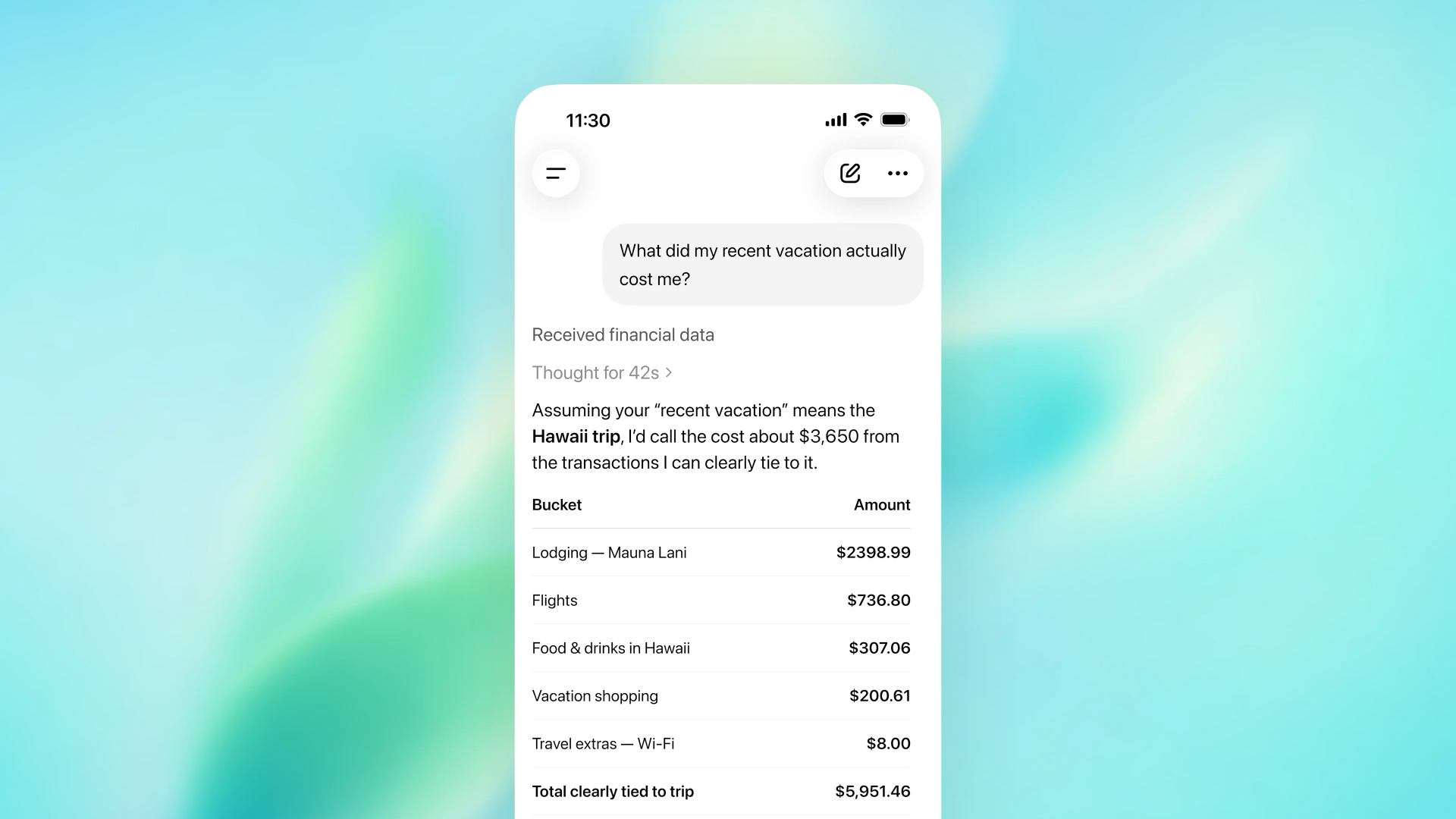
Not sure how much a trip actually cost? It can provide you with a clear bill.

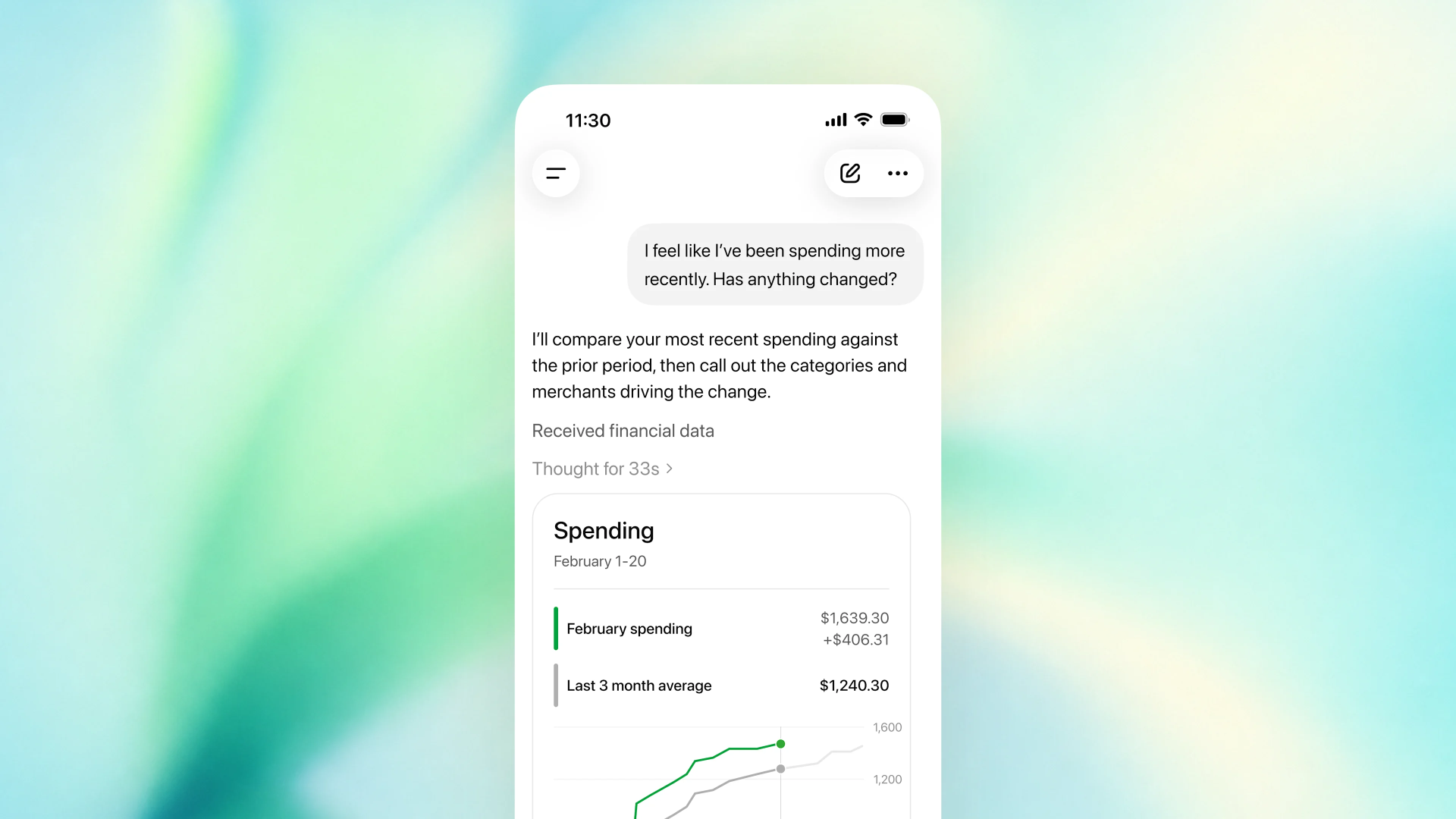
Or if you've been spending too much recently, have it check where you can save.

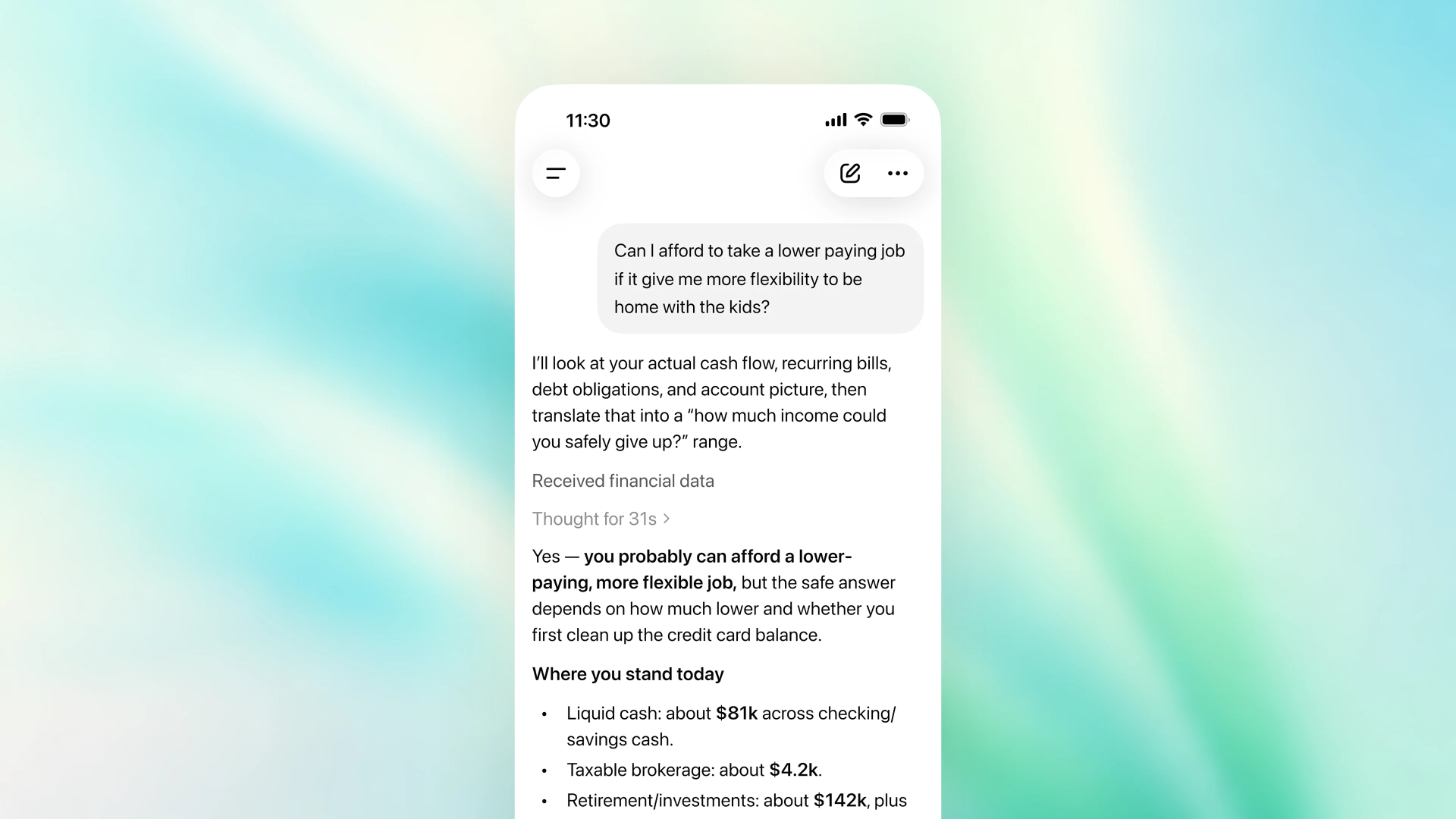
It can also help you set up a financial hypothesis, such as: given my current financial situation, can I take a lower-paying job to have more time and freedom to be with my children?

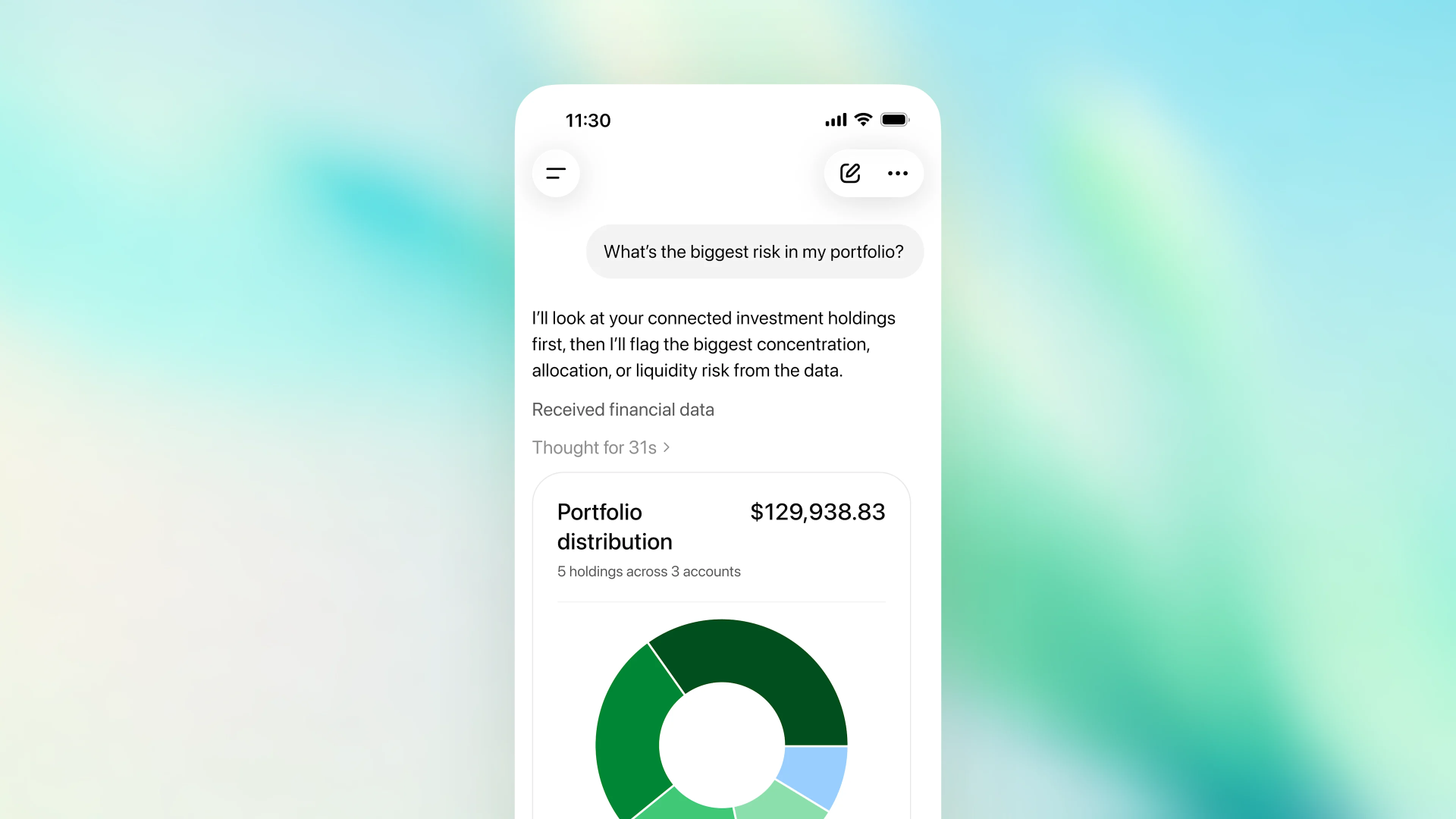
It can even give you warnings about investment risks in daily life.

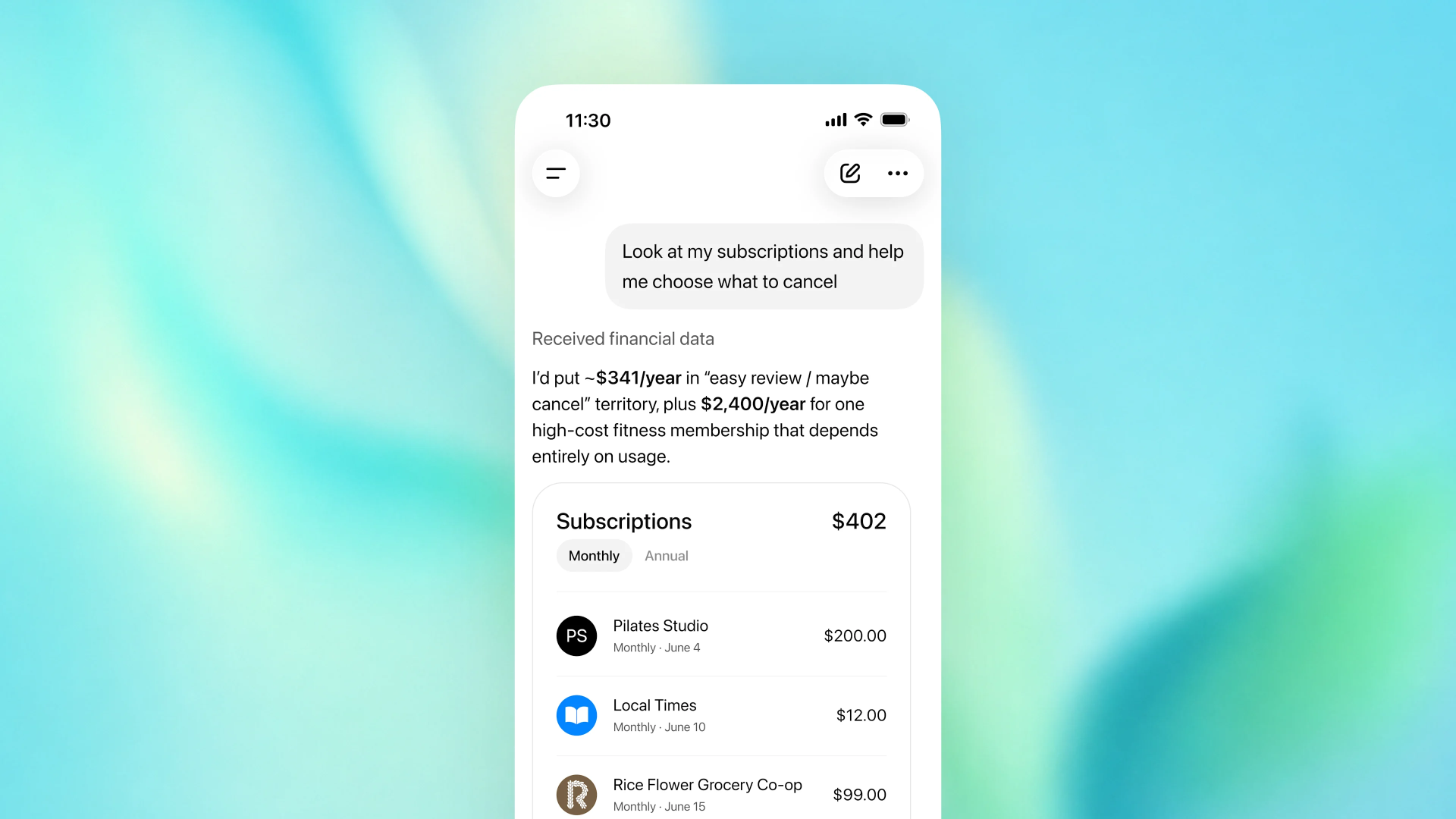
It can also help you review which subscription services you are wasting money on.

According to statistics, over 200 million users per month already use ChatGPT for budget planning, investment advice, investment path comparison, and future financial goal planning. The latest progress of the GPT-5.5 model has further enhanced ChatGPT's ability to handle complex, contextual issues in the personal finance domain, laying the technical foundation for this new feature launch.

It is reported that this financial feature has been simultaneously launched on the ChatGPT web version and iOS version, currently only open to Pro users in the United States, supporting account connections for over 12,000 financial institutions.

OpenAI plans to continuously optimize the experience based on early user feedback, and will gradually roll it out to Plus users, eventually achieving the goal of making it available to all users.

The launch of this feature comes just one month after OpenAI acquired the team of personal finance startup Hiro in April this year. The financial expertise of the Hiro team provided support for the development of this feature.

What makes it different from similar products?

So, how is ChatGPT's new feature different from existing budgeting platforms (such as Rocket Money and Monarch)?

In a nutshell, ChatGPT remembers important user information and keeps it in mind when answering questions, but does not perform any actions.

OpenAI product manager Ty Geri said in a briefing that these new features will help “connect your personal financial situation with your broader personal life situation.”

Geri said that if you ask ChatGPT to find unnecessary subscription services, the assistant will use the information it already has about you to make recommendations.

In the briefing, OpenAI emphasized that ChatGPT only has permission to read users' financial information; it can only analyze data, not actually handle users' funds, such as making investments or canceling subscriptions. These actions still need to be done by the user.

So how do you use it?

According to OpenAI, starting this financial experience is very straightforward. Users can open the "Finances" option from the ChatGPT sidebar and select "Get Started", or type "@Finances, connect my account" anywhere in the conversation to initiate the process. ChatGPT will guide users to securely link their financial accounts through the Plaid platform, with support for the Intuit platform coming later. After identity verification is complete, the system will sync and categorize the user's financial data, a process that takes approximately a few minutes.

The company stated in a press release that ChatGPT will be able to "access users' balances, transaction history, investments, and liabilities to help them better understand their financial situation or answer their questions."

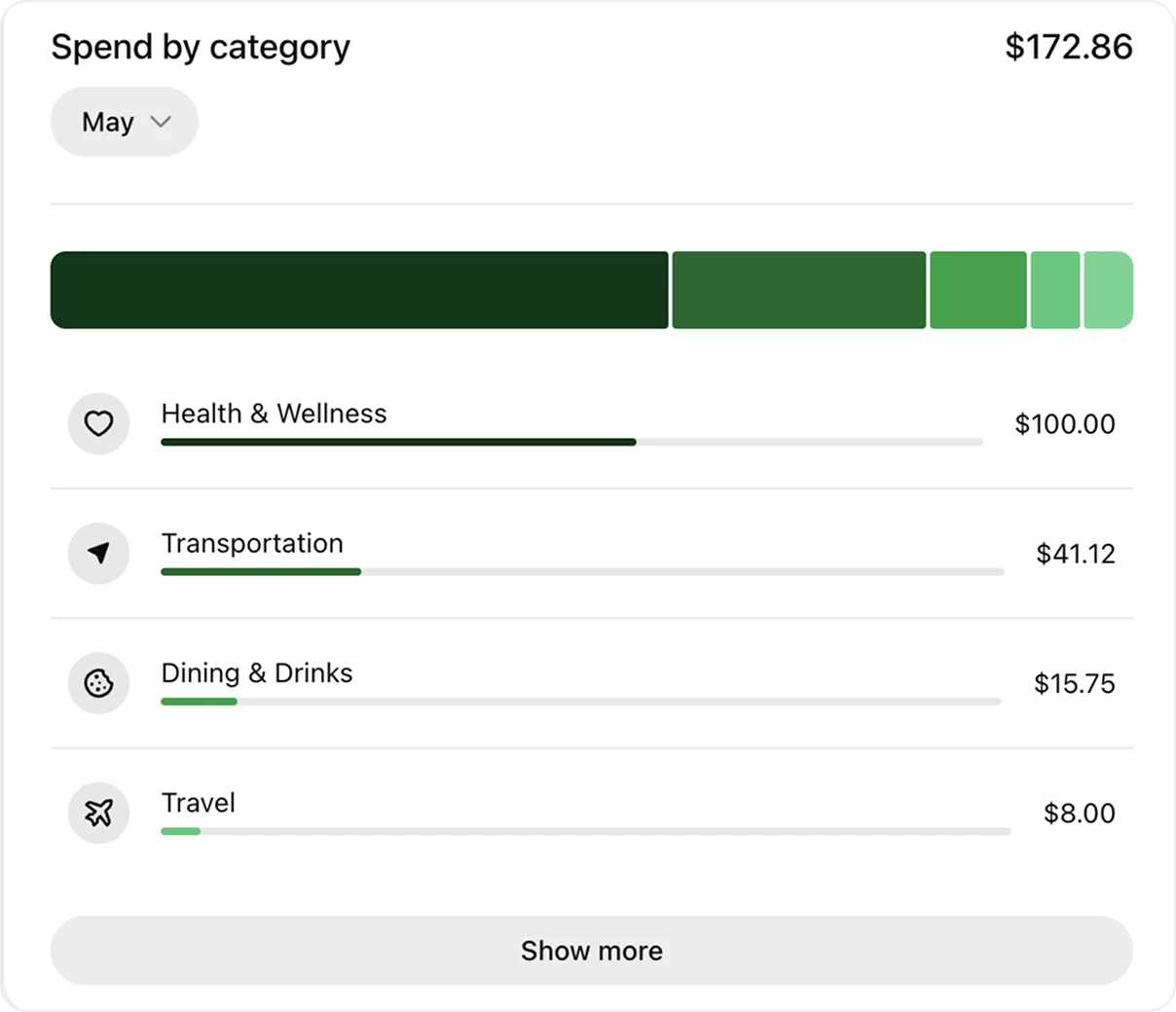
Once the account sync is complete, users can view core financial information in real time through a dedicated dashboard, including investment portfolio performance, spending details, subscriptions, and upcoming payments.

In addition to linked accounts, users can also proactively share personalized financial information such as mortgage details, savings goals, and planned large expenses. This information will be saved in "Financial Memory" for reference in future conversations, allowing ChatGPT to provide more targeted guidance by combining account data with user needs.

For the purpose of realizing the financial service closed loop "from answers to actions", OpenAI is joining hands with ecosystem partners such as Intuit. With the technical support of Intuit, users can complete a series of operations within the ChatGPT platform, ranging from credit card recommendations, approval probability inquiries, and application submissions, to stock sale tax impact consultations, tax estimations, and scheduling real-time consultations with local tax experts, thus achieving a seamless connection between financial advice and actual actions.

Regarding the privacy and security of financial data, OpenAI has made a clear commitment to put user control first. After linking accounts, ChatGPT can only access the user's account balance, transaction records, investment and liability information, but cannot view the full account number, nor perform any operations on the account.

To further explain its security, OpenAI also stated that users can disconnect the account connection at any time through "Settings">"Apps">"Finance" or the "Finance" page. After disconnection, the synced account data will be deleted from the OpenAI system within 30 days, and it will not affect the financial information in the conversation history. Users can also delete the relevant conversations individually.

At the same time, users can view or delete content in the "Financial Memory" on the "Finance" page; when using the temporary chat feature, ChatGPT will not access the linked financial accounts, and temporary chat records will not be retained. In addition, users can enable multi-factor authentication (MFA) to further enhance account security.

To ensure the accuracy and quality of financial advice, conversations related to linked financial accounts default to using the GPT-5.5 Thinking model—OpenAI's latest reasoning model. OpenAI has also established an internal evaluation benchmark, collaborating with over 50 financial professionals from leading institutions to comprehensively assess ChatGPT's performance on complex personal finance tasks.

Finally, OpenAI also emphasized that the model underpinning this new feature is its most advanced GPT-5.5 Thinking model.

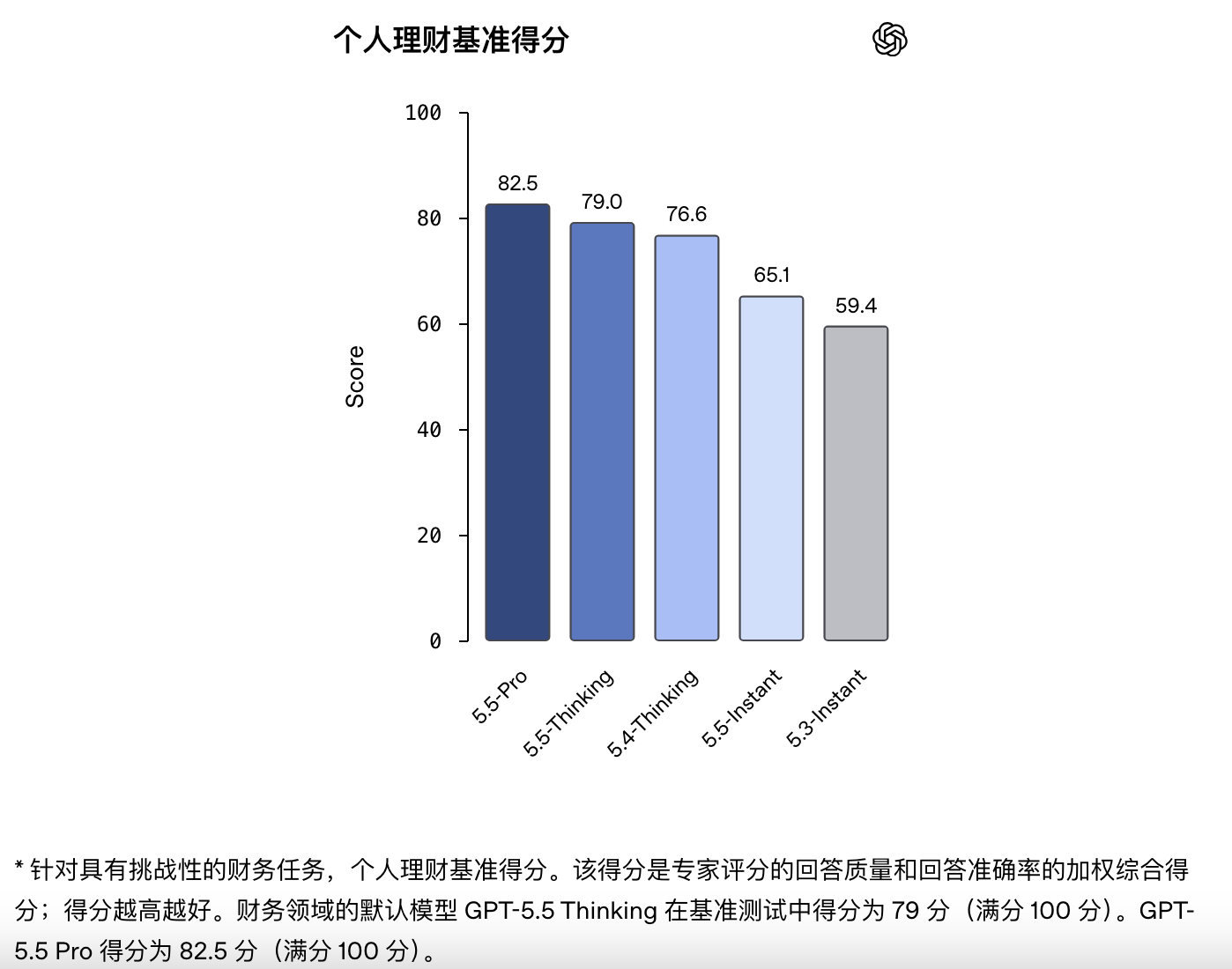
Evaluation results show that GPT-5.5 Thinking outperforms previous models in complex financial tasks, with the GPT-5.5 Pro model available to ChatGPT Pro users performing the best.

In a benchmark test for personal finance on challenging financial tasks, GPT-5.5 Thinking scored 79 out of 100, while GPT-5.5 Pro scored 82.5 out of 100, with the score being a weighted composite evaluation by experts based on answer quality and accuracy.

Would you let ChatGPT manage your wallet?

After ChatGPT launched its personal finance feature, the internet quickly split into two camps over the idea of "letting AI take over your wallet."

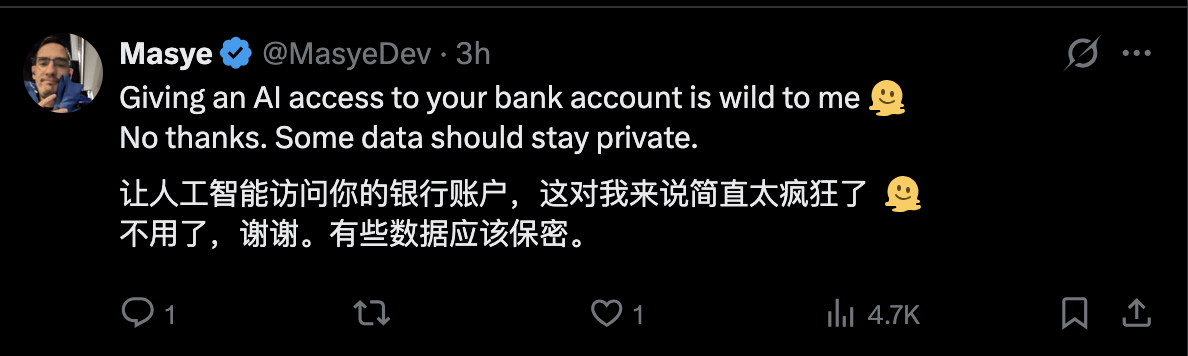
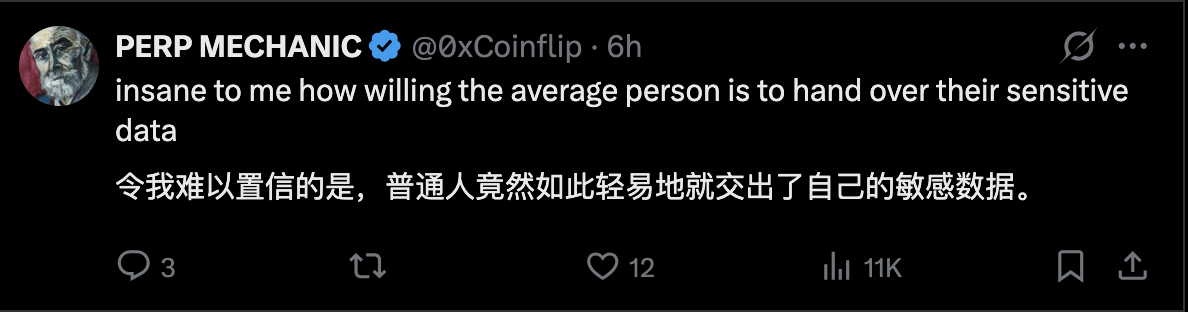
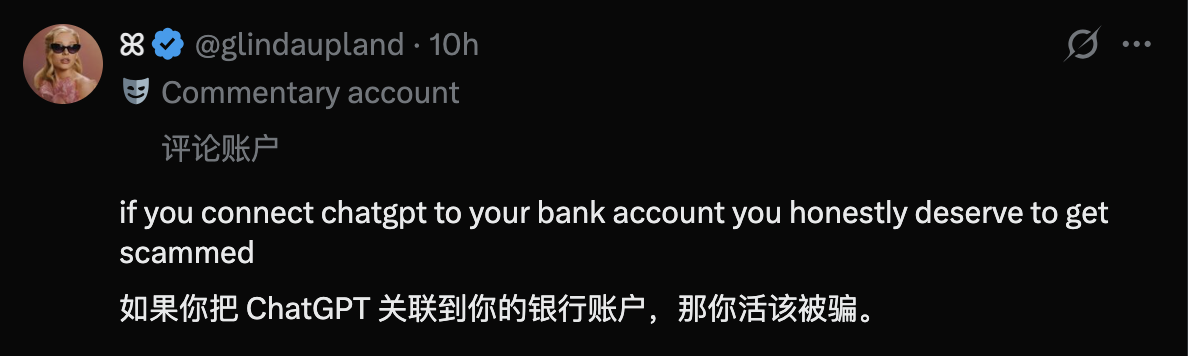
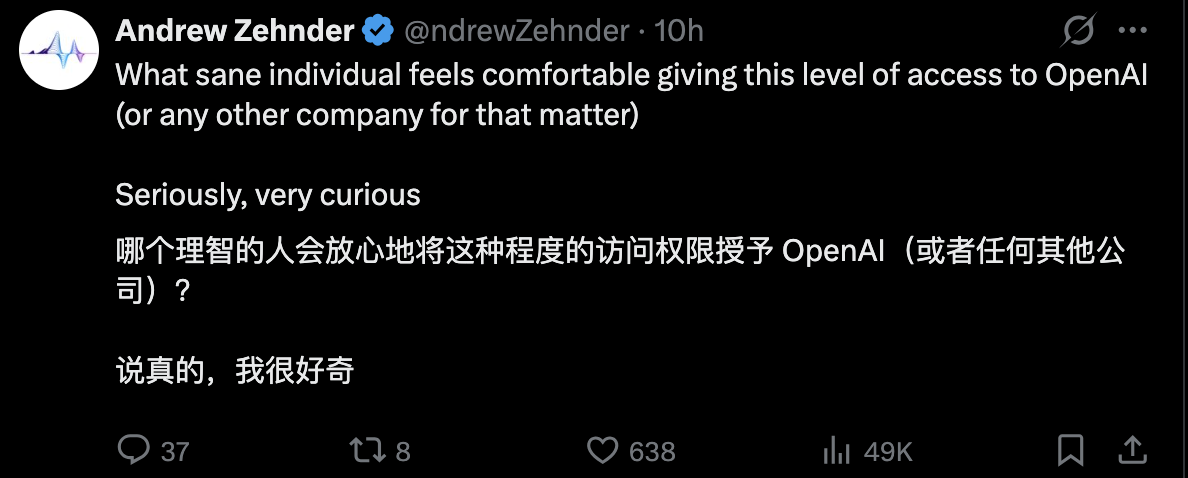
One camp's first reaction was almost instinctively wary. Some bluntly said: "Handing over bank account permissions to AI seems crazy to me. Thanks, but no thanks. Some data should just stay private forever."

In their view, chat history, search preferences, and daily habits are already enough for platforms to sketch user profiles, but once financial accounts are integrated, AI would grasp not just interests and preferences, but a person's most core asset flows, consumption structures, and even risk tolerance. For many, this has crossed the line from technological convenience into the non-negotiable realm of privacy.

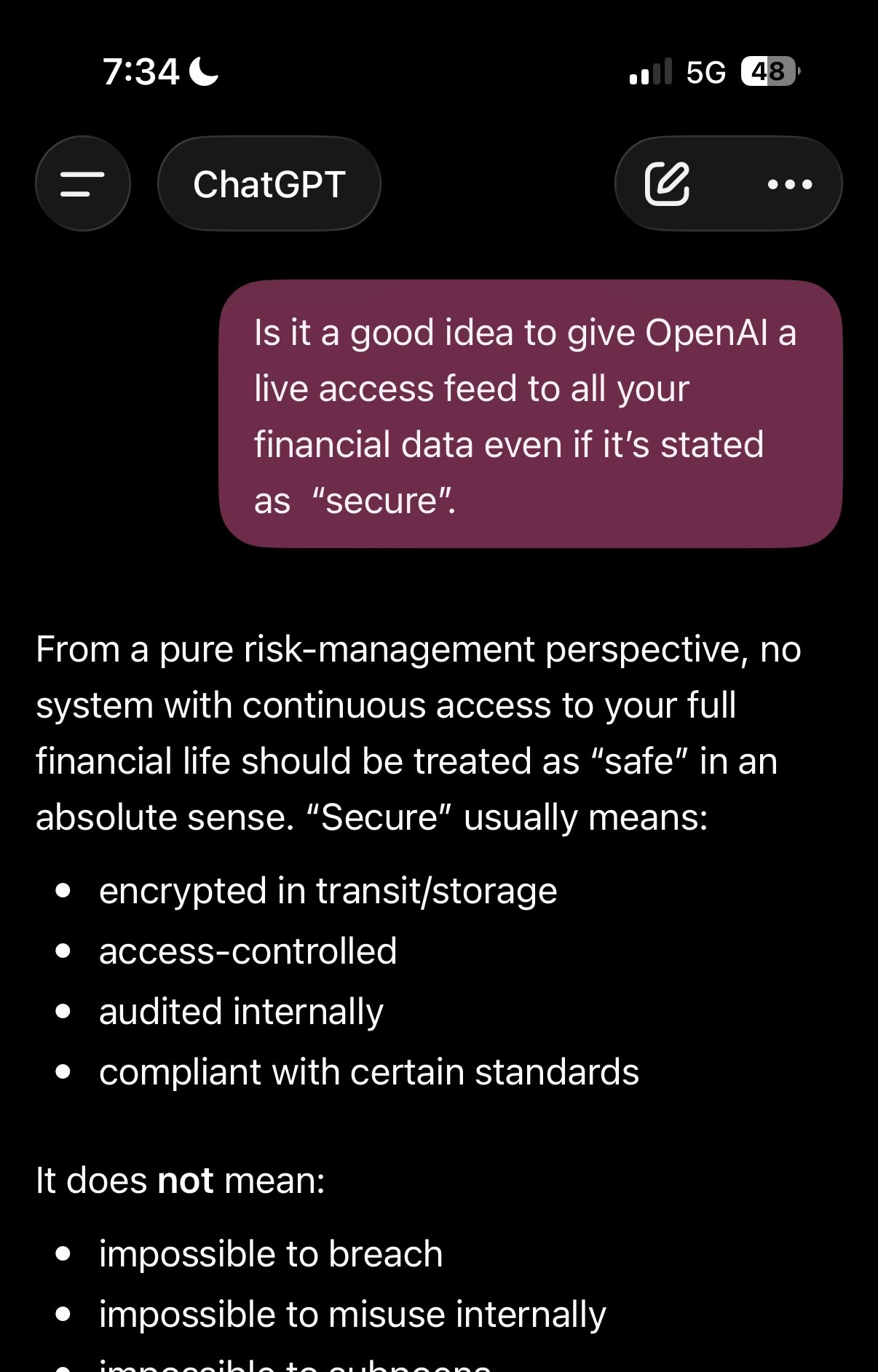
Another user shared a screenshot of his conversation with ChatGPT, in which he asked ChatGPT: Even if it claims to be "safe," is it a good idea to give OpenAI full real-time access to all your financial data?

ChatGPT replied: "From a pure risk management perspective, any system that has continuous access to your entire financial life should never be considered 'safe' in an absolute sense."

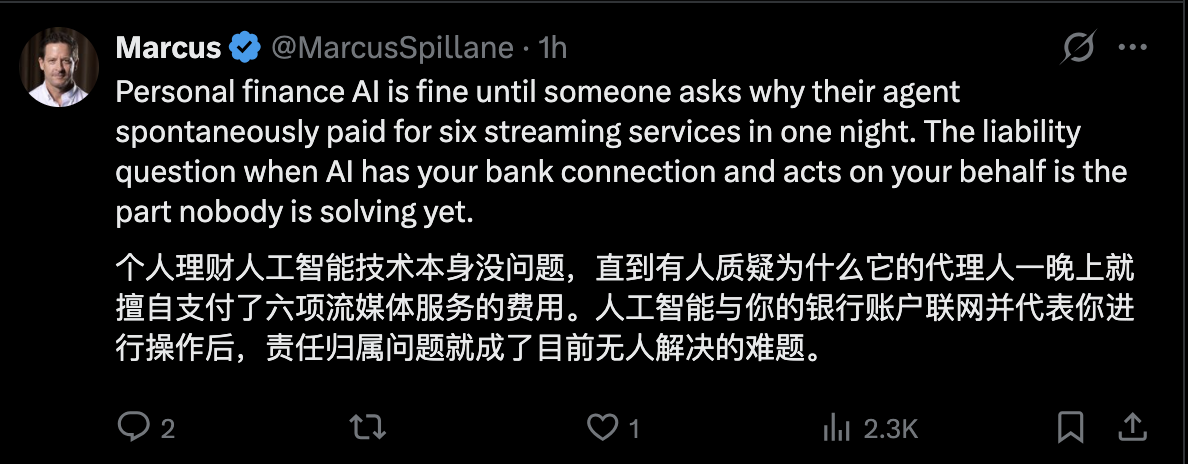
Another more realistic concern focuses on the issue of accountability.

Some commented that the personal finance AI technology itself is not the problem; the real issue is: if one day a user wakes up and finds that their AI assistant has, overnight, signed up for six streaming subscriptions without authorization and even completed the payment automatically, who bears the responsibility? Is it the platform's algorithm, the model's misjudgment, or did the user implicitly accept the risk by granting authorization? When AI no longer just provides advice but directly connects to bank accounts and performs actions on behalf of the user, existing accountability mechanisms are almost unable to cover this new type of scenario.

In other words, technology has already rushed ahead into reality, but the rule system is far from keeping up.

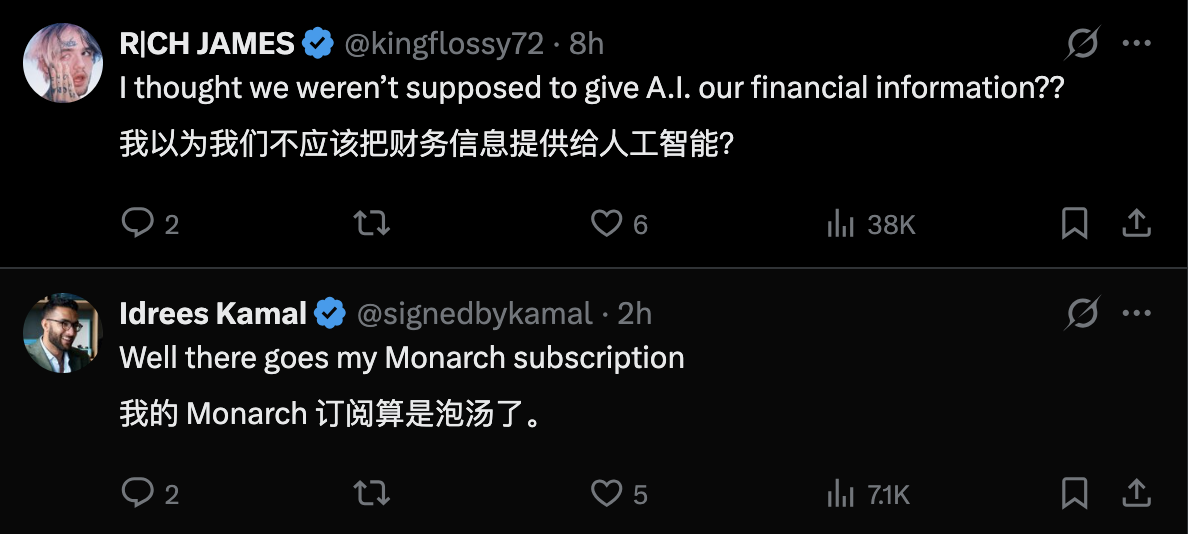
This concern has even led some to further deduce an industry impact. Some directly assert: "All AI fintech startups are doomed."

This is easy to understand. If platform products like ChatGPT begin to venture into personal finance, the moats of AI fintech startups that originally relied on selling points such as "helping users manage money," "helping users budget," and "helping users plan spending" will be rapidly eroded. After all, in the era of large models, users are likely to prefer entrusting their financial permissions to a super-entrance they already use daily, rather than downloading an additional vertical tool.

But the voices of supporters are equally strong, and the reasons they give are very clear: the younger generation simply doesn't care that much about privacy.

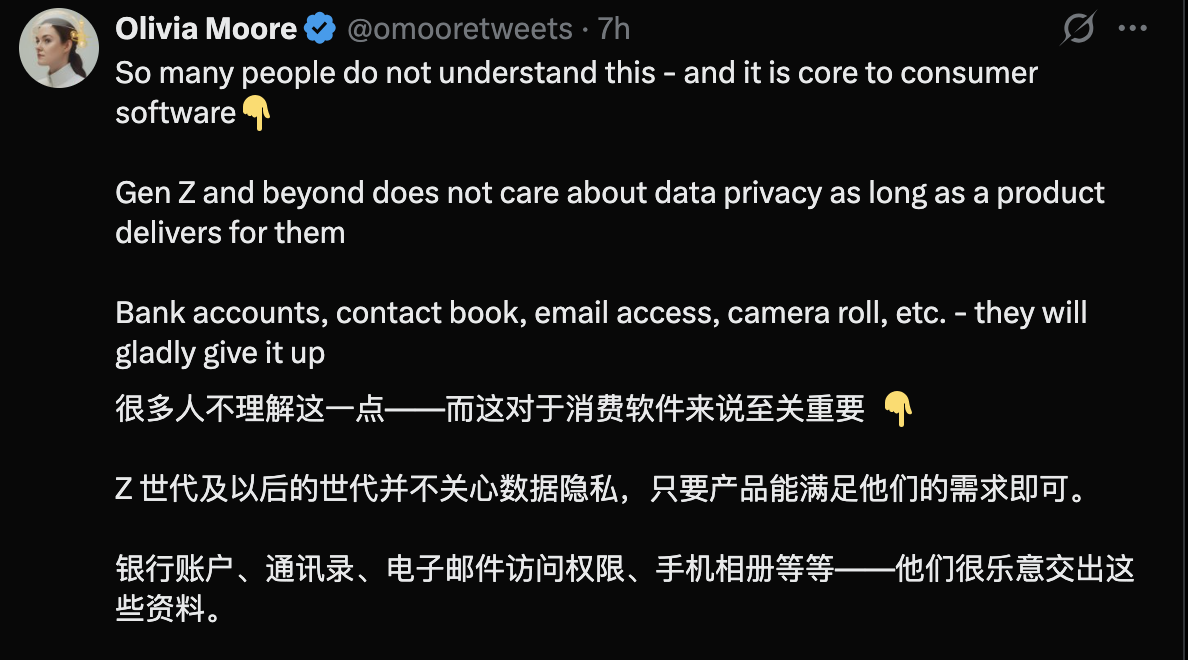
Some point out that many people don't truly understand the changes in this generation of consumer internet users.

For Gen Z and even younger users, the importance of data privacy is giving way to immediate value. As long as the product can actually solve problems, they are willing to hand over bank account permissions, contact lists, email access, and even phone photo albums. Privacy for them is not an absolute principle but a resource that can be exchanged—as long as the experience exchanged is smooth enough and the efficiency is high enough.

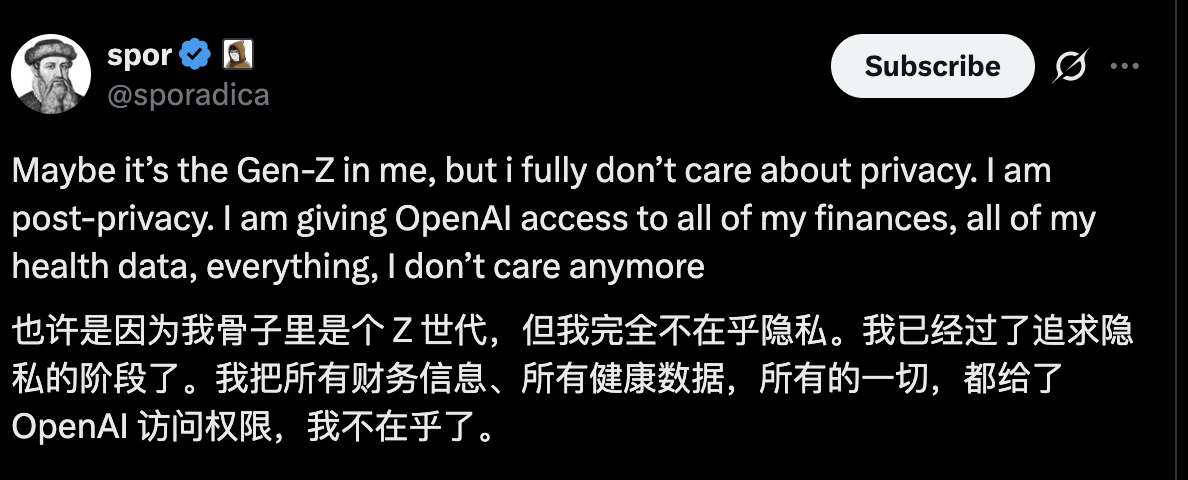
This attitude is even put more bluntly by some younger users. One person confessed: "Maybe it's because I'm Gen Z at heart, but I really don't care about privacy anymore. I'm long past the stage of agonizing over privacy. I've given OpenAI access to all my financial information, health data, almost everything. I don't mind."

Perhaps this is where the controversy truly deserves attention. On the surface, it's just a discussion about a new ChatGPT feature; on a deeper level, it reflects a clash of two digital-era values: one generation insists that "data belongs to the individual and must never be easily surrendered"; another believes that "privacy is essentially a cost of efficiency, and as long as the benefits are high enough, the exchange is completely justified."

And when large language models begin to extend from answering questions and generating content to managing user assets, understanding consumption habits, and even making financial decisions directly for users, a sharper question is already before everyone: When AI starts to pry into your wallet, are humans gaining a smarter assistant, or are they actively handing over their entire fortune?

Reference link:

https://openai.com/index/personal-finance-chatgpt/

https://www.inc.com/ben-sherry/chatgpt-wants-your-bank-account-info-heres-why-you-may-actually-want-to-share-it/91345488

https://x.com/ChatGPTapp/status/2055317612687675545