肯德基
Author | 王涛
Editor | 吾人
Source | 融中财经
路透社 reported that 怡和集团 is planning to sell its fast-food assets that it has operated for more than a decade. These assets include 肯德基 and 必胜客 stores in five markets: 香港, 澳门, 台湾, 缅甸, and 越南, plus 香港's local delivery pizza brand PHD, totaling about 1,000 stores and 25,000 employees. The transaction amount is approximately $400 million (about RMB 2.8 billion); the deadline for non-binding bids is this week, and the list of potential buyers is interesting, including 百胜中国, 凯雷集团, 台湾统一企业, and several private equity funds.
Jardine Matheson is a long-established British trading company that started doing business in China as early as the 19th century, with a particularly wide range of operations covering everything from real estate, retail, and hotels to transportation. In 2009, Jardine took over the operation of KFC Taiwan from Yum! Brands, and by 2013, it had also brought KFC's businesses in Hong Kong and Macau under its wing, running the chain restaurant business for over a decade. Now, it has voluntarily put this part of its assets up for sale, essentially offering a piece it built from scratch to find a buyer.
If you look closely, from CITIC and Carlyle jointly acquiring the relevant rights of McDonald's China in 2017, to Boyu Capital spending US$4 billion to take control of Starbucks China in November 2025, and then CPE Yuanfeng acquiring Burger King China for US$350 million in the same month, the localization of equity in foreign food and beverage brands in China and even the broader Asian market has become almost the norm over the past two years. Jardine Matheson's asset sale is just another link in this chain.
When people mention Jardine Matheson, they often only see its individual brand signs, such as Hongkong Land's Central office towers, Mandarin Oriental hotels, Wellcome supermarkets, 7-Eleven stores, Mannings, IKEA, and Zung Fu's Mercedes-Benz cars, among others. These assets are actually scattered across different subsidiaries and listed platforms. The true foundation of Jardine Matheson lies in its four core business lines: property, retail, hotels, and transportation, plus financial services, insurance, and agency operations. It employs over 100,000 people and spans more than a dozen markets across Asia.
Food and beverage has never been a core focus within Jardine Matheson's entire system; it has always felt more like a side business. In 2009, after Jardine acquired the operating rights for KFC in Taiwan from Yum! Brands, it consolidated the Taiwan outlets of KFC, Pizza Hut, and Long John Silver's, eventually becoming the second-largest fast-food group in Taiwan, second only to McDonald's. In 2013, it also took over KFC operations in Hong Kong and Macau. Combined with its existing Pizza Hut business in Vietnam and its own in-house delivery pizza brand PHD, Jardine Restaurant Group's store count gradually expanded from around 900 to approximately 1,000 today.
However, the profitability of this part of the catering assets is not particularly impressive compared to other businesses within the Jardine Matheson Group. Many media outlets have cited sources saying that the EBITDA of Jardine Restaurant Group (that is, earnings before interest, taxes, depreciation, and amortization) is approximately between $35 million and $40 million, with a corresponding profit margin of 4% to 5%. In the fast-food chain industry, this level can only be considered mid-to-low tier.
Hong Kong, as the core market for this portion of assets, is itself under considerable pressure. From the demand side, Jardine Matheson's 2025 annual report directly states that consumer spending in Hong Kong has weakened due to deflationary pressures, which has also harmed the performance of its catering business. On the supply side, Hong Kong's fast-food market has long been carved up by local players. According to Eats365 data, in terms of store count, the three brands—McDonald's, Café de Coral, and Fairwood—together occupy approximately 65% of the market share. KFC and Pizza Hut here can only be described as players "struggling to survive in the cracks." Although their brand influence is strong enough, their future growth space has become very limited.
In fact, over the past two years, Jardine Matheson has been undergoing a "slimming" adjustment. In April this year, its DFI Retail Group's Wellcome supermarket attempted to negotiate the acquisition of CK Hutchison's ParknShop supermarket chain, aiming to consolidate Hong Kong's supermarket business. However, the deal has stalled due to concerns that the market share might cross the monopoly threshold, coupled with factors such as Hong Kong residents traveling north for consumption and the diversion of online shopping. On one hand, the goal is to strengthen the supermarket business; on the other hand, the company wants to sell off its fast-food assets. Although the directions differ, the core logic is the same: dispose of assets within the Jardine Matheson group that have shown sluggish growth or limited synergy, and concentrate capital on the truly core business areas.
According to media reports, the valuation of this transaction is roughly 8 to 12 times EBITDA. The transaction amount of $400 million corresponds to an EBITDA of $35 million to $40 million, which falls precisely within this range.
A horizontal comparison reveals that the valuations of Carlyle Group's acquisition of KFC South Korea at the end of 2025 and Yum China's spin-off and listing in 2016 were also around this level. Therefore, 8 to 12 times EBITDA can be seen as a reasonable valuation benchmark for mature franchise fast-food assets in the Asian market.
However, the valuation standard is fixed, while the buyers participating in the bidding each have their own ideas. The same asset, when falling into the hands of different buyers, can result in vastly different offers. This is precisely the most interesting part of the deal: the three institutions that have clearly expressed their intent to bid represent fundamentally different valuation logics.
Since its spin-off from Yum! Brands in 2016, Yum China has turned its mainland China KFC and Pizza Hut operations into cash cow businesses over the past nine years. In 2025, its total annual revenue reached $11.8 billion, with the total number of stores exceeding 18,000, and restaurant profit margins rising to 16.3%. Meanwhile, the operations of Pizza Hut in Asia (including Taiwan) have long been managed by Jardine Matheson, which shares the same origins as Yum China. If Yum China can take over these assets, the supply chain, digital membership system, and delivery capabilities that have already proven successful in mainland China can be directly transferred to markets such as Hong Kong, Taiwan, Vietnam, and Myanmar. UBS has also pointed out that if the acquisition is completed, Yum China has the potential to significantly enhance the profitability and earnings contribution of the acquired business. Its core logic for bidding is: "I can raise the profit margin from 4%-5% to 8% or even higher," and the offer price already incorporates the additional value brought about by operational improvements.
Carlyle Group is a typical financial arbitrage institution. In 2017, it teamed up with CITIC Capital and CITIC Limited to acquire 80% of McDonald's China. When it exited six years later, the investment return was approximately $1.22 billion, with a return rate exceeding 200%. Subsequently, it successively acquired KFC Japan and KFC Korea, and the only missing piece in a KFC layout map covering East Asia was the Hong Kong, Macau, Taiwan, and Southeast Asia regions held by Jardine Matheson. In Carlyle Group's pricing logic, there is not only an expectation of operational improvement but also a clear capital exit path. That is, after acquiring these assets, it would integrate them regionally with the KFC businesses in Japan and South Korea, and then, when the timing is right, exit in a single package or pursue separate capitalization. What it aims to earn is not just the profits generated during operations, but also the differential gains from secondary pricing after consolidating fragmented franchise rights into a regional platform.
As for Taiwan's 统一企业, it is a cross-regional player entering the game. 统一企业 holds the exclusive franchise for Taiwan's 7-Eleven and a key equity stake in Taiwan's 星巴克, but its presence in Western fast-food chains is relatively weak. What 统一企业 is really eyeing is likely the approximately 220 KFC stores in Taiwan operated by 怡和集团. These assets have a high degree of complementarity with its existing retail network. If 统一企业 can acquire this portion of assets in Taiwan, it can integrate KFC into its own local retail-restaurant channel system formed with 7-Eleven. On the other hand, 怡和集团 is also "open-minded" about the structure of this deal—it can package and sell the assets as a whole, or split them by market. This precisely leaves room for regional players like 统一企业 to step in. 统一企业 is willing to pay a premium for "channel synergy," but only for the assets it can fully digest.
These three buyers each have different calculations: 百胜中国 pays for operational transformation, 凯雷集团 pays for regional integration and secondary capitalization, while 统一企业 pays for channel synergy. Ultimately, how 怡和集团 splits these assets will largely determine how much each of the three institutions can secure.
If we view the sale of Jardine Matheson's asset as an isolated transaction, its significance is actually quite limited. However, if we place it on the same timeline as several major mergers and acquisitions of foreign restaurant brands in the Chinese and Asian markets over the past decade, we can see a different story.
In 2016, Yum! Brands spun off its China business from its global operations. With a combined $460 million investment from Primavera Capital and Ant Financial, Yum China was independently listed. Nine years later, the company has become the largest Western fast-food operator in mainland China, with 18,000 stores and annual revenue of $11.8 billion in 2025.
In 2017, 麦当劳 completed the transaction with 中信资本, 中信股份, and 凯雷投资, selling the 20-year franchise rights for approximately 2,700 stores in Mainland China and Hong Kong to a Chinese consortium at a maximum consideration of $20.8 billion, which is also known as the "金拱门 moment". Thereafter, the number of McDonald's China stores expanded rapidly from about 2,400 in 2017 to over 7,000 by March 2025. In October 2024, 中信资本 acquired the 22% stake held by 中信股份 for $430 million, thereby obtaining a total of 52% controlling interest, meaning that the ultimate controlling shareholder of McDonald's China became a local Chinese private equity institution.
On November 4, 2025, Starbucks announced a joint venture with Boyu Capital. Boyu Capital invested $4 billion for a 60% stake, while Starbucks retained 40% equity and continued to hold the licensing rights for its brand and intellectual property. Less than a week later, on November 10, Burger King China's fate was also sealed. Its parent company, RBI, formed a joint venture with local private equity firm CPE Yuanfeng, which injected $350 million for an 83% stake, leaving RBI with 17%.
If we broaden our view to the entire large retail sector and extend the timeline further, many such cases emerge: in 2014, China Resources Group took over Tesco China; in 2019, Suning acquired an 80% stake in Carrefour China for 4.8 billion yuan; in 2020, Wumart purchased an 80% stake in Metro China for 11.9 billion yuan; and in early 2025, Alibaba sold a 78.7% stake in Sun Art Retail to DCP Capital for up to approximately HK$13.138 billion.
Putting all these cases together reveals a common pattern: multinational parent companies gradually retreat to the "asset-light + brand licensing" side, continuing to firmly hold onto brands, technology, and global systems, while local capital takes over stores, supply chains, and local operations, becoming the de facto operators.
The calculation of the multinational parent company is actually quite simple: the importance of the Chinese market is still there, but the current market environment is far more complex than it was five or ten years ago—geopolitical risks, consumption stratification, intensifying competition from local brands, coupled with the impact of delivery platforms and lower-tier brands on the single-store model, all these factors are constantly raising the uncertainty of continuing heavy asset investments. Selling the stores to local capital not only allows for a one-time cash recovery but also locks in a stable, high-margin income stream over the next ten or even twenty years through brand licensing fees. The structure of "retaining a 40% stake plus brand licensing income" in the Starbucks deal has almost become the standard template for this model.
The logic on the domestic capital side is completely opposite to that of the multinational parent companies. Foreign-funded catering brands have long held an "orthodox" position in the minds of consumers in first- and second-tier cities in mainland China. Their store networks, supply chains, and teams are already well-established. However, due to the operational inertia of their foreign parent companies, these assets still have significant room for improvement in areas such as digitalization, expansion into lower-tier markets, and localized product innovation. For Chinese private equity firms that have substantial funds, along with the ability to restructure operations and experience in cross-border regulation, taking over a mature foreign catering brand is like acquiring a "ballast asset" that has a well-known brand, stable cash flow, and potential for further transformation within five to ten years. CITIC Capital, Citi Capital, Primavera Capital, Boyu Capital, CPE Capital, and Hillhouse—these domestic private equity firms, which have frequently appeared on the acquisition list of foreign catering brands in recent years, have formed a "professional operator echelon."
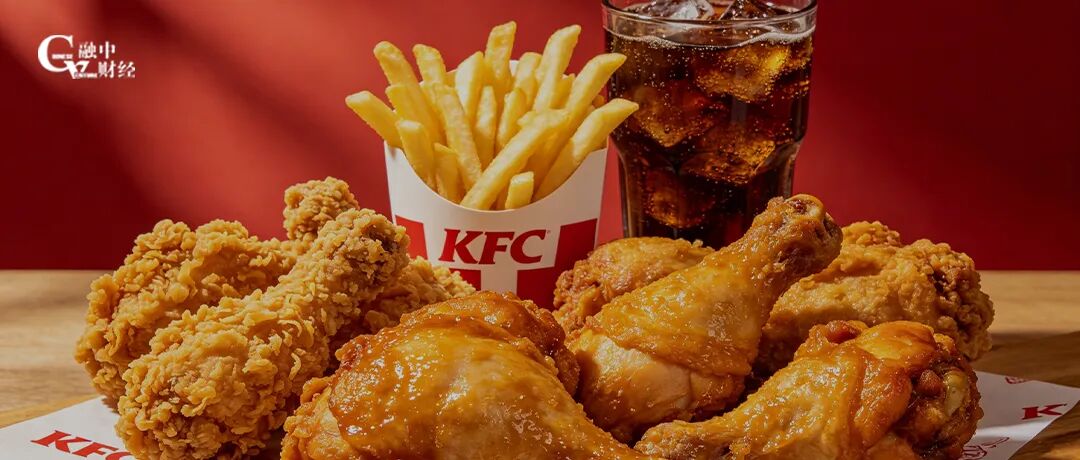
Turning back to this transaction involving Jardine Matheson, regardless of whether the final buyer is Yum China, Carlyle Group, or a partial asset split to Uni-President Enterprises, this deal worth approximately 2.8 billion RMB will become another link in the long chain of "localization of foreign catering equity." As for the KFC stores in Hong Kong, customers will still find the same cola and chicken wings on their tables, but the capital supporting this business is quietly changing hands.
This article is from WeChat public account.“融中财经”, by Wang Tao, published with authorization from 36Kr.
This content is automatically aggregated by InertiaRSS (RSS Reader) for reading reference only. Original from — Copyright belongs to the original author.