In an era when the consumer electronics industry is facing a plateau in growth dividends, the audio segment is undergoing a profound structural transformation. On the afternoon of May 15, 2026, as the rain cleared over Shenzhen Bay, Shokz held a highly anticipated media exclusive interview. Yang Yun, CEO of Shokz in China, and Zhang Haofeng, President of the Product Line, were both present, systematically explaining to the outside world how this brand, which started with "bone conduction" and "sports," is now, while firmly holding the top spot in global open-ear headphone shipments, launching an assault on a broader, multi-scenario audio empire.
Over the past two years, the overall sales share of open-ear headphones in the Chinese Bluetooth headset market has already exceeded 30%. This is not just a change in product form, but a "category-level substitution" storm led by Shokz that is sweeping the globe.
In the past, the public perception of Shokz was largely confined to the labels of "professional sports" and "bone conduction." However, in this exclusive interview, Shokz's senior executives clearly stated that professional sports and general-scenario users have never been an either-or choice. What Shokz is doing is to fully expand the definition of users from the initial "professional sports users" to "every user who needs open listening."
Official image
The reason Shokz made the highly forward-looking industry assertion that "open-ear headphones have the opportunity to replace true wireless earbuds" is rooted in a fundamental shift in users' daily earphone-wearing habits. With the surge in demand for online work, remote meetings, long-form audio content, online courses, and daily fragmented listening, the time people wear headphones is being infinitely extended.
In the context of prolonged wear, the ear canal pressure, occlusion discomfort, hygiene concerns, and safety issues associated with the inability to perceive the surrounding environment that traditional in-ear headphones bring have gradually evolved into irreconcilable rigid conflicts. The natural advantages of open-ear headphones, such as "all-day comfortable wearing" and "safe open listening," are transforming them from a niche "sports companion" for specific scenarios into an indispensable "primary device" in users' daily lives. With sound quality already largely addressed through recent technological iterations, and in some products (such as the OpenFit Pro) approaching or even surpassing traditional in-ear headphones, users' tilt toward comfort and open perception has become the decisive force for open-ear headphones to bridge the category gap.
Official Image
In the landscape of overseas expansion and globalization, Shokz has ranked first in global open-ear headphone market share for three consecutive years from 2023 to 2025 (). Data shows that not only is the Chinese market surging, but in key global markets such as the US, Europe, Japan, South Korea, and Australia, the proportion of open-ear headphones continues to rise, and the trend of strong substitution for traditional in-ear headphones has become irreversible.
Facing global competition, Shokz's core market strategy can be summarized as the "GLOCAL" approach—thinking globally while acting locally. Yang Yun compares the current headphone category competition to the new energy vehicle industry: the vast majority of core global brands and top-tier supply chains are concentrated in the Chinese market. Therefore, Shokz chooses China's fiercely competitive market environment as a "training ground" for R&D, fully leveraging the country's strong engineering talent dividend and extreme supply chain advantages to develop standardized products with hardware and performance compelling enough to sell globally.
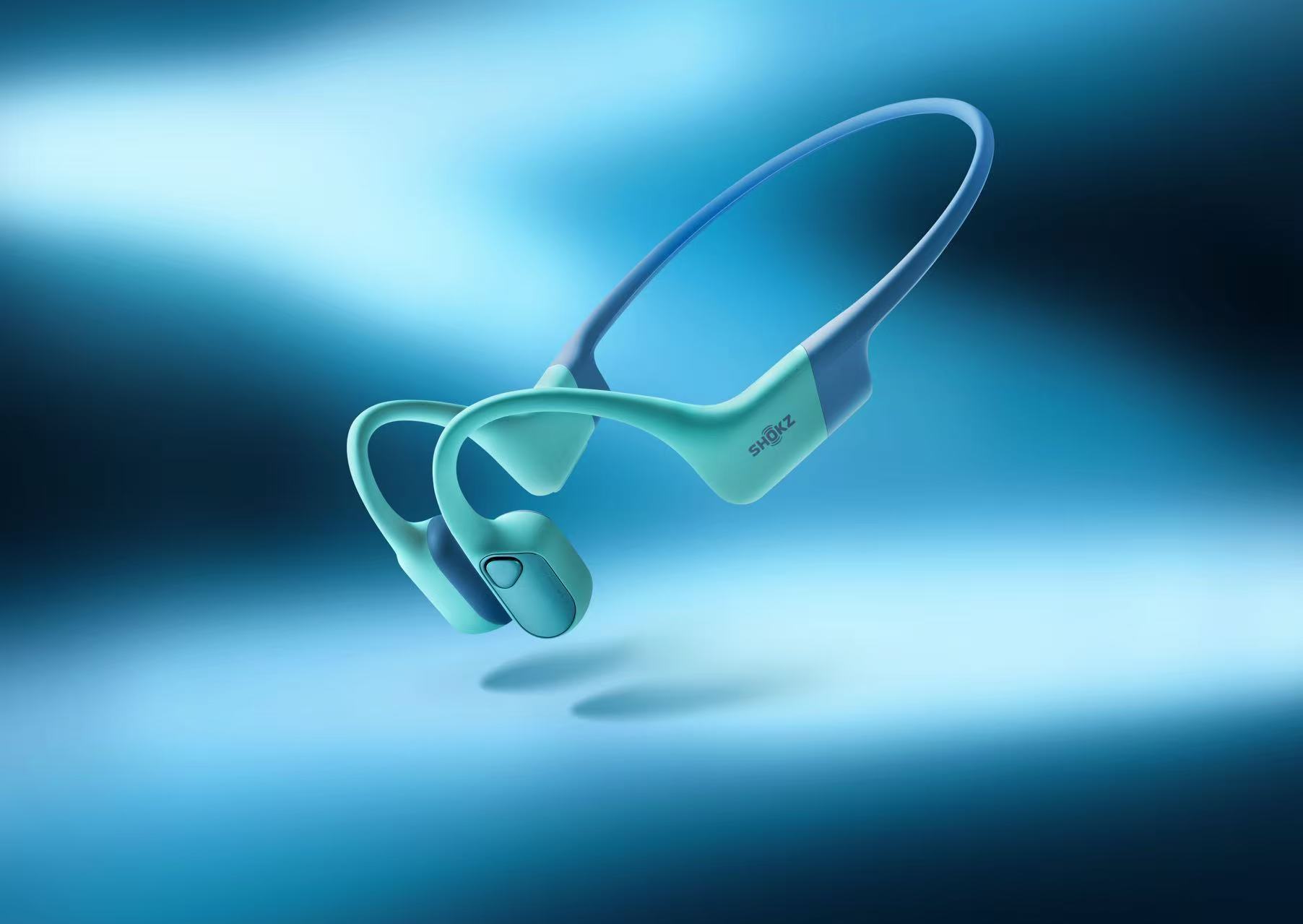
However, in terms of software, services, and ecosystem integration, Shokz carries out extremely precise localization efforts worldwide. For example, the newly released professional sports earphones OpenSwim Pro 2 have become the world's first earphones to support wireless import and offline playback of QQ Music (QQ Music), a feature that precisely addresses the core pain points of local sports enthusiasts, serving as a successful example of the marriage between global standardized hardware and top local streaming ecosystems.
Official Image
In a highly competitive and diverse environment with numerous entrants, Shokz believes that the true moat of a brand comes from the underlying genes of "technological innovation" and "user thinking," as well as a steadfast commitment to long-termism. Building a brand is the most difficult path, facing the greatest challenges and pressures. Over the past 15 years, Shokz has focused on only one thing: dedicated deep cultivation of open-ear audio.
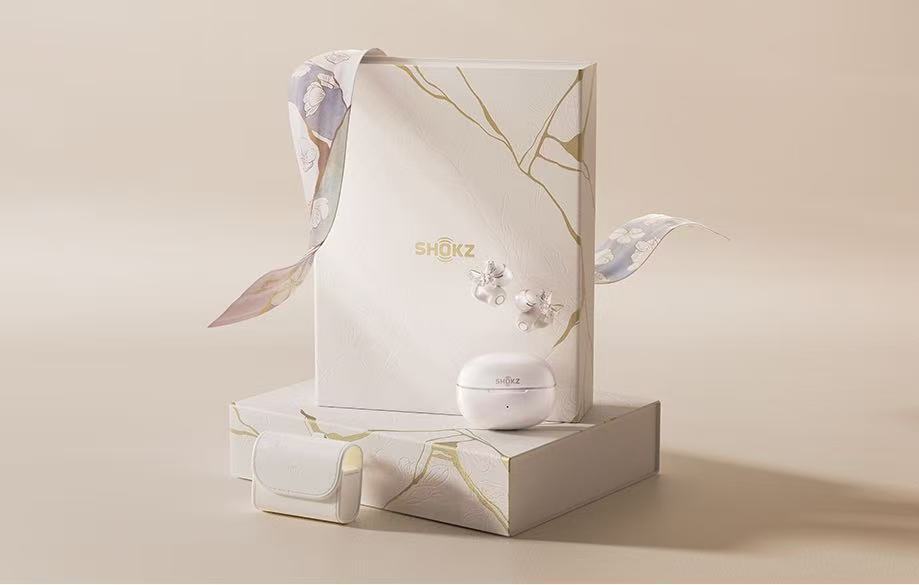
This restraint and long-term thinking are also reflected in its brand marketing and user communication. From cross-industry collaboration with freediving world champion Jin Ming to partnering with global brand ambassador Zhang Jingyi to launch an art gift box, Shokz's strategic focus is not on blindly chasing quick returns from traffic but on concretizing the concept of "open listening, never rushing" through these partners who align with the brand's resilient and elegant characteristics, thereby building a high-end, professional, and highly trustworthy brand barrier in consumers' minds.
To achieve category replacement of traditional TWS in the red ocean, relying solely on concept marketing is far from enough. It is necessary to break the long-standing physical bottlenecks and industry pain points of open-ear headphones through hardcore underlying R&D at the product and technology practical level. In the latest product matrix, Shokz has brought industry-attention-grabbing iterative upgrades through the deep integration of acoustics, materials science, and vertical scenarios.
In the popularization of open-ear headphones, weak noise suppression and muffled sound in noisy environments have always been fatal shortcomings preventing their adoption in a wider range of scenarios. () Addressing this industry pain point, Shokz pioneered the disruptive concept of "open-ear noise filtering" for the first time in the industry.
Openness and noise filtering are inherently a huge contradiction in terms of physics and acoustics. In the early stages of the project, this technology even sparked huge controversy within Shokz, with many R&D personnel once believing it to be an insurmountable physical barrier. However, based on long-term investment in technology and the technical belief of "because we believe, we see," Shokz had already proactively initiated pre-research on noise filtering technology as early as late 2020 to 2021—at a time when the now-popular ear-hook open-ear headphones had not even appeared in the industry, and the R&D was entirely based on future concepts of bone conduction.
After more than five years of high-intensity technological iteration and optimization, Shokz finally launched the "Shokz Tianli Filter Noise Technology (韶音天篱滤噪技术)". This technology successfully broadens the noise filtering frequency band to nearly 4000Hz and reduces the noise filtering depth to 18dB, making it the industry's first open-style noise filtering solution that perfectly adapts to multiple scenarios such as gyms, coffee shops, and offices. This marks a new stage for open-ear headphones: they can retain the environmental awareness and safe mobility brought by open listening while also delivering an immersive and clear listening experience. Zhang Haofeng (张浩锋) further revealed that if this technology can continue to evolve into high-difficulty noisy scenarios such as high-speed trains and airplanes in the future, it will directly trigger the next complete revolution in the audio industry.
Official Image
Most audio manufacturers have firmly focused their sports earphones on the running赛道, but Shokz has precisely targeted the swimming market as the next decisive growth breakthrough. According to Shokz’s internal global survey data, the number of people who swim regularly accounts for about 60% of the running population—a vast blue ocean that has long been underestimated by the industry. Since the swimming environment is extremely monotonous and users cannot chat or take photos while moving, their demand for music stimulation underwater is often stronger and more rigid than during running. However, due to the ineffective transmission of Bluetooth signals underwater and the stringent waterproof requirements, there has long been a lack of excellent solutions on the market, making this area almost a vacuum with zero competition for high-quality audio.
To address this, the OpenSwim Pro 2 not only elevates waterproofing to an extreme diving-grade level, but also packs a powerful custom 6nm chip and a nine-axis sensor inside the hardware. Based on deep insights into real user needs, swimmers wearing smartwatches frequently lift their wrists to check data underwater, which seriously disrupts the rhythm and stroke continuity of swimming. With this top-tier sensor and chip combination, the OpenSwim Pro 2 can accurately identify core sports metrics such as stroke type, stroke count, and swimming distance, and provide real-time voice feedback to the user, perfectly achieving a closed-loop integration of acoustics, sports technology, and extreme scenario experience.
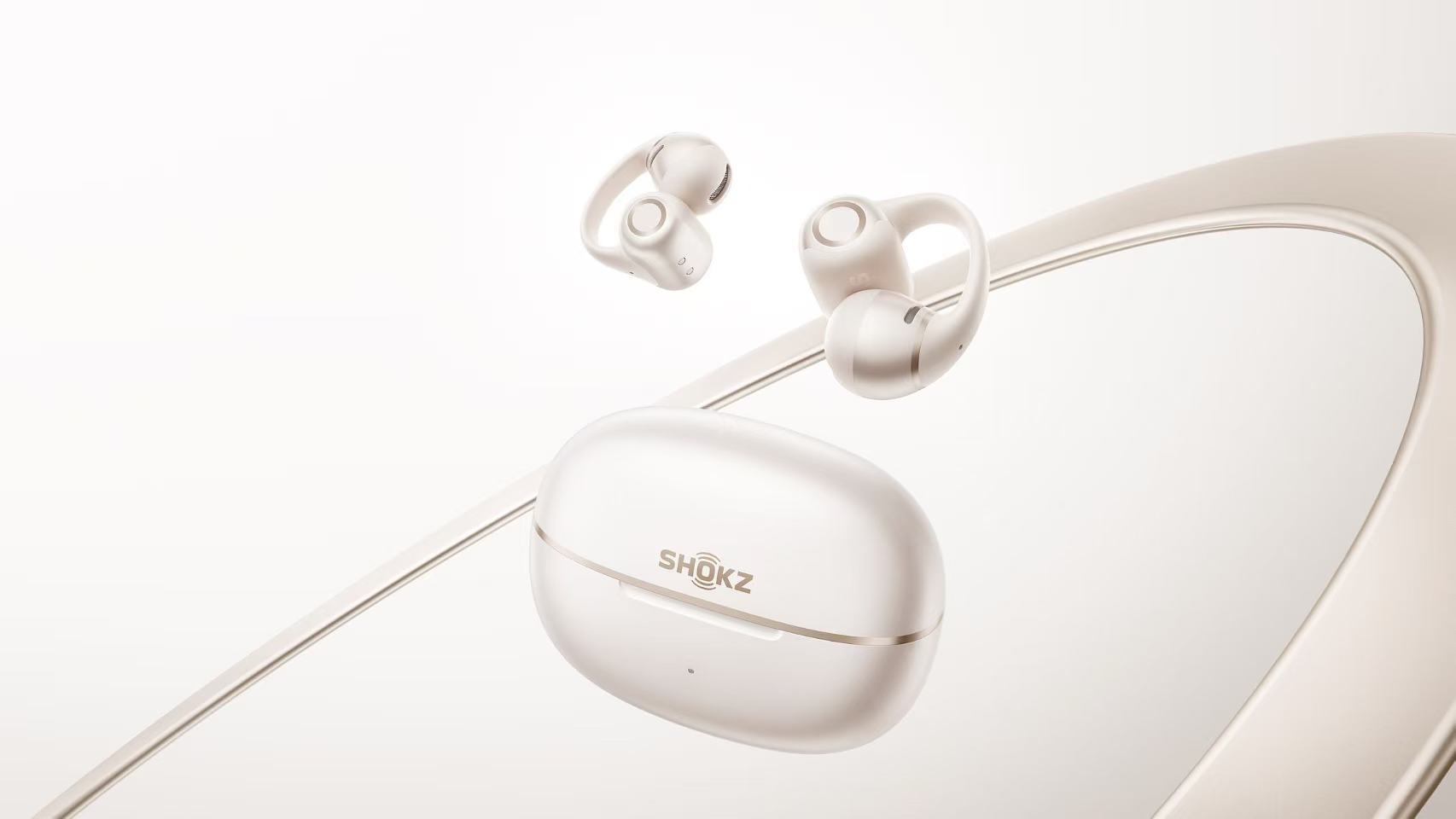
In recent years, the clip-on form factor, with its trendy appeal and unique wearing style, has been aggressively attracting traditional TWS users. However, clip-on products have always faced a stubborn paradox in the industry: clamp too tightly, and the ear cartilage feels sore; clamp too loosely, and they tend to loosen and fall off during vigorous exercise.
To achieve the golden balance of "long-lasting wear without pain and vigorous shaking without dropping," the newly launched OpenDots 2 has built upon the two core technical advantages established by the previous generation OpenDots ONE — the "Dynamic Titanium Arc Structure" and "9G Preload Force" — while making extremely delicate micrometer-level adjustments in material science and center-of-gravity distribution.
In terms of structural optimization, OpenDots 2 has achieved extreme compression of the internal core titanium sheet width, reducing it by up to 0.6 millimeters. This minute size reduction greatly alleviates the localized pressure on the edge of the ear canal. Meanwhile, the R&D team has re-optimized the overall center of gravity distribution of the earphone and comprehensively improved the resilience and fatigue resistance of the titanium sheets, ensuring that the earphone can maintain an extremely stable, balanced, and high-performance clamping experience even under prolonged, high-intensity, and high-frequency stretching usage. This R&D approach, which resolves the conflict between wearing stability and comfort through material innovation, further solidifies Shokz's leading position in the field of comfort technology.
In the current hardware wave where AI, smart glasses, and wearable health monitoring devices are hot topics, Shokz demonstrated strong strategic focus and remarkably sober thinking in the exclusive interview. Facing future technological evolution, they did not blindly follow trends but instead adhered to a methodical logic of their own.
Regarding the booming AI technology, Shokz (韶音) internally defines itself as a "radical conservative." They firmly believe that AI will inevitably reconstruct the entire smart hardware ecosystem in the future, but this process is by no means achieved overnight; rather, it follows a distinctly rhythmic progression. In Shokz's blueprint, the implementation of AI on open-ear headphones is clearly divided into three progressively evolving dimensions:
The first dimension is performance enhancement (fully deployed): This is the phase that has already matured and been widely applied. Shokz uses AI algorithms to deeply optimize the headphones' noise cancellation performance, microphone call noise reduction, and underlying acoustic sound quality.
The second dimension is a revolution in interactive experience (currently underway): With the proliferation of large AI models, the interaction medium between humans and hardware is gradually shifting from keyboards and screens to extremely natural voice conversations. Due to the inherent properties of open-ear headphones—being worn all day, not isolating the environment, and high-frequency usage—Shokz regards them as the most natural and best-suited interface for natural voice interaction with AI. In the future, this dimension will unleash tremendous opportunities for interactive revolution.
The third dimension is capability enhancement (Shokz's core strategic focus): This dimension is no longer limited to vague general scenarios but instead focuses AI on specific vertical scenarios where it can truly shine. For example, sensors on headphones collect real-time motion behavior data from users, and with AI processing it locally or in the cloud, users can receive personal trainer-level intelligent sports coaching. Or in an office setting, AI processes sound data to significantly improve users' work efficiency and productivity. This capability boost that precisely targets vertical scenarios is exactly the ace direction that Shokz (韶音) is most optimistic about and heavily investing in.
In response to the hot topic in the industry—"With a market of 400 million glasses-wearing people in China, will smart glasses eat up the living space of earhook/open-ear headphones?"—Shokz's senior management has provided a calm and rational judgment based on business fundamentals.
Zhang Haofeng (张浩锋) admitted that Shokz (韶音) is an "optimistic yet cautious player" in the eyewear market. Glasses, as facial wearable devices, are far more complex and face more physical constraints than earphones. Users can easily wear a pair of lightweight earphones on their ears all day without any psychological burden; however, attempting to forcefully mount an entire display screen, complex computing units, and a large-capacity battery on the user's face presents a fundamental "impossible triangle" physical contradiction among product weight, battery life, heat dissipation, and manufacturing costs, which cannot be perfectly resolved in the short term. Therefore, the pace of adoption and commercial rollout for open-ear headphones combined with AI is bound to be faster and more solid than for smart glasses. Glasses may hold significant long-term potential in the future, but their technical challenges and iteration cycles will inevitably be very lengthy.
Official image
Amid the industry trend where smart wearable devices are desperately "adding" features, trying to stuff various biosensors such as heart rate and EEG into earphones, Shokz (韶音) has demonstrated an extremely rare restraint and "subtraction philosophy."
Yang Yun pointed out that the core commercial value and user value of sports health monitoring (such as HRV, continuous heart rate, etc.) highly depend on "7×24 hours of seamless, long-term, and continuous data baseline support." This is precisely the natural home of devices like smart bands and smart watches, which users hardly ever remove even when bathing or sleeping. In contrast, earphones, as devices that are frequently put on and taken off and used in relatively fragmented scenarios, are inherently unable to provide a continuous time baseline without interruptions. If complex biosensors are forcibly crammed into earphones during the research stage just to piece together functions and gimmicks, it will inevitably severely compromise the wearing weight, volume, and battery life of the earphones. After rigorous evaluation, Shokz believes that this cannot provide users with a better overall core experience. Therefore, they chose to exercise restraint, making trade-offs and subtractions on unnecessary functions, allowing earphones to return to the ultimate wearing comfort technology and acoustic essence.
In Shokz's endgame mindset, open-ear headphones are never an isolated island exclusive to a small group of hardcore sports enthusiasts, but rather a category tsunami that will ultimately overturn and reshape the entire traditional true wireless audio industry landscape. From deep engagement in bone conduction and defining professional sports, to now comprehensively deploying full-form earhooks and ear clips, moving toward all-scenario open audio; from the hardcore R&D of "Shokz Tianli Noise Filtration" breaking the physical contradiction, to reshaping the high-definition listening experience for underwater sports, Shokz is using 15 years of steadfastness, insight into real needs, and hardcore technological conviction to continuously shatter those self-righteous industry ceilings imposed by the outside world.
As CEO Yang Yun stated at the end of the media interview, the so-called "endgame mindset" by no means sets the ceiling here — Shokz's technological upward potential and imagination remain vast. This open revolution, which fully returns comfort and listening autonomy to consumers, has just reached the midway point, and Shokz has clearly already grasped the ticket to the next era.
This content is automatically aggregated by InertiaRSS (RSS Reader) for reading reference only. Original from — Copyright belongs to the original author.