惯性聚合 高效追踪和阅读你感兴趣的博客、新闻、科技资讯
阅读原文 在惯性聚合中打开

推荐订阅源

A
Arctic Wolf
T
Tenable Blog
T
Troy Hunt's Blog
Exploit-DB.com RSS Feed
P
Privacy & Cybersecurity Law Blog
NISL@THU
NISL@THU
Application and Cybersecurity Blog
H
Hacker News: Front Page
S
Secure Thoughts
AWS News Blog
AWS News Blog
L
LINUX DO - 最新话题
D
Darknet – Hacking Tools, Hacker News & Cyber Security
M
MIT News - Artificial intelligence
T
Tor Project blog
S
Schneier on Security
PCI Perspectives
PCI Perspectives
OSCHINA 社区最新新闻
OSCHINA 社区最新新闻
美团技术团队
Google DeepMind News
V
Visual Studio Blog
爱范儿
爱范儿
Google DeepMind News
Cyberwarzone
Cyberwarzone
T
The Exploit Database - CXSecurity.com
罗磊的独立博客
T
Threat Research - Cisco Blogs
Recent Commits to openclaw:main
V
V2EX
C
CXSECURITY Database RSS Feed - CXSecurity.com
Stack Overflow Blog
Stack Overflow Blog
freeCodeCamp Programming Tutorials: Python, JavaScript, Git & More
G
GRAHAM CLULEY
L
LINUX DO - 热门话题
D
Docker
J
Java Code Geeks
GbyAI
GbyAI
H
Heimdal Security Blog
The Hacker News
The Hacker News
MongoDB | Blog
MongoDB | Blog
V
Vulnerabilities – Threatpost
T
Tailwind CSS Blog
Cloudbric
Cloudbric
TaoSecurity Blog
TaoSecurity Blog
C
CERT Recently Published Vulnerability Notes
Y
Y Combinator Blog
Recorded Future
Recorded Future
Cisco Talos Blog
Cisco Talos Blog
T
Threatpost
The Register - Security
Hacker News - Newest:
Hacker News - Newest: "LLM"

Hacker News: Front Page

SPICE simulation → oscilloscope → verification with Claude Code — Lucas Gerads GitHub - GainSec/AutoProber: Hardware hacker’s flying probe automation stack for agent-driven target discovery, microscope mapping, safety-monitored CNC motion, probe review, and controlled pin probing. Introducing Claude Opus 4.7 Qwen Studio The Future of Everything is Lies, I Guess: Where Do We Go From Here? GitHub - SeanFDZ/macmind: Single-layer transformer in HyperTalk for the classic Macintosh Virginia Bans Sale of Geolocation Data Show HN: Agent-cache – Multi-tier LLM/tool/session caching for Valkey and Redis Ancient DNA reveals pervasive directional selection across West Eurasia [pdf] AI cybersecurity is not proof of work Moving a large-scale metrics pipeline from StatsD to OpenTelemetry / Prometheus GitHub - Nightmare-Eclipse/RedSun: The Red Sun vulnerability repository GitHub - SethPyle376/hiraeth: Local AWS emulator focused on fast integration testing, with SQS support, SQLite-backed state, and a debug-friendly web UI. A Better Ludum Dare; Or, How to Ruin a Legacy GitHub - macOS26/Agent: Any AI, replaces Claude Code, Cursor, OpenClaw. Over 18 LLM providers (Claude, OpenAI, Gemini, Ollama, Zai, HF, Qwen) wired into a native Mac app that writes code, builds Xcode projects, bumps versions, manages git, automates Safari, use AppleScript, JS or Accessibility, extend Agent! w/ MCP Servers, run tasks from your iPhone via Messages. YouTube now lets you turn off Shorts I Made a Terminal Pager Burgers | マクドナルド公式 Commands — HackerNews CLI documentation ChatGPT for Excel PiCore - Raspberry Pi Port of Tiny Core Linux Live Nation illegally monopolized ticketing market, jury finds Google Broke Its Promise to Me. Now ICE Has My Data. Founding Engineer at Adaptional | Y Combinator CRISPR takes important step toward silencing Down syndrome’s extra chromosome GitHub - saffron-health/libretto: The AI toolkit for building reliable browser automations US v. Heppner (S.D.N.Y. 2026) no attorney-client privilege for AI chats [pdf] Unexpected €54k billing spike in 13 hours: Firebase browser key without API restrictions used for Gemini requests Fragments: April 14 Cal.com Goes Closed Source: Why AI Security Is Forcing Our Decision | Cal.com - Scheduling Software for Online Bookings Laravel raised money and now injects ads directly into your agent Pakistan hospital at centre of child HIV outbreak caught reusing syringes in BBC film Codex Hacked a Samsung TV Tech Valuations Back to Pre-AI Boom Levels A perfectable programming language — Soter GitHub - halfwhey/claudraband: Claude Code for the Power User Partnership through Play: Investigating How Long-Distance Couples Use Digital Games to Facilitate Intimacy Textbooks and Methods of Note-Taking in Early Modern Europe (2008) Eternity in six hours: Intergalactic spreading of intelligent life (2013) Seven countries now generate 100% of their electricity from renewable energy Tell HN: OpenAI silently removed Study Mode from ChatGPT Pro Max 5x Quota Exhausted in 1.5 Hours Despite Moderate Usage Show HN: Oberon System 3 runs natively on Raspberry Pi 3 (with ready SD card) Tell HN: docker pull fails in spain due to football cloudflare block Bring Back Idiomatic Design No one owes you supply-chain security GitHub - xsawyerx/curl-doom: DOOM, played over cURL Apple update turns Czech mate for locked-out iPhone user The Grand Line Cache TTL silently regressed from 1h to 5m around early March 2026, causing quota and cost inflation Building a Z-Machine in the worst possible language The peril of laziness lost Iran war: We spoke to the man making Lego-style AI videos that experts say are powerful propaganda AI Will Be Met With Violence, and Nothing Good Will Come of It GitHub - duguyue100/midnight-captain: Inspired by Midnight Commander, tailored to my taste. How to build a `git diff` driver · Jamie Tanna | Software Engineer Center for Responsible, Decentralized Intelligence at Berkeley The Local Universe’s Expansion Rate Is Clearer Than Ever, but Still Doesn’t Add Up - A new synthesis of astronomical measurements confirms a persistent mismatch that could point to physics beyond current models The disturbing white paper Red Hat is trying to erase from the internet – OSnews NetBlocks (@netblocks@mastodon.social) The Future of Everything is Lies, I Guess: Annoyances ‘Abhorrent’: the inside story of the Polymarket gamblers betting millions on war Productive procrastination — Max van IJsselmuiden maps, territory and LMs 447 Terabytes per Square Centimetre at Zero Retention Energy: Non-Volatile Memory at the Atomic Scale on Fluorographane Show HN: Pardonned.com – A searchable database of US Pardons 20 Years on AWS and Never Not My Job The Seasons are Wrong The FAA wants gamers to apply for air traffic control jobs Artemis II crew splashes down near San Diego after historic moon mission We gave an AI a 3 year retail lease in SF and asked it to make a profit | Andon Labs How a dancer with ALS used brainwaves to perform live On filing the corners off my MacBooks Installing every* Firefox extension OpenClaw’s memory is unreliable, and you don’t know when it will break Steve Blank Nowhere Is Safe Chimpanzees in Uganda locked in vicious 'civil war', say researchers watgo - a WebAssembly Toolkit for Go linux/Documentation/process/coding-assistants.rst at master · torvalds/linux GitHub - callumlocke/json-formatter: Makes JSON easy to read. Founding Product Engineer at Bild AI | Y Combinator A compelling title that is cryptic enough to get you to take action on it GitHub - Keychron/Keychron-Keyboards-Hardware-Design: Industrial design files for Keychron keyboards and mice. 100+ models with CAD assets in STEP, DXF, DWG, and PDF. Source-available, with commercial use allowed for original compatible accessories within the license terms. [ANNOUNCE] WireGuardNT v0.11 and WireGuard for Windows v0.6 Released 1D-Chess Helium Is Hard to Replace Keeping a Postgres queue healthy — PlanetScale Serenity Forge (@serenityforge.com) Our response to the Axios developer tool compromise Do Americans read print books, e-books or audiobooks more? Uncharted island soon to appear on nautical charts The Problem That Built an Industry Fragments: April 2 Python Release Python install manager 26.1 Bitcoin miners are losing $19,000 on every BTC produced as difficulty drops 7.8% God sleeps in the minerals Harness engineering: leveraging Codex in an agent-first world Apple Silicon and Virtual Machines: Beating the 2 VM Limit What have been the greatest intellectual achievements? The APL Programming Language Source Code
Why weekends are under threat
2026-04-11 · via Hacker News: Front Page

Just like Uber and Facebook, weekends thrive because of something known as network effects. Always-on work culture weakens them.

calendar

This story is adapted from Planet Money: A Guide to the Economic Forces That Shape Your Life, a book by Alex Mayyasi (a Hustle contributor) and NPR’s Planet Money team about the underlying economic principles that show up in our daily lives.

In 1929, Soviet leader Joseph Stalin decided that the weekend was bourgeois and inefficient. So he introduced nepreryvka, or the continuous workweek.

It was five days long, with each worker receiving a single, randomly assigned day off. Now Soviet factories could keep humming 365 days per year.

On paper, this was a better deal for Soviet workers, who previously had only Sunday off. Now they got their day off after four days at work, not six.

Still, workers hated nepreryvka. Rather than most of the country having Sunday off, now 20% of the population was free any given day.

“What are we to do at home if the wife is in the factory, the children in school, and no one can come to see us?” one worker griped. “That’s no holiday, if you have to celebrate by yourself.”

By 1931, Stalin backtracked, and reinstated a coordinated day off.

Stalin’s misadventures in calendaring reveal that weekends aren’t just days of the week. Weekends are a technology to organize time.

Like the internet, weekends’ usefulness comes from network effects: They’re valuable because of all the other people using them, and their value grows as more and more people participate.

Network effects are key to understanding the modern economy. They also explain why leisure time today faces its greatest threat since Stalin.

History’s hardest product launches

In December 1842, Samuel Morse walked into the Capitol Building in Washington, DC, and pitched world leaders on the telegraph.

At the time, it took more than a month for a message to steam by ship from New York around Cape Horn to San Francisco. Morse felt confident he could send messages quickly and accurately across continents, even oceans.

But no one seemed to grasp the telegraph’s potential. Morse’s problem was that watching a single telegraph in action was like playing catch with yourself — he was demonstrating a network good — a product whose usefulness comes from network effects — without a network.
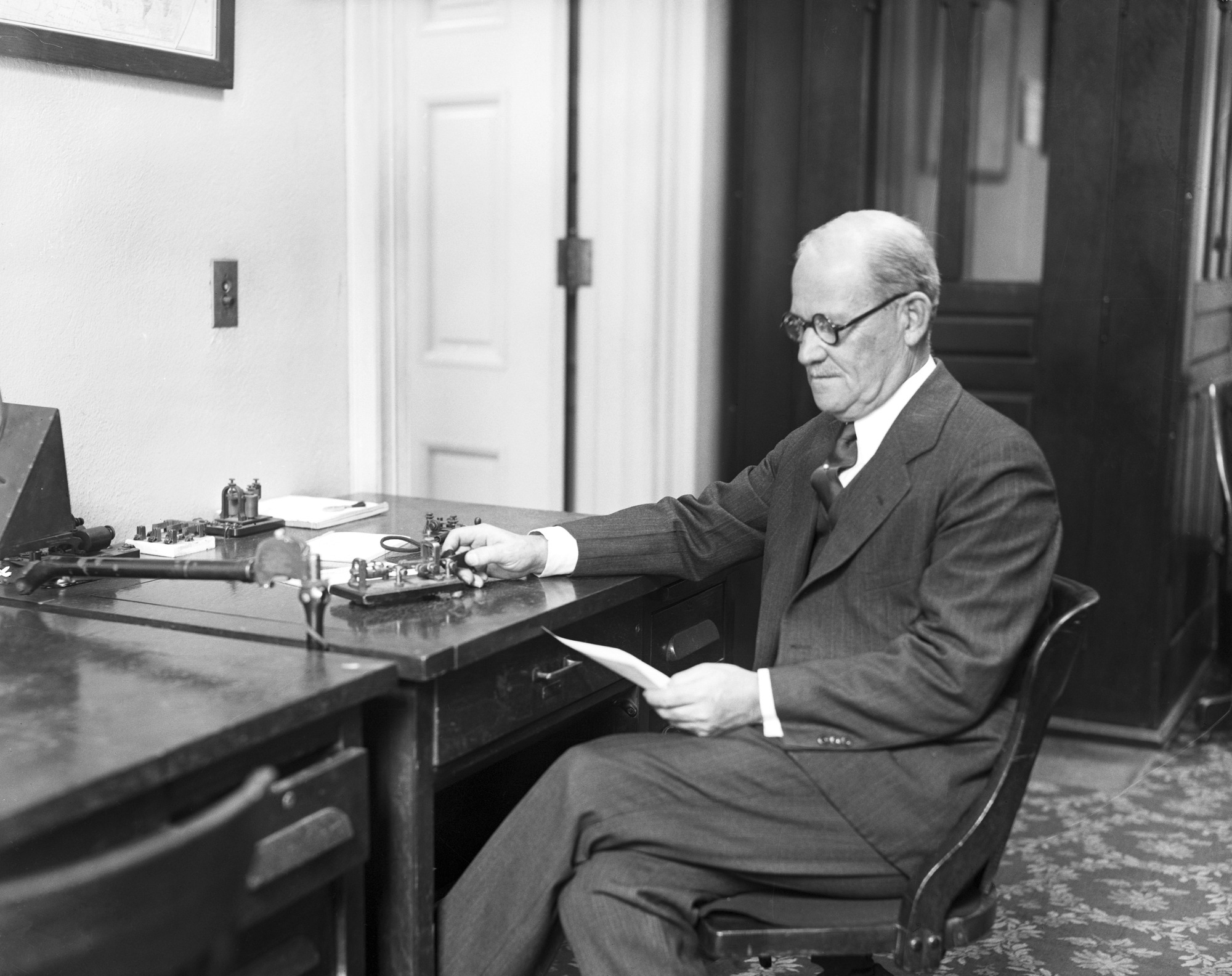
Black-and-white photo of telegraph operator Edward Smithers working at a desk in the White House in 1928.Edward Smithers, the telegraph operator for several presidents, works on a telegraph at the White House in 1928. (Bettmann/Getty Images)

That day in DC, he tapped out a message in the system of dots and dashes he’d invented, then received it, via the wire, in another room. The assembled congressmen seemed skeptical; some ridiculed him.

Network goods aren’t actually useful until you’ve built the entire network. Despite the skepticism, Congress narrowly voted to fund Morse, who then built a telegraph line along the railway from Baltimore to Washington.

  • Residents played chess matches over the wires.
  • Baltimore police telegraphed a description of a criminal fleeing by train to DC so the crook could be arrested at the station.
  • Someone messaged a bank to ask about a customer’s creditworthiness.

People started to get it.

Within a few years, Morse’s company was racing to build telegraph lines faster than their competitors.

With network goods, the race to build the network tends to be winner-take-all. If a telegraph company wires an entire region and opens convenient telegraph offices, it becomes more difficult for a competitor to build a separate, parallel network and win customers.

With his early lead, Morse established large, profitable telegraph lines that transformed him into a titan of industry.

A century or so after the telegraph wired much of the world, a new network — the internet — arose, which enabled new kinds of network goods. The construction of these new goods was as simple and affordable as creating a website (thefacebook​.com, ebay​.com) or app (Uber, Hinge).

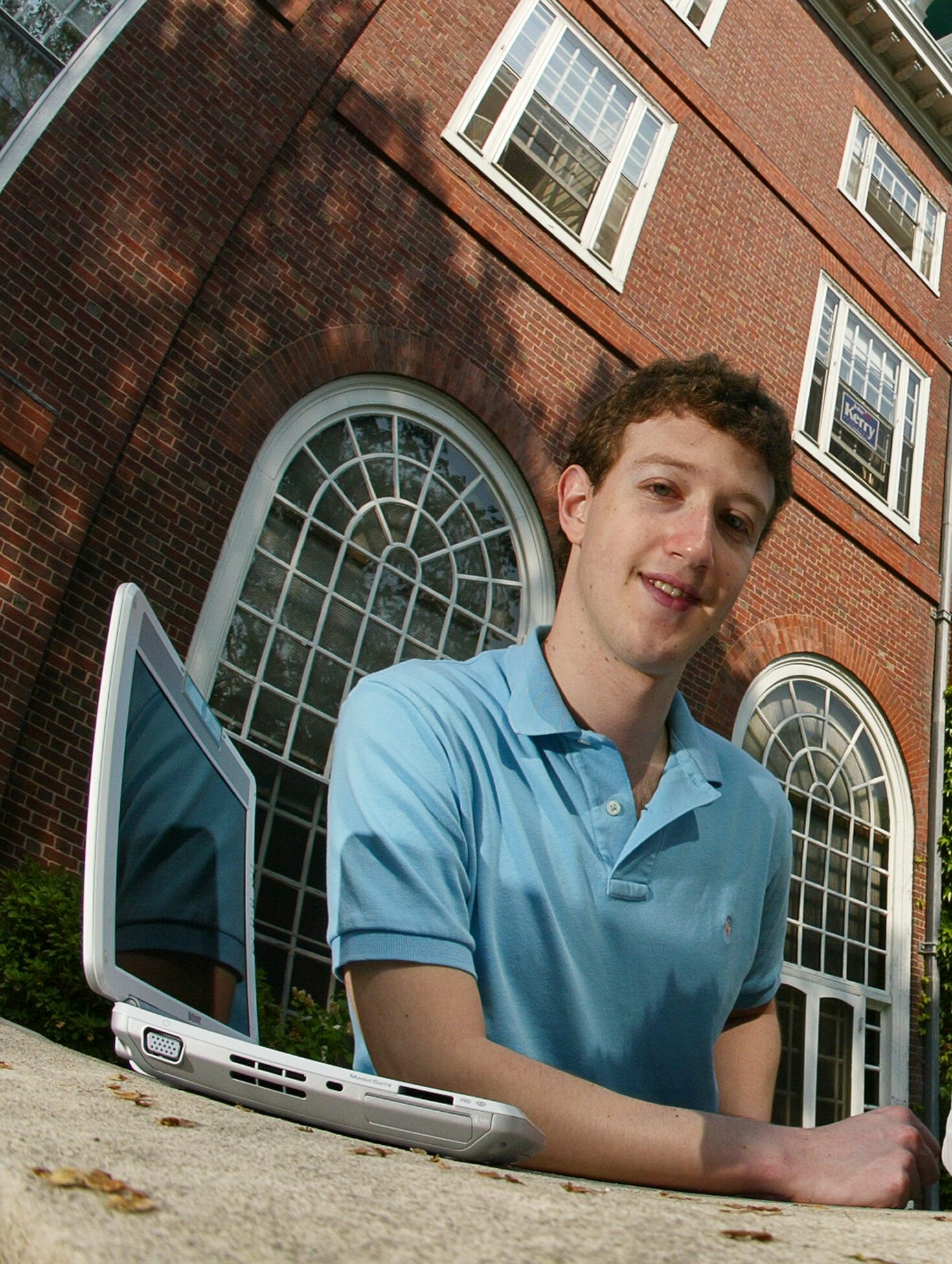
A young Mark Zuckerberg smiling outdoors while leaning over an open laptop in front of a brick building.

Mark Zuckerberg needed network effects to grow Facebook into a behemoth. (Rick Friedman/Corbis via Getty Images)

But companies still had to convince people that their networks offered value to the customer. Why download Uber if there aren’t already lots of drivers or customers?

The companies that solved this conundrum were rewarded with a network that grew increasingly valuable as more customers joined.

Investors and start-up founders love network effects. In the past few decades, a majority of the world’s biggest new companies have risen, at least in part, thanks to more people using their product:

  • As more businesses sold their products on Amazon, the selection attracted more customers, which attracted more sellers.
  • The data from Google search queries became a competitive advantage that allowed Google to continually improve its search algorithm and ad targeting.
  • As more people joined, Instagram became more useful and entertaining. (Or at least increased FOMO.)

Network effects are a powerful concept in business. But their impact doesn’t end there.

Schrӧdinger’s Saturdays

Days, months, years. These units of time arise from natural phenomena: the sun rising and setting, the moon waxing and waning. A week, though, is a human invention.

The idea of the weekend really started to codify after the Industrial Revolution created a clear distinction between work hours and leisure time. (In preindustrial agrarian societies, farmers rested when the day’s work was done or when the sun set, not at five o’clock sharp.)

Illustration of people relaxing outdoors on a picnic blanket while someone flies a kite in the background.Olivia Heller/The Hustle

The workers who marched into New England’s textile mills and English coal mines generally had Sunday off as a religious day. They might also cheekily take Saint Monday, which was the euphemism for shirking on Monday to nurse a hangover.

The weekend’s official expansion had many protagonists and motivations:

  • Unions lobbied for capped hours and time off.
  • Henry Ford believed that a weekend would encourage road trips and car ownership.
  • Executives used longer weekends to reduce hours during the Great Depression in order to cut costs and limit layoffs.

In 1938, the United States’ Fair Labor Standards Act established a 44-hour workweek (reduced in 1940 to 40 hours) and mandated that workers receive overtime after 40 hours, and the five-day workweek became standard.

The weekend meant more free time. It also created something new: weekly leisure time that the majority of the population enjoyed together.

We’ve now lived with weekends so long that many of its network-effect benefits are invisible to us. Like Apple’s app store (a classic network-effect business), the weekend became a platform for others to build upon: dance halls, sports arenas, country getaways to cater to weekenders.

“The modern idea of personal leisure emerged at the same time as the business of leisure,” writes Witold Rybczynski, a well-known architect and academic. “The first could not have happened without the second.”

Without weekends, you don’t get many giant music festivals and 80k-person stadiums. A world of nepreryvka doesn’t develop cute B&Bs for weekend getaways and restaurants that serve bottomless mimosas.

A performer on stage facing a massive crowd at the Coachella music festival with a Ferris wheel visible in the background.

Coachella: likely not possible without a critical mass of people having weekends. (Karl Walter/Getty Images for Coachella)

Not everyone has weekends off, of course, and plenty of people prefer a free Tuesday so they can get chores done or enjoy uncrowded theaters, stores, or ski lifts.

Overall, though, the value of collective days off is so strong that researchers Cristobal Young and Chaeyoon Lim found that unemployed people reported almost as big a happiness spike on weekends as people with jobs.

“The essential characteristic of the weekend is not just the having of a day off,” they write in their paper Time as a Network Good, “but rather that other people have the day off.”

Yet even as the average worker has gained more leisure time over the last century, many people feel busier than ever.

That’s partly because the market has delivered us so many products and activities to spend our leisure time consuming. But many workers have also lost the clear demarcation between work and time off.

In the 1930s, physicist Erwin Schrödinger attempted to explain a counterintuitive principle of quantum mechanics using the example of a cat in a box. In his thought experiment, the box contains poison that will be released depending on the state of a subatomic particle. Until you open the box and check, Schrödinger’s cat is somehow both alive and dead.
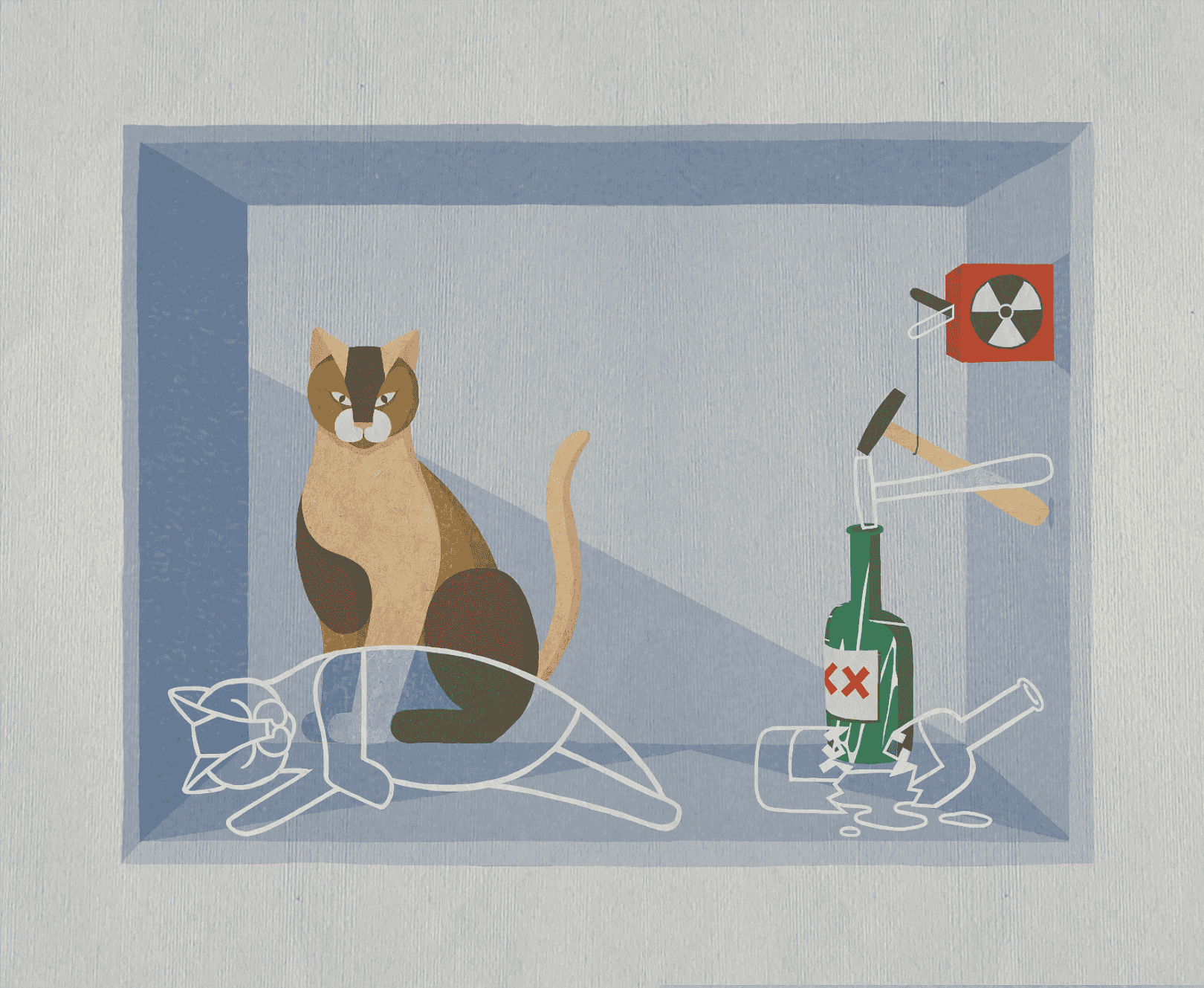
Illustration of Schrödinger's thought experiment showing a cat inside a box alongside a poison bottle and radioactive trigger device.

Olivia Heller/The Hustle

Today millions of us have Schrödinger Saturdays — sure, we have the day off, but we’re expected to check our work email, which might send us scurrying to review a contract or respond to our boss.

Or we live according to the whims of just-in-time scheduling. Fast-food restaurants and clothing stores make workers show up, but then send them home if the scheduling software predicts a slow day.

The encroachment of work into free time reminds us of something fundamental about life. Economists spend lots of time thinking about money. But our most valuable resource is time.

Like dollars, time comes in different denominations. A free hour alone on Tuesday afternoon might be worth five dollars; a free hour on Saturday evening when all your friends are available for dinner might be worth 20. Stalin’s mistake was to replace everyone’s twenties with fives.

Illustration of a man sitting alone on a park bench checking his phone, looking distracted on what should be a day off.

Olivia Heller/The Hustle

The innovation of weekends increased the value of our leisure hours; smartphones, always-on work culture, and addictive entertainment threaten to reduce that value.

Turning off your phone before a family meal; not answering emails in your off-hours; spending Saturdays with people you love — that’s putting the power of network effects to work in your own life.

You can order the Planet Money book and get tickets to their book tour at planetmoneybook.com.