







This article was featured in the One Story to Read Today newsletter. Sign up for it here. Updated at 8:22 a.m. ET on April 25, 2026.
When I was a freshman at Stanford University, I learned to shotgun a beer from a guy in a frat. Soon after, he dropped out and started an AI company. Six months later, it was valued at more than $1 billion.
For most students, Stanford is a normal competitive school, where people go to class and coffee shops and fall in love and freak out over finals. But a select few attend something else: a Stanford inside Stanford, where venture capitalists pursue 18- and 19-year-olds, handing out mentorships and money and invites to yacht parties in an attempt to convert promise into profit.
Steve Blank teaches a legendary start-up class at the school, “Lean Launchpad.” Although students have always dreamed big, Blank told me that Stanford has changed in recent years, placing more and more emphasis on the young founders who may kick back some of their future billions to the university. Today, he said, “Stanford is an incubator with dorms.”
AI seems poised to eliminate many entry-level jobs, but it has made this special cohort at Stanford only more valuable. “Our bread and butter is young students,” a VC explained once, while promising me and a small group of other freshmen and sophomores that if we ever had ideas, her firm would help us out. Investors spend all day hanging out at the Coupa Café on campus. Firms such as Sequoia and Pear VC employ talent scouts—a number of them Stanford upperclassmen—to identify the best of the young best. Then they sink their hooks in.
These teenagers are sometimes handed “pre-idea funding”—hundreds of thousands of dollars, or in rare cases, even millions—before they have the glimmer of an actual company in mind. Plied with excess and access, they have little oversight; innovation and fraud co-develop. And all of this is happening as tech companies assume more power over our lives than ever before.
This is a story about the kids being groomed to rule the world—and what they’re learning from those who already do.
California was the site of the great Gold Rush that transformed America. That population of young adventurers, Mark Twain wrote, “gave to California a name for getting up astounding enterprises and rushing them through with a magnificent dash and daring and a recklessness of cost or consequences.” Yet the fortune generated by Silicon Valley in the past few decades has exceeded the value of all the gold discovered during the first California boom 200 times over, even adjusted for inflation.
Last year, the value of public companies based in the area was $23 trillion—greater than the GDPs of the United Kingdom, Germany, India, and the entire continent of Africa combined. Private companies add at least another $1 trillion. As a data-science professor once joked to me, “I bike past more billionaires on my way to work than there are in the entire Midwest.”
This is an economy that runs on the assumption of potential—on the idea that tech founders will, through brute force, innovate their way into market domination and produce limitless riches. Without a product or revenue, Safe Superintelligence, an AI company with about 20 employees, was valued at $32 billion in 2025; it still hasn’t announced any tech and doesn’t plan to anytime soon.
In this modern-day gold rush, the resource to mine is talent. And nowhere can you find more of it than at Stanford.
Stanford and Silicon Valley are intertwined in a unique fashion. Although the Ivy League has long been a pipeline to Wall Street and Washington, much of Silicon Valley was built on university land. The Stanford Research Park has been home to the headquarters of Hewlett-Packard, Facebook, and Theranos. Nowadays, roughly 150 companies, including Tesla and Google, have offices on campus. (In 2025, Stanford earned $320 million in rent.) The venture-capital firms are just up the hill, ready to fund new start-ups from promising students, most of whom then set up shop nearby, hiring almost exclusively other Stanford students and cycling some of the proceeds back to the university. I took my first college programming course in the Nvidia auditorium, donated by Jensen Huang, the Stanford alum who started the world’s most valuable company. (The world’s second-most-valuable company, Alphabet, was also started by Stanford students.)
For Silicon Valley investors, sorting out the students who can make it big from the wannabes has become a high-stakes competition. Nobody sees value in a “wantapreneur,” as one investor put it to me; they want to identify the “builders.” That’s the name applied to the tech acolytes who have what it takes, and also a title assumed by many pretenders.
The college has large entrepreneurship clubs—the Association of Stanford Entrepreneurial Students and the Business Association of Stanford Entrepreneurial Students, known as ASES and BASES. But joining won’t get you into the Stanford inside Stanford. Access to the spaces that actually matter is invite-only—determined less by technical skill than by who you know and by resumé status symbols, such as having done the Neo Accelerator or PearX summer fellowship, run by VCs. Those who have been plucked from the crowd congregate at secret clubs and lavish dinner parties.
When it comes to this Stanford inside Stanford, “you sort of join it freshman year or you don’t,” one student turned founder told me. “It’s totally just vibes.” One funded undergrad told me, “You’re treated like royalty if you say the right things.” Another put it to me more bluntly: “Any VC is begging to shove money down our throat.”
Some of the investors and CEOs competing for teenagers have good reputations. Ann Miura-Ko co-founded a fund that was an early backer of companies such as Lyft and Twitch. She is also an instructor at Stanford. "I look for super-builders and super-thinkers,” she told me; she gathers them in her Mayfield Fellows Program, which promises to transform “12 exceptional students into a cohesive community of entrepreneurs and leaders who define the next decade and shape the world.” Students I’ve spoken with describe Miura-Ko as a supportive and creative mentor. But some of those on the prowl are less interested in what they can do for students than in what students can do for them.
A friend recalled attending a party as a junior and chatting with a former classmate who had gone to work for a company valued at more than $150 billion. “Hey, you should consider coming to work with me,” the guy said. My friend answered noncommittally. Three days later, he was having coffee with the company’s CEO and being offered a minimum $600,000 salary if he dropped out. “I felt like I was being swept off my feet,” he told me. After doing some digging, though, he concluded that the company was shady—he suspected that it had misled investors about the effectiveness of its technology—and turned down the offer. A number of our mutual friends didn’t. One by one, they were persuaded to drop out. “That’s how they recruit,” my friend said. “They’re assassins.”
Stanford students aren’t just going to networking events, of course; they’re also doing plenty of cool things. I know a student who cobbled together a robot to drive around parties serving drinks; another built a tool that can determine exactly where and when video clips were taken through the fluctuation of electromagnetic fields in the background noise.
It’s fun and a little bit surreal to be told that you can just go out and make whatever it is you want to exist. Who wouldn’t want a $10,000 “micro-grant” from the Friends and Family club to spin up a nifty gadget? Or an investment from Z Fellows, which pays students to ignore their coursework for a week and dream up something interesting?
But kids know that even the most lighthearted exercise in creativity can be their ticket to Silicon Valley riches. The project you tinker with in your dorm room goes on your résumé; hacking sessions have corporate sponsors. Z Fellows is “Your Fast Track Into Silicon Valley.” Many students carefully copy the model they’ve seen lead to success: DoorDash started with a few students getting food delivered to their dorm; Snapchat was created when a frat bro wanted to send disappearing sexts to a girl.
But students have the ambition to work on big issues too—and many make substantial advances. Amber Yang made the Forbes “30 Under 30” list at 18 for developing promising technology to track space junk. Her algorithms could predict the position of debris with 98 percent accuracy—far better than NASA models. From almost the second she arrived on campus, the VCs began their pursuit.
“When you’re 18 and you have that amount of attention, you sort of feel like you don’t have a choice but to say yes,” Yang told me over coffee. Yes to the funding, to the programs, to starting a company that might ensure generational wealth before you can legally rent a car. Yang felt herself getting sucked in: “I struggled a lot with figuring out what I really wanted versus how people saw me.”
But when she was offered the Thiel Fellowship, a prestigious program that paid students $100,000 (now $250,000) to drop out of college, she turned it down—an almost-unheard-of decision. Instead, she finished her education. She also helped spin up a club called No Filter. Each week, she and a friend, Noor Siddiqui, invited a tech CEO to come talk to a group of 30 students. With confidentiality rules in place and an invite-only policy, No Filter immediately gained cachet as a place where insiders congregated. VCs, in turn, happily paid for the club, because it provided them with access to this cohort of students. “There were a few VCs who would just give us—and to them, it was nothing—but they gave us $20,000 for the quarter to just go out to dinners, and then we’d meet with the VCs,” Yang said.
Now Siddiqui runs a start-up that lets you select which genes you want your child to have (“Sex is for fun,” she says; “embryo screening is for babies”), and Yang has since become a venture capitalist herself. “I love the Valley, I love Stanford, and I’m, like, the biggest proponent of it,” Yang said. Still, she has come to reject the mythology around Stanford’s success machine, and the idea that it can predictably pluck the unconventional geniuses from the student body—especially when so many of the potential geniuses are just trying to copy the path to success they think older innovators followed.
“From the outside, everyone’s looking in, and they’re like, Oh, this person got that job because they’re just really great, and it’s meritocratic. And that’s what Silicon Valley tells everyone, that it’s meritocratic, right? That’s not the case,” she told me. Success is about “knowing the right person and being connected in a very specific way.”
When Sam Altman dropped out of Stanford in 2005 to start a company, “it was a very different time,” he told me. Today’s wining and dining and systematized recruiting had yet to sweep campus. “None of that stuff happened,” he said. “No VCs were showing up taking people to dinner. There was nothing even close to the idea that clearly exists now of the VC circuit, where the same people go to every event.”
As the former head of Y Combinator and now the CEO of OpenAI, Altman has maintained close ties to campus. He’s one of those billionaires who will respond to a text from a student or throw an investment or a job their way. “I’ve heard there’s these crazy-luxurious trips now and all of this stuff,” Altman said, “and it sounds very awesome.” Yet even he isn’t sure what to think. “I have heard from some of the people who work at OpenAI and went to Stanford that they’re very skeptical of the people that are doing the VC dinner circuit, and they tend to not be the really talented builders. It tends to be a big anti-signal,” Altman said.
Blank, the “Lean LaunchPad” instructor (he developed the now-ubiquitous “lean start-up” methodology used by thousands of companies), told me that the university has become so suffused with entrepreneurial ambition that it’s gotten hard to spot the actual geniuses. “The true founders—not the ones who want to make a lot of money or do it because their roommates want to do it—are closer to artists than to any other profession,” Blank said. They “see things that other people don’t. They hear things others don’t. And they’re driven to take that vision and turn it into physical reality. You know who else does that? Painters do that; sculptors do that; poets do that; playwrights do that.” He took the comparison to its logical conclusion: “Most paintings are failures. Most songs suck. Novels aren’t often best sellers. So the nature of an artist is you fail most of the time, yet you’re tenacious and you’re resilient.”
Those people exist in tech, but they’re rare. “Turns out,” Blank said, “100 percent of entrepreneurs think they’re visionaries. The data say 99 percent aren’t.”
This belief was echoed by John Hennessy, Stanford’s president from 2000 to 2016. When we spoke last spring, he told me that students today “look at Steve Jobs, Mark Zuckerberg, and Bill Gates and conclude that dropping out is the most brilliant thing. This is an incorrect assumption.”
Hennessy was a pioneering computer scientist, called “the godfather of Silicon Valley” by Marc Andreessen, and his coziness with tech leaders drove the university’s expansion. During his tenure, Stanford became the top fundraising school in the nation, the first to exceed $1 billion in a year, and Hennessy oversaw the construction of more than 70 new buildings; the university’s reputation skyrocketed, and its admissions rate dropped by 70 percent. After stepping down, Hennessy became the chair of the board of Alphabet.
“When I look at what I’ve seen in the last, say, 20 years, students have become much more focused on career,” Hennessy said. “There are hundreds of students on our campus who think they’re going to build the next great AI company. Yeah, maybe one of them will. But not hundreds.”
For all of Silicon Valley’s effort to identify talented teenagers, Hennessy pointed out, “if you look at the most successful start-ups that have spun out, they were graduate students, not undergrads.” The mythology of the brilliant-dropout founder doesn’t reflect reality, he argued. And throwing a bunch of money at kids who are still growing up can backfire.
Last year, I met a student at an off-campus dinner party. He was 19, smart, and openly contrarian—and I enjoyed arguing with him. He offered me a ride home. From behind the wheel of his Tesla, he began talking about drugs. “The whole reason I’m studying chemistry is because of LSD,” he said. “Have you tried it?” I told him I had not. He continued to tell me about “ketamine, LSD, shrooms, ecstasy, cocaine.” Then he said, “If you want, I’ll be your dealer. Just hit me up.”
We didn’t do drugs. But I looked the guy up later: He had already raised nearly $20 million for his software company.
“The founder-CEO model implies that you have a young founder who doesn’t really know how to be CEO,” Hennessy told me. Give too much power to a young person with too much ego, he said, and you can end up with a failure like Theranos. Elizabeth Holmes started the blood-test start-up as a Stanford sophomore, when Hennessy was three years into his term as president; he watched it all fall apart during his last year on the job. The product didn’t work, and Holmes was convicted of defrauding her investors.
She is far from the only Stanford-trained hustler to get ahead by distorting the truth.
Over the course of my freshman year, people I got to know in the tech world told me stories about having perpetrated tax evasion and tax fraud, research misconduct, embezzlement and misappropriation of funds, securities fraud, insider trading, academic dishonesty; about operating slush funds and shell companies, hacking, reckless endangerment. One CEO who took me out to brunch told me proudly about how his company had gotten its start—he’d signed a contract with the Libyan dictator Muammar Qaddafi. The breadth of bad behavior was staggering to me—but it didn’t seem to stop anyone from getting funded.
One dropout told me about the first check cut to her company, from an angel investor a year before. “I literally biked to someone’s office,” she told me, and he didn’t even ask “what my situation was” before agreeing to fund her. She had the reputation of someone who was going to make money, and she knew it “wasn’t fair,” but why not go for it? Her company then put out a glossy launch video promoting its product’s wondrous new features, neglecting to mention that the tech didn’t actually work.
The Stanford inside Stanford encourages an “actions first, questions later” mentality. I met many people who’d confessed to fraud or wrongdoing and still found their way back into tech’s good graces. One student publicly apologized for stealing a Chinese AI model and passing it off as groundbreaking new research, and then went right to work at an AI start-up attempting to automate white-collar jobs. The company is now worth $10 billion, and the guy serves as head of evaluations, measuring the reliability of the tech.
Much of the lack of accountability in this system is due to mindlessness, the kind of problem that develops when you have too much money to spend too fast.
One of the dirty truths about Silicon Valley is that most VCs suck at their job. About 2 percent of VC firms generate 95 percent of the industry’s returns. The average VC firm does not outperform the market. And many of them seem to be simply guessing—or, more accurately, going wherever they see a group headed.
Right now the stampede is moving toward anything with AI in the pitch. Before AI, it was cryptocurrency. Before crypto, it was virtual reality. And so on. The VC model depends on a few colossal successes outweighing the many failures. Investors buy into hype cycles, knowing that one big catch will set them up for life. There seems to be more money now than ever, and more of it focused on a mythologized view of a young founder. Facebook was originally launched on a shoestring budget, and a falling-out between Mark Zuckerberg and Eduardo Saverin—Zuckerberg’s classmate and fellow co-founder, who provided the company’s initial funding—eventually turned into a dispute worth tens of billions of dollars, thanks to Saverin’s original $15,000 stake.
Today Stanford clubs will spend twice that on a party.
“We’ve lost the moral compass for what we invest into,” Blank told me, sitting in a courtyard in the shadow of the business school. “We’ve lost the sense of shame and the sense of purpose.”
In Blank’s class, teams of students spend 10 weeks developing a company from idea to fundable start-up. Then they pitch it to investors brought in by Blank and his colleagues. It is extremely selective, extremely rigorous, and, as the course’s name implies, a launchpad to Silicon Valley success.
But Blank belongs to an older generation of innovators. And during his time in Silicon Valley’s training ground, he’s observed a change: “If you have no core beliefs, then you follow the money; you follow what’s most exciting.”
This is the message students are receiving, in a world where getting ahead at all costs has become the norm.
“There are 150—and they’re all men—that run the world,” the billionaire Chamath Palihapitiya once told an enraptured Stanford audience. He also described “anyone who wants to go into politics” as “fucking puppets.” Real power, he said, means aggregating “enough of the capital of the world to then reallocate it against my worldview.”
Jonathan Levin, Stanford’s president, got the job in 2024, after his predecessor, Marc Tessier-Lavigne, resigned over allegations of research misconduct in his labs. (In response to a university investigation triggered by my reporting in The Stanford Daily, Tessier-Lavigne conceded that he’d overseen studies in which data had been manipulated, but he denied having tried to hide the issues.) Levin graduated from the university (majoring in English and math), has spent the past 26 years working there, and lights up when he talks about Stanford. In his first commencement address last year, he said that he’d been out so late the night before his own graduation that he’d shown up in shorts and Tevas—then he revealed that, along with his presidential robes, he’d donned the sandals once more. There is, of course, plenty to praise about Stanford. The professors are outstanding, the research cutting-edge, the campus stunning. But what does Levin think about the extent to which Silicon Valley has taken over the university?
I asked him about this last spring. Levin lamented the pressure being put on students to think about their career from the minute they arrive on campus: “I don’t think it’s particularly healthy, and I think having more space at the university for just calm and fun, for that matter, is a good aspiration.” But he didn’t seem to think that the university could do much to limit its complete integration with Silicon Valley. “Should we have, like, a rule against venture capitalists coming onto campus?” he asked, before answering his own question: “No.”
When I’d asked him, in an earlier interview, about some of the fraud cases associated with Stanford that were in the news—Elizabeth Holmes; Do Kwon, an alum who was sentenced to 15 years in prison for his role in a crypto scheme; Stan Cohen, a professor found liable in a $20 million fraud case for misrepresenting the danger of a compound he’d sold as a potential cure for Huntington’s disease—Levin took a long pause before responding.
He defended the integrity of the research done at Stanford, and pointed out that the university doesn’t control what its students do after they graduate. Fraud, he told me (he called it “claims that are unfounded”), is really hard to avoid in Silicon Valley: “There is an aspect of entrepreneurship where you’re rewarded for selling a vision of what could be, and it doesn’t always get realized.”
Of course, students have plenty of opportunities to learn that mentality on campus. For years, there was an instructor on the computer-science faculty known as Professor Billionaire. The moniker actually undersells it. As a full-time professor for decades, David Cheriton amassed a fortune worth more than $15 billion today, much of it by investing in the companies of Stanford students. He cut the first check to Google in 1998. He also co-founded several companies while teaching full-time—exactly the kind of arrangement that Stanford encourages.
The university even operates its own VC fund, StartX, to seed student businesses, boasting that companies it has incubated are “3X more likely to reach $100M valuation.”
One of those companies was Clinkle. The brainchild of a Stanford undergraduate named Lucas Duplan and two of his classmates, it got initial funding from StartX in 2011. Mehran Sahami, the current chair of computer science at Stanford, coached the three students and invested in the company. The start-up raised more than $30 million. Duplan and one investor, the airline magnate Richard Branson, took a picture of themselves lighting fake $100 bills on fire. But in 2015, the company itself went up in flames. Clinkle was supposed to be a mobile-payments company based on cutting-edge ultrasound technology, but its polished demo belied an app that didn’t work; instead, the company released what was essentially a pre-paid debit card, to near-universal ridicule, and went under. Duplan was, charitably, a poor leader. Yet nobody caught up in the Stanford hype cycle had looked too closely. Just give the cash to the 21-year-old—what could go wrong?
Hennessy, the former Stanford president, was an adviser to Clinkle too. He helped usher in the no-boundaries relationship with Silicon Valley. It’s not that he doesn’t believe in the humanities or care about students’ education, but Stanford’s closeness with Silicon Valley is what enabled the university’s ascent. “We live in this environment,” he said, “which, of course, we helped create.”
One Silicon Valley CEO, the founder of an automation-focused company, has taken it upon himself to run an exclusive seminar at Stanford with spots for just 12 people a year, requiring an elaborate admissions process. Mandating absolute secrecy, he teaches his pupils the path to becoming the billionaires they aspire to be.
In reality, it’s not an official course—no one receives credit—but something more like a secret society, a sort of Skull and Bones for the tech elite. There are lectures and discussions and guests, with sessions held weekly on campus. But the real purpose of the class is for the “professor” to do what everyone else is trying to do: identify and network with students who could be useful to him in the future. Only he’s figured out how to make the kids come to him, knowing that they can’t resist the allure of an exclusive, hush-hush symbol of their ultimate insiderness.
It’s the perfect encapsulation of the Stanford inside Stanford. The class is called “How to Rule the World.”
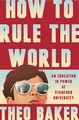
This essay was adapted from Theo Baker’s forthcoming book, “How to Rule the World: An Education in Power at Stanford University.”
This article originally included Founders Fund on a list of VC firms that employ talent scouts on Stanford's campus. Founders Fund has employed talent scouts in the past, but is not doing so currently.
Illustration sources: Look and Learn / Bridgeman Images; Paul Chinn / The San Francisco Chronicle / Getty; Kirby Lee / Getty; Liz Hafalia / The San Francisco Chronicle / Getty.
By
Baker, Theo
When you buy a book using a link on this page, we receive a commission. Thank you for supporting The Atlantic.
此内容由惯性聚合(RSS阅读器)自动聚合整理,仅供阅读参考。 原文来自 — 版权归原作者所有。