





NIST Hurricane Maria Program | Technical Update (July 2025)
Hurricane Maria, which struck Puerto Rico on Sept. 20, 2017, was one of the most devastating and costly hurricanes in U.S. history. The storm caused nearly 3,000 deaths and more than $90 billion in damages. While nature cannot be controlled, communities can reduce the impacts of natural hazards by making their buildings and infrastructure more resilient, upgrading emergency preparedness plans for critical facilities, and strengthening evacuation and communication protocols.
In 2018, the National Institute of Standards and Technology (NIST) launched an investigation into Hurricane Maria’s impacts to learn what went wrong and to take steps to make Americans safer from future hurricanes.
“Our goal is to learn from that event to recommend improvements to building codes, standards and practices that will make communities more resilient to hurricanes and other hazards, not just in Puerto Rico but across the United States,” said NIST’s lead Hurricane Maria investigator Joseph Main.
The investigation has been an enormous undertaking. NIST experts have conducted hundreds of surveys and interviews, analyzed dozens of buildings, conducted laboratory experiments, and more. As NIST’s National Construction Safety Team nears the end of its investigation, it has released a video update that highlights significant milestones and preliminary findings.
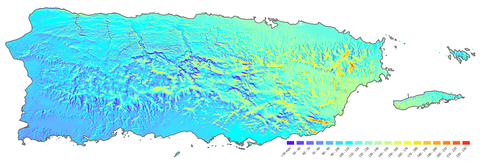
Hurricane Maria set off a cascade of building and infrastructure failures across Puerto Rico that had lasting impacts on society, including health care, business and education. The storm itself was a Category 4 hurricane, with peak gusts as high as 140 mph over flat terrain, strong enough to topple trees and lift roofs off houses. The wind was even stronger along the ridges of hills and mountains, where power lines and cellphone towers were located. Those lines and towers were damaged or destroyed, knocking out electric, phone and internet service for almost the entire island.
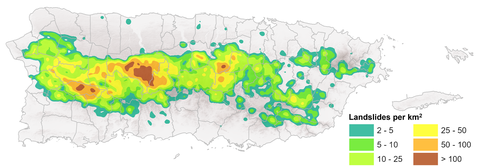
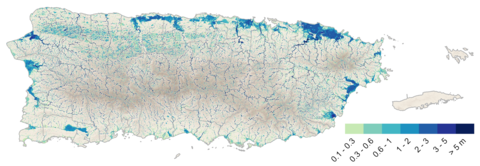
The steep mountains of Puerto Rico also intensified the rainfall, resulting in extensive flooding and more than 70,000 landslides. This destroyed roads and bridges, blocking routes to hospitals and shelters for those who badly needed them. The hospitals and shelters themselves were heavily damaged by the storm, lifesaving medical equipment was destroyed, and parts of the buildings became uninhabitable. Each of these impacts intensified others. For example, the loss of electricity made it more difficult to move patients and supplies within some hospitals because elevators stopped working.
NIST has a long history of studying disasters and building failures. Under the National Construction Safety Team (NCST) Act, NIST is authorized to establish teams “to assess building performance and emergency response and evacuation procedures in the wake of any building failure that has resulted in substantial loss of life or that posed significant potential of substantial loss of life.”
Additionally, the National Windstorm Impact Reduction Act gives NIST responsibility for “carrying out research and development to improve model building codes, voluntary standards, and best practices for the design, construction, and retrofit of buildings, structures, and lifelines” with the purpose of achieving “measurable reductions in the losses of life and property from windstorms.”
Previous NIST investigations have led to building code improvements for tornadoes and fires that can save lives in communities across the country.
Responding to Hurricane Maria, NIST created a team of experts in structural and civil engineering, public health, epidemiology, medicine, anthropology, communications, sociology and economics. These experts came from NIST, other federal agencies and universities, including outside experts based in Puerto Rico.
“Having a local presence has been critical in carrying out this work, especially during the pandemic,” said Maria Dillard, investigation associate lead.
The investigation is wide-ranging and has included reconnaissance of the island, creation of a detailed map of wind speeds during the hurricane, long-term measurements of wind speeds at cell towers, and wind tunnel tests. The NIST team conducted hundreds of interviews with emergency communicators; family members of the deceased; hospital, school and shelter staff members; shipping and transportation sector representatives; infrastructure officials; and others impacted by the storm. They also surveyed more than 1,500 households, 450 businesses, 300 schools and 16 hospitals for the project.
Understanding the impact on hospitals and emergency shelters was a high priority for the investigators, who conducted detailed evaluations of five hospitals and five shelter facilities.
This information went into computer models to understand how the hurricane and the long recovery process unfolded.
During the course of the investigation, Puerto Rico was buffeted by more disasters, including a series of earthquakes that started in 2019, the COVID-19 pandemic in 2020, Hurricane Fiona in 2022, and Tropical Storm Ernesto in 2024. These events made the recovery from Hurricane Maria more difficult and presented additional challenges for the investigation.
Importance of NIST's Hurricane María Investigation
The complete report will not be released until 2026, so these findings may change before the report is finalized. However, in the video Main and Dillard share the following major preliminary findings, which they anticipate will be included in the final version.
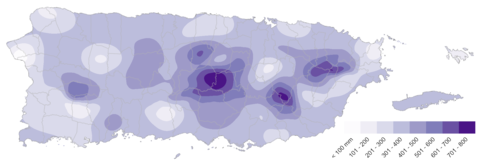
While peak wind speeds over flat terrain reached as high as 140 mph (225 km/h), those winds were accelerated to over 200 mph (322 km/h) in some areas by the shape of steep hills and mountains. The mountains also intensified the rainfall. The most extreme rainfall reached 30 inches (76 centimeters) in some areas.
A major challenge for the investigation was that many weather-measuring devices were damaged during the storm. Only three out of 22 weather stations were fully functional throughout the hurricane. A Doppler weather radar site was destroyed by high winds, and the majority of rain gauges failed during the storm.
Surveys with family members of those who died in the two weeks following the hurricane showed that only about one-tenth of the deaths occurred on the day of landfall and that only a small fraction of the deaths were caused by storm-related injuries. Reduced access to health care was found to be a significant factor in the deaths that occurred. The most common causes of death were noncommunicable medical conditions such as cardiovascular disease, diabetes and kidney disease, as those who suffered from these conditions had difficulty obtaining the medical care they needed.
Landslides, collapsed bridges and fallen trees blocking roads kept people from getting help. Such road disruptions were estimated to have cut off hospital access for just over half of the population immediately following the hurricane. Many patients sought medical care at multiple places before receiving treatment. After arriving at hospitals, patients encountered additional disruptions in care from hospital buildings that were damaged, flooded and without electrical power.
The investigation also found that 95.3% of schools lost power, for an average of over 100 days. Lack of potable water was also an issue for school recovery. One school emphasized that students needed to bring their own water because the school’s water was not safe to drink.
One important preliminary finding from the study is that emergency preparations work. Businesses, schools and hospitals that prepared before Hurricane Maria were able to resume operations more quickly afterward. Preparations included preestablished emergency plans, designated risk mitigation funds, and backup power sources.
Preliminary findings also showed that financial assistance was effective. Statistically, businesses, schools and hospitals that received financial assistance were able to recover more quickly than those that did not.
Through the National Construction Safety Team (NCST) Act, NIST has a responsibility to use investigation findings to create recommendations and help implement them.
Recommendations from the Hurricane Maria Program are anticipated to result in:
These changes will be important for hurricane-prone regions throughout the U.S., not just Puerto Rico. Hurricane Helene, which carved a destructive path from Florida through North Carolina in 2024, shared many similarities with Hurricane Maria, such as significant rainfall in mountainous areas that led to flooding and landslides; neighborhoods and communities being cut off from road access; massive infrastructure failure; and at least one hospital requiring evacuation.
By applying the lessons of Hurricane Maria, this investigation can help the increasing number of communities that are experiencing intense hurricanes prepare for, respond to, and recover from them.
Editor’s Note (9/25/2025): In the section titled “What Made Hurricane Maria So Dangerous?,” we updated the number of landslides from “more than 40,000” to “more than 70,000” to reflect the most recent and accurate information.
此内容由惯性聚合(RSS阅读器)自动聚合整理,仅供阅读参考。 原文来自 — 版权归原作者所有。