


CyberAgent is a Japanese internet company engaged in businesses such as internet advertising, media & IP, and gaming. Guided by its vision of “creating a company that represents the 21st century,” the company leverages its strengths in technology and creativity to generate new value both domestically and internationally.
At CyberAgent, AI is positioned not as a set of limited advanced initiatives, but as a foundational technology that supports both business growth and operational design. The company has made continuous investments in this area. In 2016, it established “AI Lab” to conduct research and development of a wide range of AI technologies related to digital marketing. In 2023, it further launched the “AI Operations Office” to build an organizational framework for leveraging AI as a means of transforming business operations.
These efforts are centered on the adoption of ChatGPT Enterprise and Codex. Given the nature of its businesses in advertising, media, and gaming, CyberAgent’s competitive advantage lies in improving both quality and productivity at the same time, while also using AI to rapidly iterate through hypothesis testing. By making ChatGPT Enterprise the foundation of its AI environment, the company has enabled employees to use AI confidently in their daily work, supported by strong security and management capabilities. Today, using ChatGPT for tasks such as research, drafting, and organizing key points has become standard practice, while humans continue to hold final decision making responsibility. Codex is also helping people move faster in design discussions, code review, and documentation.
Even before the emergence of generative AI, CyberAgent had been advancing research and development aimed at leveraging AI in the advertising domain. In 2020, the company introduced “Kiwami Prediction AI,” promoting initiatives to integrate AI into the advertising creative production process.
After ChatGPT was released in 2022, the use of AI in employees’ daily work expanded rapidly. As business use grew, the need for stronger security, governance, and clear rules became more important. A major challenge was uncertainty about what information could be safely entered into AI tools, which created hesitation and slowed adoption. Usage also varied across departments and individuals, making it difficult to share knowledge and manage AI use across the company.
To address those challenges, CyberAgent adopted ChatGPT Enterprise, which offers management features designed for enterprise use. ChatGPT Enterprise enables companies to manage how input data is handled in accordance with their specific requirements, including contracts, configurations, and operational policies. It also provides enterprise-grade security and access control features, allowing employees to confidently incorporate AI into their daily work. Furthermore, CyberAgent has established internal guidelines for handling confidential information to ensure safe and secure use.
Ken Takao, Manager in the Data Technology Department of the Corporate IT Promotion Division, says ChatGPT Enterprise helped create an environment where employees could use AI without hesitation.
“With enterprise features such as account management and visibility into usage, ChatGPT Enterprise made it possible to support business use of a wide range of information, excluding confidential data. As a result, the scope of AI use across the company has expanded, and many employees now use it in their daily work.”
—Ken Takao, Manager, CyberAgent
CyberAgent does not typically enforce the use of specific tools across the organization. ChatGPT Enterprise is no exception, with each team, department, and subsidiary evaluating it alongside other tools and adopting it based on their own objectives. Even so, it is now used across nearly all departments, reaching a monthly active user rate of 93%.
That growth was driven by deliberate culture building inside the company, along with ongoing training support from OpenAI.
From a cultural perspective, CyberAgent has implemented mechanisms to encourage proactive use, such as sharing knowledge including prompts and successful use cases, as well as internal rankings that allow employees to understand their own AI tool usage. (These rankings are designed so that individuals can only view their own data and are not used for evaluation purposes.)
CyberAgent also built follow-ups into its operating model. When an employee has not used the tool for a certain period, their bot reaches out on Slack to understand why. If the employee is using another AI tool, the conversation helps clarify which tools are being used and for what purpose. If they are not using any AI tools, CyberAgent suggests ways AI could support their specific work.
As part of efforts to encourage adoption, a light follow up is conducted via Slack when a tool has not been used for a certain period. Employees are asked whether they are using other AI tools and what challenges they may be facing. If needed, they are also given suggestions and practical tips on how to use AI more effectively in their work.
In addition, training sessions and workshops hosted by OpenAI have played a significant role. Despite often being organized within just a few days of announcement, more than 100 employees participated in each of over ten sessions. Those sessions ranged from beginner friendly introductions such as “ChatGPT Enterprise 101” to workshops on custom GPTs, hands on Codex sessions, and internal hackathons. Together, CyberAgent and OpenAI designed learning opportunities for different roles and levels of maturity, helping employees build their first successful experiences with AI in practical ways.
Codex adoption is growing quickly across CyberAgent. Teams are using it for far more than code generation, especially in upstream work such as design, alignment, and evaluation, where better decisions early on can reduce rework later.
Takao points to three use cases in particular:
He also highlights three main benefits from using Codex:
CyberAgent is also seeing Codex spread beyond engineering. Non-developer roles are starting to use it for writing specifications, creating mockups, and structuring work adjacent to product and development. In some cases, Codex is even helping build the systems that sustain ChatGPT adoption internally. For example, CyberAgent used Codex to build its internal usage ranking system, making adoption more visible and engaging.
Across CyberAgent’s development teams, Codex is increasingly seen not just as a speed tool, but as a way to improve the quality of judgment.
Sou Yoshihara, one of CyberAgent’s top Codex users in the AI Business Division, uses Codex through MCP in Cursor and uses it for the design and implementation planning of Kiwami Prediction AI. Yoshihara says, “Compared with other coding models, Codex gives the impression of producing higher quality proposals,” and sees it not simply as a tool, but as a way to optimize the development process as a whole.
The same pattern is visible in game development as well. Hidekazu Hora of GOODROID emphasizes that working with Codex made the flow from design to implementation to validation easier to navigate. Hora used Codex in the development of the game WormEscape, which reached soft launch after about one month of development.
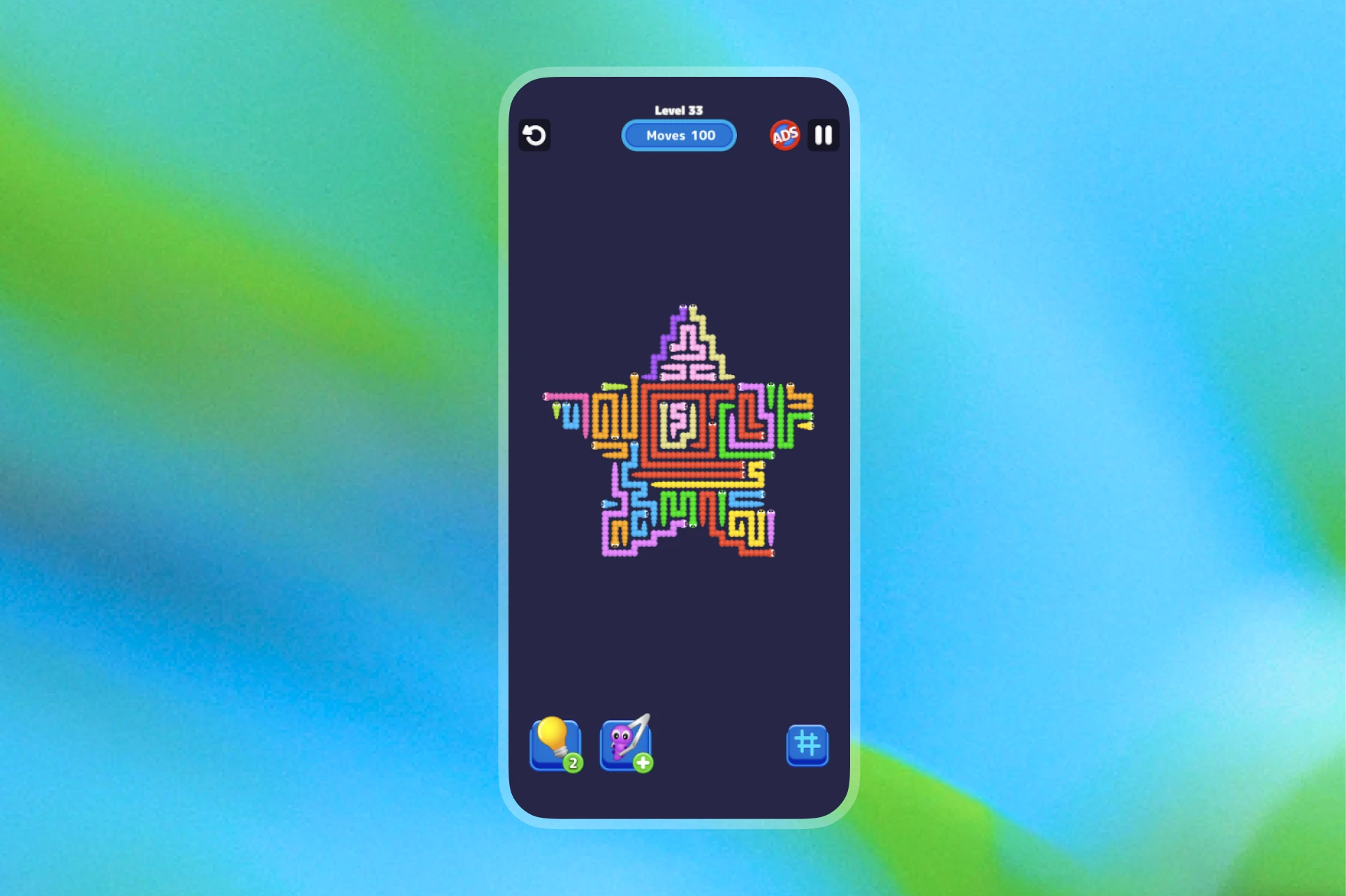
“It felt like a reliable partner that supported the entire process from discussing implementation to carrying it out, helping increase development speed. With Codex, even in areas where I had no prior experience, I was able to resolve roadblocks caused by lack of knowledge more quickly, and I feel it helps achieve both quality and speed.”
—Hidekazu Hora, Developer, GOODROID
Across the company, developers are using Codex in different ways, but a common theme has emerged: usability and output quality are what keep bringing teams back. Codex is not only helping people work faster. It is helping them move forward with more confidence.
CyberAgent views AI not as a temporary boom, but as a turning point that will become part of the next standard for the internet industry. With AI Lab as a long term engine for technical advancement and practical business application, the company plans to continue expanding how AI creates value across the organization.
What stands out about CyberAgent’s approach is not only the scale of adoption, but how that adoption has taken shape. In a culture without blanket mandates, teams choose the tools that work for them, learn how to use them well, and build systems that help adoption spread further. ChatGPT Enterprise and Codex have become more than productivity tools. Together, they are helping CyberAgent move from introducing AI to embedding it in everyday work, and from adoption to redesigning how work gets done.
此内容由惯性聚合(RSS阅读器)自动聚合整理,仅供阅读参考。 原文来自 — 版权归原作者所有。