





如果涉及到具体的操作系统和CPU等,则为 Linux/amd64
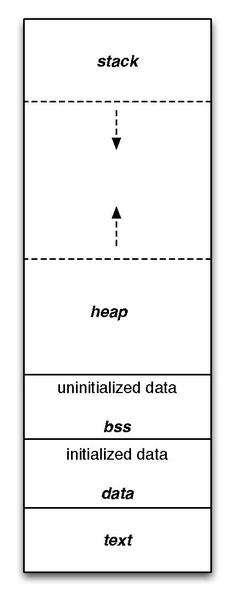
首先介绍一下内存布局,从高地址到低地址,依次是:
code segment,存储的是具体的指令)当然,这个还不完全,还有很多段没有列出来例如stack和heap中间可能有mmap的内存段。此外此处还没有考虑到多线程的情况下,不过为了热热身,已经够了。
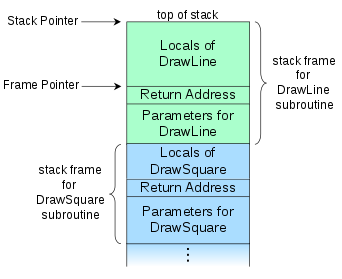
栈的作用主要是用来保存函数调用之后的该返回哪里。通常,调用一个函数,进行的步骤有把参数从右向左依次压栈, 然后把返回地址压栈,然后开始执行函数。当然,这是实现细节,只是目前比较常用的一种方式。当函数执行完之后,就取出返回地址, 继续执行。有一个寄存器,PC(Program Counter)就是用来存储下一条要执行的指令的。
计算机中有一句名言,所有的问题都可以引入一个中间层来解决,那么,为什么会有帧呢?解决了什么问题?我个人的看法是,将多个 函数调用分别包装起来,从而进行了隔离,当然,这里的“包装”是一个抽象概念,实际上,只要你想,仍然可以访问到其他函数的栈 内的内容。
Python中的协程一般是通过yield来实现,有yield的函数,其返回结果就是一个generator。而Python中的协程就属于无栈协程。 那我们来看一下generator object长啥样:
/* _PyGenObject_HEAD defines the initial segment of generator
   and coroutine objects. */
#define _PyGenObject_HEAD(prefix)                                           \
    PyObject_HEAD                                                           \
    /* Note: gi_frame can be NULL if the generator is "finished" */         \
    struct _frame *prefix##_frame;                                          \
    /* True if generator is being executed. */                              \
    char prefix##_running;                                                  \
    /* The code object backing the generator */                             \
    PyObject *prefix##_code;                                                \
    /* List of weak reference. */                                           \
    PyObject *prefix##_weakreflist;                                         \
    /* Name of the generator. */                                            \
    PyObject *prefix##_name;                                                \
    /* Qualified name of the generator. */                                  \
    PyObject *prefix##_qualname;

typedef struct {
    /* The gi_ prefix is intended to remind of generator-iterator. */
    _PyGenObject_HEAD(gi)
} PyGenObject;
为什么叫做无栈协程呢?因为generator没有自己的栈,只有它自己的帧。每次执行到这个coroutine的时候,是把其帧丢到调用者的 栈上的。
而Go的协程则属于有栈协程,在这篇文章里有说到 具体切换的时候,涉及到哪些东西。我在这里再列出来一下,我们看看G长啥样:
type g struct {
        // Stack parameters.
        // stack describes the actual stack memory: [stack.lo, stack.hi).
        // stackguard0 is the stack pointer compared in the Go stack growth prologue.
        // It is stack.lo+StackGuard normally, but can be StackPreempt to trigger a preemption.
        // stackguard1 is the stack pointer compared in the C stack growth prologue.
        // It is stack.lo+StackGuard on g0 and gsignal stacks.
        // It is ~0 on other goroutine stacks, to trigger a call to morestackc (and crash).
        stack       stack   // offset known to runtime/cgo
        stackguard0 uintptr // offset known to liblink
        stackguard1 uintptr // offset known to liblink

        _panic         *_panic // innermost panic - offset known to liblink
        _defer         *_defer // innermost defer
        m              *m      // current m; offset known to arm liblink
        sched          gobuf
        ...
}
其中的gobuf就是协程中保存的东西,我们看看:
type gobuf struct {
	// The offsets of sp, pc, and g are known to (hard-coded in) libmach.
	//
	// ctxt is unusual with respect to GC: it may be a
	// heap-allocated funcval, so GC needs to track it, but it
	// needs to be set and cleared from assembly, where it's
	// difficult to have write barriers. However, ctxt is really a
	// saved, live register, and we only ever exchange it between
	// the real register and the gobuf. Hence, we treat it as a
	// root during stack scanning, which means assembly that saves
	// and restores it doesn't need write barriers. It's still
	// typed as a pointer so that any other writes from Go get
	// write barriers.
	sp   uintptr
	pc   uintptr
	g    guintptr
	ctxt unsafe.Pointer
	ret  sys.Uintreg
	lr   uintptr
	bp   uintptr // for GOEXPERIMENT=framepointer
}
把好几个重要的寄存器的值全部保存了,如 SP, PC等。其实就是把整个G的栈全部保存下来,换成新的要执行的G的栈的值。
stackful coroutine的优势在于可以在栈执行到任意一步的时候端走,而stackless则只能端走栈中最顶部的那个frame。 如果要说stackful coroutine的缺点的话,我觉得应该是实现比较复杂,goroutine的实现还算简单,是因为它没有用到所有的 寄存器,只用到栈底,栈顶,framepointer,PC等几个。例如传参数,都是统一往栈里丢,当然,它这样实现也是为了简单。 一般的C程序,都是前几个参数丢某某寄存器,更多的参数才丢栈里。
参考资料:
此内容由惯性聚合(RSS阅读器)自动聚合整理,仅供阅读参考。 原文来自 — 版权归原作者所有。