注:本文已发布超过一年,请注意您所使用工具的相关版本是否适用
序
笔记
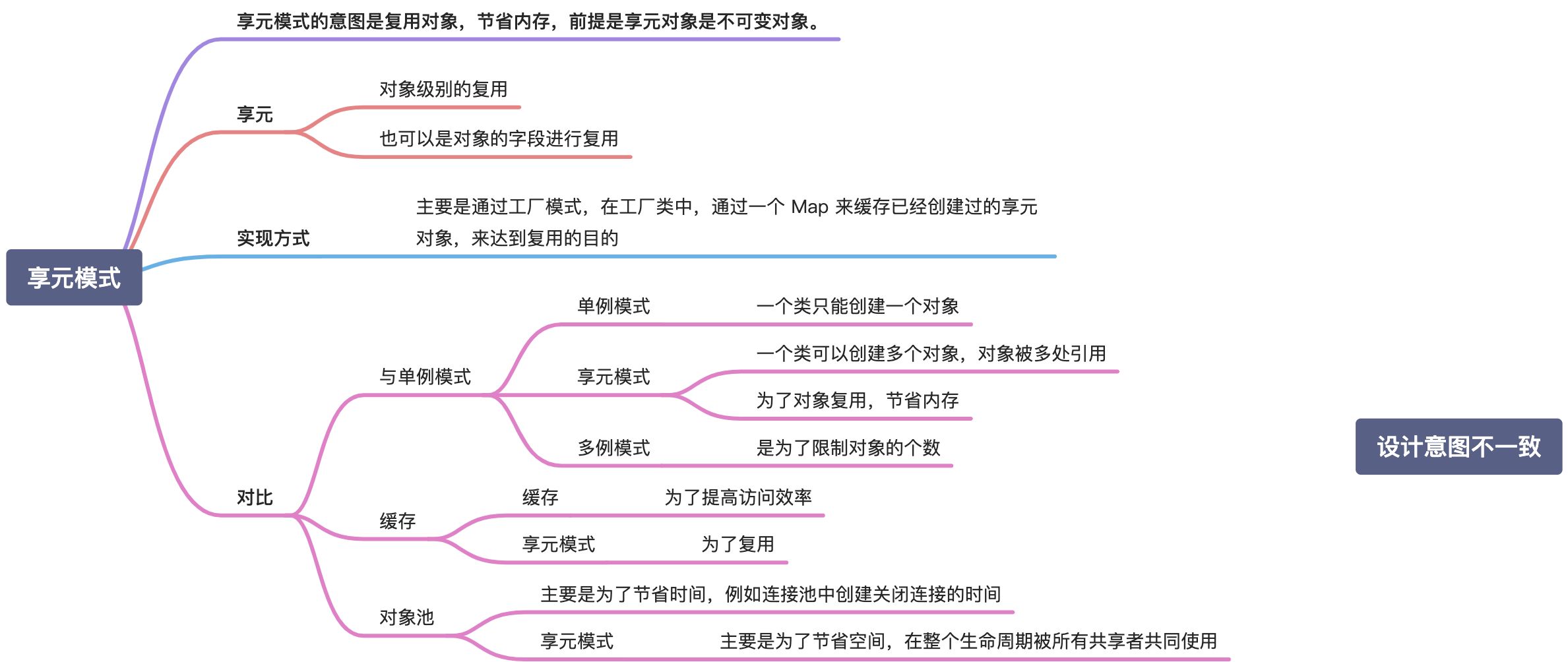
代码实现
复用课程中的 🌰,如果我们现在正在做一个棋牌类的游戏,例如象棋,无论是什么对局,棋子的基本属性其实是固定的,并不会因为随着下棋的过程变化。那我们就可以把棋子变为享元,让所有的对局都共享这些对象,以此达到节省内存的目的。
Code
1
2
3
4
5
6
7
8
9
10
11
12
13
14
15
16
17
18
19
20
21
22
23
24
25
26
27
28
29
30
31
32
33
34
35
36
37
38
39
40
41
42
43
44
45
46
47
48
49
50
51
52
53
54
55
56
57
58
| package flyweightvar units = map[int]*ChessPieceUnit{
1: {
ID: 1,
Name: "車",
Color: "red",
},
2: {
ID: 2,
Name: "炮",
Color: "red",
},
// ... 其他棋子
} // ChessPieceUnit 棋子享元
type ChessPieceUnit struct {
ID uint
Name string
Color string
} // NewChessPieceUnit 工厂
func NewChessPieceUnit(id int) *ChessPieceUnit {
return units[id]
} // ChessPiece 棋子
type ChessPiece struct {
Unit *ChessPieceUnit
X int
Y int
} // ChessBoard 棋局
type ChessBoard struct {
chessPieces map[int]*ChessPiece
} // NewChessBoard 初始化棋盘
func NewChessBoard() *ChessBoard {
board := &ChessBoard{chessPieces: map[int]*ChessPiece{}}
for id := range units {
board.chessPieces[id] = &ChessPiece{
Unit: NewChessPieceUnit(id),
X: 0,
Y: 0,
}
}
return board
} // Move 移动棋子
func (c *ChessBoard) Move(id, x, y int) {
c.chessPieces[id].X = x
c.chessPieces[id].Y = y
}
|
单元测试
1
2
3
4
5
6
7
8
9
10
11
12
13
14
15
16
17
| package flyweightimport (
"testing" "github.com/stretchr/testify/assert"
) func TestNewChessBoard(t *testing.T) {
board1 := NewChessBoard()
board1.Move(1, 1, 2)
board2 := NewChessBoard()
board2.Move(2, 2, 3) assert.Equal(t, board1.chessPieces[1].Unit, board2.chessPieces[1].Unit)
assert.Equal(t, board1.chessPieces[2].Unit, board2.chessPieces[2].Unit)
}
|
关注我获取更新
猜你喜欢







