




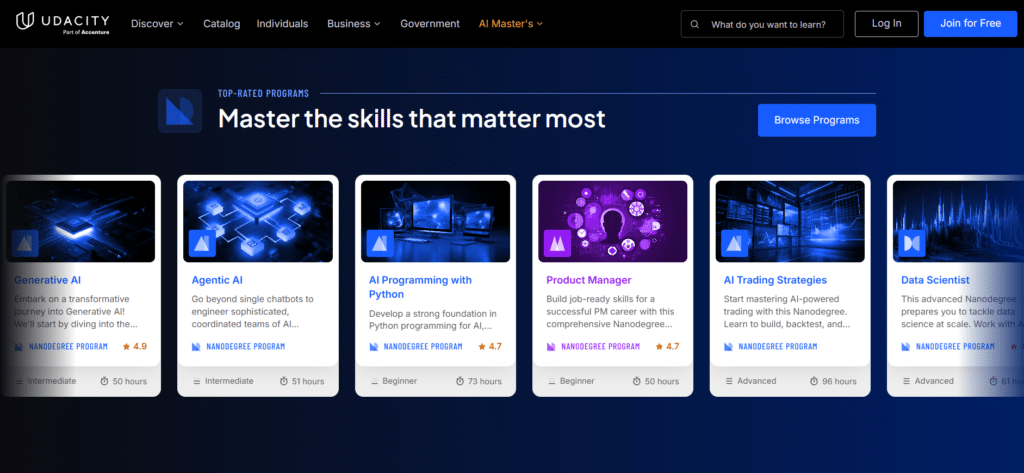
Udacity built its name on a bold promise: take someone with basic skills and turn them into a job-ready tech professional in a matter of months.
A decade after it launched, that promise still draws students, career switchers, and working professionals to the platform.
But Udacity is expensive, and the decision to enrol in a Nanodegree program is not one you should make without understanding exactly what you are buying.
This Udacity review covers the full picture: how the platform works, what the Nanodegree experience actually looks like, how the projects and mentorship hold up, and whether the career outcomes justify the cost in 2026.
Udacity is an online learning platform founded in 2011 by Sebastian Thrun, a Stanford professor and one of the people behind Google’s self-driving car project.
It started as a place to take free university-style computer science courses and evolved into a platform built around what it calls Nanodegrees: structured, project-based learning programs designed in partnership with tech industry companies.
The platform sits at the premium end of online education. It is not competing with $15 courses on Coursera or Udemy.
Udacity is aiming at professionals who want a structured curriculum with human mentorship, real project feedback, and a credential they can present to employers in technical fields.
Udacity works best for:
The platform does not try to serve everyone. Its pricing and structure reflect a focus on people who take tech career development seriously and want something closer to a bootcamp experience without leaving their current job.
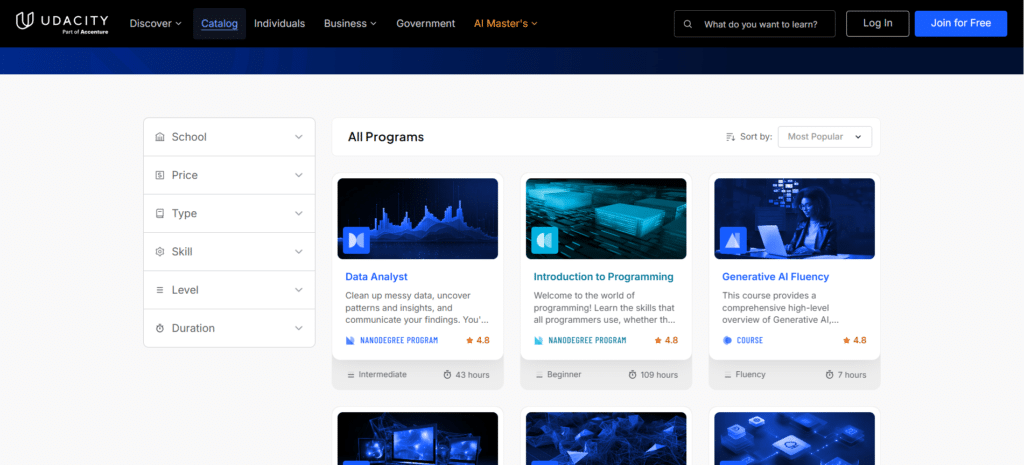
The Nanodegree is Udacity’s main offering and the thing that sets it apart from platforms offering individual courses.
A Nanodegree is a curated learning program covering a specific technical skill or career path. Each one includes video lessons, coding exercises, projects, mentor sessions, and a graduation project that ties the skills together.
Programs typically run between three and six months at around ten hours of study per week.
Popular Nanodegree programs in 2026 include:
Each program is built around a specific job role rather than a generic subject area. The curriculum reflects what hiring managers at companies like Google, Amazon, and IBM say they want to see in candidates, because Udacity works directly with those companies when designing course content.
This is one of the stronger selling points Udacity has held onto since the early days.
The Nanodegree curricula are developed in partnership with companies actively hiring for these roles. Content contributors and advisors have included teams from Google, Amazon Web Services, Facebook, AT&T, Nvidia, IBM, and others.
This does not mean every lesson was written by a Google engineer, but it does mean the skill selection, project types, and technical depth reflect what the industry actually uses in production environments rather than what a lone academic thought relevant five years ago.
Instructors in the video content are typically practitioners with real experience in their fields. The teaching style across most programs is direct and practical, focused on building things rather than explaining theories at length.
Projects are what separate a Udacity Nanodegree from a collection of video courses, and they deserve serious attention in any honest review.
Every Nanodegree includes a set of structured projects you build yourself, and a human reviewer gives you detailed written feedback on each one.
You submit the project, a real person reviews it against a rubric, and you receive comments on what passed, what needs revision, and specific guidance on how to improve it.
This review loop matters enormously. Getting written feedback from someone with domain expertise forces you to engage with your work at a deeper level than a multiple-choice quiz ever does.
It also means you come away from the program with a set of projects you actually built and can show to employers, not just a list of topics you watched videos about.
Typical projects across Nanodegrees include:
The final capstone project brings the entire program together in a single piece of work designed to demonstrate the full range of skills the Nanodegree covered.
Udacity includes one-on-one mentorship as part of the Nanodegree experience, which is another differentiator from platforms where you are essentially on your own.
Mentorship on Udacity includes:
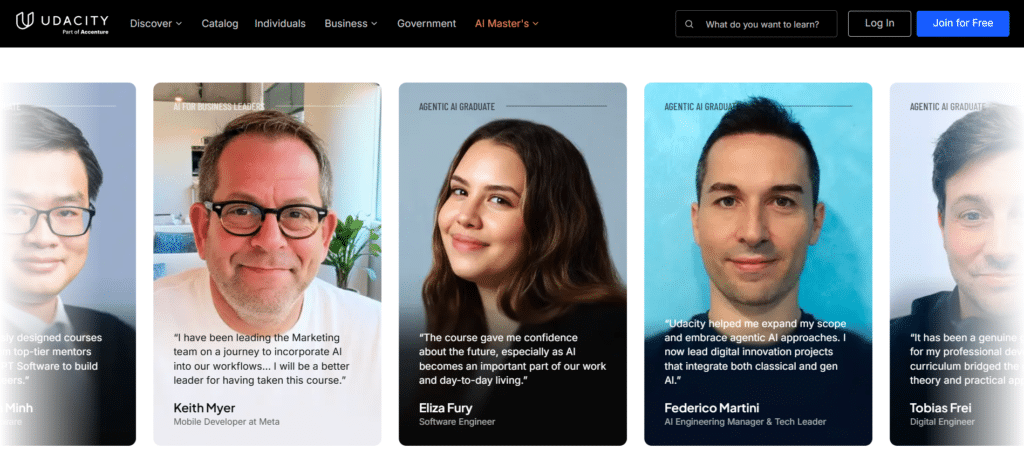
The quality of mentorship varies. Many students report genuinely helpful mentors who go beyond the curriculum to answer specific questions and give career guidance. Others note that mentor responsiveness can be inconsistent, and the depth of a session depends heavily on which mentor you are matched with.
The broader student community adds a layer of peer support that helps during the harder stretches of a program. Having other people going through the same material at roughly the same time creates accountability and a place to troubleshoot problems that your mentor might take longer to respond to.
Udacity’s technical content is generally strong in the areas where the platform has invested most deeply: machine learning, AI, data science, and cloud.
| What makes the content work | Where content quality is less consistent |
| Lessons are taught by practitioners who build real systems, not just explain them | The depth of some foundational lessons assumes a certain pace that can feel rushed for complete beginners |
| Content is updated when foundational tools or frameworks change significantly | Web development and some non-AI tracks feel less polished than the ML and data science programs where Udacity has the deepest expertise |
| The workspace environments built into the platform let you code directly in the browser without setting up local dependencies | Some older programs show their age in parts, particularly where libraries or platforms have released major updates since the content was produced |
| Video explanations are concise and paired with immediate coding exercises |
Before committing to a Nanodegree, Udacity offers a set of free courses that cover foundational topics and give you a real feel for the teaching style.
Free courses available include:
These courses do not include project review or mentorship, but they cover real content and let you decide whether Udacity’s format suits how you learn before spending money on a full Nanodegree.
Working through a free course first is genuinely the best way to evaluate the platform.
Udacity has invested in career support as part of the Nanodegree package, and this is worth examining carefully since it is part of what justifies the premium price.
Career services on Udacity include:
Udacity also maintains relationships with hiring partners who have posted roles specifically targeting Nanodegree graduates. The hiring partner network includes tech companies, startups, and enterprise organisations.
The career services are more useful than what most online learning platforms offer, but they stop short of the placement guarantees some coding bootcamps make.
Udacity gives you tools and guidance; it does not promise a specific outcome, which is an honest position to take even if it is less marketable as a headline feature.
Udacity operates a dedicated enterprise division that serves companies training their technical workforces at scale.
Udacity for Business includes:
Major companies including Bertelsmann, Shell, Mercedes-Benz, and various government agencies have run large-scale programs through Udacity’s enterprise offering.
The scholarship programs Udacity has run with these organisations have put Nanodegree access in front of thousands of students who would not otherwise have been able to afford individual enrollment.
Udacity charges a monthly subscription fee to access Nanodegree programs rather than a one-time course purchase.
Standard monthly pricing across most Nanodegrees sits between $249 and $399 per month.
Most programs are designed to be completed in three to six months, which means total cost typically lands between:
Udacity periodically offers promotional discounts on program enrollment, and discount windows around back-to-school periods and end of quarter tend to surface the strongest offers.
Completing a program faster reduces the total cost since you pay by the month, which creates a genuine incentive to study consistently rather than letting the subscription idle.
Annual access options are available for some programs at a reduced effective monthly rate, which makes sense for learners who know they will take longer or want access to multiple programs.
Compared to platforms like Coursera or LinkedIn Learning, Udacity is significantly more expensive per month. Compared to in-person bootcamps that charge $10,000 to $20,000 upfront, it is considerably cheaper for the level of mentorship and feedback included.
Udacity vs Coursera: Coursera offers a wider catalog and lower per-month pricing, with degrees and certificates from accredited universities. Udacity beats it on project depth and human mentorship. Coursera wins on breadth and academic credentialing.
Udacity vs LinkedIn Learning: LinkedIn Learning charges a lower monthly fee but offers a fundamentally different product. It is self-paced video learning with no project review, no mentorship, and no structured program arc. Good for specific skill videos; not comparable to a Nanodegree on depth or accountability.
Udacity vs Springboard and General Assembly: Springboard and General Assembly are bootcamp-style programs with job guarantees on certain tracks and more intensive mentor support. They also cost significantly more. Udacity sits between traditional MOOCs and full bootcamps in both price and intensity.
Udacity vs DataCamp: DataCamp focuses specifically on data skills and charges a lower monthly fee, with good hands-on exercises. For pure data science foundational skill-building at a lower price point, DataCamp competes well. Udacity’s projects go deeper and the mentorship adds a human layer DataCamp does not offer.
Udacity delivers real value for the right kind of learner in the right situation.
If you are making a serious career move into data science, machine learning, cloud, or a related technical field, and you want more structure and accountability than a self-paced course library provides, a Nanodegree is a credible investment.
The projects are real, the reviewer feedback is useful, and the industry-aligned curriculum covers skills employers are actively hiring for.
The platform works best for people who can commit to consistent study time each week and complete their program within the target timeframe. Letting a monthly subscription run longer than necessary erodes the value proposition quickly.
Start with a free course to confirm the format works for you, pick a program that maps directly to a specific job role you are targeting, and treat the projects as portfolio work you are genuinely proud of rather than checkboxes to clear.
Used that way, Udacity justifies the cost in a way that cheaper alternatives with no feedback loop rarely can.
此内容由惯性聚合(RSS阅读器)自动聚合整理,仅供阅读参考。 原文来自 — 版权归原作者所有。