




惯性聚合 高效追踪和阅读你感兴趣的博客、新闻、科技资讯
阅读原文 在惯性聚合中打开

推荐订阅源

酷 壳 – CoolShell
酷 壳 – CoolShell
H
Hacker News: Front Page
P
Palo Alto Networks Blog
T
ThreatConnect
Apple Machine Learning Research
博客园_首页
T
True Tiger Recordings
P
Privacy & Cybersecurity Law Blog
B
Blog
IT之家
IT之家
Last Week in AI
Last Week in AI
F
Full Disclosure
Hacker News: Ask HN
Hacker News: Ask HN
C
Comments on: Blog
Microsoft Azure Blog
C
Cybersecurity and Infrastructure Security Agency CISA
Microsoft Security Blog
博客园 - 【当耐特】
N
News and Events Feed by Topic
NISL@THU
NISL@THU
腾讯CDC
雷峰网
雷峰网
Security Latest
Security Latest
李成银的技术随笔
M
Microsoft Research Blog - Microsoft Research
L
LangChain Blog
L
Lohrmann on Cybersecurity
cs.CL updates on arXiv.org
C
Check Point Blog
Y
Y Combinator Blog
Recent Announcements
博客园 - Franky
N
News | PayPal Newsroom
V
V2EX
A
About on SuperTechFans
The Register - Security
月光博客
月光博客
奇客Solidot–传递最新科技情报
奇客Solidot–传递最新科技情报
Google Online Security Blog
MyScale Blog
MyScale Blog
Cisco Talos Blog
Cisco Talos Blog
Vercel News
Vercel News
WordPress大学
WordPress大学
C
Cyber Attacks, Cyber Crime and Cyber Security
The Hacker News
The Hacker News
IntelliJ IDEA : IntelliJ IDEA – the Leading IDE for Professional Development in Java and Kotlin | The JetBrains Blog
爱范儿
爱范儿
A
Arctic Wolf
L
LINUX DO - 最新话题
freeCodeCamp Programming Tutorials: Python, JavaScript, Git & More

WeLiveSecurity

The quest for greater tech independence Why geopolitical turmoil is a gift for scammers, and how to stay safe FrostyNeighbor: Fresh mischief and digital shenanigans Eyes wide open: How to mitigate the security and privacy risks of smart glasses Fake call logs, real payments: How CallPhantom tricks Android users Fixing trivial passwords is as easy as 123456 A rigged game: ScarCruft compromises gaming platform in a supply-chain attack This month in security with Tony Anscombe – April 2026 edition The calm before the ransom: What you see is not all there is GopherWhisper: A burrow full of malware New NGate variant hides in a trojanized NFC payment app Ransomware’s back office: What the ransom note won’t say Why that next data breach alert could be a trap Supply chain dependencies: Have you checked your blind spot? Recovery scammers hit you when you’re down: Here’s how to avoid a ‘second strike’ As breakout time accelerates, prevention-first cybersecurity takes center stage Digital assets after death: Managing risks to your loved one’s digital estate This month in security with Tony Anscombe – March 2026 edition RSAC 2026 wrap-up – Week in security with Tony Anscombe A cunning predator: How Silver Fox preys on Japanese firms this tax season Virtual machines, virtually everywhere – but not all protected Cloud workload security: Mind the gaps Move fast and save things: A quick guide to recovering a hacked account EDR killers explained: Beyond the drivers Face value: What it takes to fool facial recognition Cyber fallout from the Iran war: What to have on your radar Sednit reloaded: Back in the trenches What cybersecurity actually does for your business How SMBs use threat research and MDR to build a defensive edge Protecting education: How MDR can tip the balance in favor of schools This month in security with Tony Anscombe – February 2026 edition Mobile app permissions (still) matter more than you may think Faking it on the phone: How to tell if a voice call is AI or not PromptSpy ushers in the era of Android threats using GenAI Is Poshmark safe? How to buy and sell without getting scammed Is it OK to let your children post selfies online? Naming and shaming: How ransomware groups tighten the screws on victims Taxing times: Top IRS scams to look out for in 2026 OfferUp scammers are out in force: Here’s what you should know A slippery slope: Beware of Winter Olympics scams and other cyberthreats This month in security with Tony Anscombe – January 2026 edition DynoWiper update: Technical analysis and attribution Love? Actually: Fake dating app used as lure in targeted spyware campaign in Pakistan Drowning in spam or scam emails lately? Here’s why ESET Research: Sandworm behind cyberattack on Poland’s power grid in late 2025 Children and chatbots: What parents should know Common Apple Pay scams, and how to stay safe Old habits die hard: 2025’s most common passwords were as predictable as ever Why LinkedIn is a hunting ground for threat actors – and how to protect yourself Is it time for internet services to adopt identity verification? Your information is on the dark web. What happens next? Credential stuffing: What it is and how to protect yourself This month in security with Tony Anscombe – December 2025 edition A brush with online fraud: What are brushing scams and how do I stay safe? Revisiting CVE‑2025‑50165: A critical flaw in Windows Imaging Component LongNosedGoblin tries to sniff out governmental affairs in Southeast Asia and Japan ESET Threat Report H2 2025 Black Hat Europe 2025: Was that device designed to be on the internet at all? Black Hat Europe 2025: Reputation is currency – even in the ransomware economy Locks, SOCs and a cat in a box: What Schrödinger can teach us about cybersecurity Seeking symmetry during ATT&CK® season: How to harness today’s diverse analyst and tester landscape to paint a security masterpiece The biggest catch: How whaling attacks target top executives Phishing, privileges and passwords: Why identity is critical to improving cybersecurity posture MuddyWater: Snakes by the riverbank Oversharing is not caring: What’s at stake if your employees post too much online This month in security with Tony Anscombe – November 2025 edition What parents should know to protect their children from doxxing Influencers in the crosshairs: How cybercriminals are targeting content creators MDR is the answer – now, what’s the question? PlushDaemon compromises network devices for adversary-in-the-middle attacks What if your romantic AI chatbot can’t keep a secret? Can password managers get hacked? Here’s what to know Why shadow AI could be your biggest security blind spot In memoriam: David Harley The who, where, and how of APT attacks in Q2 2025–Q3 2025 ESET APT Activity Report Q2 2025–Q3 2025 Sharing is scaring: The WhatsApp screen-sharing scam you didn’t see coming How social engineering really works | Unlocked 403 cybersecurity podcast (S2E6) Ground zero: 5 things to do after discovering a cyberattack This month in security with Tony Anscombe – October 2025 edition Fraud prevention: How to help older family members avoid scams Cybersecurity Awareness Month 2025: When seeing isn't believing Recruitment red flags: Can you spot a spy posing as a job seeker? How MDR can give MSPs the edge in a competitive market Cybersecurity Awareness Month 2025: Cyber risk thrives in the shadows Gotta fly: Lazarus targets the UAV sector SnakeStealer: How it preys on personal data – and how to stay safe Cybersecurity Awareness Month 2025: Building resilience against ransomware Minecraft mods: When ‘hacking’ your game becomes a security risk IT service desks: The security blind spot that may put your business at risk Cybersecurity Awareness Month 2025: Why software patching matters more than ever AI-aided malvertising: How chatbots can help spread scams How Uber seems to know where you are – even with restricted location permissions Cybersecurity Awareness Month 2025: Passwords alone are not enough The case for cybersecurity: Why successful businesses are built on protection Beware of threats lurking in booby-trapped PDF files Manufacturing under fire: Strengthening cyber-defenses amid surging threats New spyware campaigns target privacy-conscious Android users in the UAE Cybersecurity Awareness Month 2025: Knowledge is power This month in security with Tony Anscombe – September 2025 edition
The OSINT playbook: Find your weak spots before attackers do
2025-11-20 · via WeLiveSecurity

Privacy

Here’s how open-source intelligence helps trace your digital footprint and uncover your weak points, plus a few essential tools to connect the dots

20 Nov 2025  •  , 5 min. read

The OSINT advantage: Find your weak spots before attackers do

Whatever the reason, we spend vast amounts of time online, tapping into the untold expanse of information, communication and resources. Sometimes, the challenge isn’t finding some data, but knowing what’s relevant, real and worth trusting. Anyone working with information needs to be able to cut through the noise and discern the authenticity of the data, which requires being methodical and deliberate when choosing and using our sources – and having the right tools to expedite the process.

And this is where OSINT comes in. Short for “Open Source Intelligence”, OSINT refers to the gathering and analysis of publicly available data to produce actionable insights. Journalists can use it for investigations and fact-checking. Businesses can rely on it for tracking their reputation or monitor competitors. Researchers can leverage it for their studies. Basically, if you’re trying to make sense of public data, you’re already in OSINT territory. Needless to say, OSINT has use cases in cybersecurity, too.

OSINT in cybersecurity

What started as a practice for military and law enforcement purposes has become an important discipline in cybersecurity, enabling security practitioners to gauge risks, spot exposed assets and understand potential threats. The benefits are obvious: OSINT gives organizations a clearer picture of their digital footprint and helps them spot their weak spots before they can be exploited for bad ends.

For example, pentesters can use it during reconnaissance to locate exposed domains or services. Threat intelligence teams can rely on it to follow malicious activity on social media or underground forums. Meanwhiie, red and blue teams can both use OSINT to test how visible their infrastructure is from the outside. It also allows security professionals to complement their understanding of bad actors by spotting their tactics and watching their chatter.

Of course, the same techniques work both ways. Every piece of information about an organization that’s publicly accessible is equally available to adversaries, who can leverage OSINT for spearphishing attacks, among other things, as knowing a target’s habits or coworkers makes the bait more convincing.

Tools and techniques

OSINT practitioners can use a plethora of open-source and proprietary tools that automate data collection and analysis. Some of the most common ones are:
  • Shodan and Censys: these are staples among search engines for internet-connected devices, such as routers and IP cameras. They help you see what’s publicly exposed and shouldn’t be, such as open ports, exposed APIs and insecure certificates, which helps identify exposed systems in an organization's network.
  • Maltego: a visual mapping tool to link people, domains, and IPs to reveal hidden connections.
  • TheHarvester, Recon-ng, SpiderFoot: sets of scripts that collect email addresses, subdomains, hosts, usernames, etc., from multiple sources (such as WHOIS, search engines, social media sites and public databases). They come in handy in the reconnaissance phase of penetration testing attacks.
  • OSINT Framework and OSINTCombine: these tools organize hundreds of free resources by category (web search, social media platforms, government sites, etc.), making it easy for both newcomers and seasoned analysts to find the right tool for each task.
  • Google Dorks and GooFuzz: advanced search techniques (using operators like site: or filetype:) that help uncover sensitive data indexed by search engines.
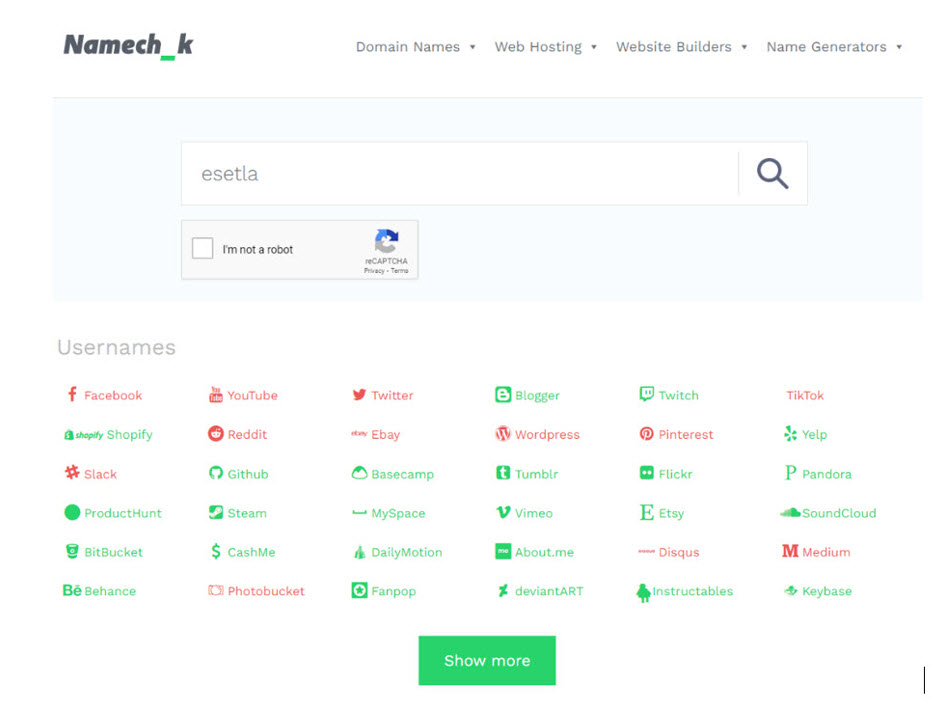
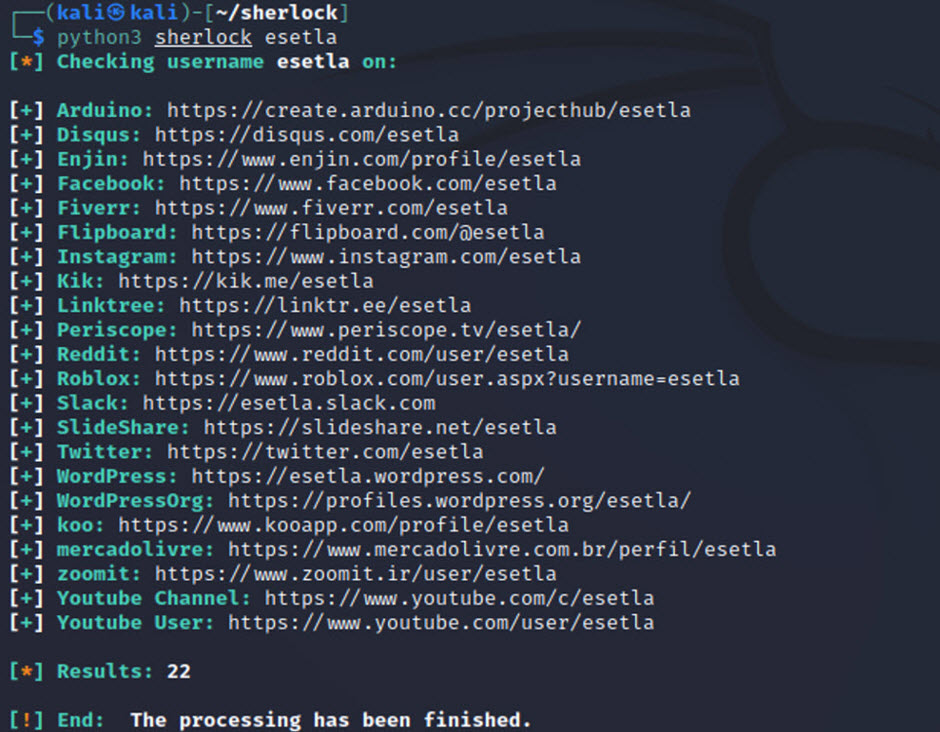
  • Social media tools: platforms like Namechk and Sherlock check whether a username exists across dozens of sites and are, therefore, useful for building digital profiles. More advanced tools such as Skopenow, Telegago, or AccountAnalysis analyze behavior and connections on platforms like X, Facebook, or Telegram.
  • Metadata analysis: tools such as ExifTool, FOCA, and Metagoofil extract geolocation, author names, timestamps and other data contained in images and documents.
  • Threat monitoring: automated projects can blend OSINT with real-time alerts. For example, FBI Watchdog warns of legally seized domains and DNS changes in real time. There are also various tools that track criminal forums for early signs of ransomware campaigns.
que-es-osint-como-empezar
Figure 1. Namechk checks whether the same username appears across multiple social media networks
que-es-osint-como-empezar-2
Figure 2. Sherlock does something similar from the command line and is handy for mapping someone’s online footprint

Getting started with OSINT

If you’re starting from scratch, stick to the conventional intelligence cycle:

  1. Define your goals; in other words, be clear about what you’re investigating and what questions you’re seeking to answer.
  2. Identify relevant sources, such as social media, websites, government databases, or public records.
  3. Collect and analyze data with the help of select OSINT tools.
  4. Document what you find, and assess how reliable each nugget of information is. Make sure to source and rigorously document your findings so that you reduce errors and ensure your analysis is credible.

Recommended starter tools

If you’re just starting out, here are a few free tools with robust documentation:

  • Explore the OSINT Framework to find categorized resources.
  • Experiment with TheHarvester, SpiderFoot, and Recon-ng to understand automated data gathering.
  • Learn basic Google Dorking and how to work with Shodan.
  • Try Maltego, which integrates multiple APIs into one interface, to visualize relationships and datasets.

Mock case study

Let’s say a company suspects a data breach. An OSINT analyst might take these steps:

  1. They check breach databases such as Have I Been Pwned to see if company emails appear in known leaks.
  2. They also use Google Dorks to search for publicly exposed documents (e.g., “filetype:xls CEO email")
  3. They scan for unprotected servers using Shodan or Censys.
  4. Using Maltego or social media intelligence (SocMINT) tools, they map employee social profiles tools to identify accidental exposure of confidential data.
  5. Ultimately, they discover that a server indexed by Google was using weak credentials. The team updates configurations and notifies users, preventing a potentially serious breach.

Parting thoughts

Knowing how to use OSINT tools is one thing; knowing how to investigate responsibly is another. Learn when to create sock puppet accounts for investigations, when to use scraping to handle large datasets, and when it’s appropriate to explore the dark web. Just remember never to lose sight of privacy laws and the ethics behind the search – they’re part of the craft.

We’re almost about to enter 2026, and open-source intelligence is more relevant than ever. it’s part of how cybersecurity, journalism, and research all operate. The explosion of available data, coupled with smarter automation and artificial intelligence, means that almost anyone can extract meaningful intelligence from open sources. Done right, OSINT turns the noise of the online world into actionable insights.


Let us keep you
up to date

Sign up for our newsletters