












Privacy
Smart glasses allow anyone to track and record the world around them. That could put your data and the privacy of those nearby at risk.
11 May 2026 • , 5 min. read
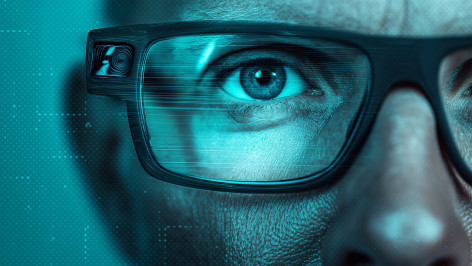
Fashion and many other trends have a way of reappearing every few years. So we probably shouldn’t be surprised that smart glasses are doing the rounds once more, after a failed attempt by Google to popularize them over a decade ago. The difference this time round is that they’re not just more stylish – and arguably harder to tell from regular shades. They’re also packed with far more powerful technology, capable of tracking and recording their surroundings, and allowing the user to ask AI about the things they can see around them.
This presents significant security and privacy risks for both smart glasses users and the people they interact with.
Anyone who’s ever lived in a city will be used to being monitored. Germany and the UK have among the highest number of CCTV cameras in the world. But when that monitoring is targeted and not based around informed consent, it can quickly get out of hand. Smart glasses give anyone the ability to record or take photos of strangers surreptitiously. Although they feature a small LED light, this can be covered up, and in any case may be difficult for bystanders to spot.
But that’s not all. Harvard University researchers have demonstrated how video taken via smart glasses and livestreamed to Instagram can be connected to AI. Algorithms then work to identify faces and then pull information from the internet on those individuals. Suddenly that cool accessory becomes a powerful, portable surveillance device capable of empowering stalkers, bullies and fraudsters.
The bad news is that Meta may be looking to streamline the process with a controversial Name Tag feature. The social media giant has also come under scrutiny from regulators recently after reports revealed that some outsourced workers in Kenya were able to view highly sensitive images as part of their job to monitor users’ interaction with its AI platform. Even if users don’t have data monitored in this way, it might still be used to train AI models, according to an updated Meta privacy policy. And any voice recordings made after the “Hey Meta” wake word will be stored (along with transcripts) for up to a year by default.
This isn’t just about privacy. Any sensitive information shared with a public AI platform via a pair of smart glasses could theoretically be regurgitated to other users if prompted in the right way. That’s a potential security risk if they choose to use the information fraudulently. And then there are those outsourced workers and contractors who may stumble across information harvested by glasses, which they might decide to sell to scammers.
Information you might accidentally send to the cloud/AI model could include:
There’s also a risk of nefarious smart glasses users shoulder surfing behind you in public, in order to steal PINs, passwords and other secrets. Combined with facial recognition technology, this data extraction may allow them to build up a sizeable digital profile on their targets. With enough detail they could either launch convincing phishing attacks, hijack your accounts or impersonate you in new account creation attempts.
Like any smart device, glasses could also be hacked more conventionally, by:
These attack vectors could in turn enable bad actors to hijack your device for direct data theft, account takeover, or surveillance that could put you in physical danger.
Whether you are wearing them or being observed by someone else, there are a few steps you can take to mitigate the risks we’ve outlined above:
Meta isn’t the only tech giant rolling out smart glasses. Google, Apple, Amazon and a host of Chinese players are said to be developing similar products. Unfortunately, many prioritize competitive advantage over users’ rights. Keep a close eye on developments to ensure your security and privacy don’t suffer as a result.
Sign up for our newsletters
此内容由惯性聚合(RSS阅读器)自动聚合整理,仅供阅读参考。 原文来自 — 版权归原作者所有。