
惯性聚合 高效追踪和阅读你感兴趣的博客、新闻、科技资讯
阅读原文 在惯性聚合中打开

推荐订阅源

cs.AI updates on arXiv.org
V
Visual Studio Blog
The GitHub Blog
The GitHub Blog
Apple Machine Learning Research
J
Java Code Geeks
T
Tailwind CSS Blog
大猫的无限游戏
大猫的无限游戏
Jina AI
Jina AI
OSCHINA 社区最新新闻
OSCHINA 社区最新新闻
Hugging Face - Blog
Hugging Face - Blog
WordPress大学
WordPress大学
宝玉的分享
宝玉的分享
freeCodeCamp Programming Tutorials: Python, JavaScript, Git & More
罗磊的独立博客
人人都是产品经理
人人都是产品经理
H
Heimdal Security Blog
Last Week in AI
Last Week in AI
博客园 - 【当耐特】
Cyberwarzone
Cyberwarzone
Google DeepMind News
雷峰网
雷峰网
Hacker News: Ask HN
Hacker News: Ask HN
Webroot Blog
Webroot Blog
Microsoft Azure Blog
MyScale Blog
MyScale Blog
A
About on SuperTechFans
V2EX - 技术
V2EX - 技术
小众软件
小众软件
博客园 - Franky
博客园 - 司徒正美
P
Privacy International News Feed
爱范儿
爱范儿
U
Unit 42
博客园 - 叶小钗
The Hacker News
The Hacker News
C
Check Point Blog
奇客Solidot–传递最新科技情报
奇客Solidot–传递最新科技情报
Simon Willison's Weblog
N
News and Events Feed by Topic
D
Docker
T
Threatpost
MongoDB | Blog
MongoDB | Blog
让小产品的独立变现更简单 - ezindie.com
H
Help Net Security
L
LINUX DO - 最新话题
Security Latest
Security Latest
T
The Exploit Database - CXSecurity.com
S
SegmentFault 最新的问题
A
Arctic Wolf
Spread Privacy
Spread Privacy

WeLiveSecurity

Recovery scammers hit you when you’re down: Here’s how to avoid a ‘second strike’ As breakout time accelerates, prevention-first cybersecurity takes center stage Digital assets after death: Managing risks to your loved one’s digital estate This month in security with Tony Anscombe – March 2026 edition RSAC 2026 wrap-up – Week in security with Tony Anscombe A cunning predator: How Silver Fox preys on Japanese firms this tax season Virtual machines, virtually everywhere – but not all protected Cloud workload security: Mind the gaps Move fast and save things: A quick guide to recovering a hacked account EDR killers explained: Beyond the drivers Face value: What it takes to fool facial recognition Cyber fallout from the Iran war: What to have on your radar Sednit reloaded: Back in the trenches What cybersecurity actually does for your business How SMBs use threat research and MDR to build a defensive edge Protecting education: How MDR can tip the balance in favor of schools This month in security with Tony Anscombe – February 2026 edition Mobile app permissions (still) matter more than you may think Faking it on the phone: How to tell if a voice call is AI or not PromptSpy ushers in the era of Android threats using GenAI Is Poshmark safe? How to buy and sell without getting scammed Is it OK to let your children post selfies online? Naming and shaming: How ransomware groups tighten the screws on victims Taxing times: Top IRS scams to look out for in 2026 OfferUp scammers are out in force: Here’s what you should know A slippery slope: Beware of Winter Olympics scams and other cyberthreats This month in security with Tony Anscombe – January 2026 edition DynoWiper update: Technical analysis and attribution Love? Actually: Fake dating app used as lure in targeted spyware campaign in Pakistan Drowning in spam or scam emails lately? Here’s why ESET Research: Sandworm behind cyberattack on Poland’s power grid in late 2025 Children and chatbots: What parents should know Common Apple Pay scams, and how to stay safe Old habits die hard: 2025’s most common passwords were as predictable as ever Why LinkedIn is a hunting ground for threat actors – and how to protect yourself Is it time for internet services to adopt identity verification? Your information is on the dark web. What happens next? Credential stuffing: What it is and how to protect yourself This month in security with Tony Anscombe – December 2025 edition A brush with online fraud: What are brushing scams and how do I stay safe? Revisiting CVE‑2025‑50165: A critical flaw in Windows Imaging Component LongNosedGoblin tries to sniff out governmental affairs in Southeast Asia and Japan ESET Threat Report H2 2025 Black Hat Europe 2025: Was that device designed to be on the internet at all? Black Hat Europe 2025: Reputation is currency – even in the ransomware economy Locks, SOCs and a cat in a box: What Schrödinger can teach us about cybersecurity Seeking symmetry during ATT&CK® season: How to harness today’s diverse analyst and tester landscape to paint a security masterpiece The biggest catch: How whaling attacks target top executives Phishing, privileges and passwords: Why identity is critical to improving cybersecurity posture MuddyWater: Snakes by the riverbank Oversharing is not caring: What’s at stake if your employees post too much online This month in security with Tony Anscombe – November 2025 edition What parents should know to protect their children from doxxing Influencers in the crosshairs: How cybercriminals are targeting content creators MDR is the answer – now, what’s the question? The OSINT playbook: Find your weak spots before attackers do PlushDaemon compromises network devices for adversary-in-the-middle attacks What if your romantic AI chatbot can’t keep a secret? Can password managers get hacked? Here’s what to know Why shadow AI could be your biggest security blind spot In memoriam: David Harley The who, where, and how of APT attacks in Q2 2025–Q3 2025 ESET APT Activity Report Q2 2025–Q3 2025 Sharing is scaring: The WhatsApp screen-sharing scam you didn’t see coming How social engineering really works | Unlocked 403 cybersecurity podcast (S2E6) Ground zero: 5 things to do after discovering a cyberattack This month in security with Tony Anscombe – October 2025 edition Fraud prevention: How to help older family members avoid scams Cybersecurity Awareness Month 2025: When seeing isn't believing Recruitment red flags: Can you spot a spy posing as a job seeker? How MDR can give MSPs the edge in a competitive market Cybersecurity Awareness Month 2025: Cyber risk thrives in the shadows Gotta fly: Lazarus targets the UAV sector SnakeStealer: How it preys on personal data – and how to stay safe Cybersecurity Awareness Month 2025: Building resilience against ransomware Minecraft mods: When ‘hacking’ your game becomes a security risk IT service desks: The security blind spot that may put your business at risk Cybersecurity Awareness Month 2025: Why software patching matters more than ever AI-aided malvertising: How chatbots can help spread scams How Uber seems to know where you are – even with restricted location permissions Cybersecurity Awareness Month 2025: Passwords alone are not enough The case for cybersecurity: Why successful businesses are built on protection Beware of threats lurking in booby-trapped PDF files Manufacturing under fire: Strengthening cyber-defenses amid surging threats New spyware campaigns target privacy-conscious Android users in the UAE Cybersecurity Awareness Month 2025: Knowledge is power This month in security with Tony Anscombe – September 2025 edition Roblox executors: It’s all fun and games until someone gets hacked DeceptiveDevelopment: From primitive crypto theft to sophisticated AI-based deception Watch out for SVG files booby-trapped with malware Gamaredon X Turla collab Small business, big risk: How SMBs can fight back against ransomware HybridPetya: A Petya/NotPetya copycat comes with a twist Introducing HybridPetya: Petya/NotPetya copycat with UEFI Secure Boot bypass Are cybercriminals hacking your systems – or just logging in? Preventing business disruption and building cyber-resilience with MDR Under lock and key: Safeguarding business data with encryption GhostRedirector poisons Windows servers: Backdoors with a side of Potatoes This month in security with Tony Anscombe – August 2025 edition Don’t let “back to school” become “back to bullying”
ESET APT Activity Report Q4 2025–Q1 2026
Jean-Ian Boutin · 2026-05-28 · via WeLiveSecurity

ESET Research

Threat Reports

An overview of the activities of selected APT groups investigated and analyzed by ESET Research in Q4 2025 and Q1 2026

28 May 2026  •  , 4 min. read
ESET APT Activity Report Q4 2025–Q1 2026

ESET APT Activity Report Q4 2025–Q1 2026 summarizes notable activities of selected advanced persistent threat (APT) groups documented by ESET researchers from October 2025 through March 2026. The operations highlighted here are representative of the broader threat landscape we investigated during this period, illustrating key trends and developments, and contain only a fraction of the cybersecurity intelligence data provided to customers of ESET Threat Intelligence APT Reports.

During the monitored time frame, China-aligned threat actors remained highly active worldwide, conducting espionage campaigns shaped in part by geopolitical developments affecting Beijing’s economic and security interests. Following the US military operation in Venezuela and amid continuing instability in the Gulf region, we spotted signs that China-aligned groups were being mobilized to improve Beijing’s visibility into maritime, energy, and political developments abroad. In one notable case, FamousSparrow targeted a Venezuelan governmental entity connected to maritime affairs, likely to monitor the resilience of oil shipments after the US intervention. We also noticed SteppeDriver targeting a Syrian governmental network, activity that may reflect both Chinese commercial interest in Syria’s reconstruction projects and security concerns surrounding Uyghur fighters present in that country. On VirusTotal we found PhiliKit, a new implant that we assess to be part of UNC5221’s SPAWN toolset targeting Ivanti VPN appliances, while our tracking of NegativeGlimmer revealed the group compromising governmental entities in Cambodia and Panama, as well as an AI and robotics company in South Korea. The latter targeting in South Korea aligns with Beijing’s enduring interest in strategic technologies prioritized under the Made in China 2025 industrial development policy.

The war in Iran that began in late February 2026 was the defining event for Iran-aligned activity during this period. Paradoxically, the conflict coincided with a decline in activity from established Iran-aligned APT groups in our telemetry, most likely because internet restrictions imposed by the Iranian regime hindered their ability to operate effectively. At the same time, this environment appears to have favored the mobilization of proxy and hacktivist actors targeting Israel, the United States, and other states seen as hostile to Tehran. We also documented an unusual spike in activity against Israeli targets that we could not confidently link to previously known groups. Two unattributed activity clusters, Rusty Boots and MoKhargosh, demonstrated both espionage capabilities and destructive potential – including deployment of a bootkit-style wiper and retaining destructive tooling for later use – whereas a third, MOØN Badr, appears to have been limited to targeted espionage.

North Korea-aligned threat actors remained active on several fronts. Multiple groups continued targeting developers and the cryptocurrency ecosystem with social engineering schemes that can yield both direct financial gain and opportunities for software supply-chain compromise. Lazarus and DeceptiveDevelopment continued to invest in long-term relationship building with high-value targets, while Kimsuky and Konni favored quicker, more opportunistic attacks. We also uncovered the reemergence of Andariel in South Korea, where the group deployed TigerRAT and attempted to spread Rook ransomware within an engineering company that appears to manufacture equipment relevant to liquid hydrogen handling and the nuclear industry – technologies that are obviously of interest to Pyongyang’s ballistic and nuclear ambitions.

We also tracked the continuing evolution of Lazarus campaigns, including Operation DreamJob and Operation DangerousPassword. The former targeted European drone manufacturers; the latter led to the compromise of the widely used JavaScript library axios, which has over 100 million weekly downloads on the npm registry and is critical to web and mobile applications worldwide. Attackers exploited the lead maintainer’s compromised credentials to publish malicious versions of the library that injected trojanized code into affected systems, before being detected and removed. In parallel, ScarCruft compromised a gaming platform serving the Yanbian region in China, likely to collect intelligence on individuals of interest to the North Korean regime, including refugees and defectors.

Russia-aligned threat actors continued to focus overwhelmingly on Ukraine and entities connected to the country’s defense efforts. Sednit deployed its Covenant and BeardShell implants against Ukrainian military personnel, drone manufacturers, and organizations involved in drone research and development, while also targeting logistics and transportation companies outside Ukraine. Sandworm intensified destructive activity over the winter, deploying several new wipers in Ukraine against governmental and private sector targets. Particularly notable was a December 2025 data destruction incident affecting a Polish energy company, which we attribute to Sandworm with medium confidence. Although destructive attacks by Russia-aligned actors outside Ukraine remain rare, this case stands out because it affected critical infrastructure in a NATO member state. Given Poland’s role in helping stabilize Ukraine’s electricity supply, it is possible that the operation was intended to strain Ukraine’s power grid during the winter.

We also tracked several noteworthy campaigns from lesser-known and unattributed clusters. These include a browser-in-the-browser phishing attack against a Japanese think tank, Android spyware we named Asin that targets Arabic-speaking users via apps claiming to offer conflict-tracking features, and the compromise of a defense company in the United Arab Emirates through a SmartOffice CRM server, followed by the deployment of custom post-exploitation and reverse proxy tools.

ESET products protect our customers’ systems from the malicious activities described in this report. Intelligence shared here is based mostly on proprietary ESET telemetry data and has been verified by ESET researchers.
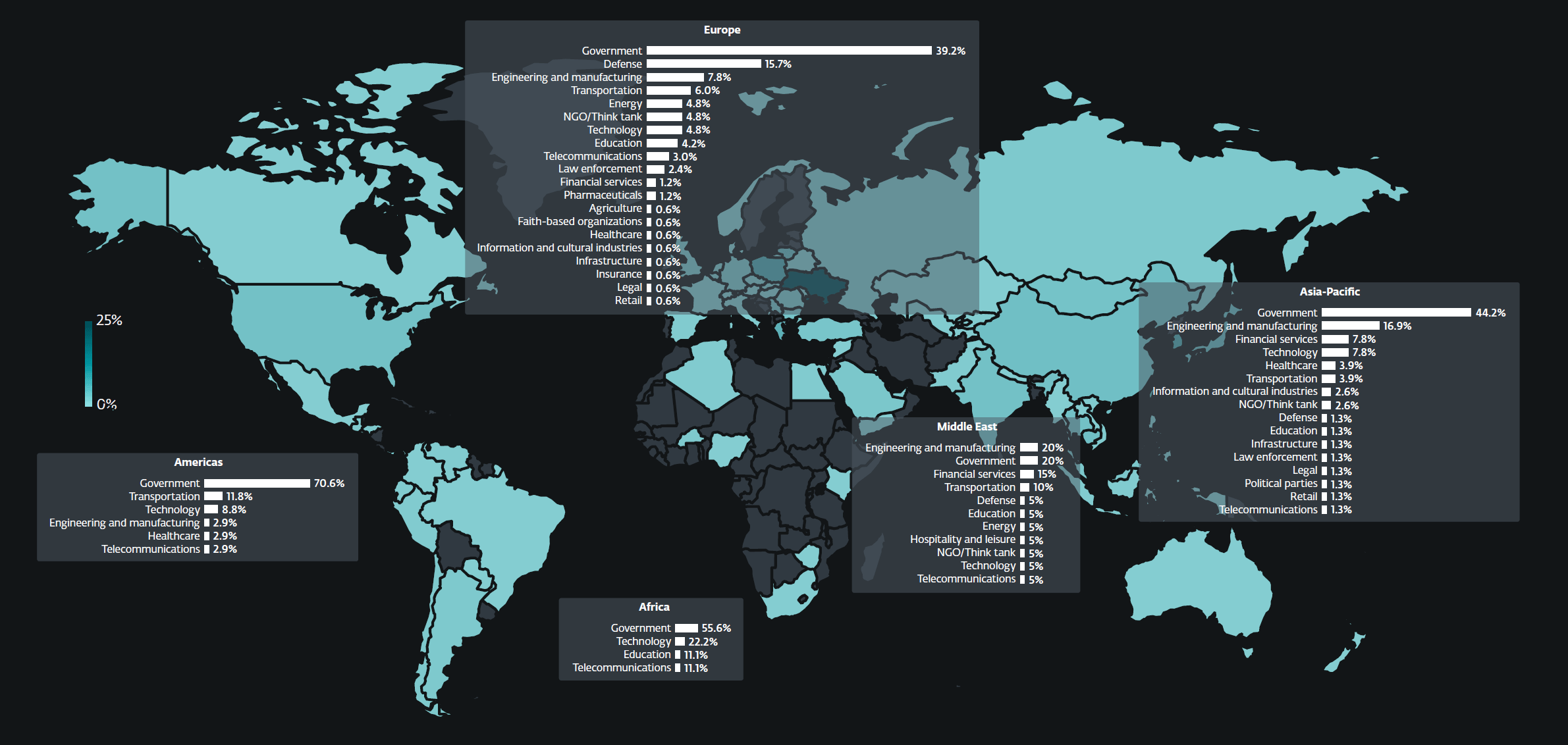
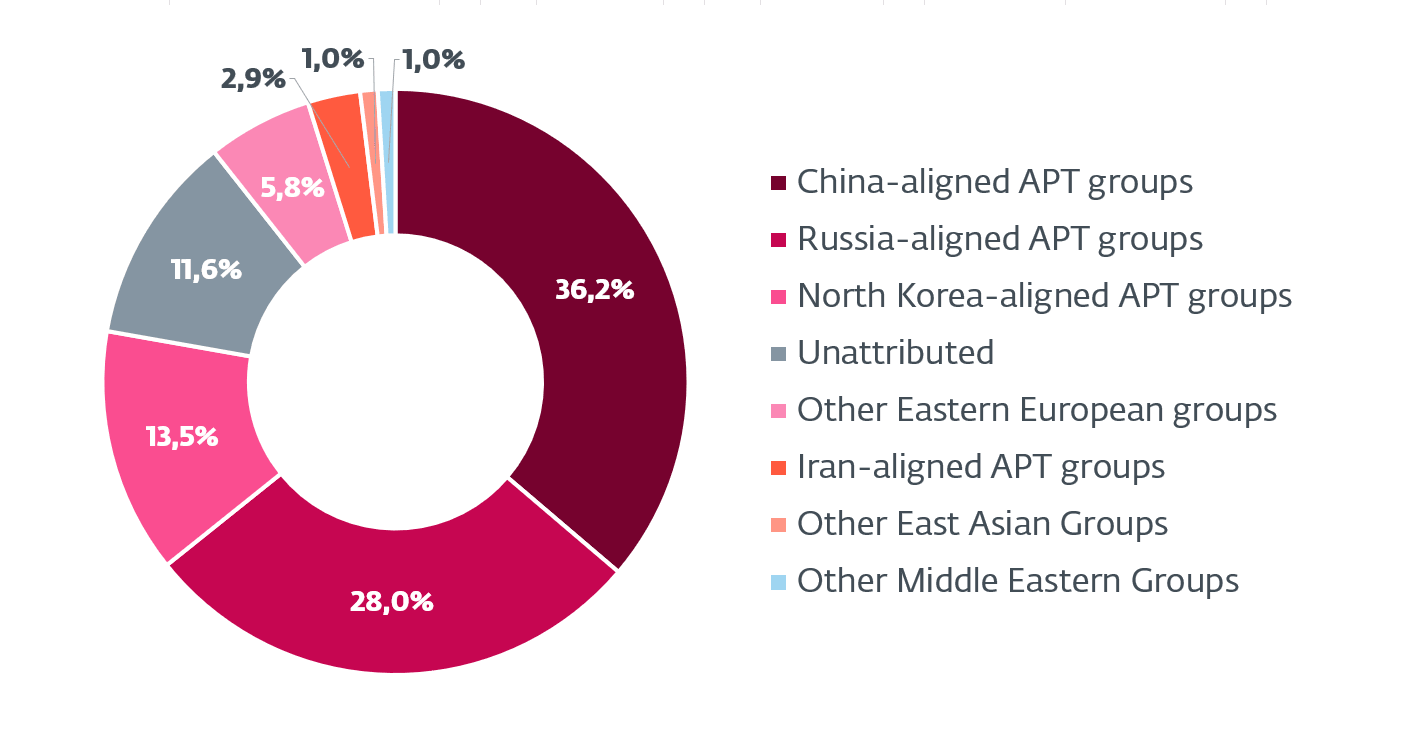
Figure 1
Targeted countries and sectors
Figure 2
Attack sources

ESET APT Activity Reports contain only a fraction of the cybersecurity intelligence data provided in ESET Threat Intelligence APT Reports. For more information, visit the ESET Threat Intelligence website.


Let us keep you
up to date

Sign up for our newsletters