


惯性聚合 高效追踪和阅读你感兴趣的博客、新闻、科技资讯
阅读原文 在惯性聚合中打开

推荐订阅源

P
Privacy International News Feed
CTFtime.org: upcoming CTF events
Jina AI
Jina AI
T
Tailwind CSS Blog
WordPress大学
WordPress大学
Scott Helme
Scott Helme
C
Cybersecurity and Infrastructure Security Agency CISA
博客园 - Franky
C
CERT Recently Published Vulnerability Notes
cs.AI updates on arXiv.org
雷峰网
雷峰网
Schneier on Security
博客园 - 聂微东
T
Tor Project blog
Hugging Face - Blog
Hugging Face - Blog
博客园 - 司徒正美
AI
AI
T
Troy Hunt's Blog
Security Latest
Security Latest
T
The Blog of Author Tim Ferriss
cs.CV updates on arXiv.org
C
Check Point Blog
T
Threat Research - Cisco Blogs
W
WeLiveSecurity
V
Vulnerabilities – Threatpost
Recorded Future
Recorded Future
Recent Commits to openclaw:main
Cisco Talos Blog
Cisco Talos Blog
C
CXSECURITY Database RSS Feed - CXSecurity.com
Cloudbric
Cloudbric
J
Java Code Geeks
罗磊的独立博客
C
Cyber Attacks, Cyber Crime and Cyber Security
aimingoo的专栏
aimingoo的专栏
L
LangChain Blog
freeCodeCamp Programming Tutorials: Python, JavaScript, Git & More
P
Privacy & Cybersecurity Law Blog
Google DeepMind News
Threat Intelligence Blog | Flashpoint
让小产品的独立变现更简单 - ezindie.com
L
Lohrmann on Cybersecurity
I
InfoQ
MongoDB | Blog
MongoDB | Blog
OSCHINA 社区最新新闻
OSCHINA 社区最新新闻
The GitHub Blog
The GitHub Blog
The Hacker News
The Hacker News
H
Help Net Security
钛媒体:引领未来商业与生活新知
钛媒体:引领未来商业与生活新知
P
Proofpoint News Feed
N
News and Events Feed by Topic

WeLiveSecurity

Recovery scammers hit you when you’re down: Here’s how to avoid a ‘second strike’ As breakout time accelerates, prevention-first cybersecurity takes center stage Digital assets after death: Managing risks to your loved one’s digital estate This month in security with Tony Anscombe – March 2026 edition RSAC 2026 wrap-up – Week in security with Tony Anscombe A cunning predator: How Silver Fox preys on Japanese firms this tax season Virtual machines, virtually everywhere – but not all protected Cloud workload security: Mind the gaps Move fast and save things: A quick guide to recovering a hacked account EDR killers explained: Beyond the drivers Face value: What it takes to fool facial recognition Cyber fallout from the Iran war: What to have on your radar Sednit reloaded: Back in the trenches What cybersecurity actually does for your business How SMBs use threat research and MDR to build a defensive edge Protecting education: How MDR can tip the balance in favor of schools This month in security with Tony Anscombe – February 2026 edition Mobile app permissions (still) matter more than you may think Faking it on the phone: How to tell if a voice call is AI or not PromptSpy ushers in the era of Android threats using GenAI Is Poshmark safe? How to buy and sell without getting scammed Is it OK to let your children post selfies online? Naming and shaming: How ransomware groups tighten the screws on victims Taxing times: Top IRS scams to look out for in 2026 OfferUp scammers are out in force: Here’s what you should know A slippery slope: Beware of Winter Olympics scams and other cyberthreats This month in security with Tony Anscombe – January 2026 edition DynoWiper update: Technical analysis and attribution Love? Actually: Fake dating app used as lure in targeted spyware campaign in Pakistan Drowning in spam or scam emails lately? Here’s why ESET Research: Sandworm behind cyberattack on Poland’s power grid in late 2025 Children and chatbots: What parents should know Common Apple Pay scams, and how to stay safe Old habits die hard: 2025’s most common passwords were as predictable as ever Why LinkedIn is a hunting ground for threat actors – and how to protect yourself Is it time for internet services to adopt identity verification? Your information is on the dark web. What happens next? Credential stuffing: What it is and how to protect yourself This month in security with Tony Anscombe – December 2025 edition A brush with online fraud: What are brushing scams and how do I stay safe? Revisiting CVE‑2025‑50165: A critical flaw in Windows Imaging Component LongNosedGoblin tries to sniff out governmental affairs in Southeast Asia and Japan ESET Threat Report H2 2025 Black Hat Europe 2025: Was that device designed to be on the internet at all? Black Hat Europe 2025: Reputation is currency – even in the ransomware economy Locks, SOCs and a cat in a box: What Schrödinger can teach us about cybersecurity Seeking symmetry during ATT&CK® season: How to harness today’s diverse analyst and tester landscape to paint a security masterpiece The biggest catch: How whaling attacks target top executives Phishing, privileges and passwords: Why identity is critical to improving cybersecurity posture MuddyWater: Snakes by the riverbank Oversharing is not caring: What’s at stake if your employees post too much online This month in security with Tony Anscombe – November 2025 edition What parents should know to protect their children from doxxing Influencers in the crosshairs: How cybercriminals are targeting content creators MDR is the answer – now, what’s the question? The OSINT playbook: Find your weak spots before attackers do PlushDaemon compromises network devices for adversary-in-the-middle attacks What if your romantic AI chatbot can’t keep a secret? Can password managers get hacked? Here’s what to know Why shadow AI could be your biggest security blind spot In memoriam: David Harley The who, where, and how of APT attacks in Q2 2025–Q3 2025 ESET APT Activity Report Q2 2025–Q3 2025 Sharing is scaring: The WhatsApp screen-sharing scam you didn’t see coming How social engineering really works | Unlocked 403 cybersecurity podcast (S2E6) Ground zero: 5 things to do after discovering a cyberattack This month in security with Tony Anscombe – October 2025 edition Fraud prevention: How to help older family members avoid scams Cybersecurity Awareness Month 2025: When seeing isn't believing Recruitment red flags: Can you spot a spy posing as a job seeker? How MDR can give MSPs the edge in a competitive market Cybersecurity Awareness Month 2025: Cyber risk thrives in the shadows Gotta fly: Lazarus targets the UAV sector SnakeStealer: How it preys on personal data – and how to stay safe Cybersecurity Awareness Month 2025: Building resilience against ransomware Minecraft mods: When ‘hacking’ your game becomes a security risk IT service desks: The security blind spot that may put your business at risk Cybersecurity Awareness Month 2025: Why software patching matters more than ever AI-aided malvertising: How chatbots can help spread scams How Uber seems to know where you are – even with restricted location permissions Cybersecurity Awareness Month 2025: Passwords alone are not enough The case for cybersecurity: Why successful businesses are built on protection Beware of threats lurking in booby-trapped PDF files Manufacturing under fire: Strengthening cyber-defenses amid surging threats New spyware campaigns target privacy-conscious Android users in the UAE Cybersecurity Awareness Month 2025: Knowledge is power This month in security with Tony Anscombe – September 2025 edition Roblox executors: It’s all fun and games until someone gets hacked DeceptiveDevelopment: From primitive crypto theft to sophisticated AI-based deception Watch out for SVG files booby-trapped with malware Gamaredon X Turla collab Small business, big risk: How SMBs can fight back against ransomware HybridPetya: A Petya/NotPetya copycat comes with a twist Introducing HybridPetya: Petya/NotPetya copycat with UEFI Secure Boot bypass Are cybercriminals hacking your systems – or just logging in? Preventing business disruption and building cyber-resilience with MDR Under lock and key: Safeguarding business data with encryption GhostRedirector poisons Windows servers: Backdoors with a side of Potatoes This month in security with Tony Anscombe – August 2025 edition Don’t let “back to school” become “back to bullying”
GopherWhisper: A burrow full of malware
Eric Howard · 2026-04-23 · via WeLiveSecurity

ESET Research

ESET Research has discovered a new China-aligned APT group that we’ve named GopherWhisper, which targets Mongolian governmental institutions

23 Apr 2026  •  , 6 min. read

GopherWhisper: A burrow full of malware

ESET researchers have discovered a previously undocumented China-aligned APT group that we named GopherWhisper. The group wields a wide array of tools mostly written in Go, using injectors and loaders to deploy and execute various backdoors in its arsenal. In the observed campaign, the threat actors targeted a governmental entity in Mongolia.

GopherWhisper abuses legitimate services, notably Discord, Slack, Microsoft 365 Outlook, and file.io for command and control (C&C) communication and exfiltration. Crucially, after we identified multiple Slack and Discord API tokens, we managed to extract a large number of C&C messages from those services, which provided us with great insight into the group’s activities.

This blogpost summarizes the findings from our investigation of GopherWhisper’s toolset and C&C traffic, which can be found in our white paper on the topic.

Key points of the blogpost:

  • ESET Research uncovered a new China-aligned APT group we’ve named GopherWhisper that targeted a governmental entity in Mongolia.
  • The group’s toolset includes custom Go-based backdoors LaxGopher, RatGopher, and BoxOfFriends, the injector JabGopher, the exfiltration tool CompactGopher, the loader FriendDelivery, and the C++ backdoor SSLORDoor.
  • GopherWhisper leverages Discord, Slack, Microsoft 365 Outlook, and file.io for C&C communications and exfiltration.
  • We analyzed C&C traffic from the attacker’s Slack and Discord channels, gaining information about the group’s internal operations and post-compromise activities.

Backdoors galore

We discovered the group in January 2025, when we found a previously undocumented backdoor, which we named LaxGopher, on the system of a governmental entity in Mongolia. Digging deeper, we managed to uncover several more malicious tools, mainly various backdoors, all deployed by the same group. The majority of these tools, including LaxGopher, are written in Go.

Since the set of malware we found has no code similarities linking it to any known threat actor, and there was no overlap in tactics, techniques, and procedures (TTPs) with any other group, we decided to attribute the tools to a new group. We chose to name it GopherWhisper due to the majority of the group’s tools being written in the Go programming language, which has a gopher as its mascot, and based on the filename whisper.dll, a malicious component that is side-loaded.

The malware we initially discovered consists of the following:

  • JabGopher: an injector that executes the LaxGopher backdoor disguised as whisper.dll. It creates a new instance of svchost.exe and injects LaxGopher into the svchost.exe process memory.
  • LaxGopher: a Go-based backdoor that interacts with a private Slack server to retrieve C&C messages. It executes commands via cmd.exe and publishes the results back to the Slack channel configured in the code. LaxGopher can also download further malware to the compromised machine.
  • CompactGopher: a Go-based file collection tool deployed by operators to quickly compress files from the command line and automatically exfiltrate them to the file.io file sharing service. It is one of the payloads deployed by LaxGopher.
  • RatGopher: a Go-based backdoor that interacts with a private Discord server to retrieve C&C messages. On successful execution of a command, the results are published back to the configured Discord channel.
  • SSLORDoor: a backdoor built in C++ that uses OpenSSL BIO for communication via raw sockets on port 443. It can enumerate drives, and run commands based on C&C input, mainly related to opening, reading, writing, deleting, and uploading files.

Based on the knowledge we gained during our analysis, we were able to find two additional GopherWhisper tools, which were again deployed against the same Mongolian governmental entity:

  • FriendDelivery: a malicious DLL file serving as a loader and injector that executes the BoxOfFriends backdoor.
  • BoxOfFriends: a Go-based backdoor that makes use of the Microsoft 365 Outlook mail REST API from Microsoft Graph to create and modify draft email messages for its C&C communications.

A schematic overview of GopherWhisper’s arsenal is provided in Figure 1.
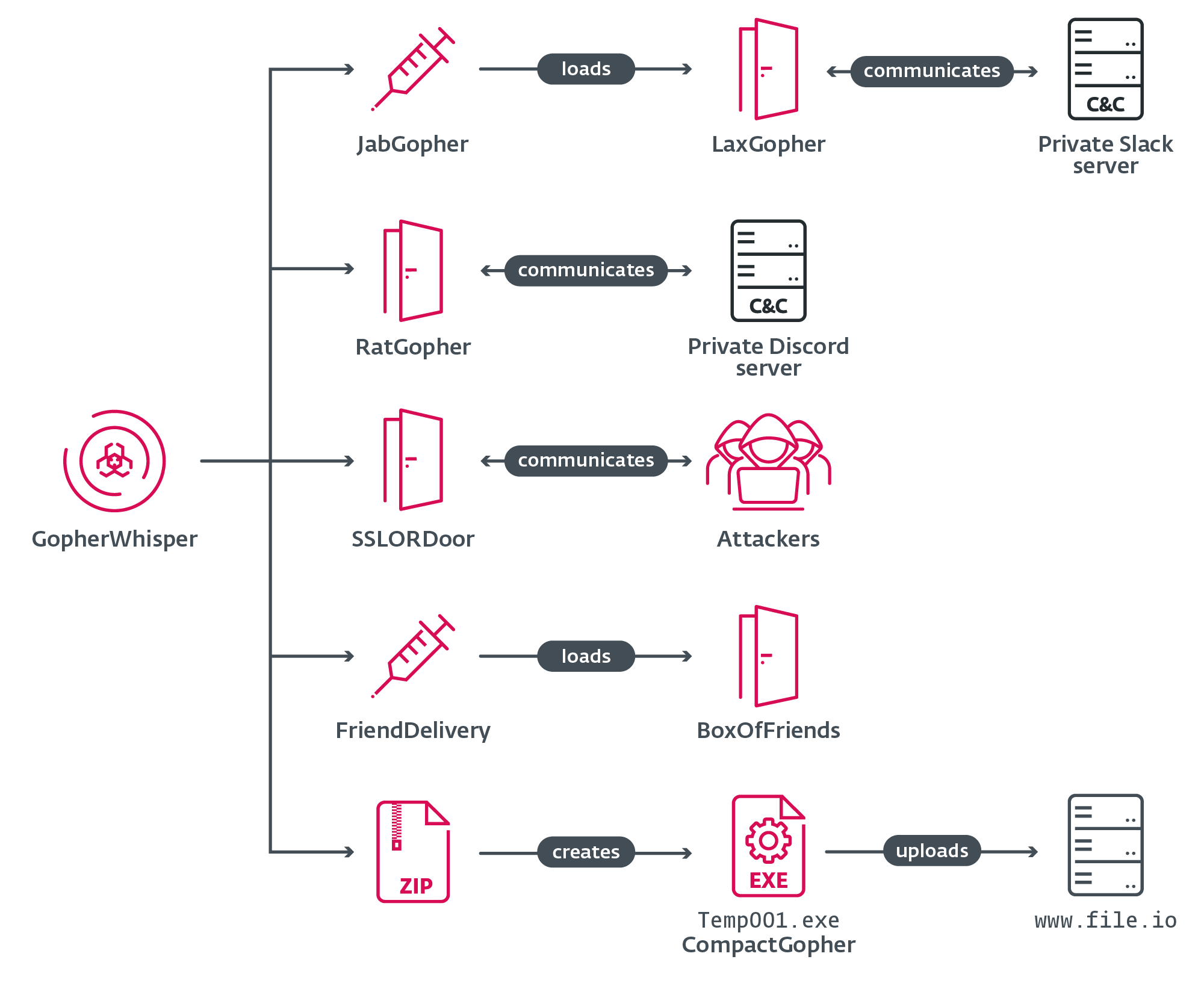
Figure 1. GopherWhisper toolset overview

Revealing messages

As mentioned in the introduction, GopherWhisper is characterized by the extensive use of legitimate services such as Slack, Discord, and Outlook for C&C communication. During our investigation, we managed to extract thousands of Slack and Discord messages, as well as several draft email messages from Microsoft Outlook. This gave us great insight into the inner workings of the group.

Timestamp inspection of the Slack and Discord messages showed us that the bulk of them were sent during working hours, i.e. between 8 am and 5 pm, in UTC+8 (see Figure 2 and Figure 3), which aligns with China Standard Time. Furthermore, the locale for the configured user in Slack metadata was also set to this time zone. We therefore believe that GopherWhisper is a China-aligned group.
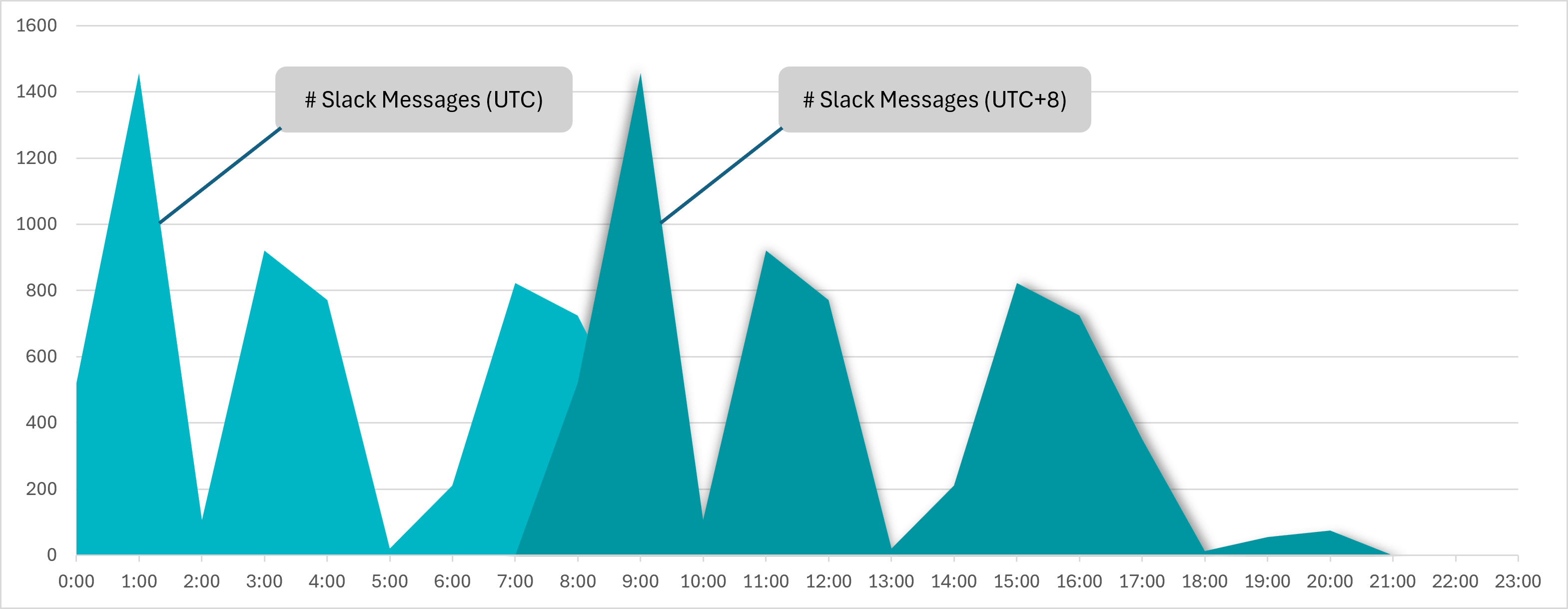
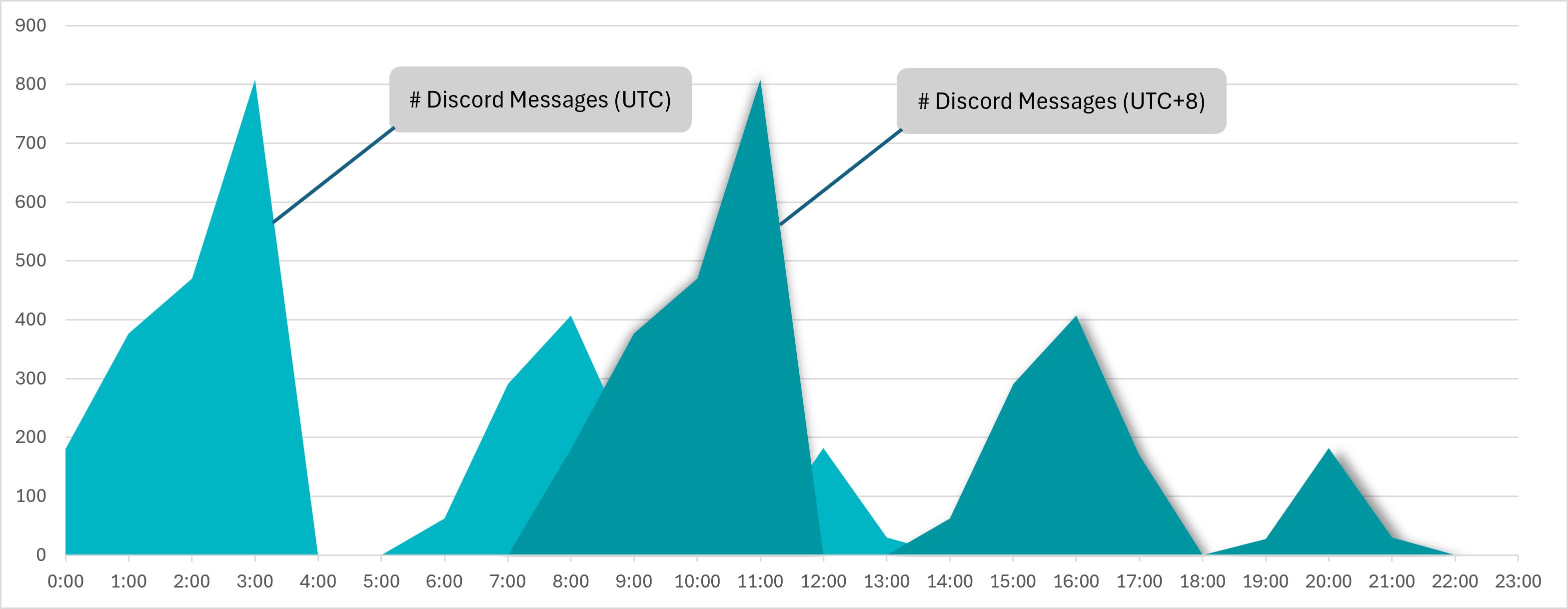
Figure 2. Slack messages every hour
Figure 3. Number of Discord messages every hour

Based on our investigation, the group’s Slack and Discord servers were first used to test the functionality of the backdoors, and then later, without clearing the logs, also used as C&C servers for the LaxGopher and RatGopher backdoors on multiple compromised machines.

LaxGopher’s Slack channel

The messages we collected revealed that LaxGopher C&C communications were mainly used to send commands for disk and file enumeration.

In addition, several interesting links to GitHub repositories with malicious code were discovered among the Slack messages, as listed in Table 1. Based on the source code of each repository, we assume that these repositories could have been used as a resource for learning and a reference during development.

Table 1. GitHub repositories found within test uploads from operators

Repository Description
https://github.com/kardianos/service Install, start, and related activities to service daemons for all operating systems with Go.
https://github.com/NHAS/stab Go local and remote process injections for x86 and x64.
https://github.com/kirinlabs/utils Go encryption and compression utilities, among others.
https://github.com/wumansgy/goEncrypt Various encryption methods implemented in Go.

RatGopher’s Discord channel

Apart from C&C communication, RatGopher’s Discord channel also contained Go source code that may have been an early iteration of the backdoor.

Additionally, we were able to obtain details about operator machines, since they often used them to run enumeration processes for testing purposes. This showed us, among other things, that an operator used a virtual machine based on VMware, and that the machine had been booted and installed at a time that aligns very nicely with the UTC+8 time zone.

Microsoft 365 Outlook communication

In addition to the Slack and Discord communication, we were also able to extract email messages used for communication between the BoxOfFriends backdoor and its C&C via the Microsoft Graph API. There we noticed that the welcome email message from Microsoft, from when the account was created, had never been deleted. This message confirmed that the account barrantaya.1010@outlook[.]com was created on July 11th, 2024, just 11 days before the creation of the FriendDelivery DLL – the loader used to execute BoxOfFriends – on July 22nd, 2024.

Conclusion

Our investigation into GopherWhisper revealed an APT group that uses a varied toolset of custom loaders, injectors, and backdoors. By analyzing the C&C communications obtained from the attacker-operated Slack and Discord channels, and from draft Outlook email messages, we were able to gain additional information about the group’s inner workings and post-compromise activities.

For a detailed analysis of the toolset and the obtained C&C traffic, read our full white paper.

A comprehensive list of indicators of compromise (IoCs) can be found in the white paper and in our GitHub repository.


Let us keep you
up to date

Sign up for our newsletters