





Vulnerabilities in OpenClaw, FreeBSD, F5 BIG-IP, and industrial control systems show risks growing across enterprise and critical infrastructure environments.
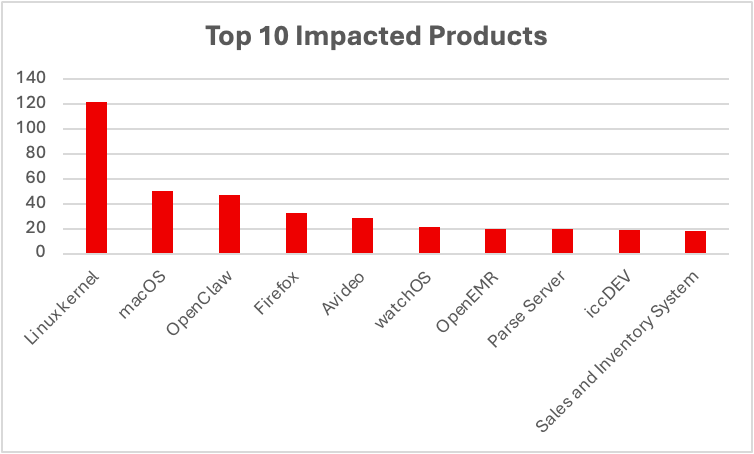
Cyble Research & Intelligence Labs (CRIL) weekly vulnerability report tracked 1,960 vulnerabilities last week, reflecting a continued surge in vulnerability disclosures across enterprise and cloud ecosystems.
Of these, 248 vulnerabilities have publicly available Proof-of-Concept (PoC) exploits, significantly increasing the likelihood of real-world attacks and accelerating exploitation timelines.
Additionally, at least 5 vulnerabilities were actively discussed across underground forums, indicating strong attacker interest and rapid weaponization.
A total of 214 vulnerabilitieswere rated critical under CVSS v3.1, while 57 were rated critical under CVSS v4.0.
Furthermore, CISA added 4 vulnerabilities to its Known Exploited Vulnerabilities (KEV) catalog, confirming active exploitation in the wild.
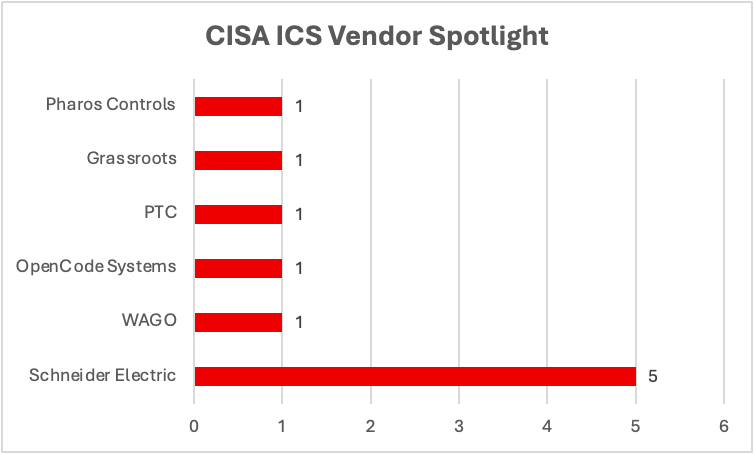
On the industrial side, CISA issued 7 ICS advisories covering 10 vulnerabilities, impacting vendors such as Schneider Electric, WAGO, and PTC.

CVE-2026-32917 — OpenClaw (Critical)
CVE-2026-32917 is a critical remote command injection vulnerability affecting OpenClaw, an AI agent framework.
The flaw occurs in the iMessage attachment staging workflow, allowing attackers to inject commands into remote systems. Successful exploitation enables arbitrary command execution, potentially leading to full system compromise.
CVE-2026-4747 — FreeBSD RPCSEC_GSS (Critical)
CVE-2026-4747 is a critical stack-based buffer overflow vulnerability in FreeBSD caused by improper bounds checking in packet handling.
Attackers can send specially crafted requests to trigger a stack overflow, resulting in remote code execution with kernel-level privileges, enabling full system takeover.
CVE-2026-31883 — FreeRDP (Critical)
CVE-2026-31883 is a heap-based buffer overflow vulnerability in FreeRDP’s audio decoding components.
A malicious RDP server or man-in-the-middle attacker can exploit this flaw to execute arbitrary code, potentially compromising remote desktop clients and enterprise environments.
CVE-2026-1207 — Django (High)
CVE-2026-1207 is a SQL injection vulnerability in Django applications using PostGIS RasterField lookups.
Insufficient input validation allows attackers to inject malicious SQL queries, leading to data exposure, modification, and potential lateral movement within backend systems.
CVE-2025-53521 — F5 BIG-IP APM (Critical)
CVE-2025-53521 is a critical vulnerability in F5 BIG-IP Access Policy Manager, initially classified as a DoS flaw but later reclassified as unauthenticated remote code execution following active exploitation.
This vulnerability allows attackers to gain full control of access management systems, posing significant risks to enterprise networks.
CISA continued expanding its KEV catalog, reflecting active exploitation trends.
Notable addition:
CVE-2025-53521 — F5 BIG-IP APM
Initially considered a denial-of-service flaw, it was reclassified as a remote code execution vulnerability after evidence of active exploitation emerged.
This shows how vulnerabilities can evolve in severity over time, reinforcing the need for continuous reassessment and monitoring.
CISA issued 7 ICS advisories covering 10 vulnerabilities, with several rated critical.
CVE-2026-2417 — Pharos Controls (Critical)
This vulnerability involves missing authentication for critical functions in Mosaic Show Controller firmware.
Attackers can exploit this flaw to gain unauthorized control over industrial systems, potentially disrupting operations.
CVE-2025-49844 — Schneider Electric Plant iT/Brewmaxx (Critical)
A use-after-free vulnerability in Schneider Electric’s industrial automation platform can lead to memory corruption and system compromise.
The presence of multiple vulnerabilities in this platform reflects systemic risk across widely deployed industrial environments.
CVE-2026-3587 — WAGO Managed Switches (Critical)
This vulnerability exposes hidden functionality in industrial switches, potentially enabling attackers to bypass controls and gain unauthorized access.
CVE-2026-4681 — PTC Windchill PDMLink (Critical)
This vulnerability involves improper control of code generation and currently has no available patch, leaving organizations exposed.
Grassroots DICOM (High, Unpatched)
A memory management flaw in Grassroots DICOM impacts healthcare imaging systems, with no vendor patch available, increasing risk to medical infrastructure.
Analysis shows that:
Commercial Facilities appear in 70% of ICS vulnerabilities
Critical Manufacturing and Energy each account for 60%
Healthcare, communications, and transportation sectors also face exposure.
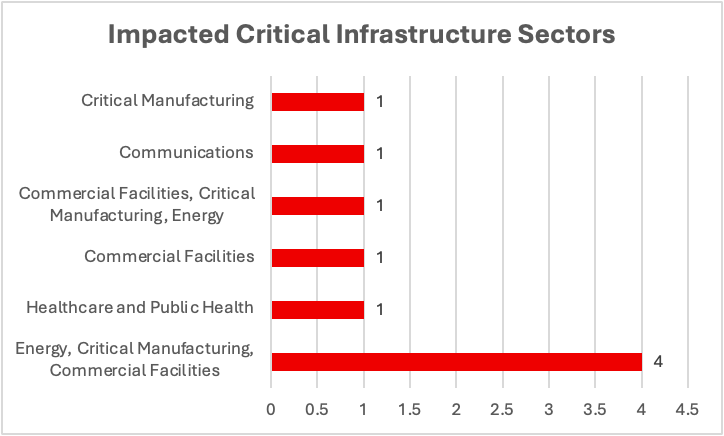
This distribution shows the strong cross-sector dependencies, where vulnerabilities in industrial platforms can cascade into multiple critical infrastructure domains.
This week’s findings highlight a convergence of:
With 248 publicly available PoCs, KEV additions confirming active exploitation, and unpatched ICS vulnerabilities, organizations face significant risk across both enterprise IT and operational technology environments.
Cyble’s attack surface management and vulnerability intelligence solutions enable organizations to identify exposed assets, prioritize remediation, and detect early indicators of compromise. By combining threat intelligence with proactive defense strategies, organizations can effectively mitigate evolving risks across enterprise and critical infrastructure environments
此内容由惯性聚合(RSS阅读器)自动聚合整理,仅供阅读参考。 原文来自 — 版权归原作者所有。