


For many organizations, Kubernetes adoption began as a technical initiative, but scaling it into a reliable, enterprise-grade platform often proved far more difficult than expected. What started as innovation quickly became complex with:
At the same time, the stakes are increasing. AI initiatives, data-intensive applications, and digital customer experiences now depend on infrastructure that is not just scalable – but predictable, secure, and efficient. According to the latest State of Platform Engineering Report1, 64% of platform engineers identify Kubernetes as a primary focus area for achieving automated, reliable, and standardized application deployment.
With VMware Cloud Foundation (VCF), and the evolution of its VMware vSphere Kubernetes Service (VKS) component, the conversation has shifted from just infrastructure management to enabling business outcomes.
VCF addresses key priorities by providing a unified platform for containers and virtual machines with a built-in, CNCF-certified Kubernetes runtime delivered through its VKS component. VKS enables platform engineers to deploy and manage Kubernetes clusters while leveraging a robust set of cloud services included in VCF, as well as CNCF conformant third-party services (Figure 1). VKS is among the first Kubernetes certified AI conformant platforms that also simplifies multi-cluster management2, empowering enterprises to confidently run AI and other modern workloads.
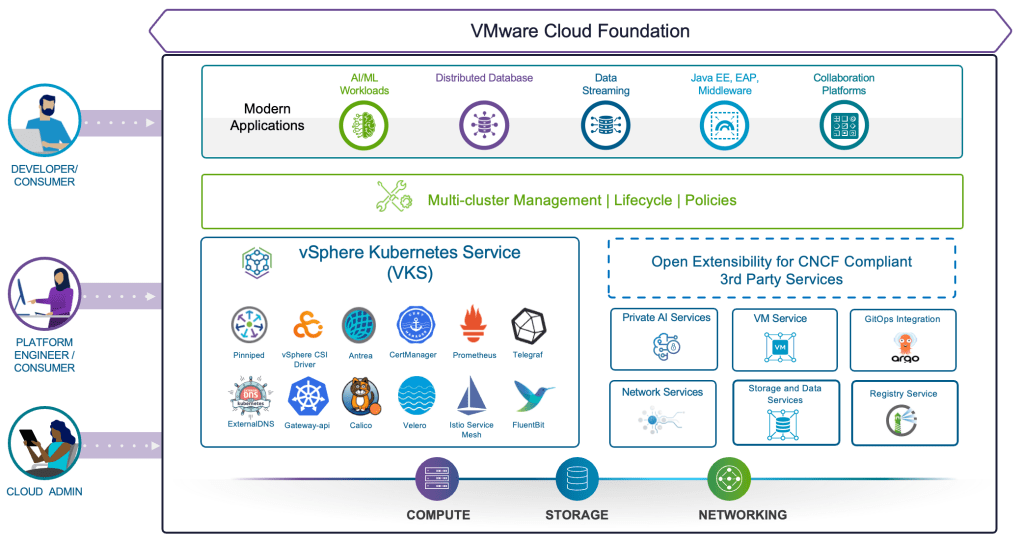
The CIO Imperative: Reduce Complexity, Increase Velocity
CIOs today face a dual mandate – ensure security, governance, control and compliance, while also driving innovation faster – on a flat to decreasing budget.
Historically, these goals have been at odds. However, with lower total cost of ownership (TCO), faster time-to-value, better security, and a simplified operational experience, VKS is fast becoming the Kubernetes runtime of choice for modern applications. To help maximize investment returns, VKS in VCF 9.1 will deliver three major benefits:
(a) Enhanced scale and performance to support business critical demands
(b) Improved operational efficiency to reduce cost and complexity
(c) Built-in security and compliance by design
VCF 9.1: Kubernetes Enhancements At A Glance
VKS in VCF 9.1 will deliver enhancements across three critical pillars:
Enhanced scale and performance to support business critical demands
Whether it’s peak retail traffic, global service delivery, or large-scale AI workloads, infrastructure must respond instantly without introducing instability.
In VCF 9.1, VKS will enable:
Business benefits:
Faster rollout of new services, improved customer experience during peak demand, and the ability to support modern workload demands without re-architecting infrastructure.
Platform Engineering benefits:
The modern application landscape spans a diverse performance spectrum, ranging from high-bandwidth or latency sensitive to GPU intensive AI workloads. Organizations seek stronger isolation, reduced blast radius, or customized cluster requirements driving the need for higher volume of clusters.
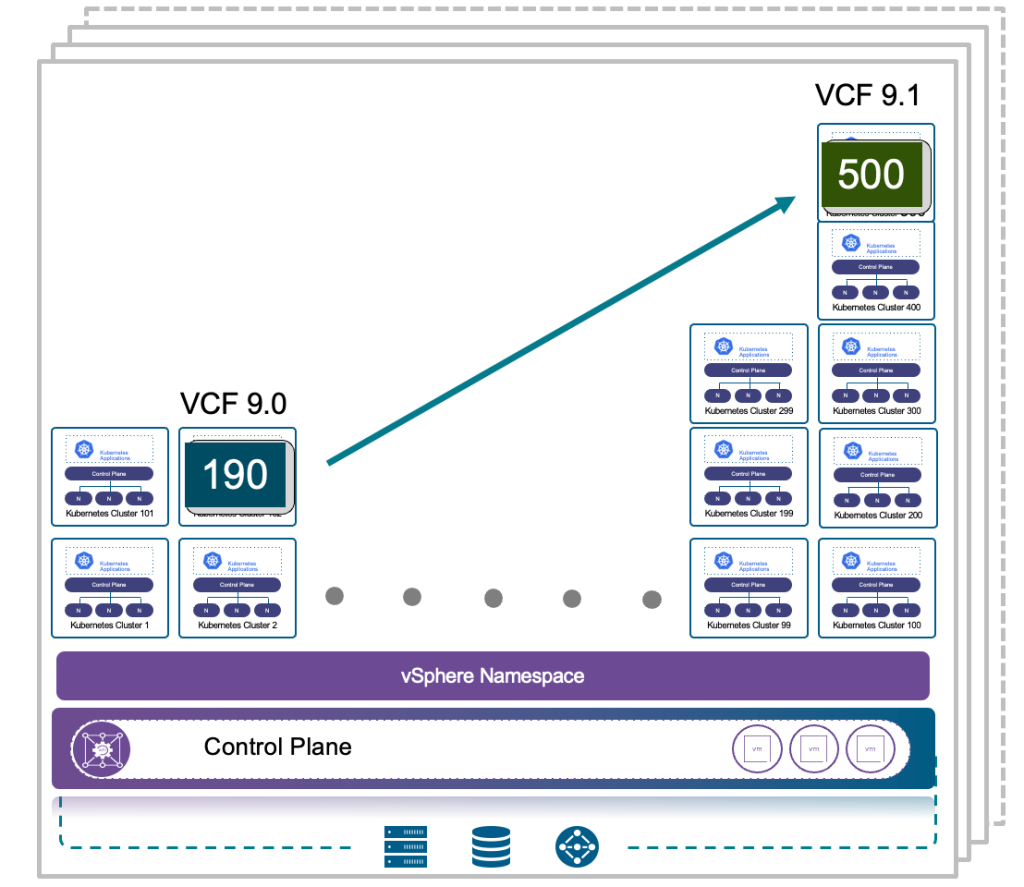
Figure 2: VKS will support up to 500 workload clusters per control plane instance for better workload isolation and significantly smaller attack surface.
For larger environments, multiple control plane instances can be deployed and managed centrally through VCF Automation (VCFA), enabling horizontal scalability while maintaining operational consistency.
Improved operational efficiency to lower the cost of innovation
One of the biggest hidden costs in enterprise IT is operational friction.
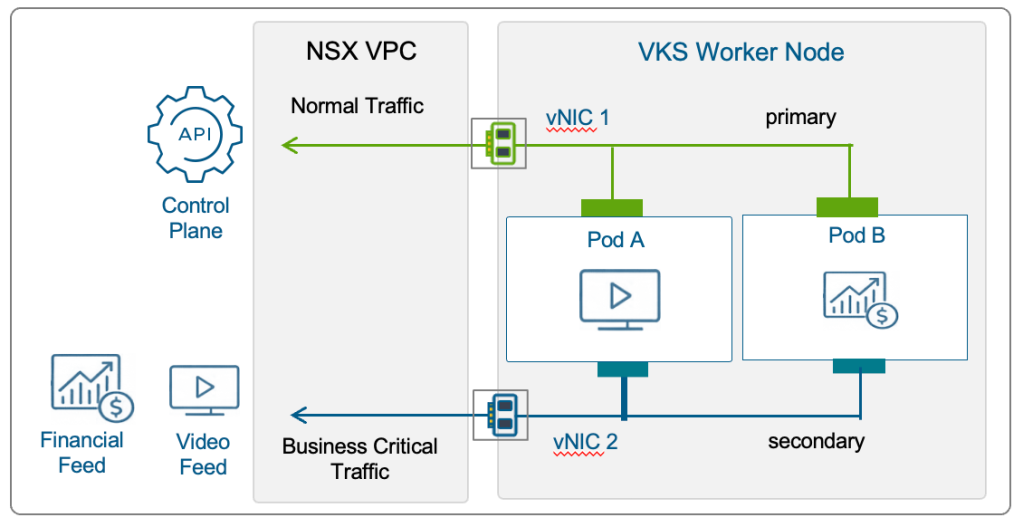
VKS in VCF 9.1 will benefit from both Kubernetes-specific enhancements and broader platform capabilities introduced in VCF:
Business benefits:
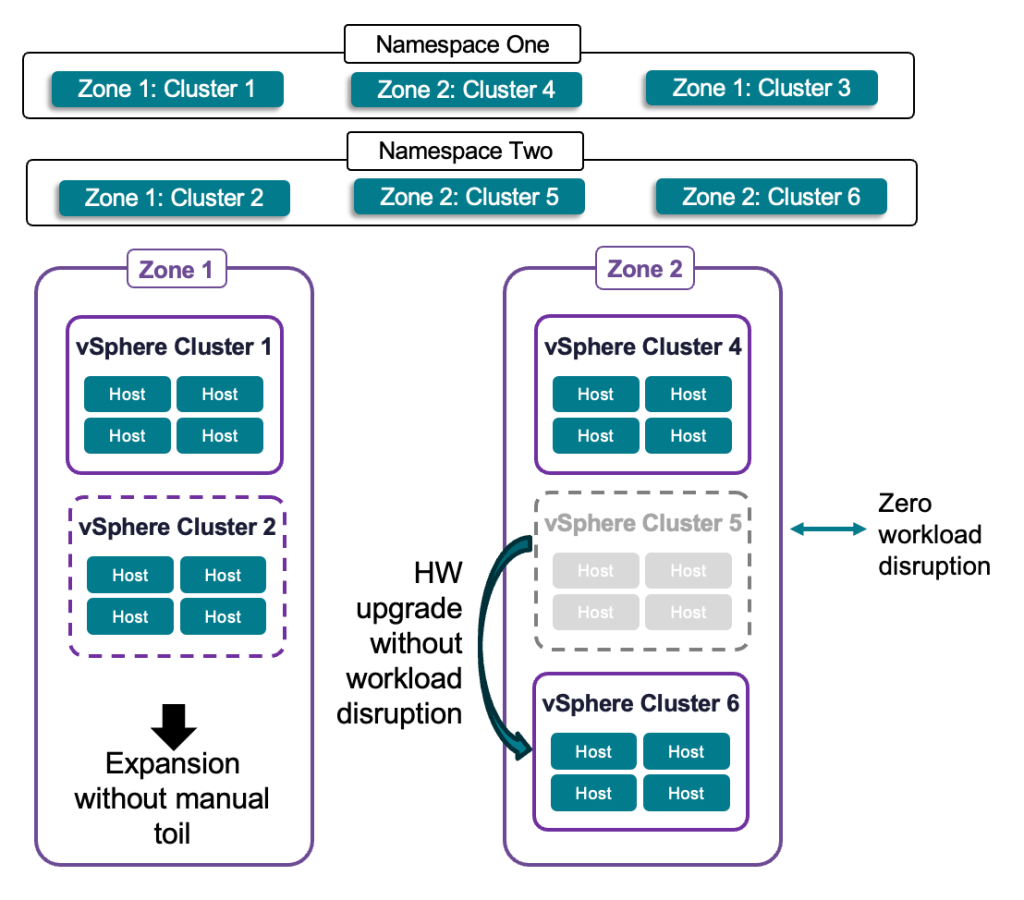
Organizations achieve faster time-to-value by accelerating innovations from initial concept to production. In addition, applications stay online and profitable during service migration and ongoing hardware lifecycle management reducing downtime costs.
Platform Engineering benefits:
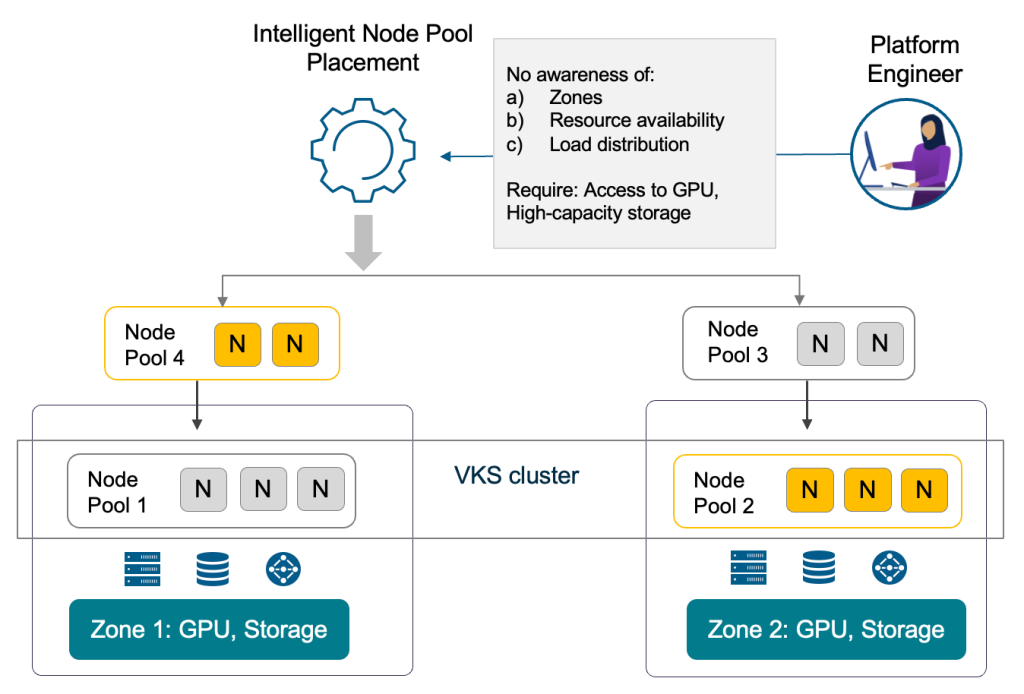
In the workload deployments node pool placement is a critical but often complex task. Platform Engineers have to consider a wide range of applications like AI apps needing GPU access, streaming apps requiring high-capacity storage, e-commerce apps that require high availability. But Platform Engineers should not be burdened with the deep infrastructure domain expertise required to navigate specialized resource access like GPU access, high-capacity storage requirements, zone awareness, resource availability across zones, load distribution, and failure constraints tied to high-availability (HA) – demanded by these modern workloads.
Tighter security and compliance that is built-in and not bolted-on
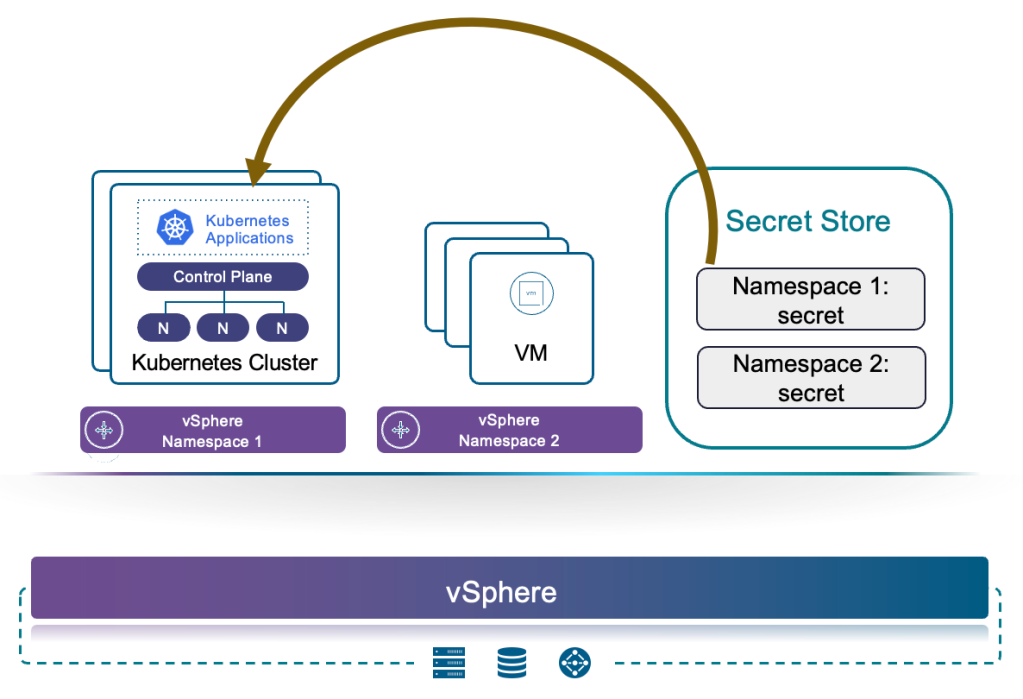
With performance and scale addressed, the next critical milestone is to address security and compliance. Security in Kubernetes environments is often fragmented, requiring multiple tools and manual processes to manage secrets and enforce access policies.
VKS in VCF 9.1 will simplify this by embedding security controls into the platform:
This will allow platform teams to automate secret handling and enforce access boundaries consistently across clusters, reducing operational risk and improving compliance readiness.
Business benefits:
Organizations will benefit from a reduced attack surface and risk of data breaches, ensuring that critical infrastructure remains protected against evolving threats. This unified approach inherently builds a stronger compliance posture through consistent policy enforcement, providing greater confidence in deploying regulated and sensitive workloads.
Platform Engineering benefits:
Container as a Service in VCF 9.1
VCF 9.1 will introduce Container Service runtime delivered through VCF Automation with complete lifecycle management. This simplified container runtime will execute directly on ESX without cluster overhead, delivering workload isolation and resource efficiency. The VCF platform will fully automate scheduling, isolation, performance optimization, and upgrades. When the application architecture evolves, the UI will generate consistent YAML for a smooth transition to VKS clusters – offering a gentle on-ramp from simple container deployments to full Kubernetes capabilities.
About VKS 3.6 Release
While being part of the same integrated cloud platform software, release cycles for the VKS component are decoupled from the VCF release schedule, with three VKS updates per year. This component specific release schedule was specifically designed to ensure seamless alignment with upstream CNCF Kubernetes releases. With the February’s shipment of VKS 3.6, customers can provision fully conformant clusters leveraging the latest Kubernetes version 1.35. For better planning VKS 3.6 also enables customers to deploy and manage Kubernetes versions 1.33 and 1.34 alongside the latest release.
To learn more about VKS
VKS web page: Learn more about VKS
VKS 3.6 Release Blog: Overview of the most important features and functionality
VKS 3.6 Release Notes: Full details on features, fixes, and supported configurations
Container as a Service in the blog: Accelerate, Streamline, and Control Your Self-Service Private Cloud with VCF 9.1
Blogs Coming Soon
1 2025 State of Platform Engineering Report Volume 4
2 VKS multi-cluster management in VCF 9.0.1
Subscribe to get the latest posts sent to your email.
此内容由惯性聚合(RSS阅读器)自动聚合整理,仅供阅读参考。 原文来自 — 版权归原作者所有。