
惯性聚合 高效追踪和阅读你感兴趣的博客、新闻、科技资讯
阅读原文 在惯性聚合中打开

推荐订阅源

Engineering at Meta
Engineering at Meta
人人都是产品经理
人人都是产品经理
大猫的无限游戏
大猫的无限游戏
博客园 - 三生石上(FineUI控件)
量子位
腾讯CDC
The Cloudflare Blog
酷 壳 – CoolShell
酷 壳 – CoolShell
云风的 BLOG
云风的 BLOG
Vercel News
Vercel News
钛媒体:引领未来商业与生活新知
钛媒体:引领未来商业与生活新知
L
LangChain Blog
aimingoo的专栏
aimingoo的专栏
The Hacker News
The Hacker News
T
The Exploit Database - CXSecurity.com
B
Blog
S
SegmentFault 最新的问题
P
Privacy & Cybersecurity Law Blog
T
Threatpost
博客园 - 聂微东
T
Tailwind CSS Blog
The Last Watchdog
The Last Watchdog
C
Check Point Blog
N
Netflix TechBlog - Medium
D
DataBreaches.Net
爱范儿
爱范儿
IT之家
IT之家
S
Secure Thoughts
M
MIT News - Artificial intelligence
NISL@THU
NISL@THU
C
Cisco Blogs
TaoSecurity Blog
TaoSecurity Blog
有赞技术团队
有赞技术团队
A
Arctic Wolf
OSCHINA 社区最新新闻
OSCHINA 社区最新新闻
P
Proofpoint News Feed
Spread Privacy
Spread Privacy
Schneier on Security
Simon Willison's Weblog
G
GRAHAM CLULEY
雷峰网
雷峰网
Project Zero
Project Zero
博客园 - Franky
H
Heimdal Security Blog
A
About on SuperTechFans
Security Latest
Security Latest
Webroot Blog
Webroot Blog
Exploit-DB.com RSS Feed
Hugging Face - Blog
Hugging Face - Blog
H
Hackread – Cybersecurity News, Data Breaches, AI and More

VMware Blogs

Diagnostics for VMware Cloud Foundation (VCF) 9.1 with Old Versions of VCF Components Mastering Infrastructure Policies in VMware Cloud Foundation Automation 9.1 Modernizing the Private Cloud: Why VCF 9.1 Lifecycle Management is a Game Changer Announcing the VMware Cloud Foundation 9.1 Upgrade Planning Tool VCF Breakroom Chats Episode 86 – Containers Made Easy: The New “Container-as-a-Service” in VCF 9.1 Securing Your VCF 9.1 Infrastructure with the Symantec Identity Security Platform Virtually Speaking: The AI Reality Check with Dave Linthicum Zero Touch Provisioning: Activating Edge Sites with VMware Cloud Foundation Edge 9.1 VCF Breakroom Chats Episode 85 – Cloning Success at Scale: Inside VCF 9.1’s App Stack Formation VMware Cloud on AWS の使用状況を確認できる API Unlocking the Full Potential of Programmable Infrastructure with VMware Cloud Foundation 9.1 – New Features and Capabilities Smarter Patching at Scale: Vulnerability Assessment and Remediation with VMware Tanzu Platform Encrypted vMotion Offload to Intel QAT in VMware Cloud Foundation 9.1 Deepen Your Expertise: Four Key Benefits of Attending Increase Deployment Flexibility with VCF Edge Automation 1.0.3 Avi Advantage: Automating Certificate Management of VCF Workloads More Memory, Less Effort: Configuring Memory Tiering in VCF 9.1 VCF 9.1 Licensing: Programmatic, Centralized, and Built to Scale Why APJ Networking Professionals Need Private Cloud Expertise VCF 9.1 Networking: Simpler VPC Connectivity Control VCF 9.1 Networking: Exploring Network Services for Virtual Private Clouds VCF Networking 9.1: Seamless DDI Integration with Infoblox The Open Source Advantage: Building from Source for Ultimate Security Expand Shared VMDKs with Clustered Applications in VMware vSAN for VCF 9.1 Monetizing Zero-Trust Security with VCF 9.1 and VMware vDefend VMware vSAN Protection and Recovery Enhancements for VCF 9.1 Deliver Production SQL Server DBaaS with VMware Data Services Manager 9.1 Maximizing Profitability: VCF 9.1 Cost-Focused Approach for VMware Cloud Service Providers Modernizing Your Infrastructure: Introducing VMware Cloud Foundation 9.1 to VCSPs VCF 9.1 is Available: Explore the New Features in Hands-on Labs What’s New with vSphere in VMware Cloud Foundation 9.1? Resizing VMware vCenter in VMware Cloud Foundation 9 Non-Disruptive VMware vCenter Patching in VMware Cloud Foundation 9.1 VMware vCenter Virtual Hardware Gets an Upgrade in vSphere with VCF 9.1 AI Has Changed the Threat Landscape. Is Your Infrastructure Ready? Simplifying Storage with the New Effective Capacity View in VMware vSAN for VCF 9.1 Auto-RAID in VMware vSAN for VCF 9.1 – Comprehensive System-Managed Data Resilience Introducing VMmark 4.1: Enhanced Power Efficiency Benchmarking for Private Cloud Infrastructure Advanced Memory Tiering Enhancements in VMware Cloud Foundation 9.1 VCF 9.1 Is Here. See It in Action. 博通發布 VMware Cloud Foundation 9.1 How Broadcom Is Helping Enterprises Win the AI Security Sprint How to Prepare for the World of AI Driven Exploits Avi Innovations for VCF 9.1: Powering Kubernetes, Agentic AI and VPC Workloads VCF 9.1: The Secure, Cost-Effective Private Cloud Platform for Production AI Announcing VCF 9.1: Modern Private Cloud Built for Efficiency and Resilience Announcing VMware Cloud Foundation Edge 9.1: A Scalable, Autonomous Edge Platform Accelerate, Streamline, and Control Your Self-Service Private Cloud with VMware Cloud Foundation 9.1 Deploy Modern Apps Faster, Scale Smarter, and Lower Your TCO with VMware vSphere Kubernetes Service in VCF 9.1 AI with VCF 9.1 on AMD GPUs: Build with open frameworks and simplify management, at a lower TCO Streamline, Simplify and Protect all your AI workloads with VCF 9.1 Simplify Workload Connectivity and Enhance Network Scale and Performance with VCF 9.1 VMware and CrowdStrike Deliver New Integration for Cyber Recovery Workflows How Many Users Can Your LLM Server Really Handle? From Infrastructure to Agents: A Hands-On Guide to Secure Private AI with Broadcom – Part 2 The New Frontier: Leading the Cloud-Native Evolution Replicating VMware vSphere Configuration Profile Desired State Webinar Recap: Design and Architecture Considerations for VMware vSphere Kubernetes Service on VMware Cloud Foundation Kubernetes 1.36: What Actually Changed for Enterprise Platforms Enhance Lateral Security and Ingress Load Balancing for Kubernetes Workloads Avi Load Balancer Analytics: Root Cause Application Performance Issues in Minutes Analyst Insight Series #3: Policy-Driven Governance and Multi-Tenant Control Post-Quantum Readiness on VMware Cloud Foundation Registration Is Live for Las Vegas | $ave with Early-Bird May 21, 2026: What’s New in VMware Tanzu Data Intelligence 10.4 From Infrastructure to Agents: A Hands-On Guide to Secure Private AI with Broadcom – Part 1 Stop Guessing: Advanced Monitoring and Troubleshooting for Data Services CPU, Disk, Network, and Memory Workload Profiles for DVD Store Database Testing How VMware Salt Automates Compliance Across Private Cloud Analyst Insight Series #2: Operational Scalability and Lifecycle Management MCP vs. APIs: Why You Need Both for AI Applications The Real Constraint on Enterprise AI isn’t GPUs; It’s Power Deploying Harbor Service in Air-Gapped VMware Cloud Foundation 9.0 Why Enhanced DirectPath Wins for High-Performance Apps Bridging the (.Local) Gap: A Split-Domain Design for VMware Cloud Foundation Deployment Observability on VMware vSphere Kubernetes Service VMware Cloud on AWS: Introducing the Usage Report APIs Converging VMware vSphere to VMware Cloud Foundation 9.0: The Top 10 Questions Answered May 6, 2026: What’s New in Tanzu Platform 10.4: Powering Agentic Apps at Scale VMware Tanzu RabbitMQ Powers the Modern Data Lakehouse with New Spark Integration and Enterprise Tooling Tanzu Data Intelligence 10.4 Delivers AI-Driven Analytics, Unified Real-Time Operations, and Sovereign Resilience Enterprise-Ready Agents Made Simple & Safe with VMware Tanzu Platform Agent Foundations Introducing Tanzu Platform 10.4: Extending Platform as a Service to Agentic Applications How AI-Assisted Analytics in Tanzu Data Intelligence Can Help Remove the SQL Bottleneck From Prototype to Production: Securing Database MCP at Enterprise Scale The Compelling Case for a Private Cloud Data Intelligence Platform The Unification Dividend: Consolidating Database Operations on VMware Cloud Foundation The Modern Spring Workflow Is Enterprise-Ready and AI-Boosted [TAM Blog] セキュアブート証明書の有効期限切れに関する注意点と対応について Accelerate Lateral Security and Ingress Load Balancing for Kubernetes Workloads From Platform to Data: Building a Cloud-Native Developer Experience On-Prem with VMware Cloud Foundation How VMware Cloud Foundation (VCF) Training Helps Keep Top Tech Talent in APJ Build Your Case for Attending VMware Explore 2026 Spring 開発元が提供する商用サポート「VMware Tanzu® Spring Essentials」とは VMware Cloud on AWS より i7i.metal-24xl インスタンスの提供開始 VMware Advanced Memory Tiering Tips for Success VMware Cloud Foundation Edge 9.0: Two-Host Edge Site Deployment with Brownfield Import Your Database Is About to Become an AI Tool. Is It Ready? Applying GitOps Principles to Maintain Desired State Configuration using VMware vSphere Configuration Profile – Part 3 Webinar Recap: Converging VMware vSphere to VMware Cloud Foundation 9.0
Scale Smarter, Save More: Redefining Infrastructure Economics with VMware vSphere in VCF 9.1
harshad kolt · 2026-05-05 · via VMware Blogs

In an era where every dollar counts and every minute of downtime matters, infrastructure teams face a perfect storm of challenges: hardware scarcity projected through 2027, isolated environments created by coexisting legacy and modern architectures, continuously evolving skillset demands, and the mounting complexity of managing installations, upgrades, and maintenance across diverse systems. Simultaneously, the evolving threat landscape and rising number and sophistication of cyber attacks require granular, high-fidelity visibility into guest OS behavior and workload activity.. Traditional approaches are no longer sustainable as organizations face intense pressure to minimize Total Cost of Ownership (TCO) while ensuring every investment delivers measurable value. What’s needed isn’t more infrastructure—it’s smarter infrastructure that maximizes existing resources through innovative approaches. This is where vSphere in VMware Cloud Foundation (VCF) 9.1 transforms the equation, delivering breakthrough innovations that fundamentally redefine infrastructure economics, performance, and security.

The Economics of Modernization Without Replacement

vSphere will introduce a suite of capabilities designed to maximize your existing infrastructure investments and reduce TCO. vSphere in VCF 9.1 also delivers features that dramatically reduce overhead and improve operational efficiency. These aren’t just incremental improvements—they’re fundamental shifts in how infrastructure delivers value. 

Memory Economics Reimagined: NVMe Tiering Gets Smarter

Memory costs have long been a constraint on infrastructure scaling, but even more so today due to skyrocketing memory prices driven by the surge of AI. vSphere changes that calculation entirely. The enhanced NVMe memory tiering feature now delivers up to 40% reduction in server TCO while removing operational friction.

What makes 9.1 transformative is how it eliminates barriers to adoption. For example, the reboot requirement for enabling memory tiering is being removed! UI notifications will make it effortless to identify eligible clusters and workloads, while proactive device health monitoring enables replacement before failures occur. 

The introduction of RAID 1 mirroring for memory tiering provides critical resilience, helping ensure device failures don’t cascade into widespread VM downtime. For data-intensive workloads like big data analytics, e-commerce platforms, and video streaming, this translates into dramatically increased memory capacity without proportional hardware investment. With improved core-to-memory balances, organizations achieve better VM consolidation and higher CPU utilization, compounding the TCO benefits.
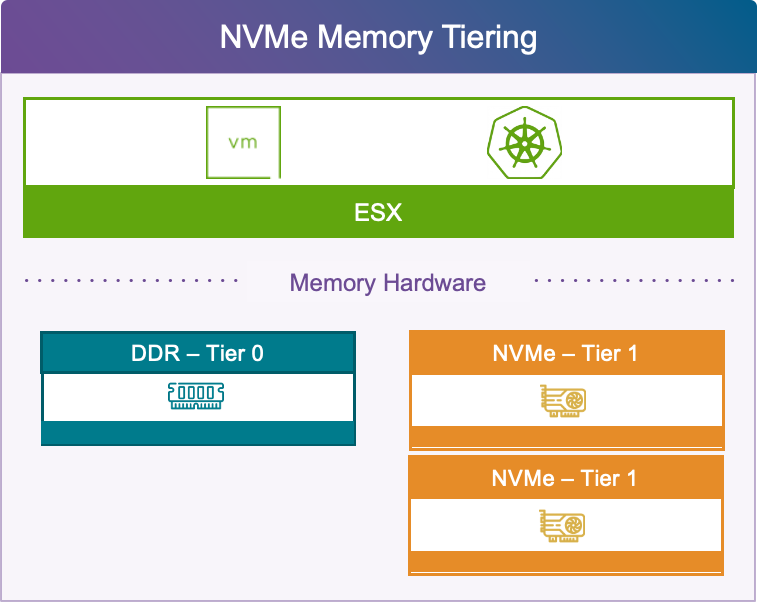
                     Figure 1: NVMe Memory Tiering

Time Is Money: Quick Patching for vCenter

Security and compliance demand regular patching, but traditional patching windows disrupt operations and strain IT teams. Quick Patching for vCenter reduces overall operation time by approximately 80%—shrinking patch windows from around 30 minutes to under 5 minutes.

This dramatic reduction isn’t just about saving time. Quick Patching intelligently classifies vCenter services based on service impact and optimizes each update type accordingly. The result? Better compliance rates for critical patches, reduced manual risk, and significantly lower administrative burden. When competitors require substantial staff time for manual patching, vSphere’s automated approach becomes a competitive advantage that compounds over time.
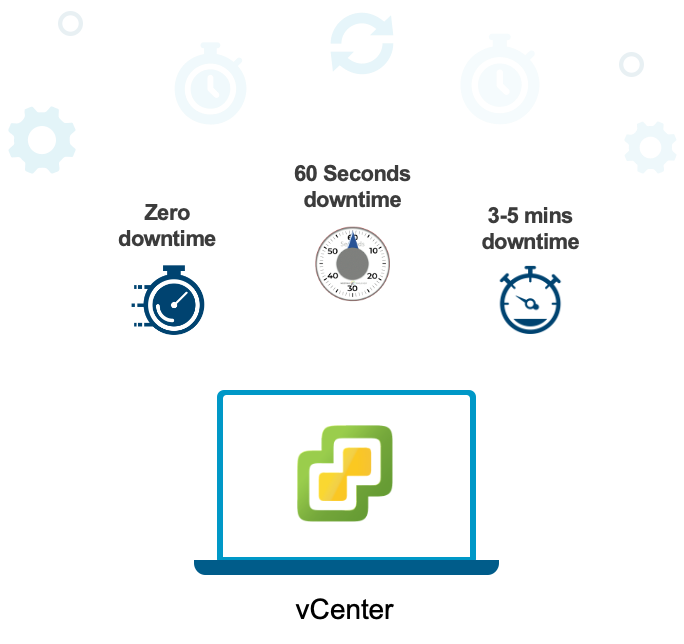
                     Figure 2: Quick Patching for vCenter

Zero-Touch Infrastructure: Elastic Provisioning at Scale

Infrastructure deployment has traditionally been a slow, manual process that makes rapid scaling difficult. vSphere Elastic Provisioning (Zero-Touch Provisioning) transforms this bottleneck into a streamlined operation. Utilizing UEFI HTTP for secure bootstrapping and vSphere Configuration Profiles for desired state configuration, organizations can rapidly deploy infrastructure at scale with minimal manual intervention.

Performance Optimization for Demanding Workloads

As workloads become more resource-intensive and processor architectures evolve, traditional approaches to performance optimization create bottlenecks that limit scalability and efficiency. vSphere in VCF 9.1 addresses these challenges head-on with intelligent performance enhancements that eliminate overhead without compromising security or operational continuity.

Performance Without Overhead: Encrypted vMotion Acceleration

For resource-intensive workloads with large frame buffers, traditional encrypted vMotion can create significant performance bottlenecks during live migration. vSphere in VCF 9.1 leverages Intel’s Quick Assist Technology (QAT) to offload encryption, decryption, and compression tasks from host CPUs during the vMotion process.

The impact? Significantly improved vMotion switchover times without sacrificing security. Organizations maintain continuous operations for their most demanding workloads while securely transmitting data without performance overhead. In environments where every second of migration time matters—whether for maintenance windows, load balancing, or disaster recovery—this optimization delivers tangible business value and operational flexibility.
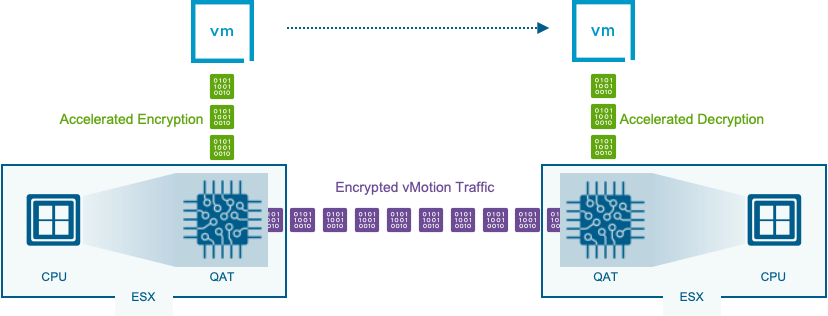
                     Figure 3: Enhanced encrypted vMotion

Maximize Performance: Topology-Aware SchedulingHigher core count processors are pushing the boundaries of previous NUMA architecture, creating challenges like node overpacking, unnecessary migrations, and suboptimal performance on AMD and SNC-enabled systems. vSphere’s topology-aware scheduling transforms how the platform handles these next-generation high-density processors.

The updated NUMA scheduler now operates more like DRS, using the same fairness model with resource pools and min/max shares, while employing a multi-resource goodness model for efficiency that factors in page-migration costs. This intelligent approach accounts for the architectures of next-generation processors, optimizing scheduling algorithms to deliver better performance, improved resource utilization, and more predictable workload behavior across diverse hardware configurations.Higher core count processors are pushing the boundaries of previous NUMA architecture, creating challenges like node overpacking, unnecessary migrations, and suboptimal performance on AMD and SNC-enabled systems . vSphere 9.1’s topology-aware scheduling transforms how the platform handles these next-generation high-density processors.

The updated NUMA scheduler now operates more like DRS, using the same fairness model with resource pools and min/max shares, while employing a multi-resource goodness model for efficiency that factors in page-migration costs. This intelligent approach accounts for the architectures of next-generation processors, optimizing scheduling algorithms to deliver better performance, improved resource utilization, and more predictable workload behavior across diverse hardware configurations.
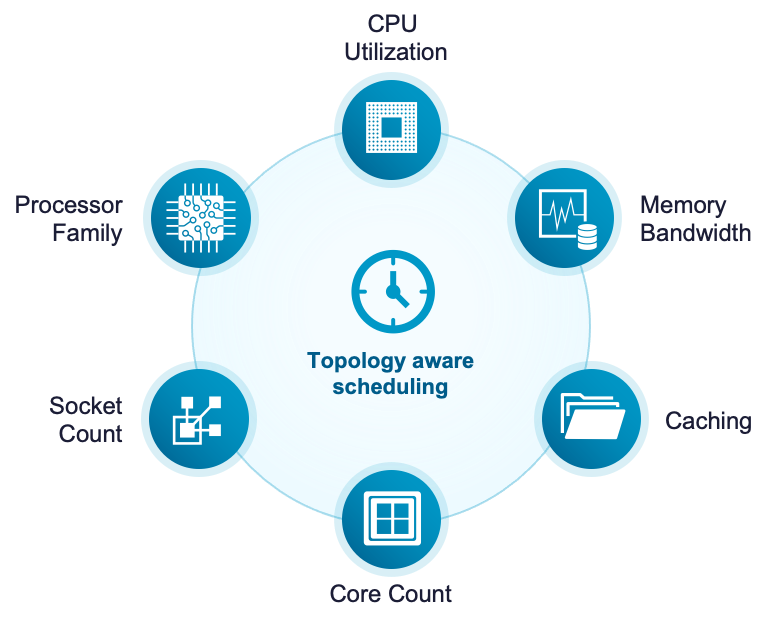
             Figure 4: Topology-aware resource scheduling

Security: Intrinsic Protection Across the Stack

vSphere delivers an intrinsically secure platform that extends protection for data-in-use, detects real-time threats, and enforces regulatory compliance of security configurations and industry best practices out-of-the-box.

Security Without Downtime: Expanded Live Patching

As organizations adopt TPM-enabled servers—constituting nearly 90% of new hardware —vSphere in VCF 9.1 extends Live Patching support to TPM-enabled hosts and enables it by default. This capability allows ESX platform infrastructure to apply essential patches without taking hosts offline or evacuating VMs, delivering critical security updates quickly within fixed SLAs while supporting robust, error-free upgrades.

Confidential Computing: Data-in-Use Protection

Data protection extends beyond storage and transmission, protecting data during processing is the final frontier. vSphere in VCF 9.1 brings Confidential Computing with Intel TDX and AMD SEV-SNP to general availability. These hardware-based memory encryption and integrity features isolate workloads from the infrastructure stack, creating secure Trust Domains (Intel) and Confidential VMs (AMD), ensuring security becomes intrinsic to the platform.

Deep Visibility: EDR Integration

Traditional Endpoint Detection and Response (EDR) tools excel at monitoring guest operating systems but often lack visibility into the ESX host itself. vSphere in VCF 9.1 enables third-party EDR agents to integrate directly into the ESX hypervisor, analyzing process, file, and network events for suspicious activity. This deep integration of threat detection directly into the hypervisor is essential for identifying lateral movement, fileless malware, and zero-day exploits without introducing performance bottlenecks.

Infrastructure That Pays for Itself

vSphere in VCF 9.1 represents a fundamental shift in infrastructure economics. By maximizing existing hardware through NVMe memory tiering, minimizing operational overhead through quick patching and elastic provisioning, eliminating performance bottlenecks through intelligent offloading, and maintaining continuous operations through live patching, organizations transform infrastructure from a cost center into a strategic advantage.

In an environment where hardware scarcity persists and every investment must deliver measurable value, vSphere in VCF 9.1 offers a clear path forward: leverage what you have, optimize how you operate, and scale without proportional cost increases. 

Learn more about vSphere in VMware Cloud Foundation 9.1 and discover how to transform your infrastructure economics today, at:


Discover more from VMware Cloud Foundation (VCF) Blog

Subscribe to get the latest posts sent to your email.