


Learning a new language is hard—especially if you’re trying it for the first time as an adult. Prepare for a time-consuming and all-encompassing process. However, AI language learning apps can be handy assistants that lend convenience in incorporating daily practice effectively.
But which app to choose? Choosing the right online AI language tutor app comes down to understanding how you learn best and how each tool can support you. To help cut through the noise and make a decision, we’ll share our picks for the seven best AI language learning apps to explore.
To perform the best comparative test, I selected Spanish as the new language I wanted to learn across each option. Then, I delved deeply into Spanish learning for the next week, spending time with each AI language learning app on this list. While a week of testing didn’t quite get me to fluency, I can confidently introduce myself in Spanish and pronounce several words. Some of these platforms and apps were extremely helpful in achieving these results; others I found more challenging to work with. Based on my experience, I have compiled my top recommendations for you to consider if you are also on the path to learning a new language.
Key takeaways:
AI language apps track your mistakes and adjust lessons to address your personal weak spots, unlike traditional textbooks, which are often one-size-fits-all and feature fixed exercises.
Conversation-focused apps like TalkPal and Langua let you practice speaking with AI. Tutors, while Chatterbug adds live video lessons with native speakers.
Free options are available (Duolingo, Memrise Basic), but please note that they often include ads and usage limits. Premium plans range from $8 to $15/month for most apps, up to $30/month for Duolingo Max, and $195/month for unlimited Chatterbug tutoring.
AI apps can help build confidence and a foundational vocabulary toolset. But they won’t make you fluent alone—you need honest conversations with native speakers, watching shows in your target language, and cultural immersion. True fluency involves dynamic speaking, reading, and writing.
Choose Duolingo or Babbel for structured learning, Langua or TalkPal for conversation practice, Memrise for native speaker videos, Lingvist for efficient vocabulary building, or Chatterbug for a hybrid AI and human tutoring experience.
AI language learning apps are AI-enabled tools that help you learn a new language through repetitive conversations or lessons in a different language. If you are trying to learn a new language—whether for a trip to a foreign land with friends or family, or for a work or educational purpose—these apps can help.
These AI apps are designed to facilitate practice with these new languages as often as you’re able. They will catch your mistakes (in understanding the language, pronunciation, etc.) and provide additional details and practice sessions to refine your skills.
These apps can also create real-life scenarios that enhance communication skills and improve language learning efficiency. Think of these tools as your personal tutor, available at your convenience, 24/7.
Now that we have discussed the basic functionality of AI language tutor apps, let’s also examine some additional benefits and conveniences they provide.
Compared to a private tutor, for example, they are budget-friendly and convenient to use—available whenever and wherever you need them. This makes your learning experience simple and easy.
With the help of AI technology, these apps can identify mistakes and provide more effective solutions and targeted practice sessions to facilitate improvements and prevent significant errors in real-life situations.
There is no pressure or time limit when using an AI language tutor app; you can learn at your own pace. Even if you are someone who doesn’t feel confident speaking a new language in front of other people, these AI apps provide a judgment-free learning playground.
Practice opportunities are readily available, thanks to user-friendly interfaces and a diverse range of lesson offerings.
As you can imagine, AI learning apps are not a replacement for real-life language learning and immersion experiences. Here are some of the challenges to consider when relying on these apps for practicing a new language:
These tools can effectively teach you how to speak and write a new language, but you don’t get the chance to immerse yourself in the culture and learn from it. This can create issues with accurate understanding, as certain words may hold different cultural meanings.
Since there is no authoritative figure or pressure to continue learning every day, it is easy to skip a day, which can slow down your learning more so than a traditionally structured program.
Having conversations with an AI chatbot feels distinctly different from conversing with people. Ultimately, the most effective way to achieve language fluency is by listening to others share stories.
With all the AI tools available to help with various aspects of your everyday routine, learning a new language is a significant specialized use case. Using these AI language learning apps adds convenience and a level of engagement that reinforces the habit in a fun way. Here are our picks for the best AI language learning apps to help you achieve new fluency.
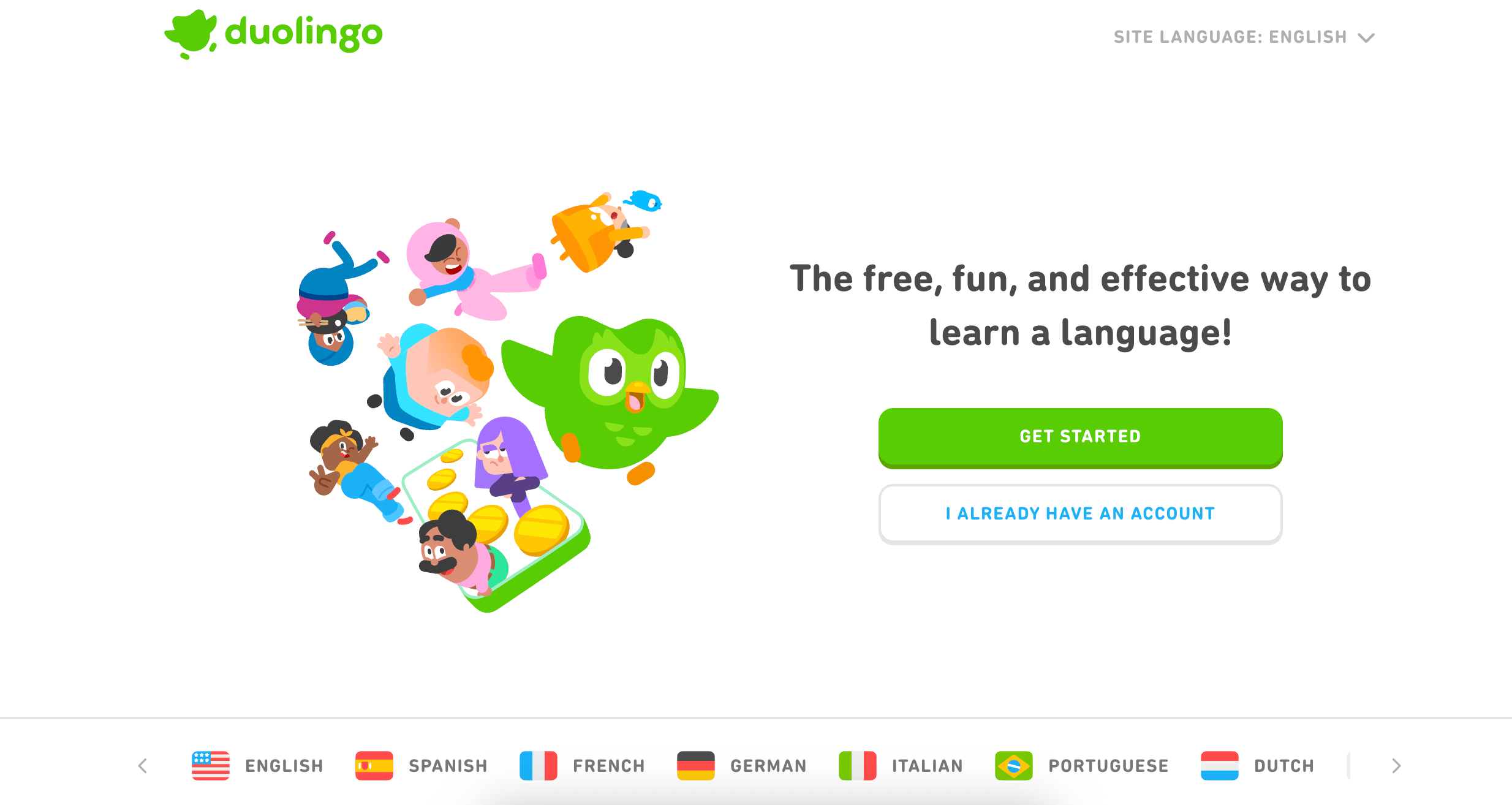
Duolingo employs gamification as its core method of teaching new languages, providing a fun and engaging learning process for users. Once you create your account, you can choose from numerous language options. Based on your language learning objectives, the entire course can be modified to accommodate your current fluency level. The lessons are concise and efficient, making them easy to complete. It is available in different versions- Super, Family, and Duolingo Max (only available via mobile apps)
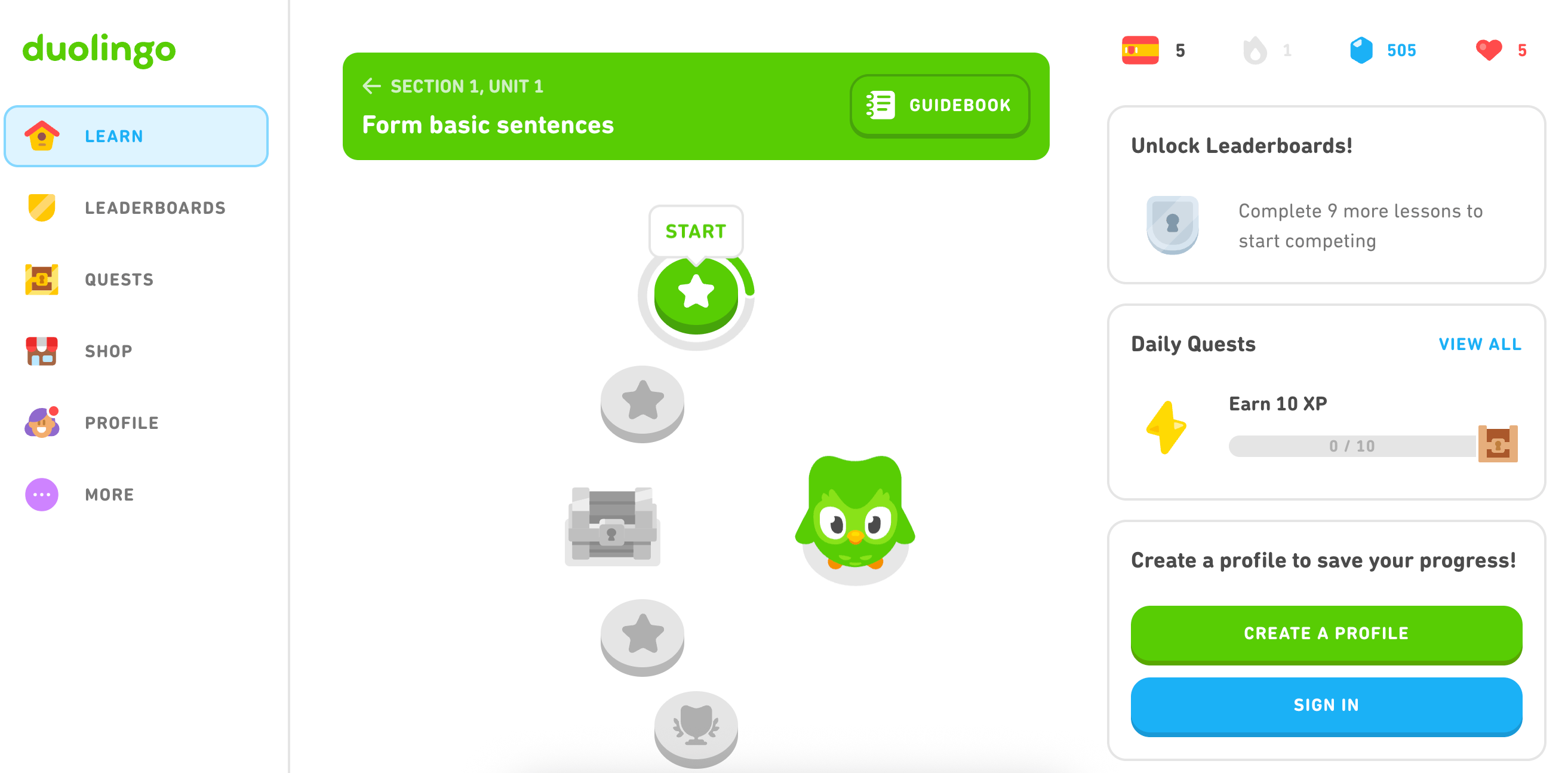
If you’re bored by the prospect of working with a tutor, you’ll find Duolingo’s gamification approach refreshing. It incorporates various games and teaching styles, offering points for each correct answer and for completing a lesson successfully. Connecting with friends and competing on the leaderboard provides an additional incentive to earn more points and continue learning regularly.
A tangible result for me? While using this tool, I invested a few minutes and now have a working understanding of how the Spanish language incorporates gender into constructing nouns.
Duolingo’s key features:
40+ languages to choose from, offering a wide range of learning opportunities.
Personalized learning opportunities to overcome mistakes and challenges that you come across during lessons.
Learn based on real-life goals, such as educational purposes, work trips, or ordering a meal in a restaurant.
Interactive stories and podcasts offer additional language exposure, adding an engaging learning dimension.
Easy-to-use, mobile-friendly apps are available for learning on the go.
Duolingo pricing:
Free: 14-day free trial
Super Family: $9.38/month
Super Duolingo: $6.38/month
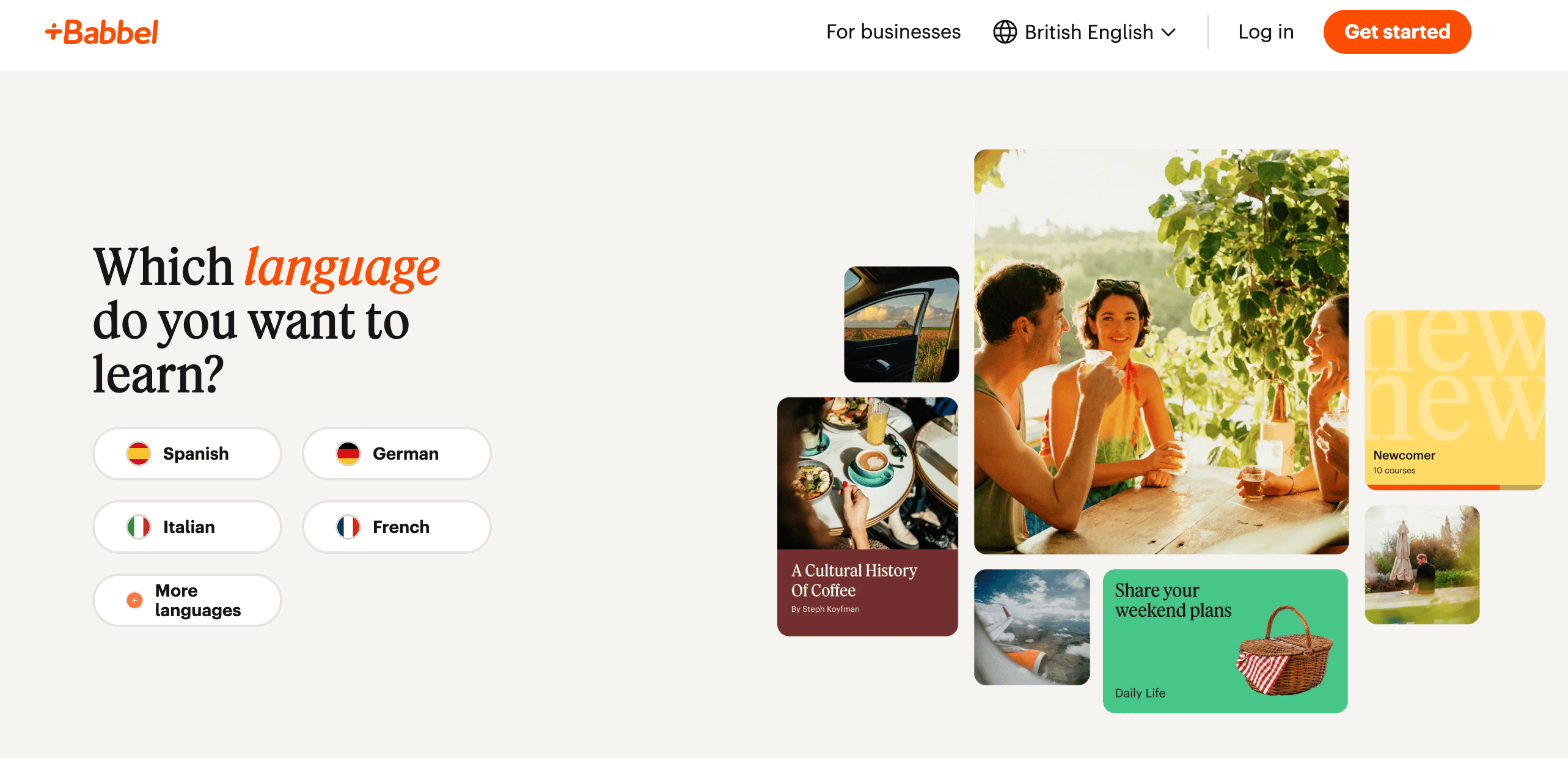
Babbel offers the look and feel of an actual language learning course, thanks to its interface, which provides a familiar learning experience similar to what you might find on any online learning platform, focusing more on learning and less on gamification or user engagement. This platform is quite simple to use, as it doesn’t have many animations or engaging elements. Instead, it is designed to guide you in finding the right options for you, offering an efficient approach to language practice. Although it doesn’t provide the same dopamine-boost point-earning system as others mentioned, it still offers a valuable experience. A significant benefit of using this platform is that certified teachers design the courses, adding a valuable level of resourcefulness in helping students learn new languages. If you find that gamified interfaces distract from actual learning, then this platform might be the best fit for you.
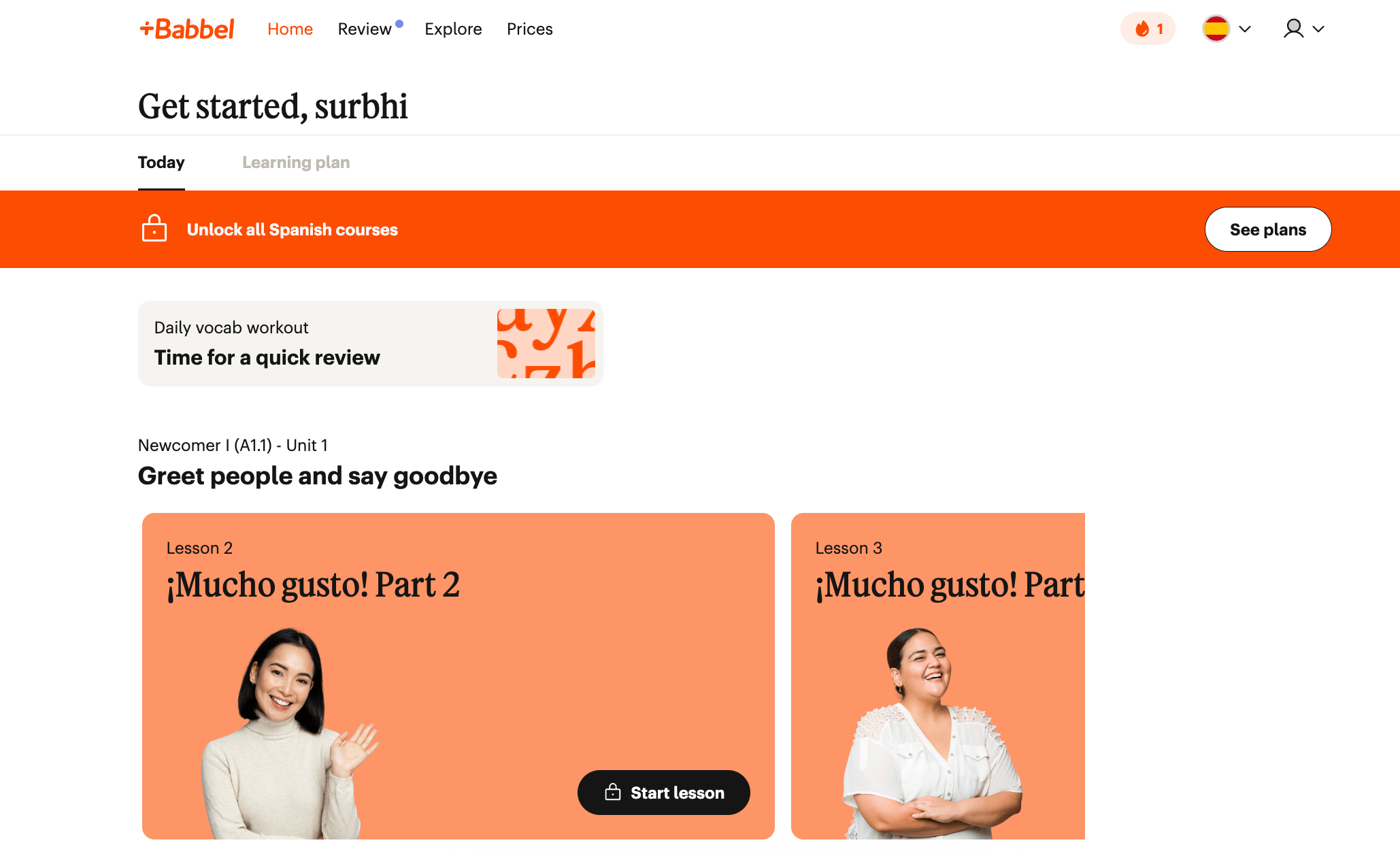
Babbel’s language modules incorporate various learning formats—flashcards, writing, speaking, and listening—empowering you to choose the format that suits your preferences. I switched it up when testing Babbel: instead of covering a broad lesson in the very first learning experience, I spent time learning some common words and phrases, such as hello, thank you, and how to introduce myself. After completing the lesson, you’ll receive an evaluation to reinforce what you got right and what needs further work. The speaking and listening modules help you gain a better understanding of pronunciation and phonetics while speaking the language.
Babbel’s key features:
Focus on grammar and basic communication skills to establish a solid foundation in language.
Using the mobile app, practice your pronunciation with helpful corrections to improve your skills.
Background information and cultural insights to help you establish a deeper connection with the language and a better overall understanding.
14+ languages with 60,000 lessons to explore.
Babbel pricing:
3 months: $15.25/month
6 months: $13.45/month
12 months: $8.95/month
Lifetime: $299.50/month
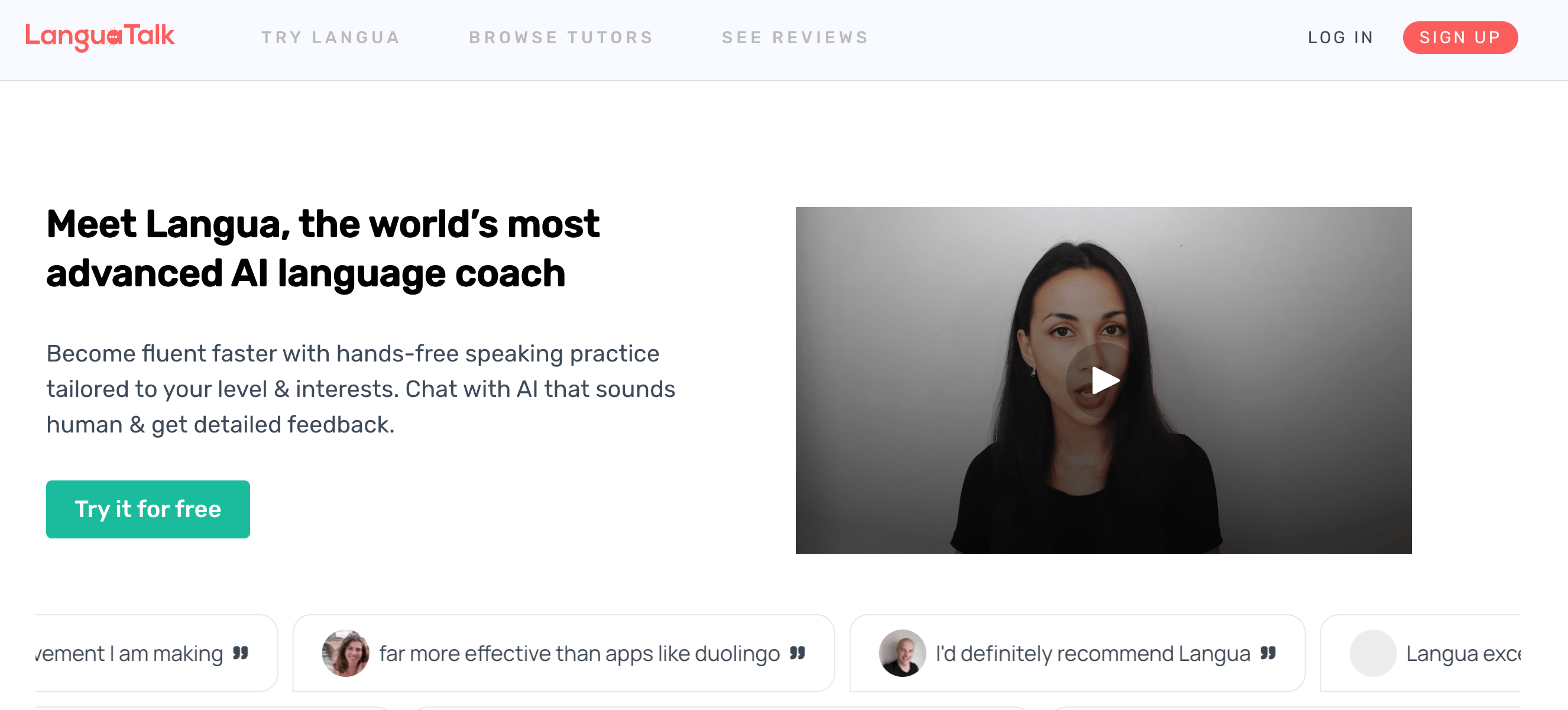
Langua is a tool built entirely around the concept of conversing with AI chatbot tutors to learn a new language. Choosing the right AI tutor is crucial for a successful learning experience. Review the tutor profiles, which often detail their area of expertise, teaching style, and available hours. You can then book a no-obligation trial session to personally assess the tutor’s compatibility with your learning preferences and goals before committing to a full course.
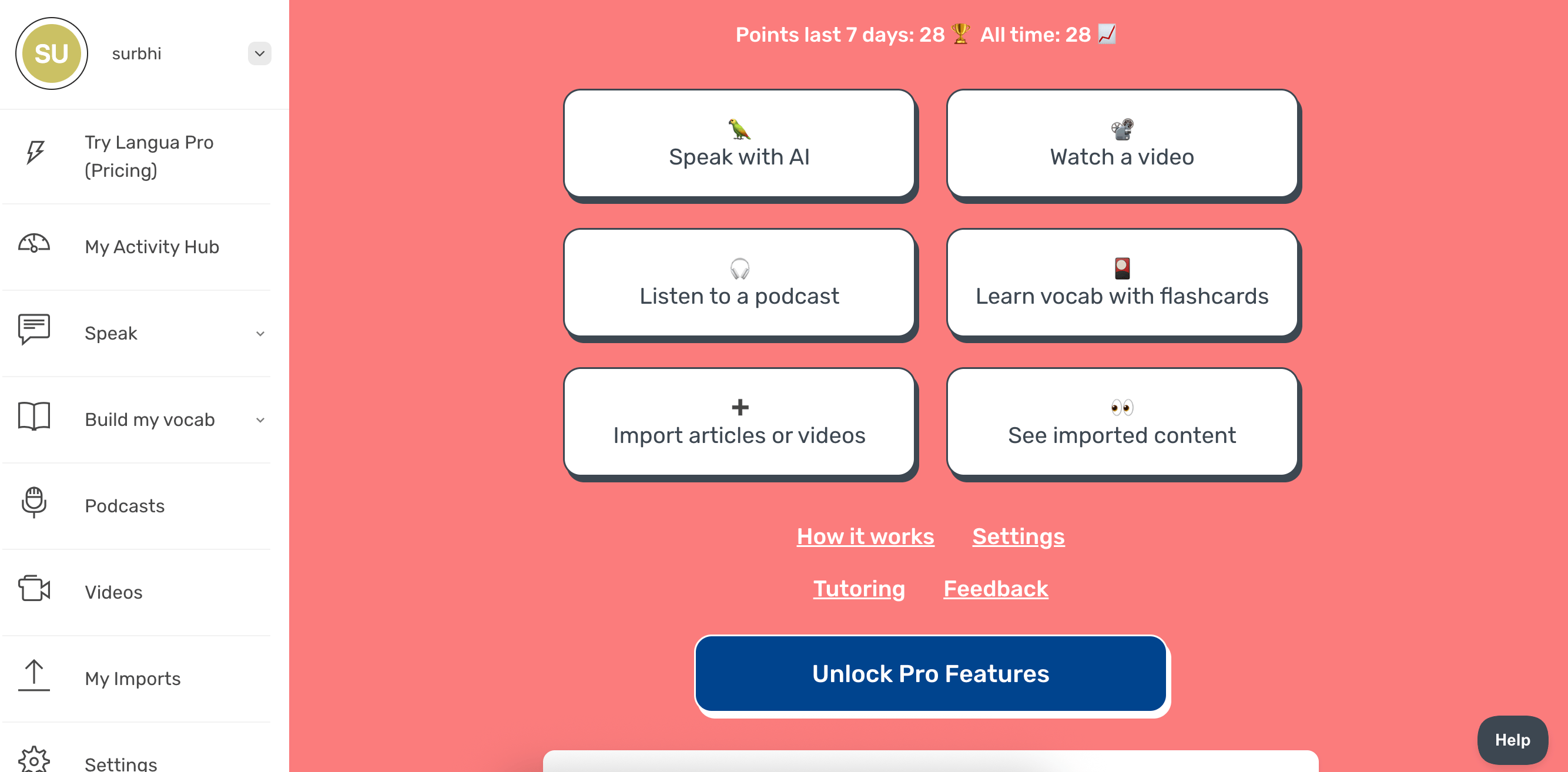
One thing I really enjoyed about this platform is that the AI chatbots or tutors are very efficient in understanding your needs and learning goals. You have the option to either type or speak your responses, and the chatbots will respond while highlighting any mistakes you might make in real time. The chat interface feels like texting a friend on a social networking platform, which is very different from a traditional learning platform, and I found it refreshing. Also, you can choose between tutors based on their ratings, number of subscribers, lessons taught, and other factors—giving you the power to take charge of your learning journey.
Langua’s key features:
It comes with 16 different languages to choose from, featuring an AI chatbot that offers human-like responses, making these conversations interesting and engaging. These chatbots can engage in various forms of conversations, such as text, debate, podcast, videos, and flashcards, to help you learn.
Easily customize your goals, even mid-journey, to adjust the chatbot’s responses and teaching process.
Straightforward grammar and pronunciation correction for mistakes.
Langua pricing:
Unlimited: $28.40/month
Communicate: $16.88/month
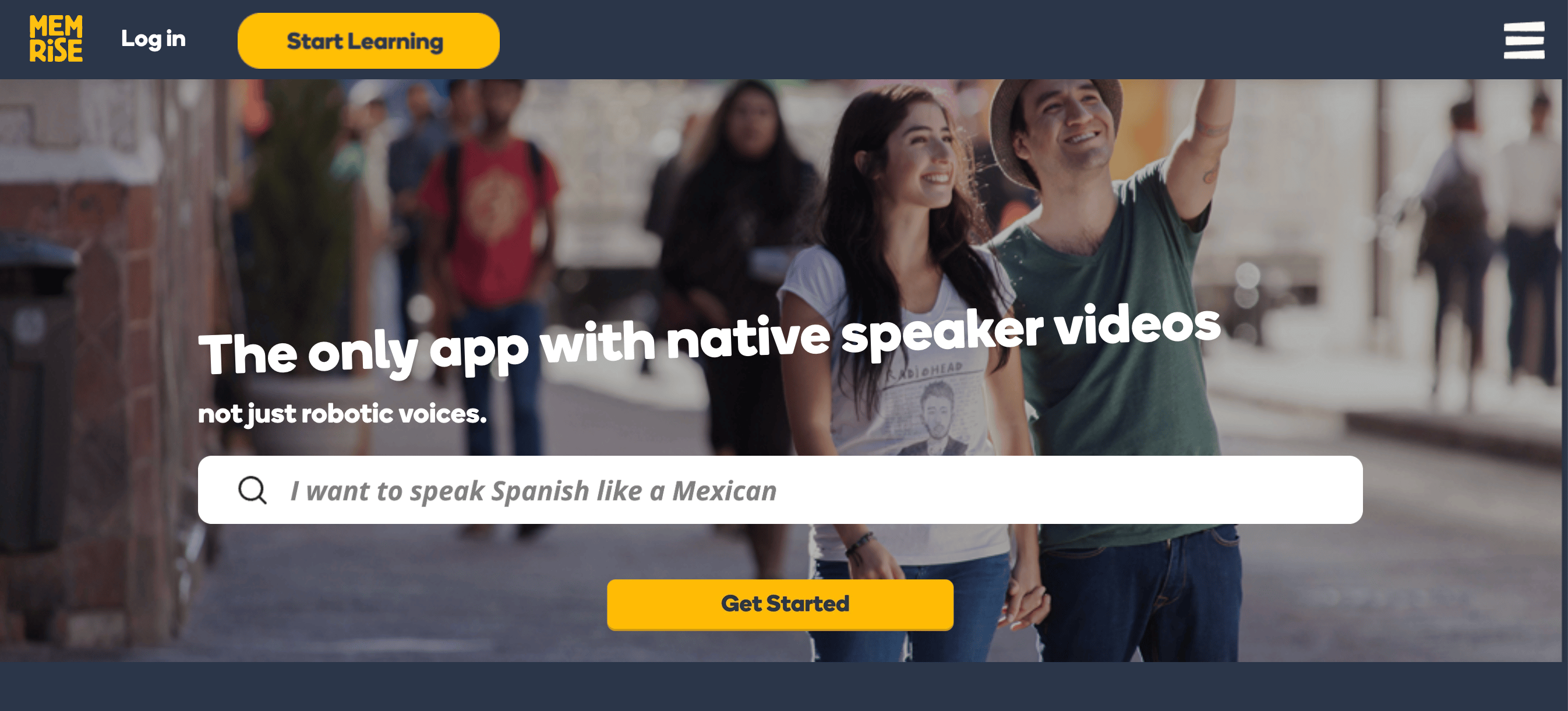
Memrise offers a fresh approach to learning languages, featuring videos from real-life speakers. After you begin learning a language and share your goals, the platform provides you with videos of native speakers reciting the words. This helps with understanding and pronunciation. The videos offer a valuable opportunity to understand and learn different dialects within the same language, offering a deeper cultural experience, as well.
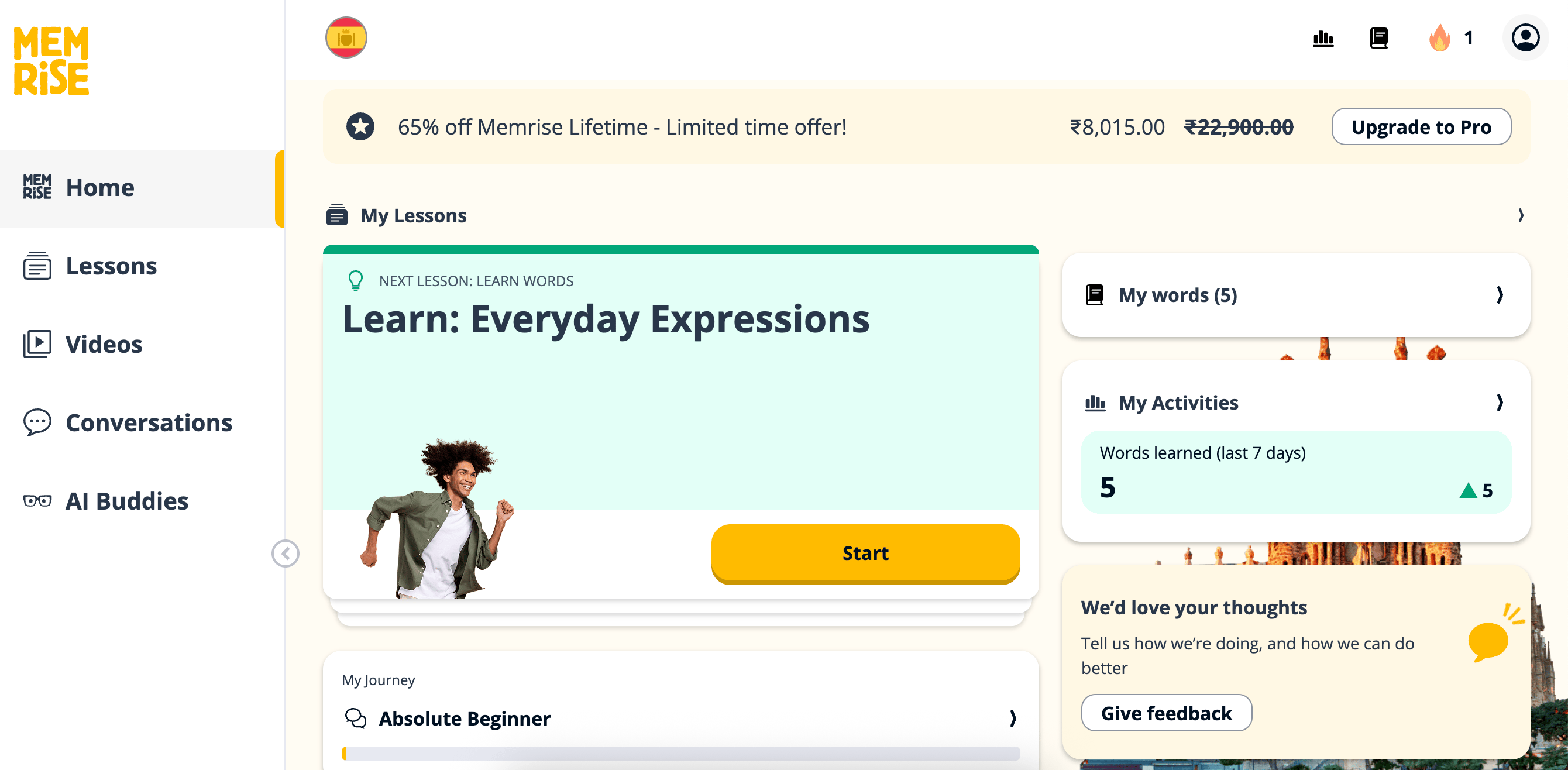
Using this tool definitely led to repetitive patterns, but there’s logic behind it. Regardless, it wasn’t my favorite experience and led to disengagement with the platform. The interface makes it easy to review the lessons, videos, and conversations that you’ve had with the bot and make revisions. You can also review progress in real-time, which, in my experience, pushed me to keep going.
Memrise’s key features:
Offers immersive learning by repeating vocabulary to help with a strong language foundation.
The AI keeps track of words that you keep missing to put more emphasis on them.
Idea for on-the-go learning: download the lessons and keep learning offline.
Memrise pricing:
Free: $0/month
Pro: $24.77/month
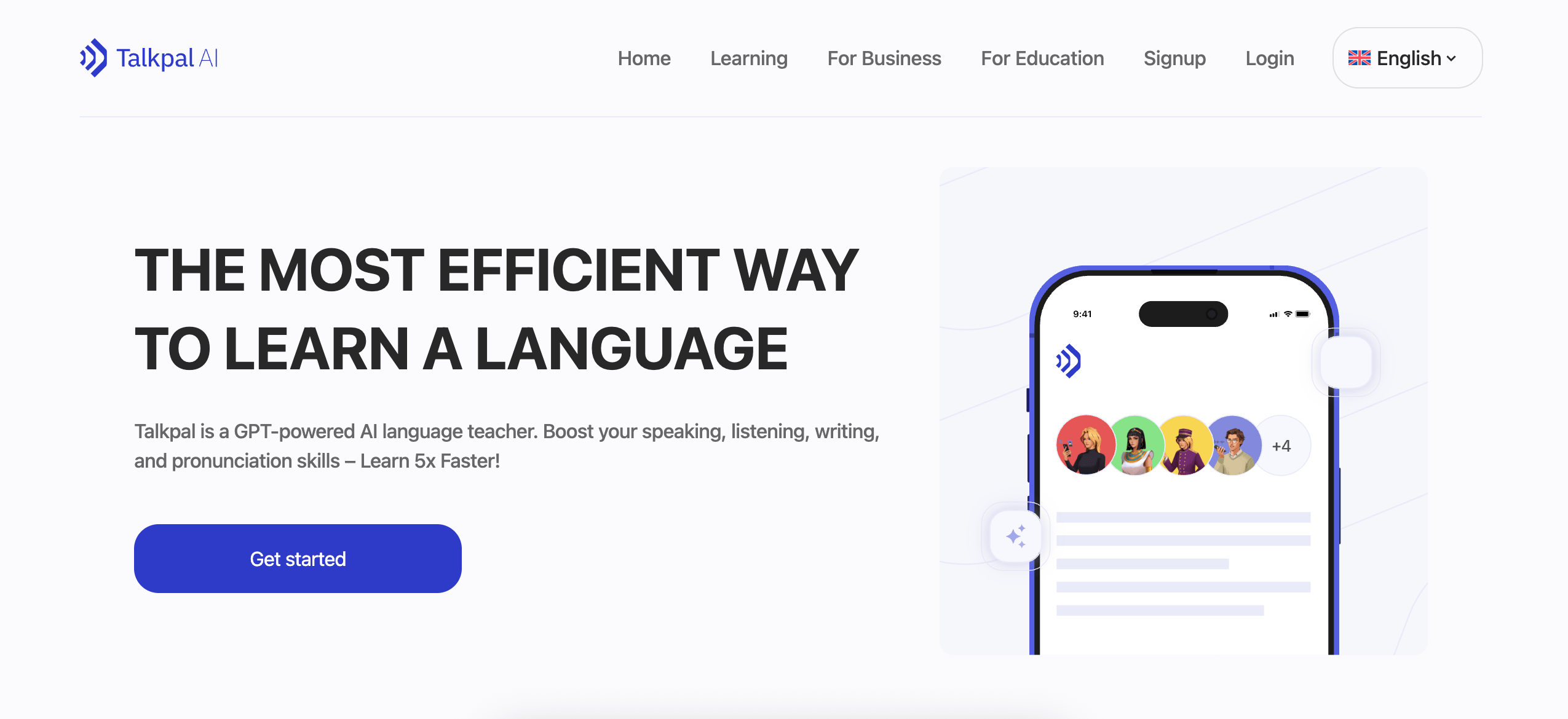
TalkPal offers various learning modes for a more engaging learning experience, including chat mode, work mode, call mode, sentence mode, dialogue mode, and debates. This tool focuses explicitly on developing the speaking ability of learning a new language and is thus ideal for individuals who learn best by speaking out loud.
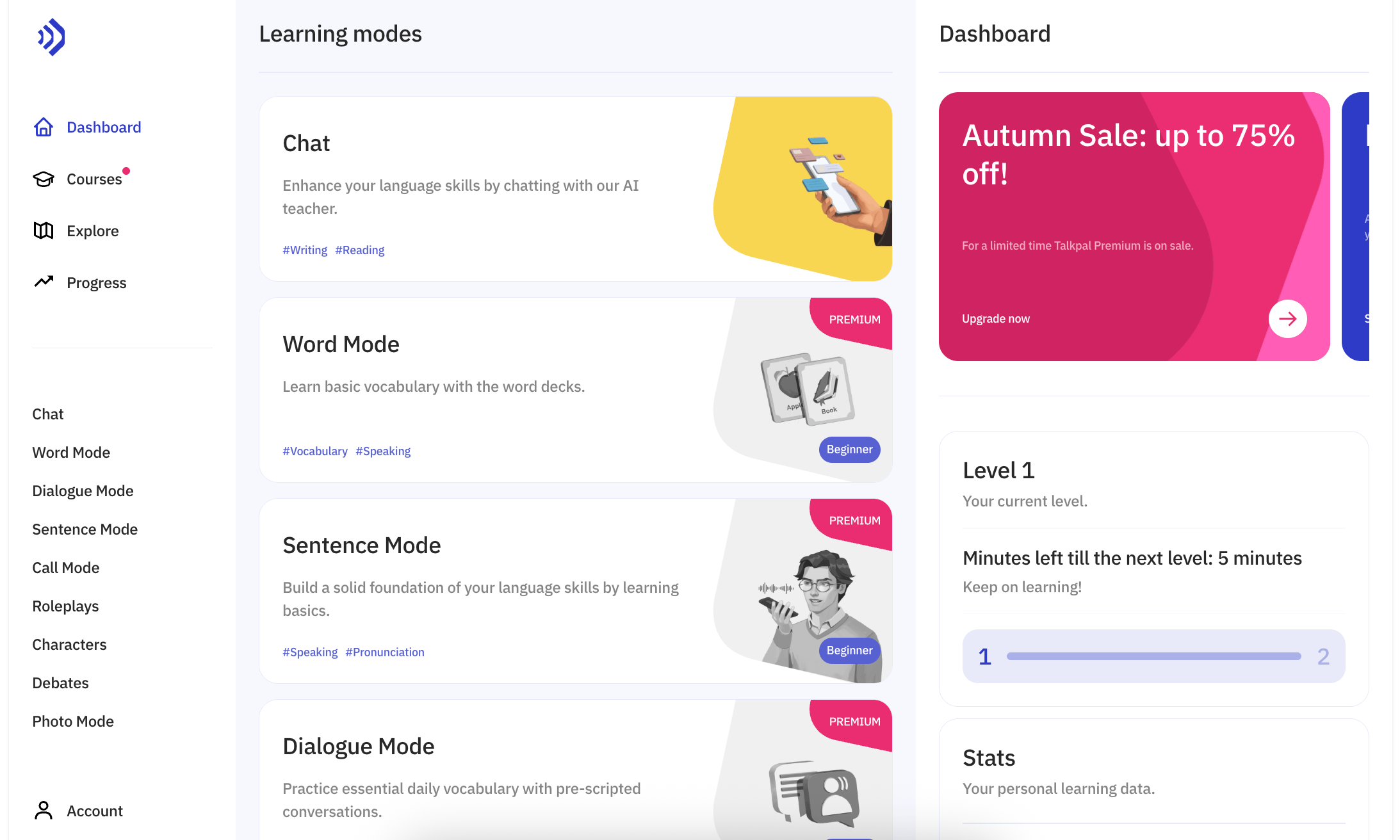
The experience of this platform (even if you choose a text-based approach) feels more like chatting with a friend rather than learning from a robotic partner. This speaks to the way I know best: interacting with the bot in a new language gave me the confidence to speak a completely different language in front of others. I found it great for boosting morale and sparking my verbal language communication skills. Switch between modes and experiment with various learning styles to better express yourself in this new language. Like many of the AI language learning apps we’ve covered, TalkPal also offers an interface to visualize your progress and the levels you achieve by completing courses, motivating and encouraging you to continue learning.
TalkPal’s key features:
Real-life scenarios and conversations help you better understand vocabulary.
Debate mode is a particularly engaging learning feature that provides an opportunity to express your ideas and opinions in a structured, long-form conversation.
Based on your preference for specific words that you might build, the AI tool pushes you to try new words and phrases to expand your vocabulary.
TalkPal pricing:
Free: $0/month
Premium 24 months: $6.25/month
Premium 1 month: 14.99/month
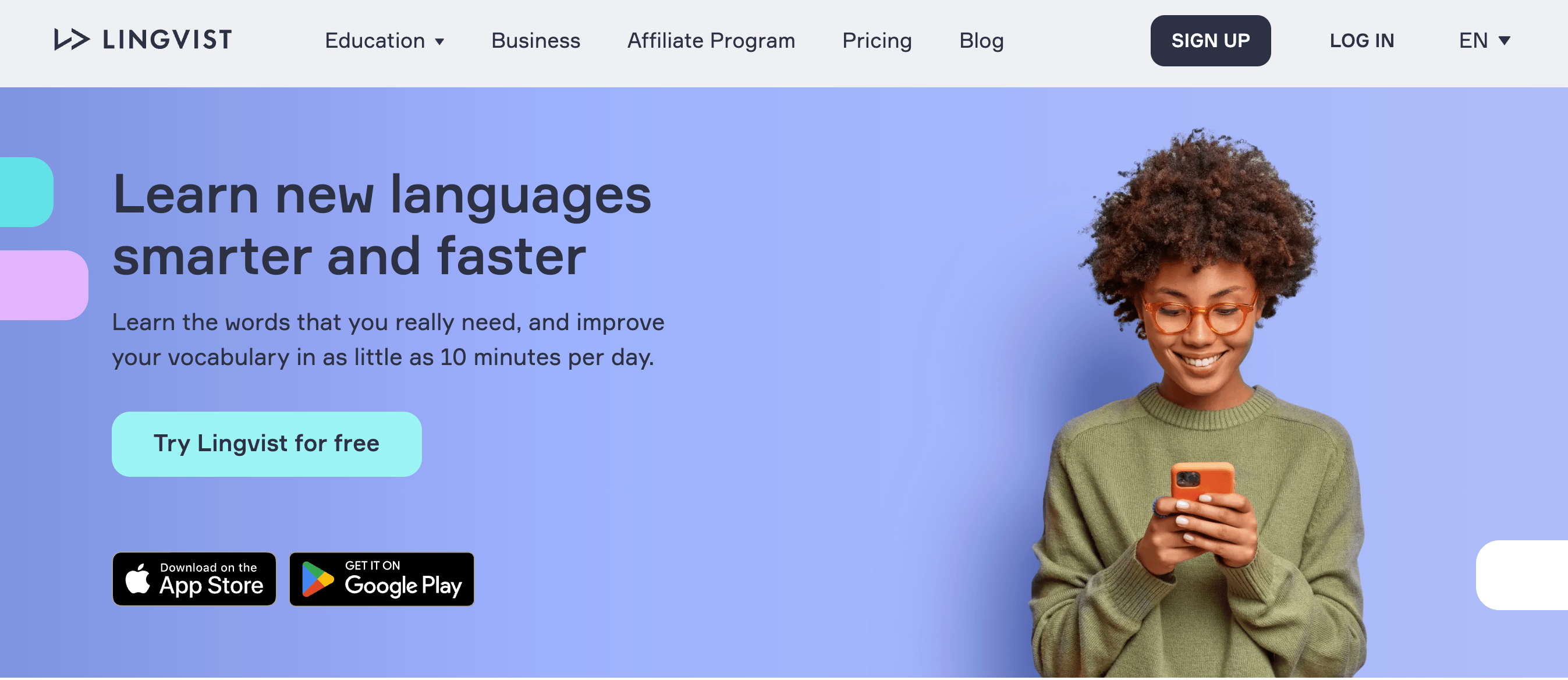
Lingvist pays direct attention to the efficiency of language learning, offering a no-frills user interface compared to others mentioned here. Language learning begins with the essentials, focusing on the most common words and phrases that you are likely to use. Track and monitor your progress with statistics such as the number of days you have been learning, the number of goals (lessons) you have completed, the number of words you have learned, and your overall progress in the course, which motivates you to continue.
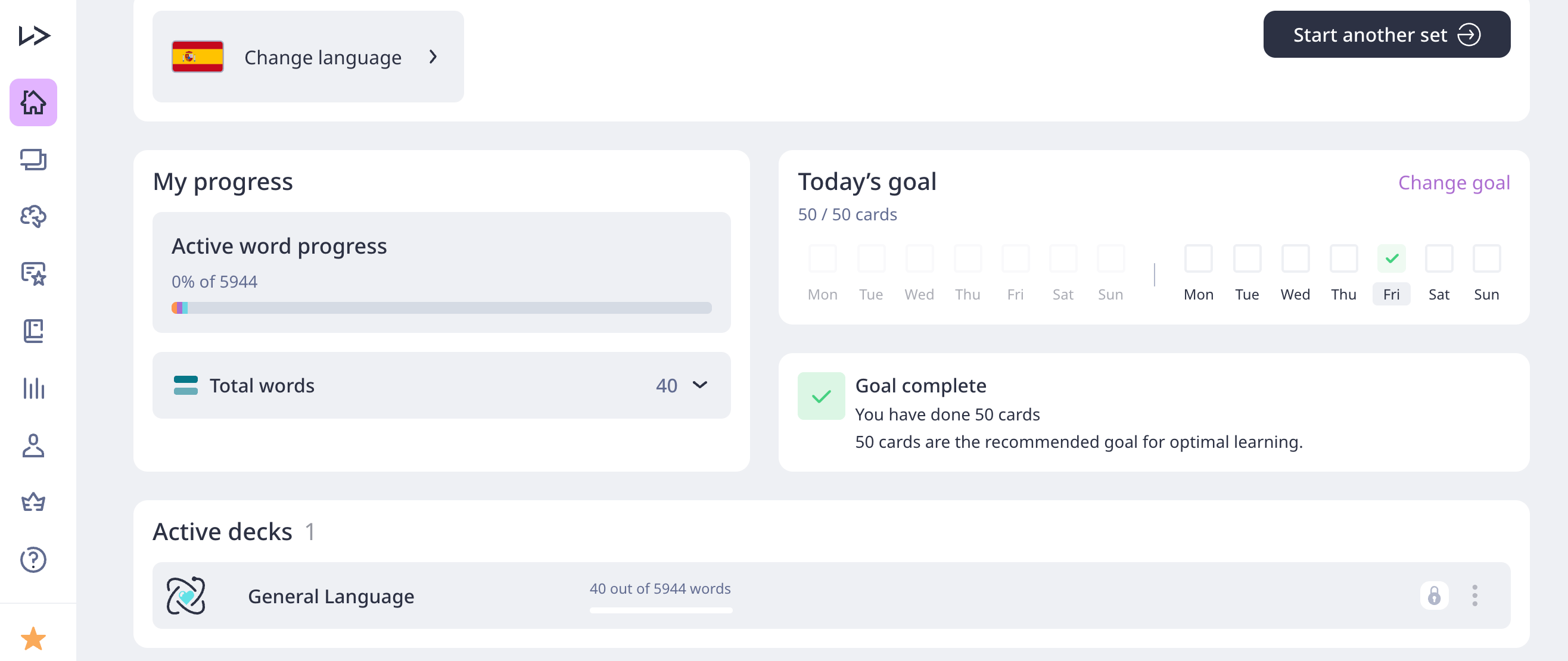
Using Lingvist, it seemed like the platform was targeting common phrases that learners would expect to use frequently, such as ‘day’, ‘year’, ‘woman’, and ‘man’. Learning on the platform felt somewhat monotonous due to the lack of animations and gamification elements. That said, the tool’s efficiency in teaching is impressive. It focuses on the words you get wrong and encourages you to practice them repeatedly.
Lingvist’s key features:
Focus on the most commonly used words in the native language.
Each word is shared with the context of a sample phrase or sentence to help you clearly understand the placement and meaning of the word.
Grammar tips appear on your screen whenever a new word or phrase is being introduced, in tandem with the pronunciation and actual meaning of the word.
Lingvist pricing:
Monthly: $9.99/month
Annual: $79.00/month
Business: custom pricing
Chatterbug offers lessons with tutors and practice sessions with AI bots, allowing for self-study and practice to reinforce traditional classroom learning. Lessons are taught by native speakers, which helps with understanding phonetics, pronunciation, and dialect while speaking. This hybrid approach offers numerous benefits: schedule lessons with flexible tutors and complement your learning with additional practice at your convenience.
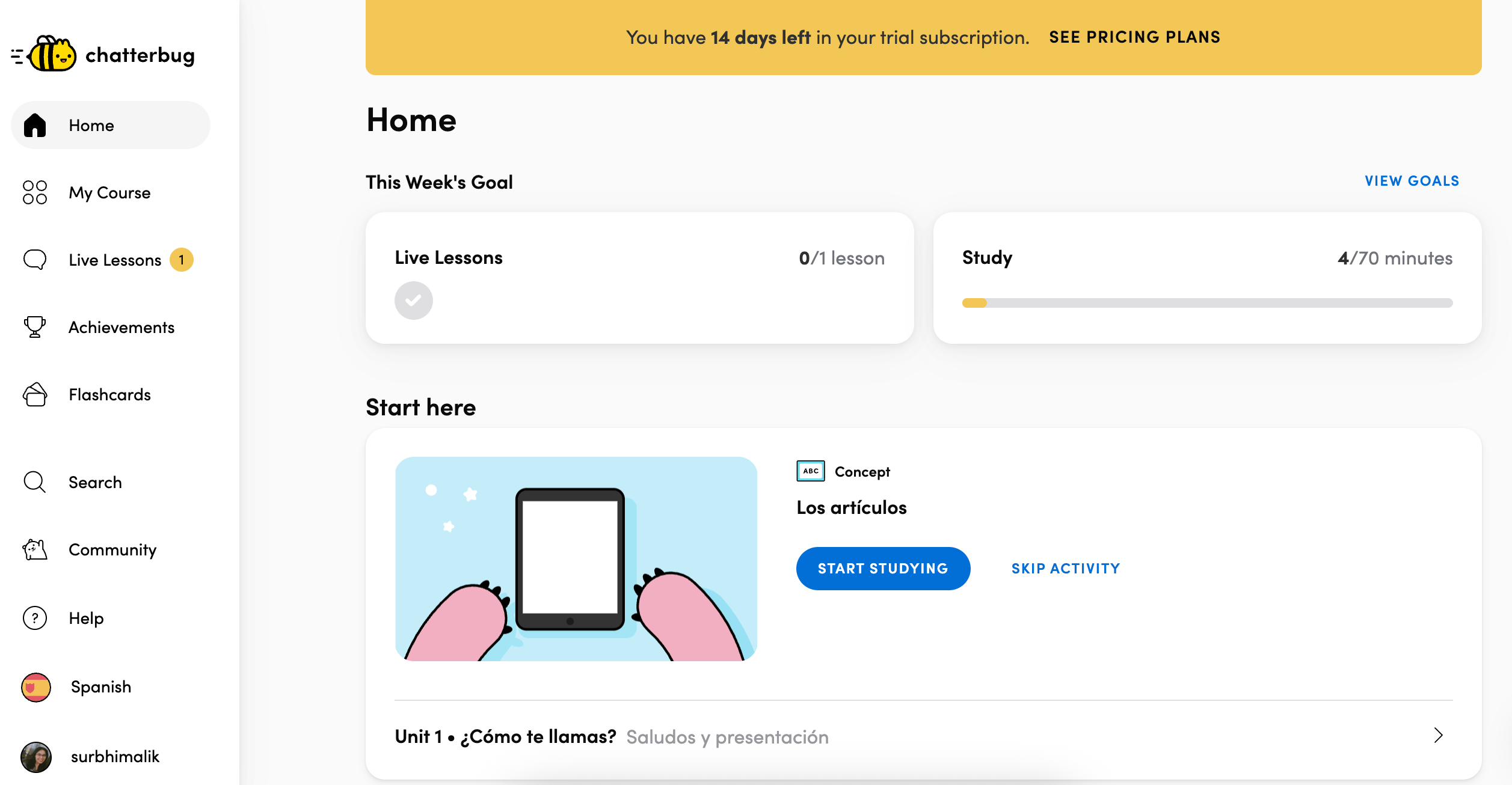
In my experience using Chatterbug, I found the platform to be cluttered and difficult to navigate. I had to digest a lot of information presented during the practice sessions, which made it difficult for me to focus on incremental learning. While certainly a great option to have, finding compatible times to meet with tutors might hinder your learning experience due to time differences. Flashcards were more helpful on this platform and helped me learn a few common phrases with easy translations in my language, aiding my understanding.
Chatterbug’s key features:
During one-on-one sessions with tutors, you receive personalized feedback on your progress to reinforce and guide learning.
AI lessons prepare you for upcoming classes and help you revise what you’ve learned in prior sessions to keep your memory fresh.
Learning lessons are designed and curated by native speakers and teachers to fit multiple learning styles.
Chatterbug pricing:
Lite: $26.71/month
Casual: $97.57/month
Serious: $180.03/month
Ultimate: $516.87/month
What is the best AI app for learning languages in 2025?
There’s no single best option because everyone learns differently. But here’s my take: Duolingo Max offers the most AI features and works well for beginners to intermediate learners. If you want conversation practice, Langua or TalkPal are your best bets. For structured grammar learning, Babbel is hard to beat. Ultimately, pick based on how you learn, not what’s popular.
Can AI apps really help you become fluent?
AI apps alone won’t make you fluent. They’re great at building vocabulary, drilling grammar, and growing confidence. However, genuine fluency requires engaging in honest conversations with native speakers, watching TV shows in your target language, and understanding the local culture. I use these apps daily, and my Spanish has improved noticeably. However, I also supplement these learnings by watching Spanish TV shows, listening to podcasts, and practicing with native-speaking friends. Use apps to build a foundation, but not as your only language learning tool.
Which AI language apps focus on speaking practice?
TalkPal and Langua are explicitly built for conversation practice with AI. Chatterbug combines AI practice with live video lessons from native speakers, providing opportunities for genuine human conversations. Duolingo offers some speaking exercises in its lessons. If you want to spend most of your time on speaking practice, consider using TalkPal or Langua for AI practice, or Chatterbug if you prefer human interaction.
Are AI language learning apps better than human tutors?
They’re fundamentally different tools. AI apps excel in convenience (practicing anytime), cost (significantly cheaper), and consistency (instant feedback). Human tutors excel in cultural understanding, genuine conversation dynamics, and identifying subtle mistakes. My advice? Utilize AI apps for daily practice and incorporate occasional human tutor sessions—once a week or twice a month—for feedback and genuine conversation. It’s the best of both worlds.
What are the most affordable AI language apps?
Memrise and Lingvist are both under $10/month on yearly plans. Duolingo offers a Greek version, although you need Duolingo Plus ($30/month) for access to its real AI features. Babbel is $7.45/month with an early commitment. If money’s tight, start with Duolingo’s free version or Memrise’s free tier and see if the teaching methods align with your requirements for learning the language.
Do AI language learning apps work offline?
Most AI features need the internet. But Memrise has the best offline experience—you can download entire lessons. Babbel also lets you download lessons for offline review. Duolingo offers limited offline access to old lessons. If offline access is essential, check each app’s specific features before making a purchase.
DigitalOcean Gradient™Platform makes it easier to build and deploy AI agents without managing complex infrastructure. Build custom, fully-managed agents backed by the world’s most powerful LLMs from Anthropic, DeepSeek, Meta, Mistral, and OpenAI. From customer-facing chatbots to complex, multi-agent workflows, integrate agentic AI with your application in hours with transparent, usage-based billing and no infrastructure management required.
Key features:
Serverless inference with leading LLMs and simple API integration
RAG workflows with knowledge bases for fine-tuned retrieval
Function calling capabilities for real-time information access
Multi-agent crews and agent routing for complex tasks
Guardrails for content moderation and sensitive data detection
Embeddable chatbot snippets for easy website integration
Versioning and rollback capabilities for safe experimentation
Get started with DigitalOcean Gradient™ Platform for access to everything you need to build, run, and manage the next big thing.
此内容由惯性聚合(RSS阅读器)自动聚合整理,仅供阅读参考。 原文来自 — 版权归原作者所有。