





If you’ve ever wanted to put your coding skills, creativity, and problem-solving chops to the test, an AI hackathon might be the perfect playground. These collaborative events bring together developers, students, designers, researchers, and innovators to build AI-powered projects.
Whether you’re looking to experiment with the latest tools, meet like-minded peers, or even launch the next big AI startup idea, hackathons create an energy that’s equal parts challenging and inspiring. This article takes a look at different types of AI hackathons, judging criteria, considerations for team creation, and available events in 2025.
Key takeaways:
AI hackathons are events where participants use AI to solve problems, create products, or help innovate within the AI technology space.
Hackathons have a variety of formats, eligible participants, prizes, and goals.
Being successful at AI hackathons requires technical knowledge, collaboration skills, as well as networking.
Current and upcoming hackathons include DigitalOcean Hacktoberfest events, Google’s GKE Turns 10, Tableau Next Virtual Hackathon, and NASA Space Apps Challenge.
An AI hackathon is an event where participants, either individuals or teams, engage in rapid and collaborative engineering, specifically around artificial intelligence or machine learning. These events can be as short as 24 hours or stretch over several months as participants work to solve a specific problem or create an app. These events can be in-person, virtual, or sometimes a hybrid event that combines both formats.
The benefits of these events include hands-on skill development, networking and collaboration, innovation and creativity, portfolio building, industry exposure, and potentially community or industry impact.
AI hackathons can be generally categorized by initiative, participants, and format. Some of them can have a technology or software focus, but this can vary between hackathons, depending on sponsoring organizations, available resources, and target audience. The main things to look out for when narrowing down available hackathons include:
Initiative: A hackathon, or codeathon, can occur for two main reasons: competition and education. In a competitive hackathon, participants create projects and solve problems for prize money or recognition. In educational hackathons, participants spend the day collaborating, coding, and learning about specific technologies.
Participants: These events can have varied age ranges. Some hackathons are open to attendees as young as 13. However, the majority of hackathons often focus on student participants (middle school, high school, secondary education) and working professionals. Sometimes the hackathon’s prize or location will dictate who can participate due to legal regulations.
Format: Traditionally, hackathons were on-site events, and would often be condensed into 24-36 hours, but this is changing thanks to the breadth and depth of online events. Now, developers can find hackathons that are in-person, online, or a hybrid format. Online hackathons are usually conducted with collaboration through online communities, Discord servers, or having teams submit projects online. A hybrid format can mean the hackathon has a mix of in-person and online events for attendees over the course of the competition.
Whether you’re going solo or assembling a team, preparation is key to making the most of your hackathon experience:
Technology skills: Learn if the hackathon has specific technology requirements or software that participants must use. If you’re an individual developer, be sure to brush up on any technical skills you think you might use over the course of the hackathon. For teams, make sure to create a diverse team that can tackle all the necessary components of AI design, testing, development, and presentations.
Team dynamics: For those working with a team, decide on team goals, assign project roles to avoid confusion over workloads, and agree on communication and development tools.
Project strategy: Start simple when it comes to ideas, as you’ll be confined by either time, development resources, or money. You’re more likely to succeed with a more polished project that can execute its task well or a minimum viable product instead of an overly ambitious project with missing components.
Networking: A main benefit of hackathons is being able to connect with like-minded individuals and learn from teams or individuals. Be sure to spend time talking with other participants, sharing your learnings, and contributing to projects.
Overall, hackathons are a way to learn, share your skills, or build out your product and showcase it to the broader tech community.
Interested in flexing your AI and machine learning skills? Here’s a look at 10 upcoming hackathon events and deadlines open to students, developers, and industry professionals:
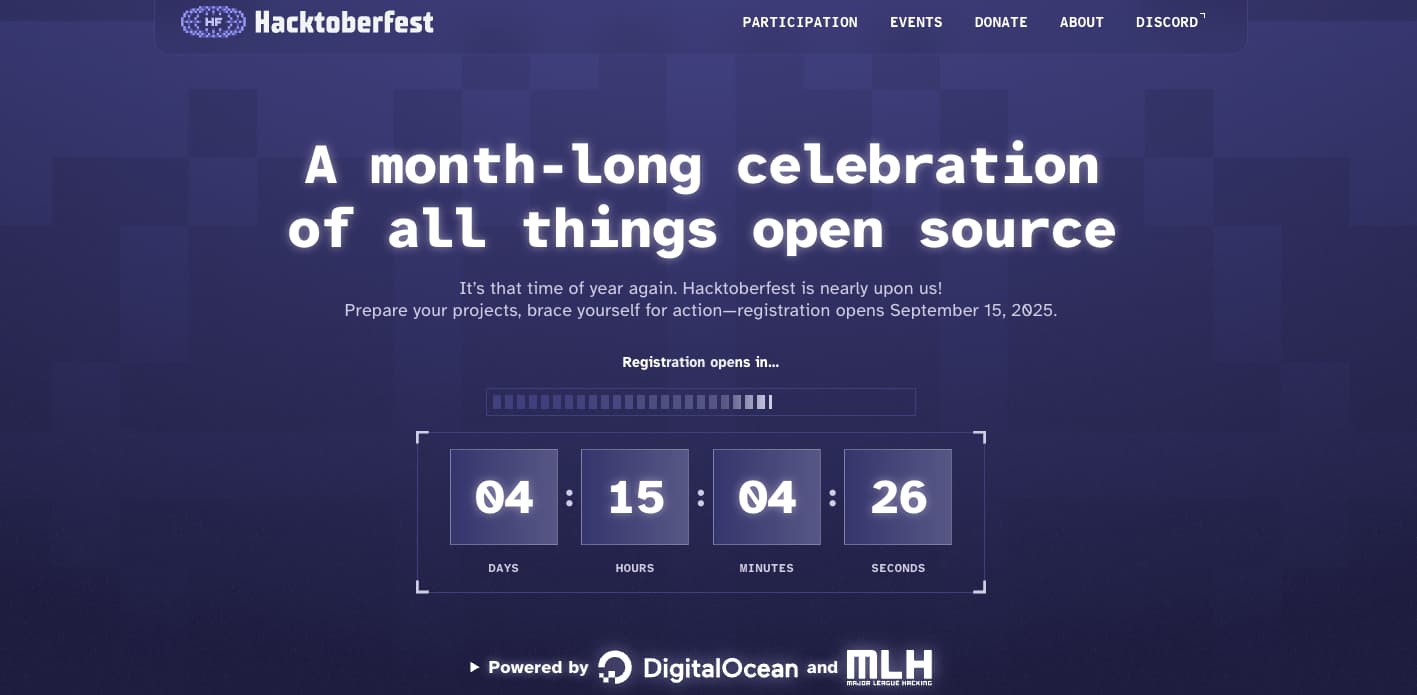
Sponsored by DigitalOcean and Major League Hacking, Hacktoberfest is designed to get as many developers involved in open source projects as possible through global hackathon events that are both in-person and online after a virtual kickoff on October 1st. The main goal for participants is to submit four high-quality pull/merge requests between October 1 and October 31 on GitHub/GitLab within participating Hacktoberfest projects. Having project owners accept your pull/merge requests will help count towards your total. There are also low- or no-code opportunities for writing, presentations, talks, social media, and more.
Host: DigitalOcean and Major League Hacking
Participant type: Student, Professionals
Date and location: October 1-31, Hybrid
Prize: Exclusive Holopin Badge
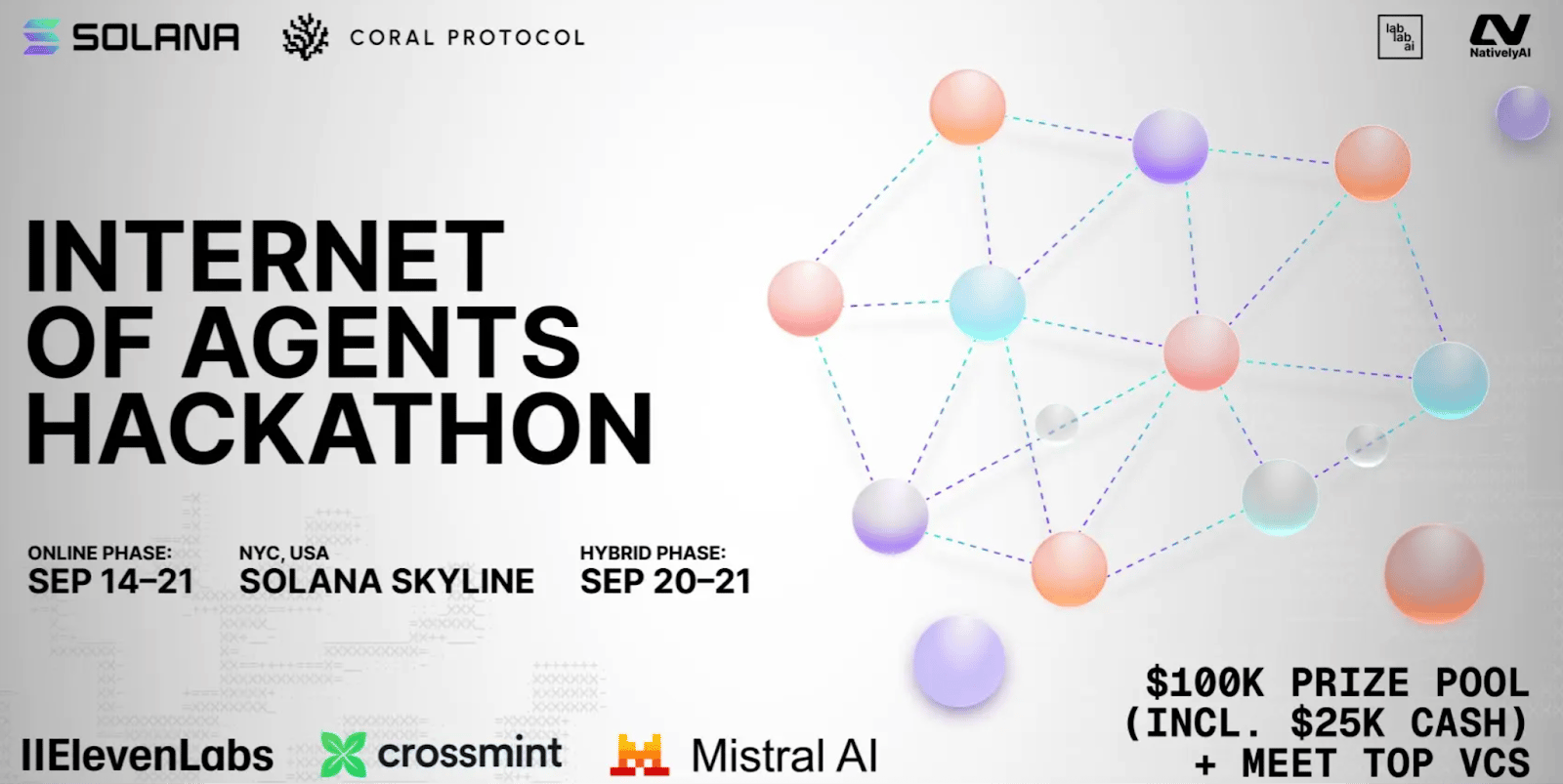
Internet of Agents provides participants with a chance to build either a reusable agent or an agent that can work with existing agents within the Coral ecosystem. The project should have a real, working demo that solves a problem, has clean and readable code, usable interfaces, and reusable value. Selected teams will be invited on-site to NYC for two days of networking with professionals, judges, and investors, as well as presentations and project workshopping.
Host: Coral Protocol, ElevenLabs, Crossmint, and Mistral AI
Participants: Students (over 18), Professionals
Date and location: September 14-21 (online), September 20-21 (hybrid)
Prize: Up to $10,000 in prizes, API credits for best use of Crossmint, ElevenLabs, and Mistral
Kubernetes has hit its 10-year mark, and to celebrate, Google is asking hackathon participants to give microservices an AI upgrade. Using one of two pre-built applications, you’ll use Google Kubernetes Engine and Google AI models to create new containerized components that will interact with the application’s APIs to integrate a new layer of AI capabilities and agentic functions. Along with submitting your project URL, you’ll include a summary of the project’s features, functionality, and technology, a public code repo URL, an architecture diagram, and a 3-minute demo video. You can include an article or social media post if you so choose.
Host: Google
Participant type: Student (over 18), Professionals
Date and location: August 18-September 22, Online
Prize: $15,000 Grand Prize (1 winner); $1,000 Honorable Mentions (3 winners); $8,000 Regional Prizewinners (4 winners), as well as Google Cloud Credits and social promotion
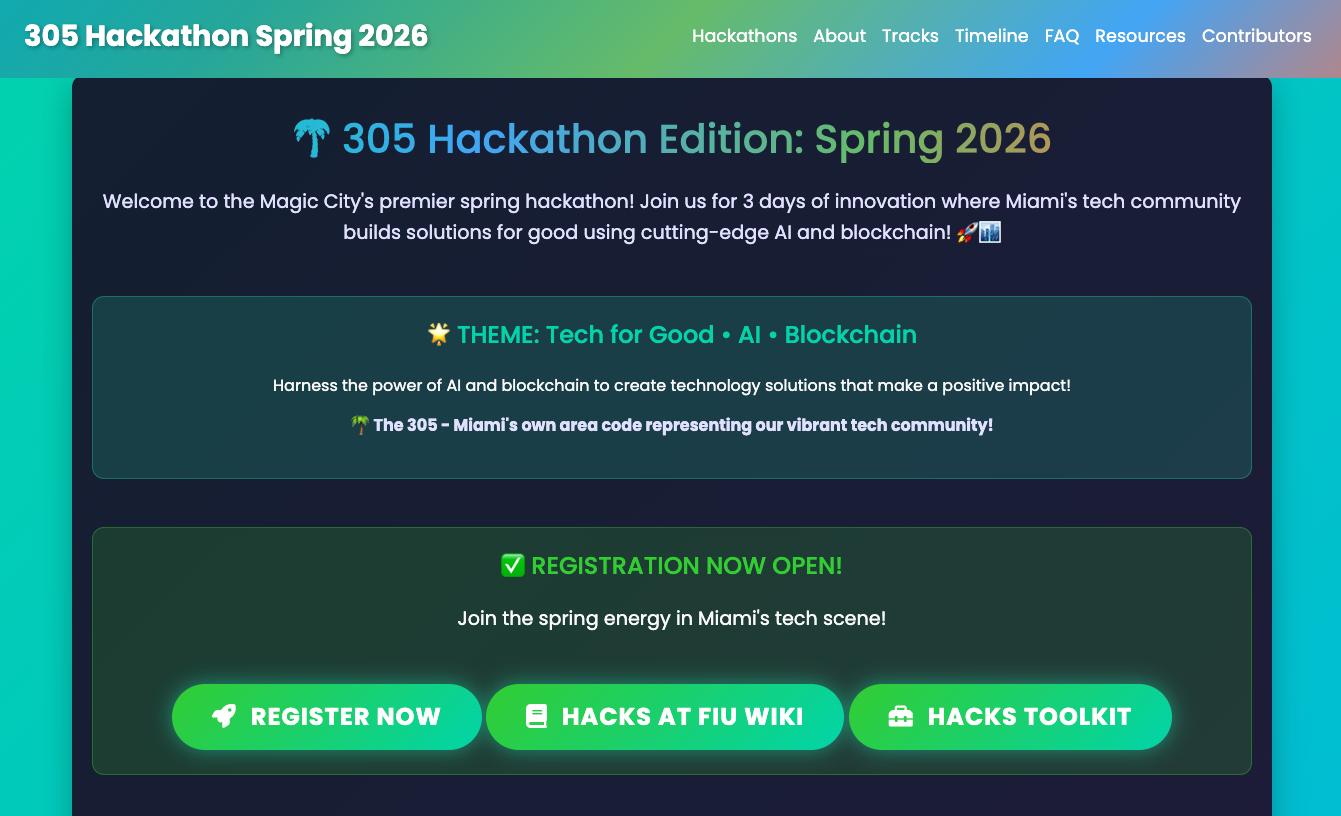
305 Hackathon is a chance for students in Miami, FL, and all over the globe to help create projects that focus on blockchain, AI, and Tech For Good. Over the course of three days, attendees will be able to network, attend workshops, and build out their projects for specific technology tracks. These include:
AI for healthcare and wellness: Software that helps improve health outcomes and healthcare.
Blockchain for sustainability: Blockchain solutions that support environmental causes and sustainability.
AI-powered education: Tools that provide personalized learning and improve accessibility.
Social impact tech: Solutions that empower communities and address social justice and equality.
Host: Code Crunch Club, ColorStack at FIU, and CAHSI at FIU
Date and location: March 20-22, 2026, Hybrid
Participants: High school and university students
Prize: Digital certificates
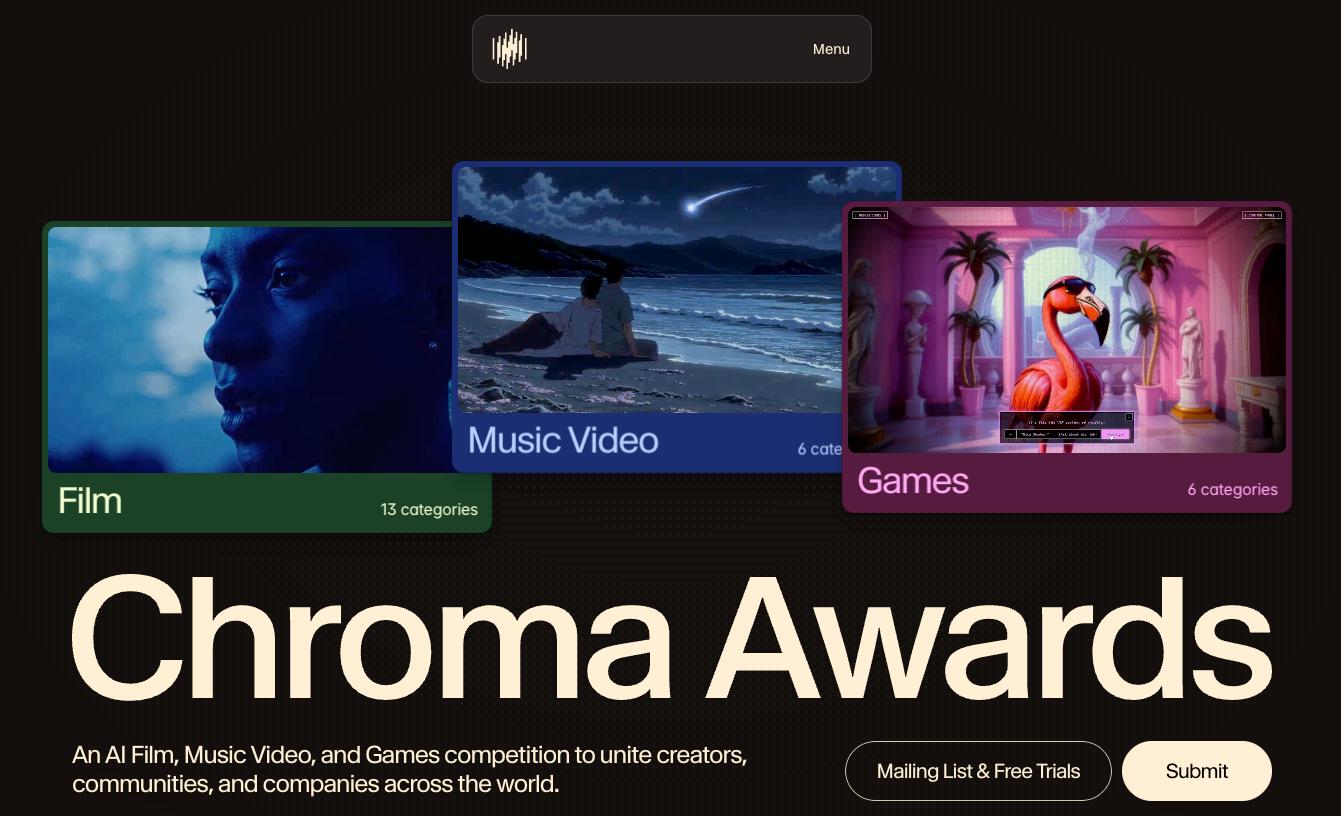
AI tools have increased their capacity for image and video creation—and the Chroma Awards give participants a chance to showcase what media they can generate with tools from ElevenLabs, FAL, Freepik, CapCut, and Dreamina. Each entry is not judged for its AI capabilities, but rather its narrative, creativity, thematic adherence, musical integration, and overall production value. This hackathon allows AI users to flex their creative muscles and see what they can create when it comes to music videos, games, or film.
Host: ElevenLabs, FAL, Dreamina, and CapCut
Date and location: August 4-November 4, 2025, Hybrid
Participants: Student (over 18), Professional
Prizes: Over $176,500 in prizes are available, including $2,000 for 1st, $1,000 for 2nd, and $500 for 3rd.
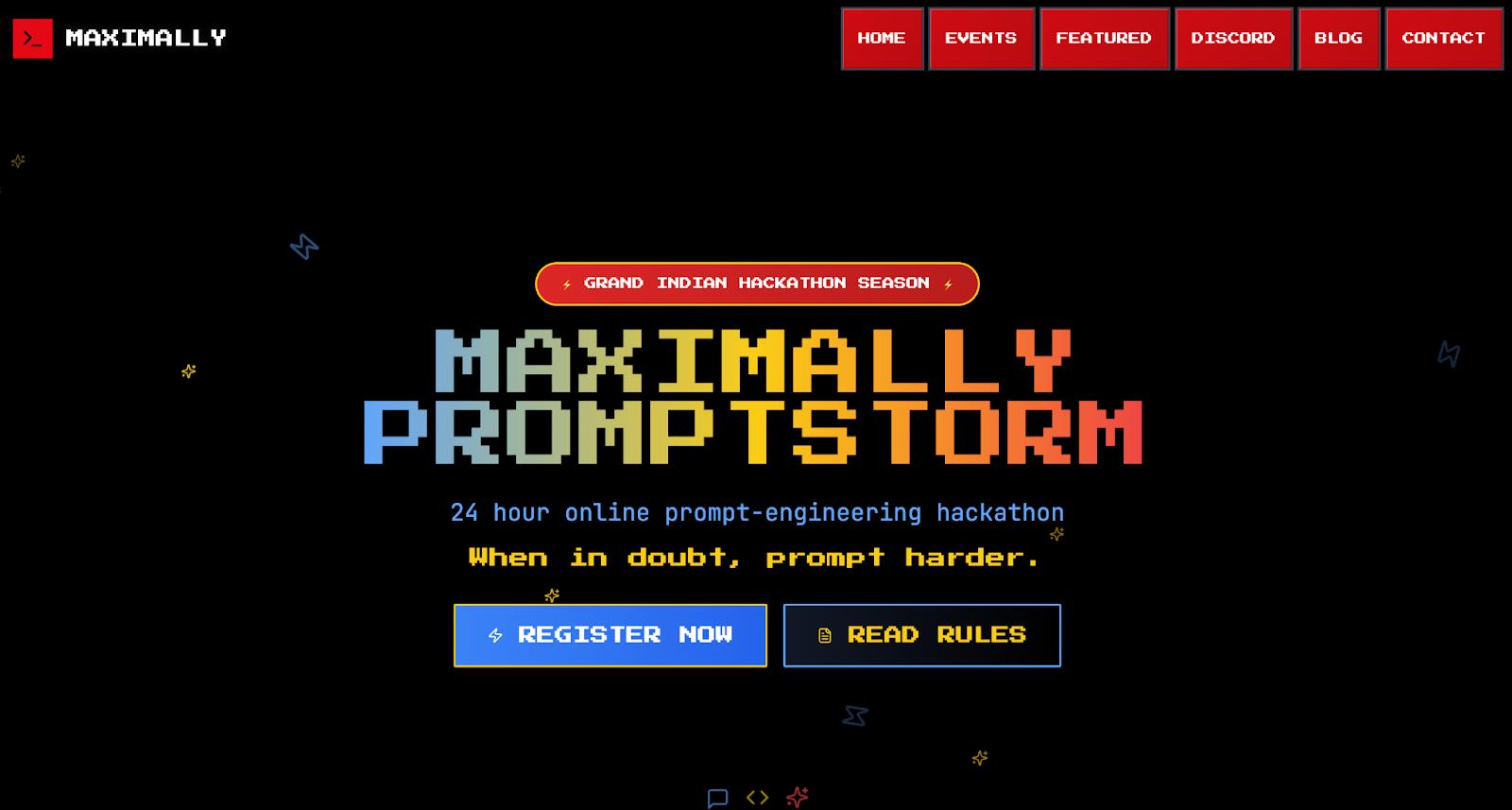
PromptStorm is a hackathon focused on participants showing off their prompt engineering skills. Within 24 hours, participants must choose to make something (visuals, code, stories, games) that is AI-generated and then see how far their prompts can take them to create a finished product. Final projects are judged on prompt creativity, output quality, tool use, execution, and presentation.
Host: Maximally
Date and location: October 25-26, 2025, Online
Participants: Student (over 18)
Prize: ₹ 5,000 in prizes available: ₹ 3,000 for Champion, ₹ 2,000 for Most Unexpected Output
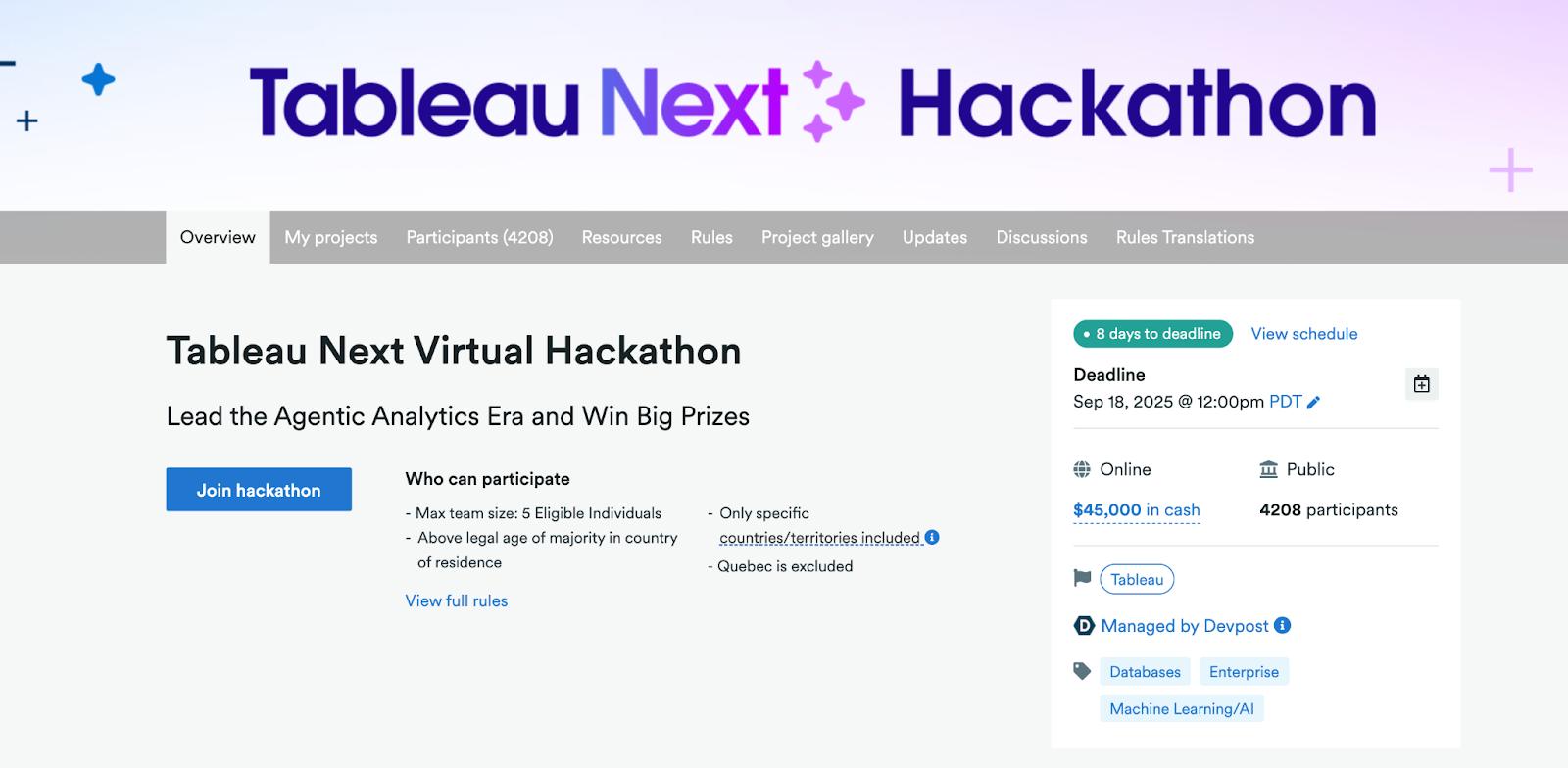
Some hackathons allow entrants to showcase innovations with specific software, and the Tableau Next Virtual Hackathon is no exception. This competition allows developers to solve a business problem with Tableau Next, Salesforce’s agentic data analytics platform. These solutions should demonstrate measurable impact, have a streamlined user experience, and showcase team creativity that harnesses Tableau’s AI-based capabilities. All participants will receive access to Tableau Next, Tableau Cloud, Salesforce CRM, and Data Cloud.
Host: Salesforce
Date and location: July 24-September 18, 2025, Online
Participants: Student (Over 18), Professional
Prize: $45,000 in prizes available; $18,000 for the Grand Prize, and $9,000 for Most Creative, Most Impactful, and Best Design
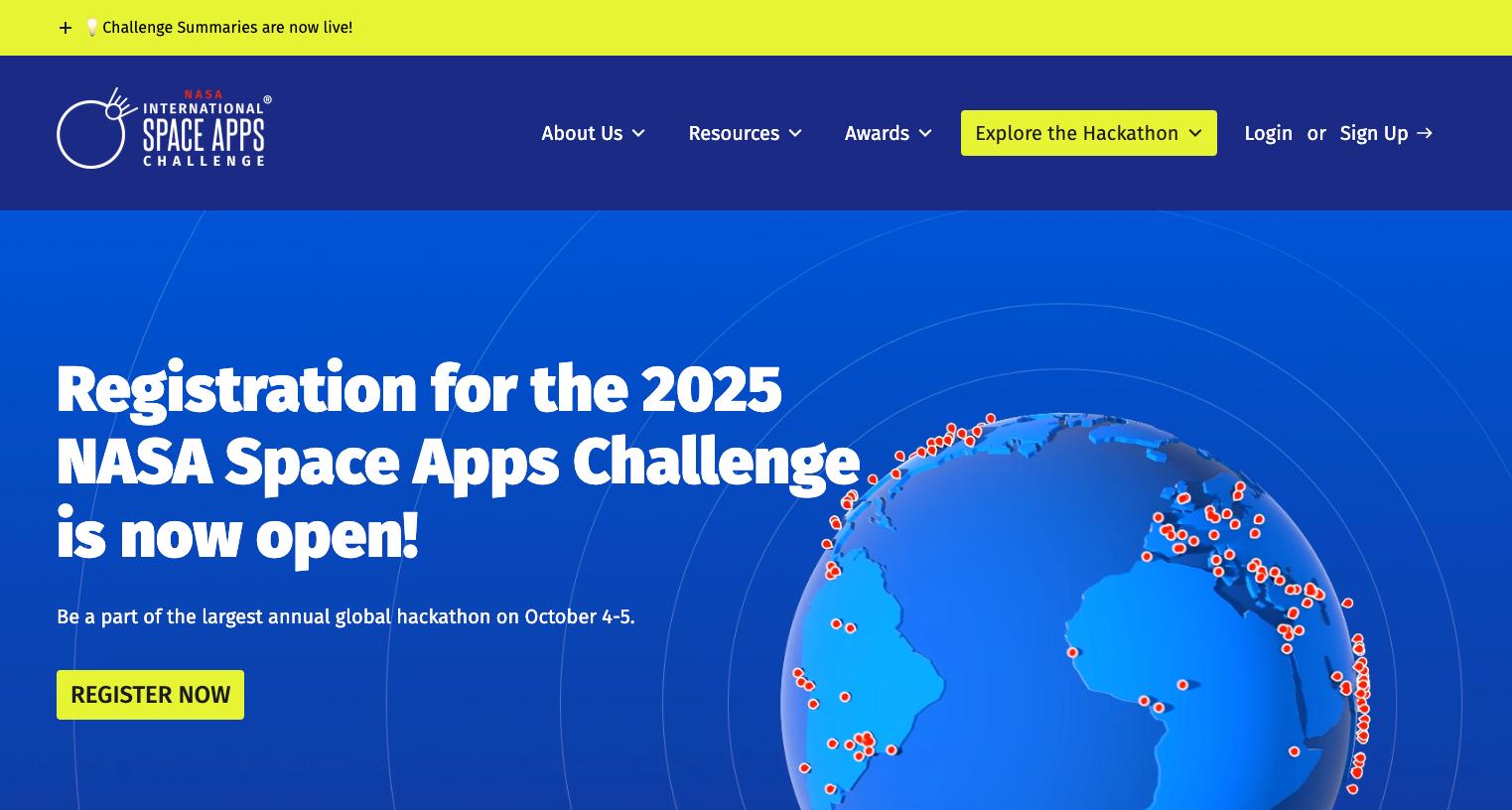
The NASA Space Apps Challenge lets teams from all over the globe use NASA data to create new applications and solve real-world problems from NASA subject matter experts. Entrants can create their own team or join a local one to address challenges around software development, astrophysics, agriculture, space exploration, AI, and more. This year’s AI-focused challenges include building a space biology knowledge engine, hunting for exoplanets, and predicting cleaner skies through earth observation.
Host: NASA
Date and location: October 4-5, 2025, In-person
Participants: All Ages
Prize: 10 Global Awards; local prizes available
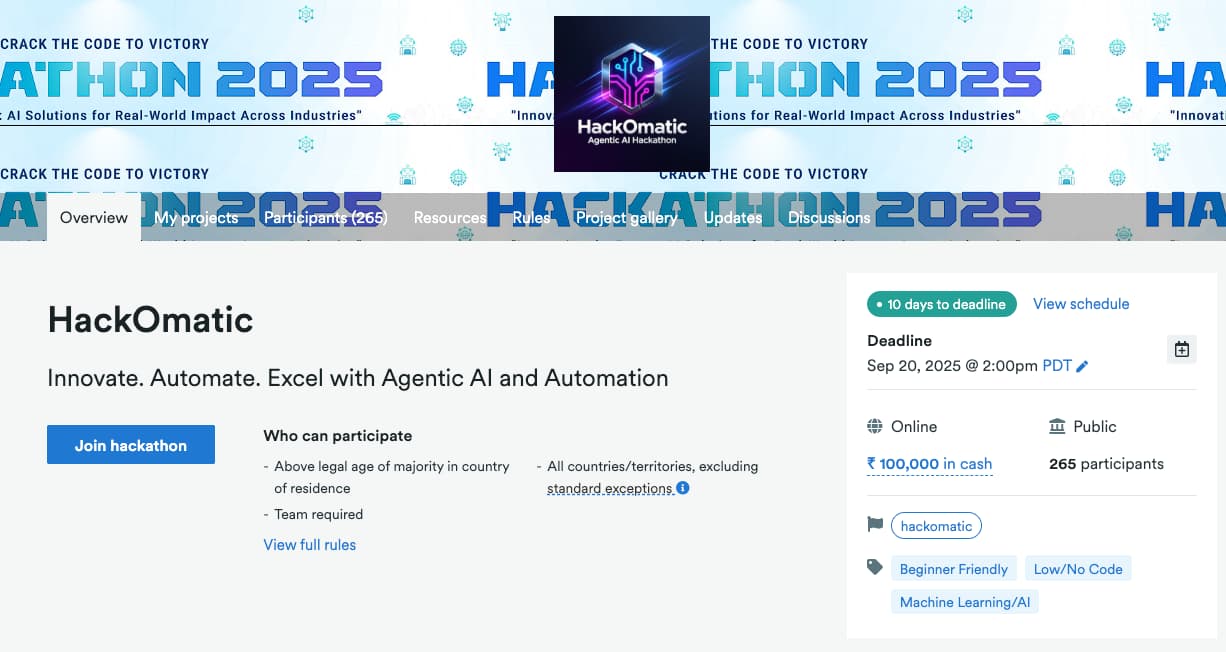
HackOmatic is geared towards AI enthusiasts who want to create AI agents that act, adapt, and evolve, and go beyond the world of AI assistants. Participants are challenged with building an AI or multi-agent system that is autonomous, adapts, and has an impact. The potential options for projects are wide, but can focus on workflow automation, digital companions, sustainability and social good, industry-specific solutions, as well as education and learning. This hackathon is also open to projects designed with low- or no-code applications.
Host: UniBee, Calyptus
Date and location: August 28-September 20, 2025, Online
Participants: Students, Professionals
Prize: ₹ 100,000 in prizes; ₹ 50,000 for 1st, ₹ 25,000 for 2nd, ₹ 15,000 for 3rd
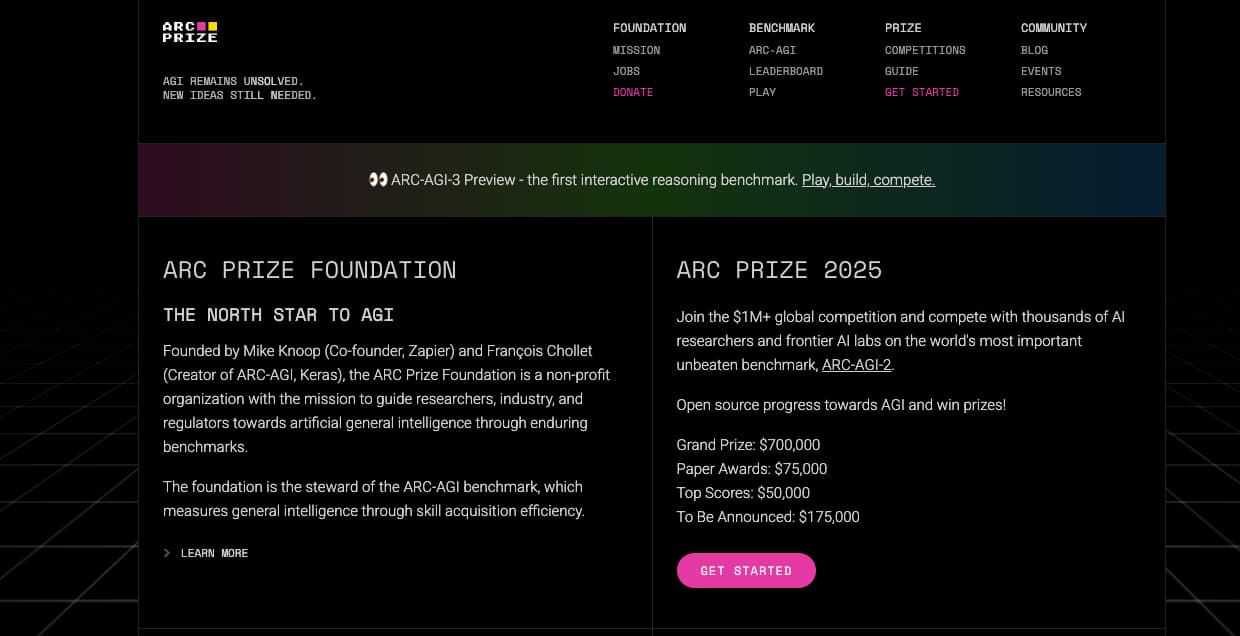
Even with all the advancements in AI systems, it’s no secret that such systems are only as good as the datasets they can access. The ARC Prize is a competition centered around artificial general intelligence (AGI), which would allow AI systems to generate new thoughts and think in a human-like fashion. Using the ARC-AGI benchmark, participants can create projects that help improve AGI or create new use case opportunities and expand the overall scope of AI system thinking.
Host: ARC Prize Foundation
Date and location: March 26-October 27, 2025 Participants: Student (Over 18), Professional
Prize: $700,000 Grand Prize
How to Code in Python Understanding AI Image Generation: Models, Tools, and Techniques
What programming languages and frameworks are most used in AI hackathons?
It may vary between specific hackathons, but top programming languages and frameworks for AI hackathons include Java, JavaScript, Python, and C++. Popular frameworks include PyTorch, TensorFlow, Keras, and Hugging Face.
Can beginners join or are AI hackathons only for advanced developers?
AI hackathons are available for all levels of experience and interest. Many are open to students, professionals, and AI enthusiasts. Some require extensive coding expertise, while others accept low—or no-code submissions.
What is the typical duration of an AI hackathon?
An AI hackathon can range anywhere from 24 hours to several months, depending on the scope of the competition or project requirements.
How are AI hackathon projects judged?
Judging is often specific to the hackathon itself, but as a guideline, judges usually look for projects that help solve a problem, use technology in an innovative way, or impact the community at large. Some hackathons do not judge a winner, and all participants get some sort of recognition for participating in the event.
Hacktoberfest is DigitalOcean’s annual celebration of open source, powered by the developer community. Every October, thousands of people around the world contribute to open source projects on GitHub and GitLab, supporting the software we all rely on. Whether you’re fixing a bug, improving documentation, or building new features, Hacktoberfest is your invitation to make an impact—and get recognized for it.
Key highlights:
Open to everyone, from first-time contributors to experienced maintainers
Contribute on GitHub and GitLab with pull requests that count toward your goal Learn new skills, grow your network, and support projects you care about
Digital rewards, community recognition, and sustainable swag like trees planted on your behalf
Global community events, workshops, and discussions throughout the month
Support for maintainers with resources, guides, and contributor engagement tools
Get started with Hacktoberfest to celebrate open source, sharpen your skills, and join a global movement shaping the future of software.
此内容由惯性聚合(RSS阅读器)自动聚合整理,仅供阅读参考。 原文来自 — 版权归原作者所有。