








Artificial intelligence and machine learning education aren’t limited to textbooks or university labs. YouTube has become the go-to classroom for millions eager to learn these skills in real time with new developments. From coding tutorials and model walkthroughs to AI ethics discussions and research paper breakdowns, today’s creators are helping make complex topics more accessible to everyone.
Whether you’re a beginner exploring neural networks or a developer fine-tuning LLMs, our picks for the top educational AI YouTubers teaching machine learning in 2025 share clear explanations, hands-on projects, and up-to-date insights in the AI industry.
💡Key takeaways:
YouTube has become a leading platform for AI and ML education, where YouTube channels like Two Minute Papers, DeepLearning.AI, AI Explained, Tina Huang, The AI Advantage, How I AI, DigitalOcean, Skill Leap AI, Wes Roth, Dwarkesh Patel, Siraj Raval, Matt Wolfe, AI Foundations, and Alex Finn simplify complex AI topics through hands-on tutorials, research explainers, and practical projects.
Each AI YouTube channel offers a unique learning approach, from research breakdowns and coding walkthroughs to automation tutorials and real-world applications, which makes AI accessible for students, developers, and business professionals alike.
Extending beyond AI tutorials, these YouTubers have built active communities through newsletters, forums, and interactive groups where learners can exchange ideas, share projects, and grow together in their AI journey.
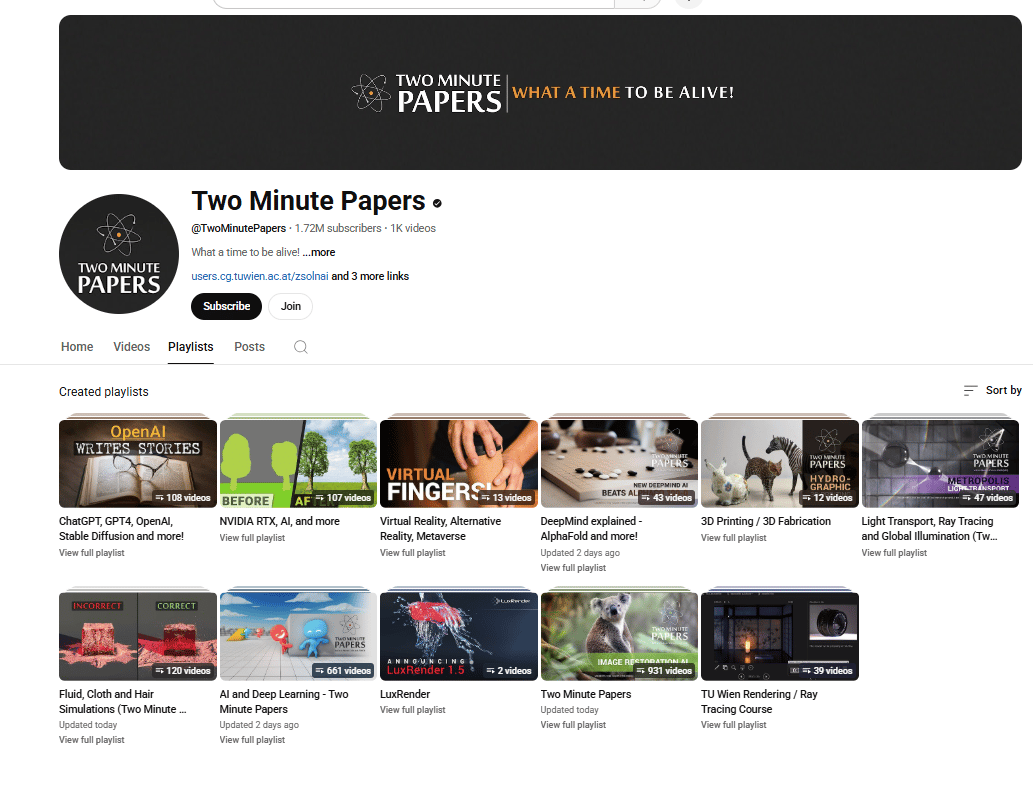
Two Minute Papers is a bite-sized YouTube channel by Károly Zsolnai-Fehér. Károly is also a research scientist and lecturer at TU Wien, known for his work in computer graphics and simulation technologies. The channel with 1.72+ million subscribers breaks down the latest AI, machine learning, and computer science research in a compelling manner. Viewers learn the big picture of AI concepts by investing just a few minutes per video. The host’s enthusiasm and clear visuals are infectious—making cutting-edge topics feel approachable and fun.
Two Minute Papers’ must-watch YouTube videos:
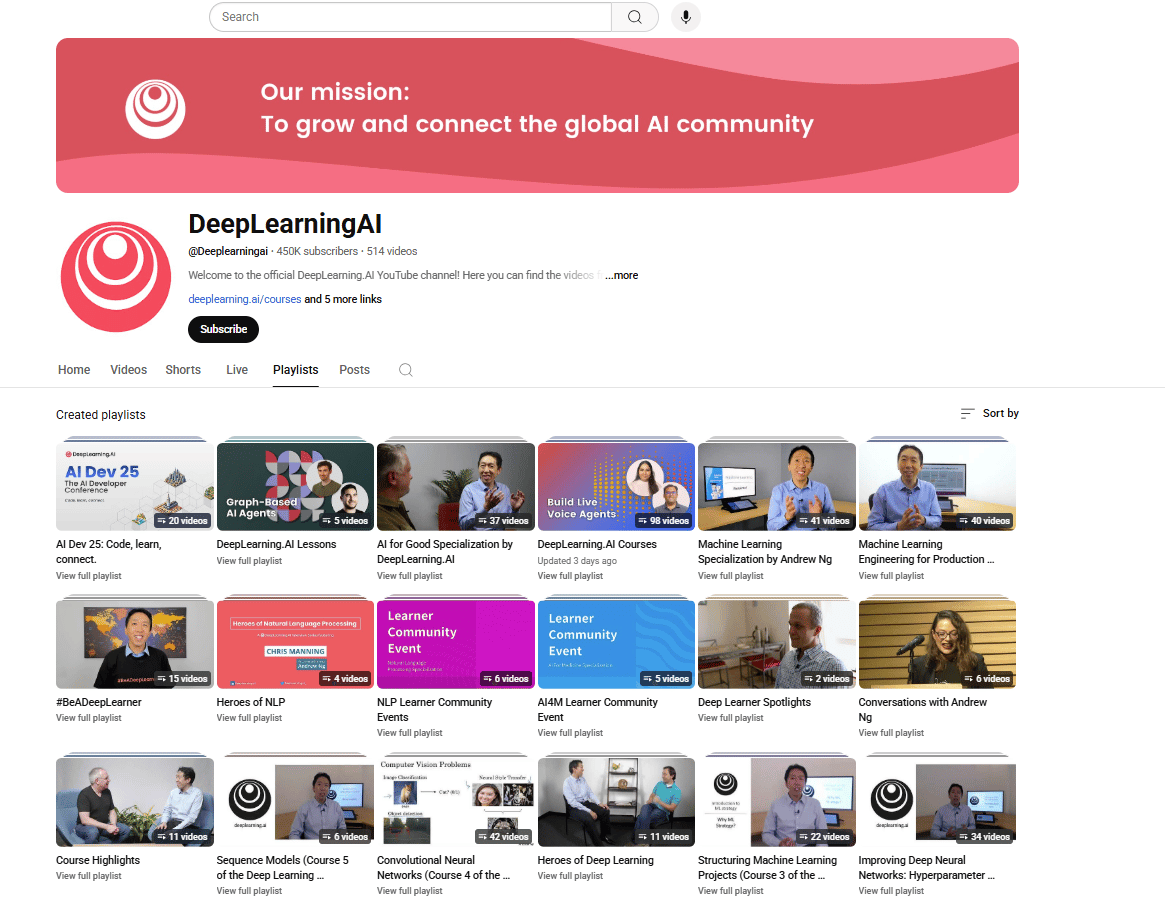
DeepLearningAI is a learning hub for anyone serious about entering the AI field, founded by Andrew Ng—the co-founder of Coursera and former head of Google Brain. The channel offers structured, career-focused content in MLOps, machine learning, deep learning, and generative AI drawn from real industry applications. It combines education with community learning through expert talks, hands-on sessions, and learning series with options for beginners and working professionals.
DeepLearningAI’s must-watch YouTube videos:
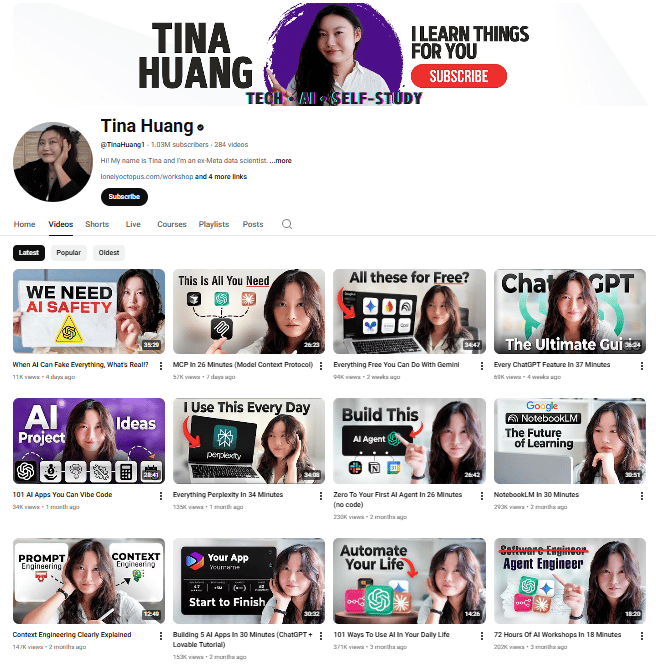
Tina Huang is an ex-Meta data scientist turned YouTuber who simplifies AI, coding, and self-learning for a broad audience. With over a million subscribers, she’s known for breaking down complex AI and tech concepts into clear, actionable lessons, focusing on career growth, personal productivity, and continuous learning. Her content combines technical tutorials with relatable insights, helping viewers learn how to use modern AI tools and self-study strategies.
Tina Huang’s must-watch YouTube videos:
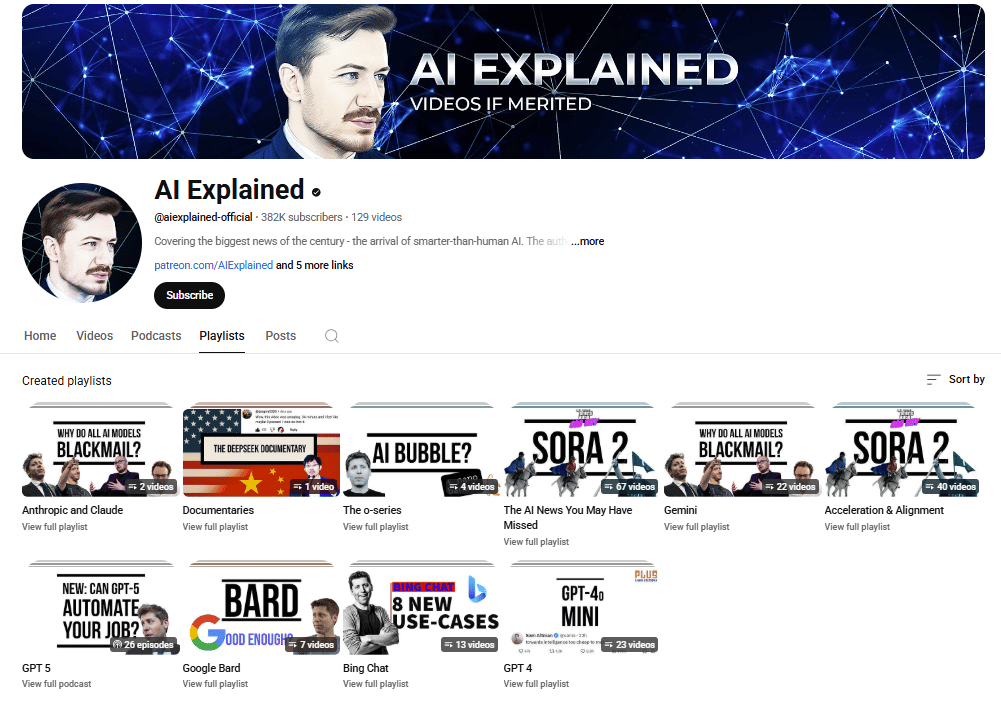
AI Explained is a fast-growing AI YouTube channel that breaks down the latest developments in artificial intelligence with clarity, urgency, and investigative depth. It analyzes AI breakthroughs, model releases, AI ethics debates, and bigger industry shifts. It’s perhaps best known for its exclusive series on leading AI models that include GPT-5, Claude, Gemini, and Sora. The Signal to Noise newsletter offers free, hype-free updates on smarter-than-human AI, and is read by professionals at companies like OpenAI, Microsoft and DeepMind.
AI Explained’s must-watch YouTube videos:
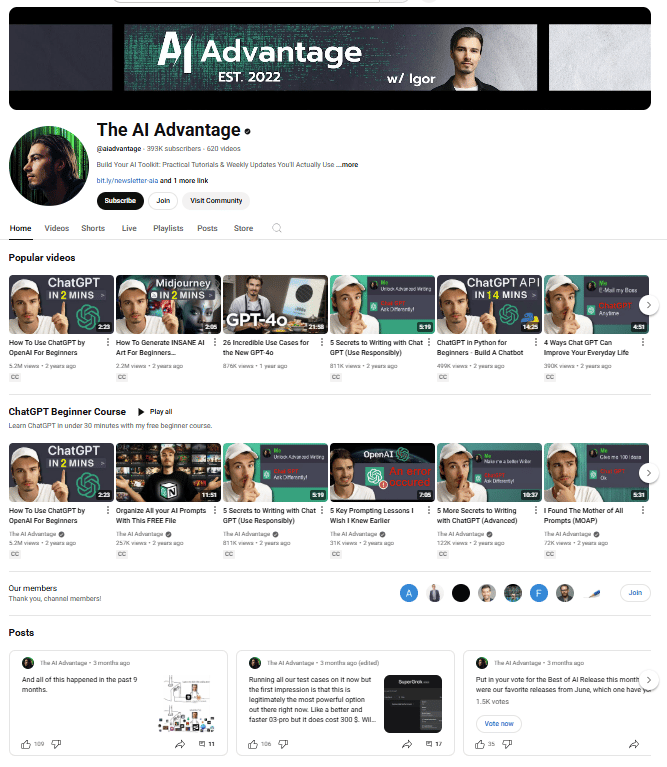
Hosted by Igor Pogany, The AI Advantage is a practical, no-fluff YouTube channel that helps people learn how to use AI tools to solve real problems. Igor Pogany is a teacher at heart who specializes in simplifying complex AI tools into practical, real-world workflows. The channel focuses on applied workflows like building AI automations, boosting productivity, and integrating AI into business and daily life. The beginner-friendly series on prompt engineering, ChatGPT, APIs, and automation is a standout offering. With clear explanations and step-by-step tutorials, it caters to developers, entrepreneurs, and professionals who want to learn practical AI/ML workflows.
The AI Advantage’s must-watch YouTube videos:
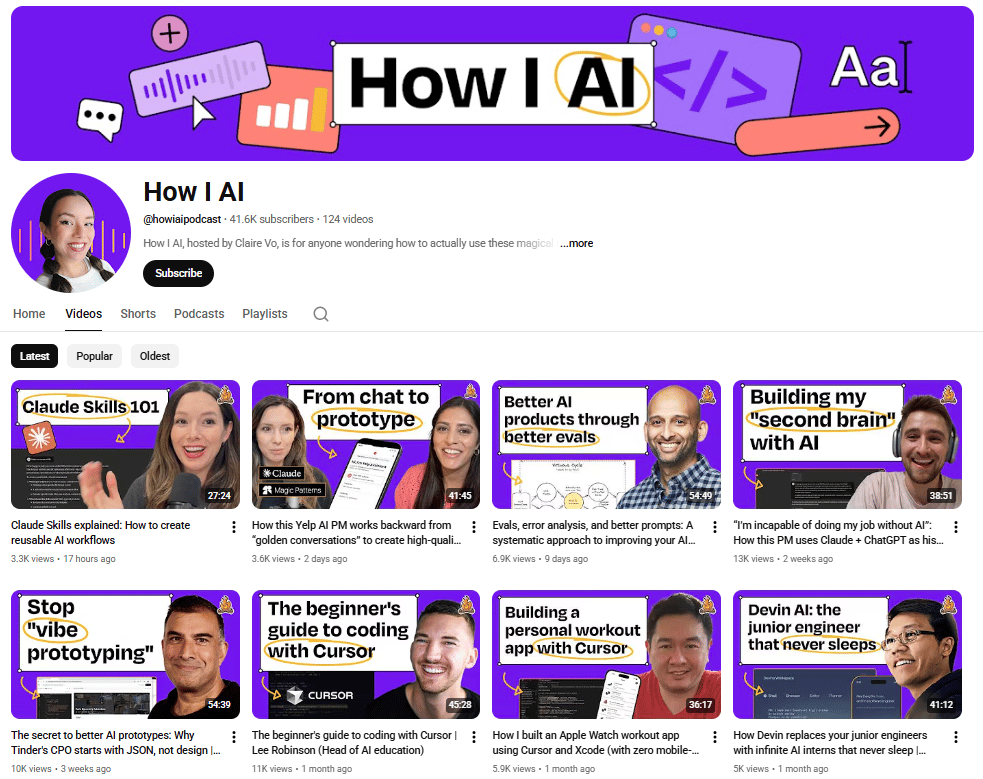
How I AI, hosted by Claire Vo, is a YouTube channel and podcast explaining how professionals use AI in their daily work. Claire Vo is the founder of ChatPRD, a seasoned product leader and 3x Chief Product & Technology Officer (CPTO) known for helping teams turn AI into practical workflows that improve how real products get built. Each episode features leading AI experts and builders sharing real workflows, product demos, and time-saving techniques that blend AI with practical problem-solving. With live screen-sharing and conversational insights, the channel helps viewers learn what AI can do and how to apply it effectively in real-world scenarios.
How I AI’s must-watch YouTube videos:
How a 91-year-old vibe coded a complex church event management system using Claude and Replit
Gumroad CEO’s playbook to 40x his team’s productivity with v0, Cursor, and Devin | Sahil Lavingia
How custom GPTs can make you a better manager | Hilary Gridley (Head of Core Product at Whoop)
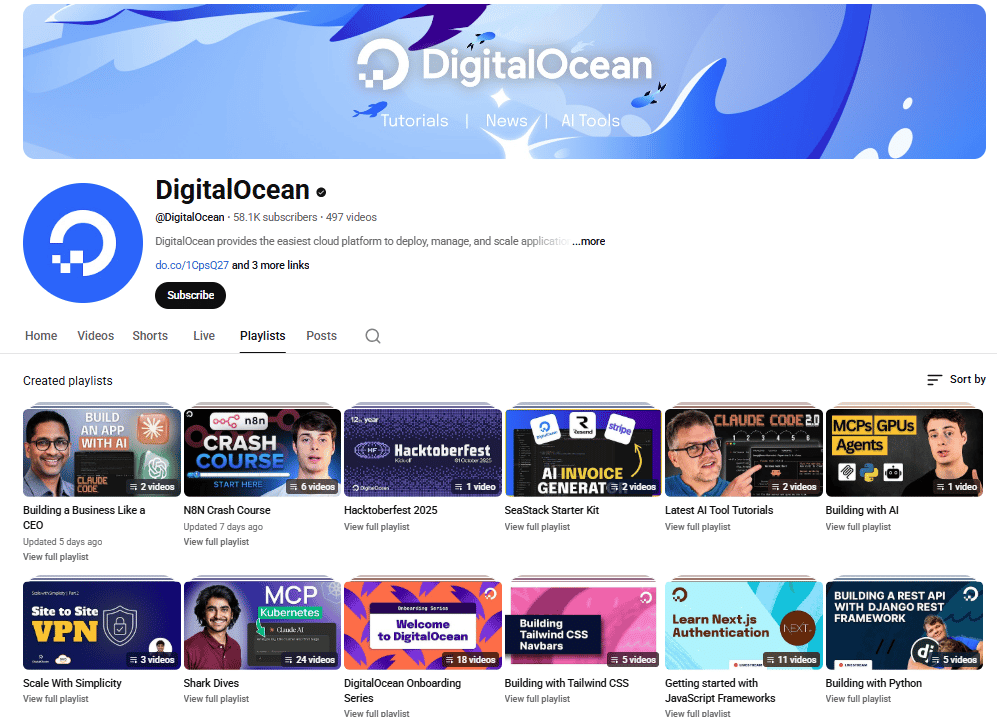
The DigitalOcean YouTube channel helps developers learn how to build, deploy, and scale modern applications with simplicity. From AI app demos and automation workflows to cloud fundamentals, and product tutorials, it’s a hub for hands-on learning. Whether you’re launching your first AI project or optimizing production workloads, subscribe for practical guidance to turn ideas into live, scalable apps on the agentic cloud.
DigitalOcean’s must-watch YouTube videos:
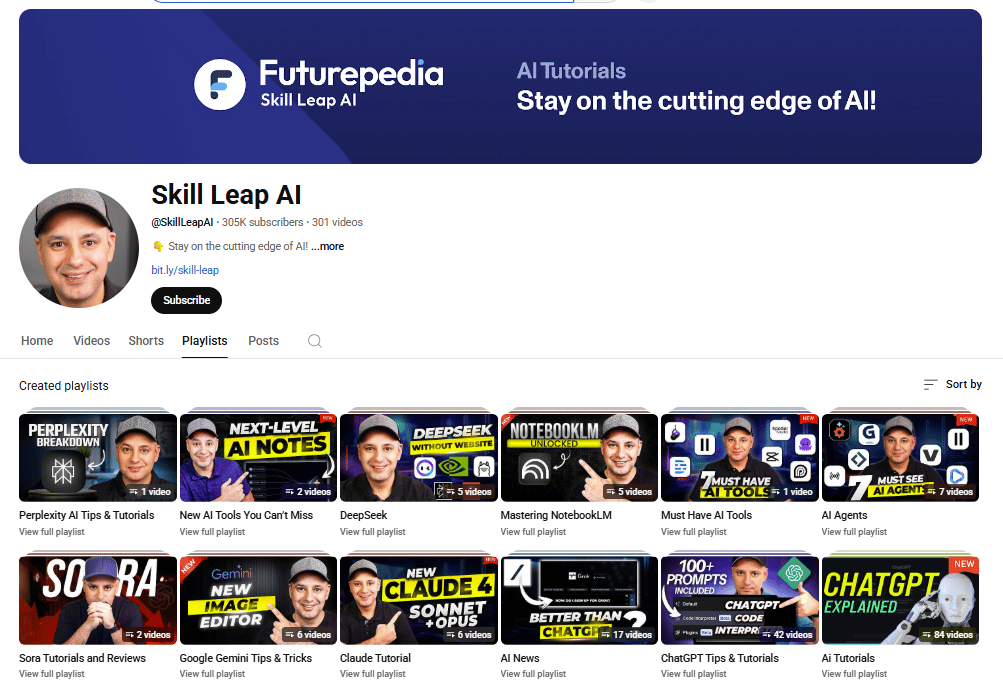
Saj Adib founded Skill Leap AI as a fast-paced, tool-focused YouTube channel. Saj Adib is also the founder of New Slate Films, a full-service video production company. The channel delivers quick, digestible tutorials that showcase practical AI tools, productivity workflows, and real-world use cases. It combines hands-on learning with practical workflows, helping viewers apply AI beyond theory. The videos suit creators, professionals, and AI beginners who want to upgrade their skills step by step (and tool by tool).
Skill Leap AI’s must-watch YouTube videos:
💡What’s the difference between Auto-GPT and ChatGPT? Learn more about how Auto-GPT tackles tasks autonomously across multiple steps, while ChatGPT stays conversational and user-guided to determine the best fit for your workflows.
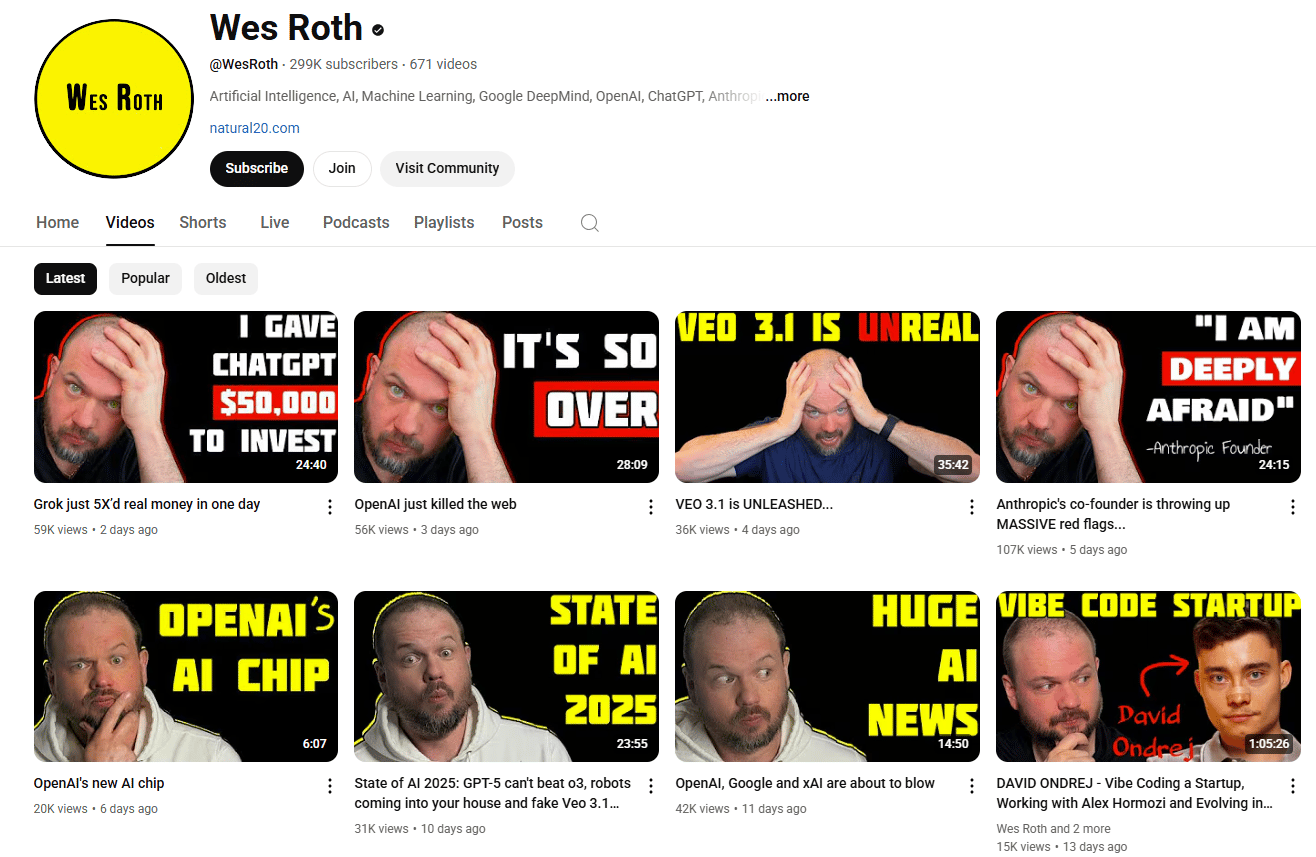
Wes Roth delivers fast-paced AI commentary that covers breaking news, industry trends, and thoughtful reflection on the future of artificial intelligence. With a clear mission to help viewers understand AI’s impact on society, he translates complex developments into relatable insights while keeping a grounded, optimistic perspective. His videos explore advances from OpenAI, Google DeepMind, xAI, and Anthropic, along with broader questions about AGI, AI ethics, and technological change.
Wes Roth’s must watch YouTube videos:
How To Use Midjourney | The ULTIMATE Beginners Guide to Midjourney 2025
OpenAI’s “AGI Pieces” SHOCK the Entire Industry! AGI in 7 Months! | GPT, AI Agents, Sora & Search
o3-mini is the FIRST DANGEROUS Autonomy Model | INSANE Coding and ML Abilities
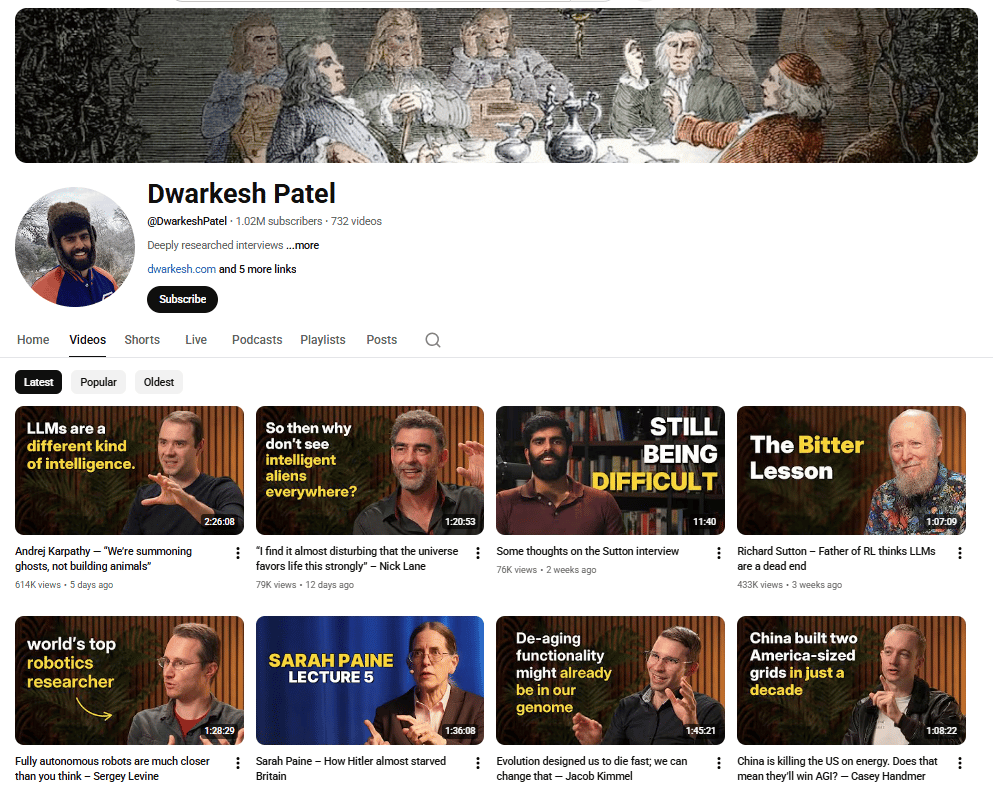
Dwarkesh Patel hosts The Dwarkesh Podcast. His channel is known for deeply researched, long-form interviews with leading thinkers in AI, science, and technology, including Andrej Karpathy (formerly of OpenAI & Tesla), Richard Sutton (DeepMind researcher and “father of reinforcement learning”), and Sergey Levine (UC Berkeley AI & robotics). Dwarkesh’s conversations explore ideas combining intelligence, innovation, and the future of humanity.
Dwarkesh Patel’s must-watch YouTube videos:
Andrej Karpathy — “We’re summoning ghosts, not building animals”
Fully autonomous robots are much closer than you think – Sergey Levine
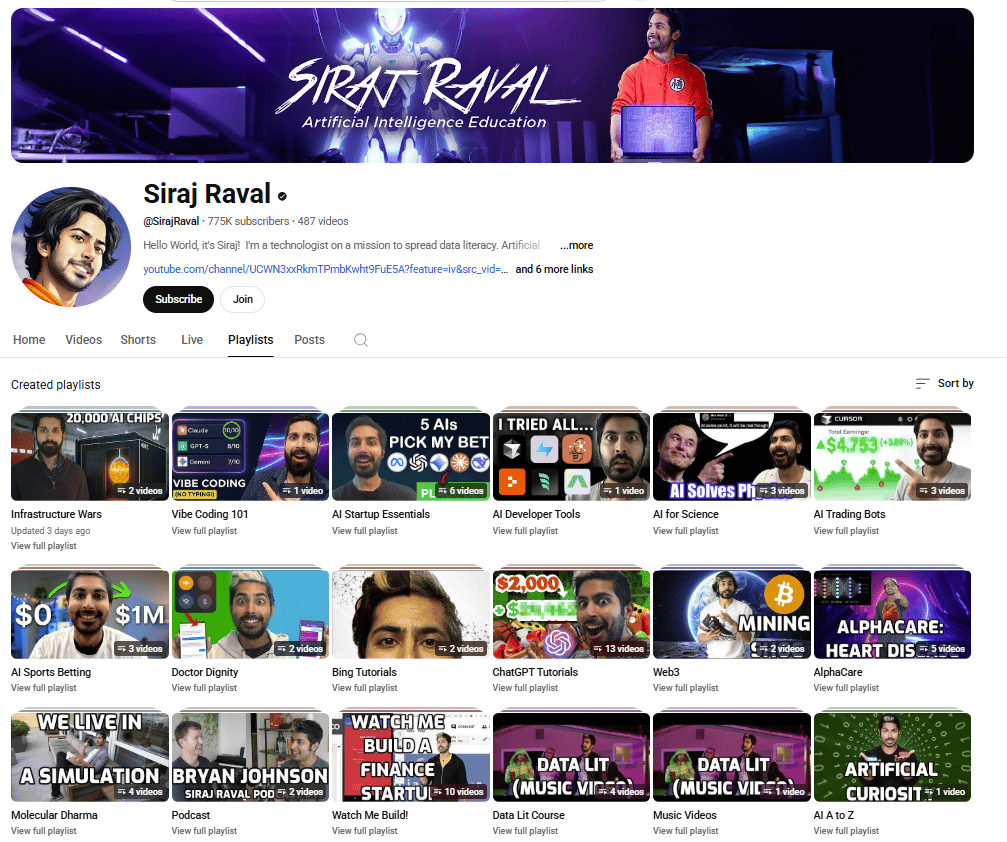
Siraj Raval is a freelance AI/ML engineer, and an early influential voice in AI education on YouTube, known for making complex concepts in artificial intelligence, math, and coding engaging and approachable. With a mission to spread data literacy, his channel offers beginner-to-advanced tutorials on AI, coding, startups, and applied machine learning. Siraj’s energetic teaching style and creative storytelling have amassed a strong global community of learners and AI enthusiasts.
Siraj Raval’s mustwatch YouTube videos:
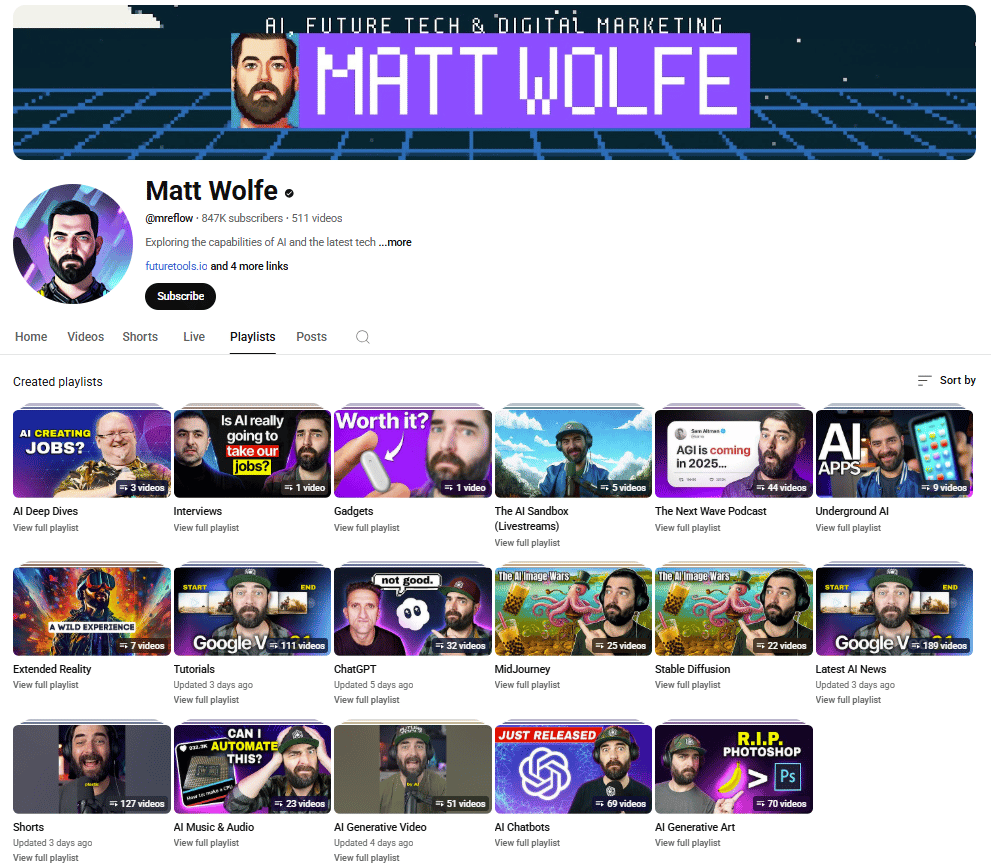
Matt Wolfe is a tech creator and entrepreneur who explores the intersection of AI, future technology, and digital innovation through his YouTube channel and platform, FutureTools.io. His content covers AI news, tool reviews, and real-world applications, helping viewers stay ahead. Known for his approachable style, Matt translates fast-moving developments into actionable insights for creators, businesses, and enthusiasts alike.
Matt Wolfe’s must watch YouTube videos:
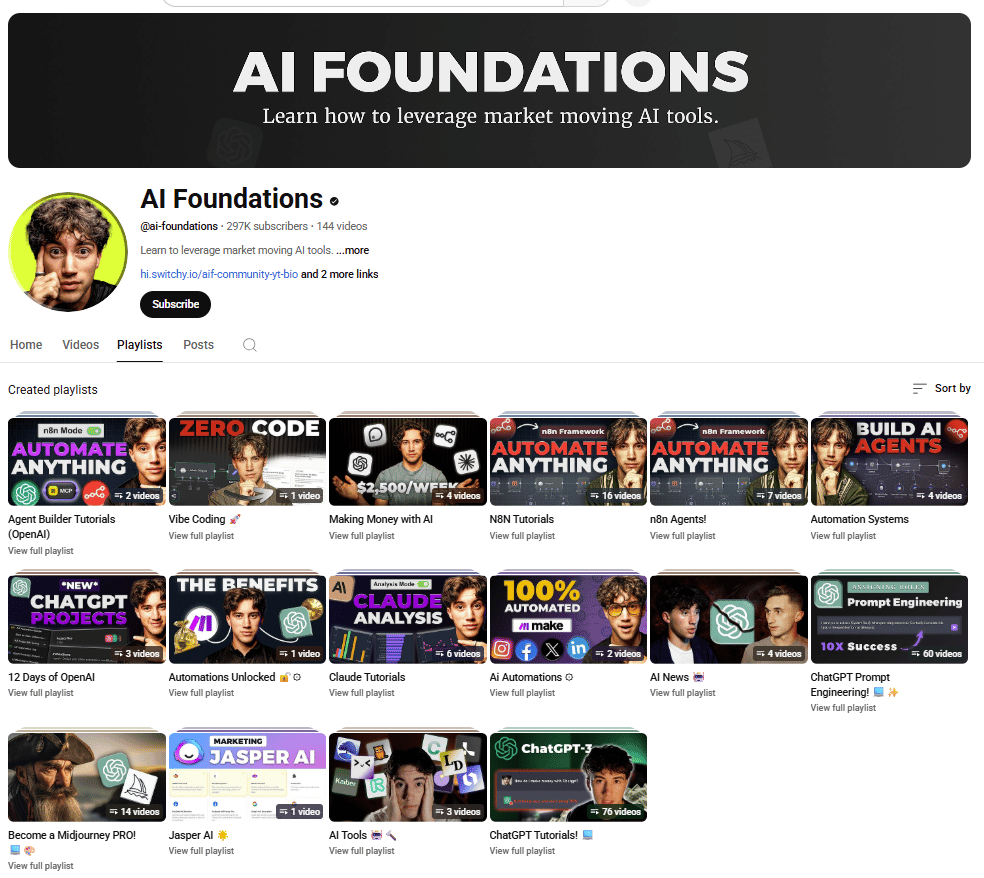
Founded by Drake Surach, the AI Foundations YouTube channel simplifies artificial intelligence for creators, entrepreneurs, and learners who want to turn AI into real-world results. The channel focuses on vibe coding, showing viewers how to automate workflows, build AI agents, and profit with emerging AI tools. Through clear, authentic teaching and a strong community-driven approach through his AI Foundations community, Drake helps people to deploy AI projects with confidence.
AI Foundations’ must-watch YouTube videos:
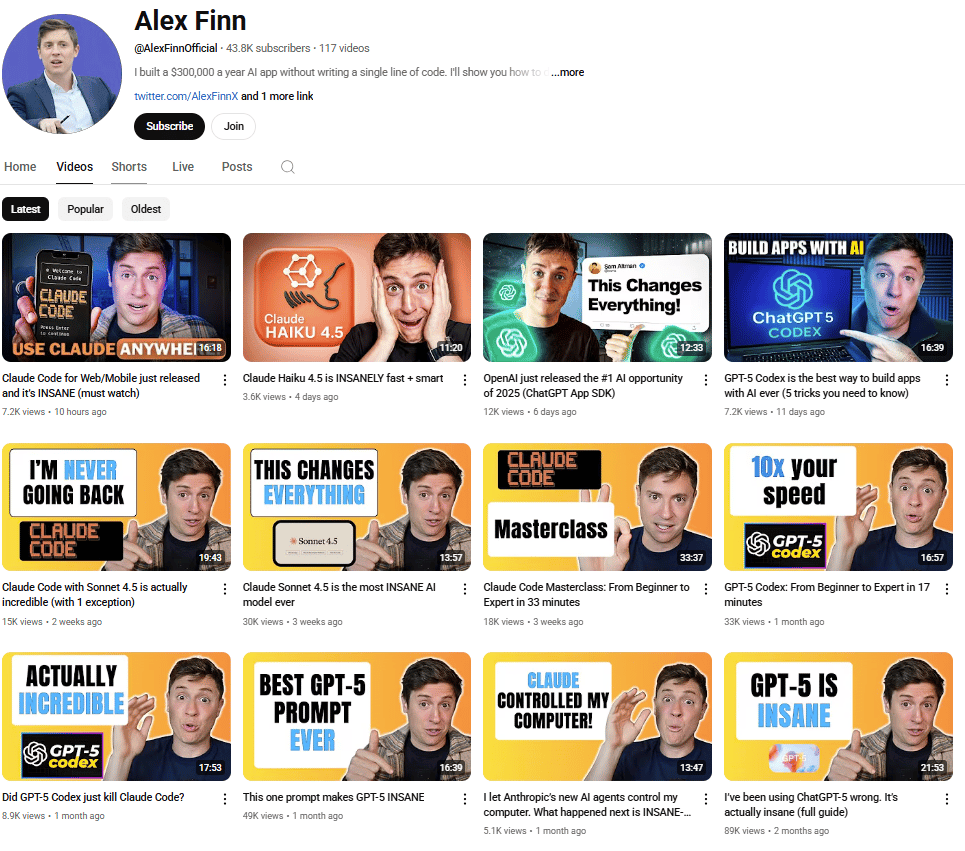
Alex Finn’s YouTube channel is dedicated to helping creators and entrepreneurs integrate AI to build and scale no-code apps. Alex Finn, founder and CEO of Creator Buddy, shares from his own experience building a $300K ARR AI app. He shows how anyone can turn ideas into profitable products through hands-on tutorials, in-depth reviews, and practical breakdowns of AI tools like Claude, ChatGPT, and GPT-5 Codex. His energetic teaching style and real-world experience make complex AI workflows approachable and business-ready.
Alex Finn’s must-watch YouTube videos:
Claude Code for Web/Mobile just released and it’s INSANE (must watch)
OpenAI just released the #1 AI opportunity of 2025 (ChatGPT App SDK)
Who are the best AI YouTubers to follow in 2025? Some of the best AI YouTube channels include Two Minute Papers, DeepLearning.AI, AI Explained, Tina Huang, The AI Advantage, How I AI, DigitalOcean, Skill Leap AI, Wes Roth, Dwarkesh Patel, Siraj Raval, Matt Wolfe, AI Foundations, and Alex Finn. They cover everything from research analysis and tutorials to coding, AI tools, and real-world applications.
Can you learn machine learning exclusively from YouTube? YouTube is an excellent starting point for getting an education on machine learning. It offers free access to tutorials, coding walkthroughs, and project-based lessons from experienced educators. However, mastering ML requires applying concepts through hands-on projects, reading research papers, and exploring structured courses or textbooks for deeper mathematical understanding. YouTube can be your launchpad, but consistent practice, staying updated, and applying what you have learned are key to mastering the field.
Which AI YouTuber explains research papers best? Two Minute Papers excels at turning complex research into easy-to-grasp summaries and offers detailed technical breakdowns for advanced learners.
What’s the best YouTube channel for AI beginners? DeepLearning.AI and The AI Advantage are excellent for beginners, thanks to their step-by-step tutorials, structured content, and focus on real-world applications.
Which YouTuber is best for ML coding tutorials in Python?
Siraj Raval is known for energetic, project-based tutorials that simplify AI and ML coding in Python.
Do AI YouTubers cover LLMs and generative AI? Yes. Many channels focus on the LLMs and generative AI tools, including AI Explained, Matt Wolfe, and Alex Finn, who showcase updates, use cases, and tutorials.
How often do AI YouTubers post new content? Most top AI YouTube creators post weekly or bi-weekly, balancing tutorials, AI news, and hands-on projects to keep content timely and engaging.
Which AI YouTubers should developers follow in 2025? Developers can follow AI Foundations, Skill Leap AI, DigitalOcean, The AI Advantage, and Alex Finn for practical workflows, automation tutorials, and guidance on building real AI-powered applications.
Unlock the power of NVIDIA H100 GPUs for your AI and machine learning projects. DigitalOcean GPU Droplets offer on-demand access to high-performance computing resources, enabling developers, startups, and innovators to train models, process large datasets, and scale AI projects without complexity or significant upfront investments.
Key features:
Powered by NVIDIA H100 GPUs with 640 Tensor Cores and 128 Ray Tracing Cores
Flexible configurations from single-GPU to 8-GPU setups
Pre-installed Python and Deep Learning software packages
High-performance local boot and scratch disks included
Sign up today and unlock the possibilities of GPU Droplets. For custom solutions, larger GPU allocations, or reserved instances, contact our sales team to learn how DigitalOcean can power your most demanding AI/ML workloads.
此内容由惯性聚合(RSS阅读器)自动聚合整理,仅供阅读参考。 原文来自 — 版权归原作者所有。