











Modal was founded in 2021 by Erik Bernhardsson and Akshat Bubna to address a common and recurring challenge in machine learning: the complexity of deploying and scaling ML workloads in production. The platform emerged as a serverless solution, eliminating the need for extensive DevOps expertise and allowing teams to focus more on model development—rather than deployment and infrastructure management.
The ML deployment landscape has undergone significant changes in recent years, driven by the rise of AI and the increasing complexity of ML workloads. Developers are seeking platforms that offer ease of use, cost-effectiveness, and scalability. ML workloads have become increasingly diverse, ranging from real-time inference APIs to batch processing jobs. Because of the increasing demand for ML deployment solutions, Modal is no longer the only available option.
The right deployment platform can make all the difference. In this article, I’ll share the top Modal alternatives to explore.
Key takeaways:
With serverless autoscaling and per-second billing, platforms like RunPod and Baseten spin up GPU resources fast, making them ideal for experimentation and cost-sensitive inference workloads that don’t require constant uptime.
Enterprise-focused platforms, such as AWS SageMaker AI and Heimdall, provide comprehensive compliance certifications (SOC 2, HIPAA, ISO 27001) and audit logging, addressing regulatory requirements that lightweight serverless platforms may lack.
DigitalOcean Gradient AI offers the most accessible entry point at $0.51/hour for GPU notebooks with integrated workflows. At the same time, AWS SageMaker AI starts at $1.006/hour but includes enterprise-grade MLOps features and multi-model endpoints.
ClearML stands alone as a fully open-source MLOps platform enabling complete self-hosting and avoiding vendor lock-in. At the same time, Anyscale builds upon open-source Ray, offering proprietary managed services.
Specialized platforms like eesel AI achieve 2-3x better token throughput for LLM workloads through PagedAttention and continuous batching optimizations that general-purpose platforms don’t provide.
Modal is a serverless AI development platform explicitly designed for ML engineers and data scientists who want to run compute-intensive workloads without worrying about managing infrastructure. This enables you to write Python functions that are automatically handled by containerization, resource allocation, and scaling.
It also excels at providing on-demand access to GPUs for batch processing, distributed training, and model inference. The platform simplifies DevOps complexity, enabling developers to focus on writing code while Modal handles auto-scaling, orchestration, and cold-start optimization. It is popular among teams seeking the flexibility of serverless computing with the power of dedicated ML hardware.
Modal uses a pay-as-you-go pricing model, where you only pay for actual compute usage, measured in GPU/CPU seconds, with rates varying by hardware type (e.g., CPUs, A100s, H100s).
Free: $0/month with $30 in monthly credits for individuals.
Team: $250/month
Enterprise: custom pricing.
Outside of specific team and business requirements, the following considerations will help you select the right serverless ML deployment platform.
Hardware availability. Ensure the platform you choose offers the specific GPU types you need, such as A100, A200, H100, H200, and RTX series. Confirm support for multi-GPU setups.
Pricing transparency. You don’t want last-minute hidden charges to ruin your plans, so check with providers upfront about their pricing structure, including whether it’s based on hourly, monthly, or annual charges. Determine the total cost of ownership (TCO) before making a final decision and sticking to a single serverless GPU platform.
Cold start latency. Evaluate how quickly the platform can spin up new containers and load your models into memory. For latency-sensitive applications, look for platforms that offer pre-warmed containers, sophisticated caching mechanisms, and minimum instance counts.
Integration and developer experience. Check if the platform offers Python native APIs, integrates efficiently with your existing CI/CD pipelines, and supports your preferred ML frameworks (PyTorch, TensorFlow, and JAX).
Scaling capabilities. Assess how the platform manages horizontal scaling (increasing the number of instances) and vertical scaling (utilizing larger machines). Examine the platform’s response time to traffic spikes and support for batching requests.
Security and compliance. Verify relevant certifications, such as SOC2, HIPAA, and ISO standards, along with data encryption standards, when handling sensitive data and information.
The following platforms represent diverse approaches to ML deployment, ranging from fully managed serverless solutions to open-source frameworks that can be self-hosted. Each option addresses different use cases—whether you prioritize cost efficiency, enterprise compliance, developer experience, or specialized performance for specific workload types (such as LLM inference or distributed training).
DigitalOcean’s Gradient AI Platform offers developers a comprehensive suite for building and deploying AI agents. It provides access to various foundation models through a unified API, enabling the creation of intelligent agents without requiring extensive infrastructure management. The Platform supports the integration of external data sources, facilitating the development of context-aware applications. Additionally, it includes features such as agent evaluation tools and traceability, enabling developers to monitor and refine their agents effectively. With its serverless inference capabilities, Gradient AI Platform ensures scalable and efficient deployment of AI solutions.
Gradient AI Platform’s key features:
One-click model serving with load balancing, auto-scaling, and REST API generation, transforming trained models into production-ready endpoints in minutes.
Built-in experiment tracking and model registry maintain a complete lineage of training runs, artifacts, and hyperparameters, ensuring teams can reproduce results and compare model performance across iterations.
Gradient AI Platform Pricing:
Runpod is another developer-friendly platform offering serverless inference and dedicated pod rentals for GPU-accelerated workloads. It sources data from a global network of data centers and individual GPU providers. Runpod’s Docker-first approach and simple interface make it easily accessible to engineers familiar with containerization. It offers more control over the container environment and persistent volumes if required, while automating DevOps.
RunPod’s key features:
Network volumes enable persistent storage across serverless invocations, useful for caching model weights and reducing cold starts.
Template marketplace offers pre-built environments for common frameworks, reducing deployment time for standard use cases.
Serverless autoscaling with per-second billing ensures you only pay for actual inference time without maintaining idle capacity.
RunPod pricing:
Community cloud H200: $3.59/hour (80 GB instance)
Secure cloud H200: $3.59/hour (80 GB instance)
Looking for more GPU compute alternatives? Our guide to Runpod alternatives compares seven platforms for serverless inference, distributed training, and batch processing. See detailed pricing breakdowns and feature comparisons to find the ideal ML infrastructure provider for your needs.
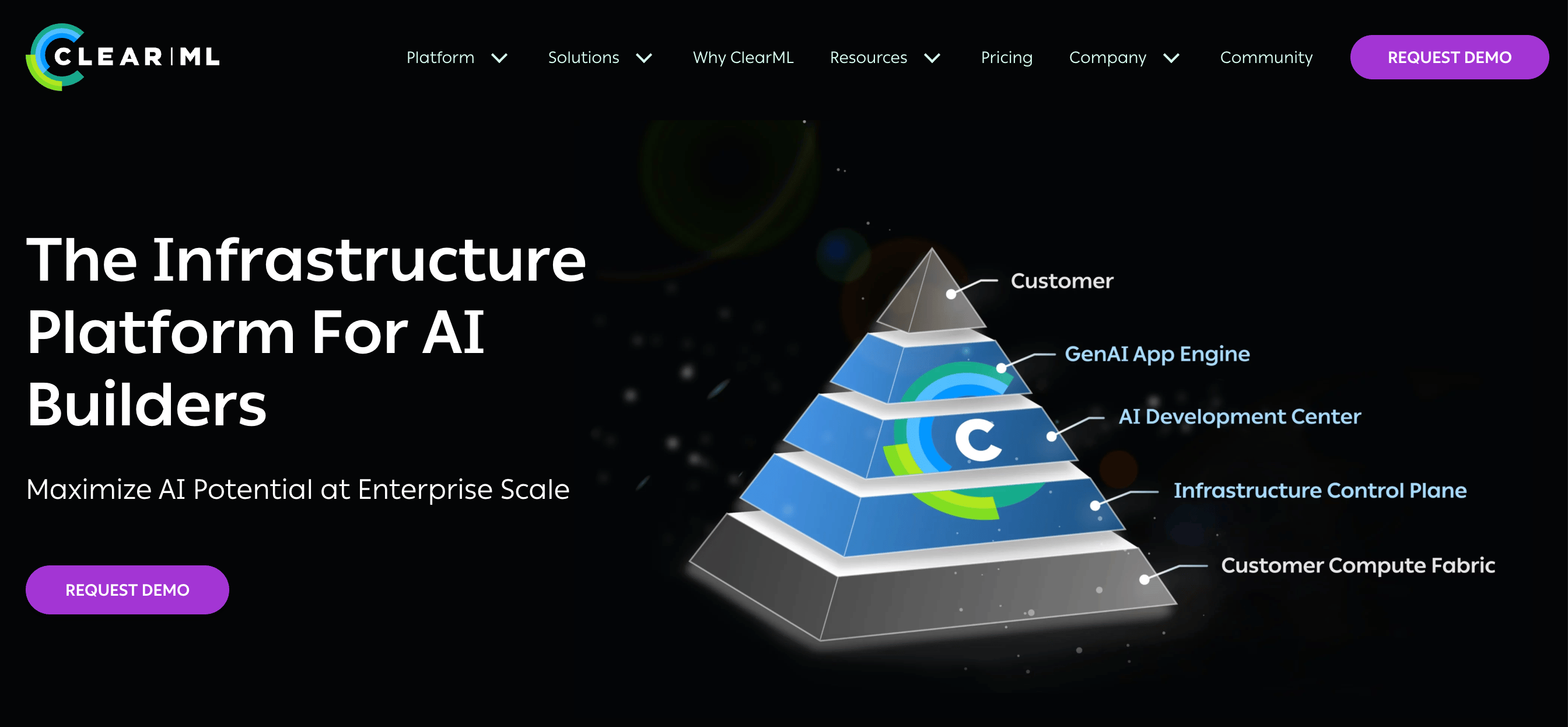
ClearML is an option for teams seeking an open-source, end-to-end MLOps platform. It offers environments with reproducibility and collaboration, which allows you to clone past experiments and log every run easily. ClearML can be easily self-hosted or run on your VPC (Virtual Private Cloud), making it an ideal choice for businesses that require privacy or deep system integration.
ClearML’s key features:
A built-in job scheduler is included with the pipeline engine to orchestrate and schedule jobs.
Interactive dashboard to log and compare hyperparameters, artifacts, and metrics, allowing comprehensive experiment tracking and remote debugging.
ClearML Serving enables the deployment of models with autoscaling, such as REST APIs.
ClearML pricing:
Community: $0, for teams of up to 3 members
Pro: $15/user/month + usage, for teams of up to 10 members
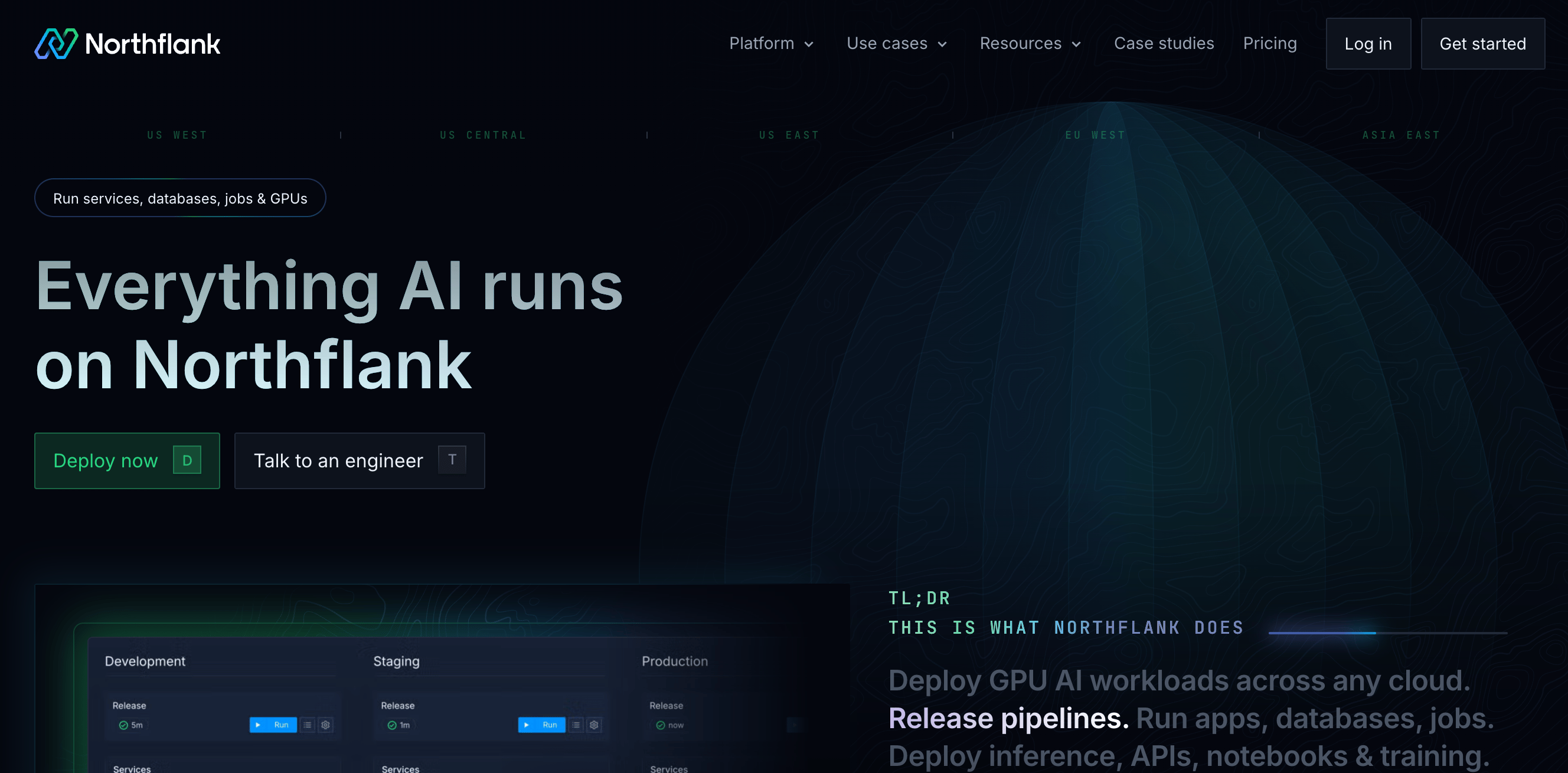
Northflank offers a modern development platform with strong ML capabilities and extends beyond ML to general deployment. It is a production-grade platform for deploying and scaling full-stack AI products. The platform emphasizes infrastructure-as-code principles while maintaining an intuitive UI, making it suitable for teams that require programmatic control. Northflank offers a multi-cloud approach, facilitating deployment across Azure, GCP, and AWS from a single interface.
Northflank’s key features:
Native Docker and Kubernetes support provides maximum flexibility in how you containerize and orchestrate ML workloads.
Built-in CI/CD with GitOps workflows automatically redeploy models when you push code changes to your repository.
Real-time logs and metrics dashboards provide visibility into model performance and resource utilization, eliminating the need for additional tooling.
Northflank pricing:
Northflank compute H100: $$2.74/hour
Bring your own cloud: $0.0138/GB vRAM/hour
AWS SageMaker AI is an all-in-one platform that covers training, deployment, pipelines, and monitoring. It is designed for teams requiring industrial-scale ML capabilities with the highest possible security, reliability, and compliance. AWS SageMaker AI is utilized by teams already invested in the AWS ecosystem, as well as by teams designing ML applications that require enterprise-level support.
AWS SageMaker’s key features:
SageMaker Studio provides a unified, web-based IDE (Integrated Development Environment) for the entire ML workflow. It integrates notebook environments, experiment tracking, model debugging, and visual workflow builders into a single interface that supports collaborative development across teams.
SageMaker Autopilot automates the entire ML pipeline, including feature engineering, algorithm selection, and hyperparameter tuning, using AutoML techniques. This enables citizen data scientists to build models of production quality.
Real-time and batch inference endpoints with automatic scaling, multi-model endpoints for cost optimization, and serverless inference for intermittent traffic patterns provide flexible deployment options for any use case.
AWS SageMaker AI pricing:
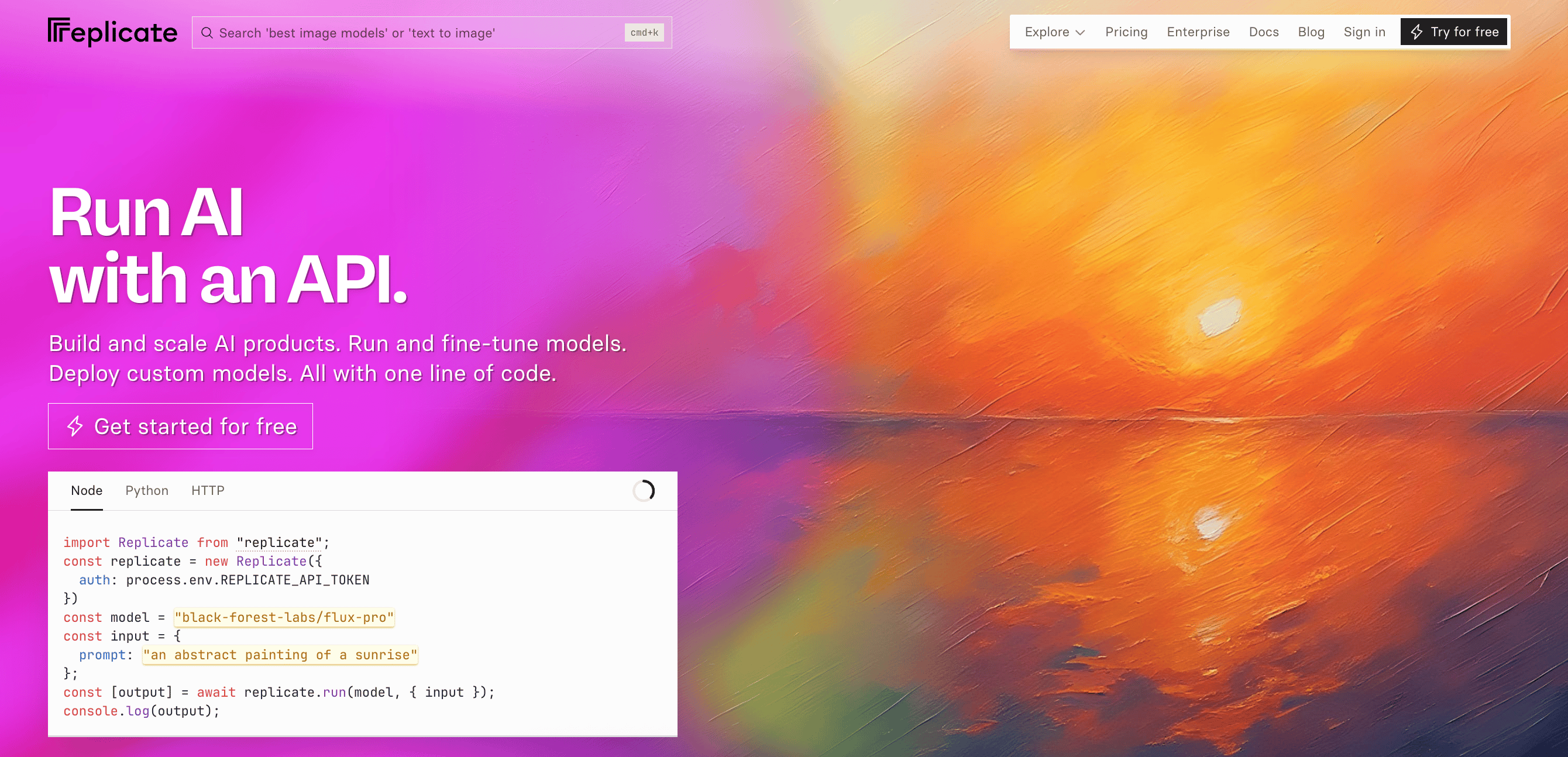
Replicate is designed for deployment and open-source model sharing via a simplified API. This platform hosts various pre-packaged models (Stable Diffusion, Llama, Whisper), allowing you to deploy your own with minimum configuration. Replicate helps developers share and utilize models for quick testing and deployment, making it a fast and easy way to deploy existing templates or build custom models.
Replicate’s key features:
One-line deployment from GitHub repositories using Cog, Replicate’s open-source tool for packaging ML models in containers.
Automatic API generation creates REST endpoints for your models, eliminating the need to write server code or handle request parsing.
Hardware flexibility allows choosing from CPUs to high-end GPUs (A100, H100) on a per-prediction basis.
Replicate pricing:
Public models: Pay-as-you-go model
Private models H100: $5.49/hour
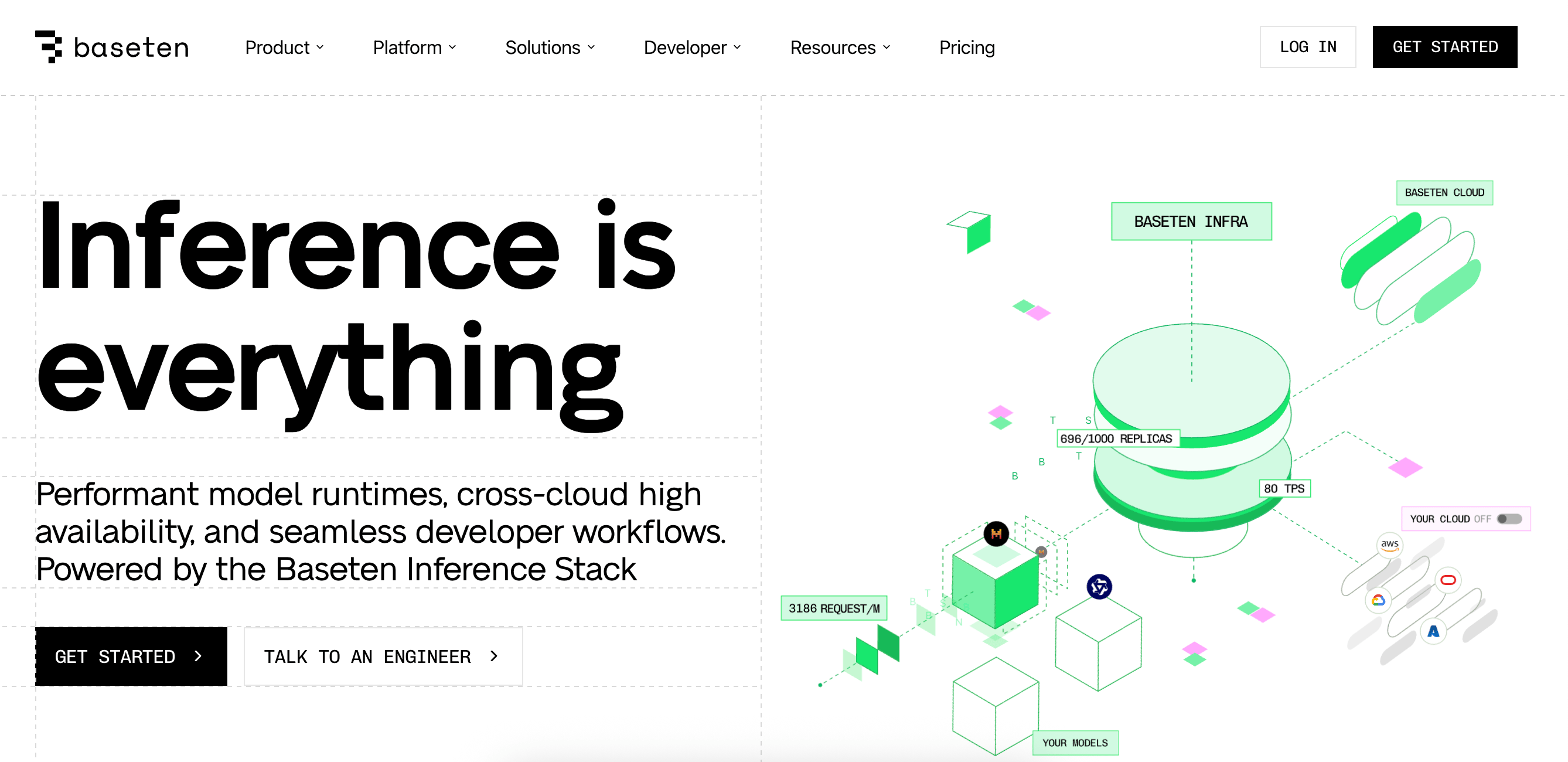
Baseten primarily focuses on ML inference, offering a straightforward path from trained models to a production API. It emphasizes low-latency serving and developer-friendly deployment workflows, making it suitable for customer-facing applications where response time is a key component of customer service.
Baseten’s key features:
Multi-framework support handles PyTorch, TensorFlow, scikit-learn, and custom models through a unified deployment interface, enabling easy integration across various frameworks.
Automatic model optimization applies quantization and batching to maximize throughput without code changes.
Gradual rollouts and A/B testing capabilities enable safe model updates with automatic traffic splitting between versions.
Baseten pricing:
Basic: $0/month
Pro: Custom pricing
Enterprise: Custom pricing
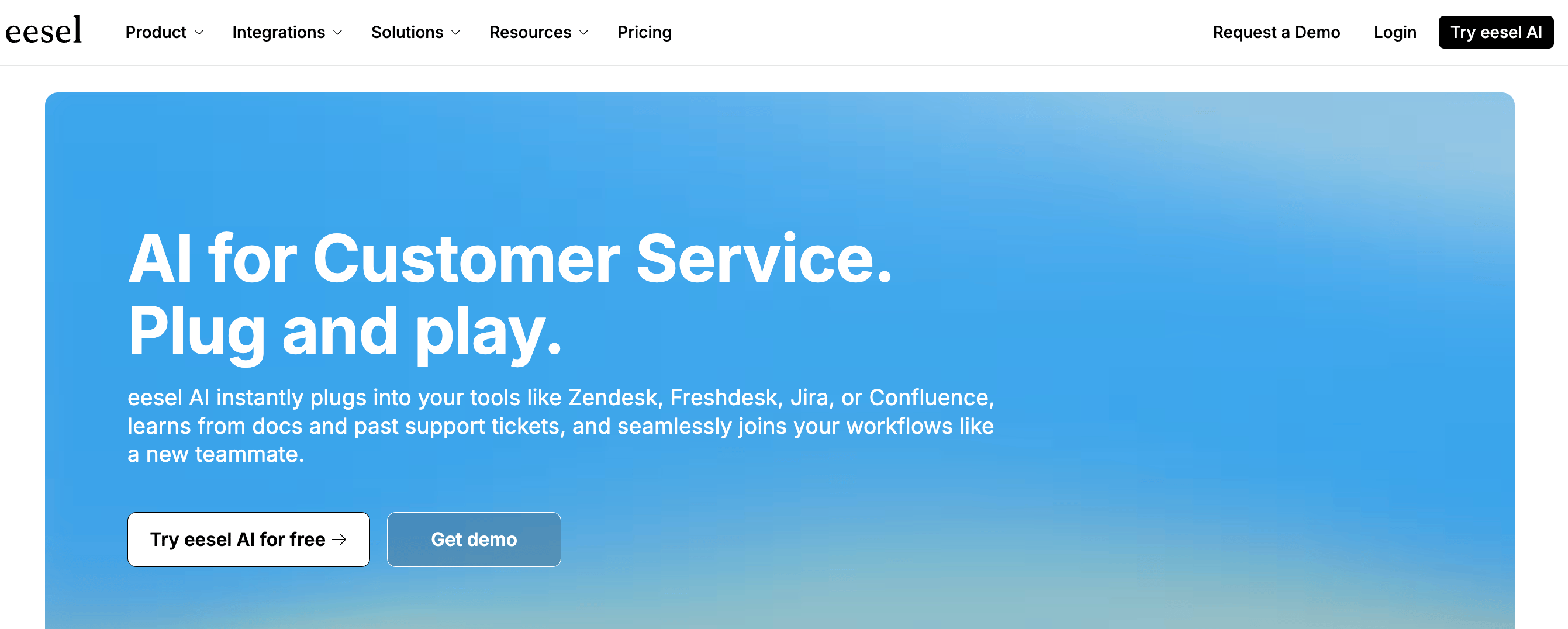
eesel AI excels at finished, production-ready solutions that can be deployed instantly, saving a significant amount of time and resources. It’s designed for LLM applications and generative AI workloads, offering special tools for prompt engineering and fine-tuning. eesel AI’s architecture is optimized for the smooth implementation of continuous batching and attention kernel optimization, which improves performance.
eesel AI’s key features:
Multi-tenancy support enables efficient serving of different fine-tuned variants of the same base model on shared infrastructure.
Fine-tuning infrastructure with LoRA and QLoRA support enables parameter-efficient adaptation of foundation models to specific tasks.
LLM-specific optimizations—including PagedAttention and continuous batching—increase token throughput by 2- 3x compared to naive implementations.
eesel AI pricing:
Team plan: $239/month
Business plan: $639/month
Custom plan: custom pricing
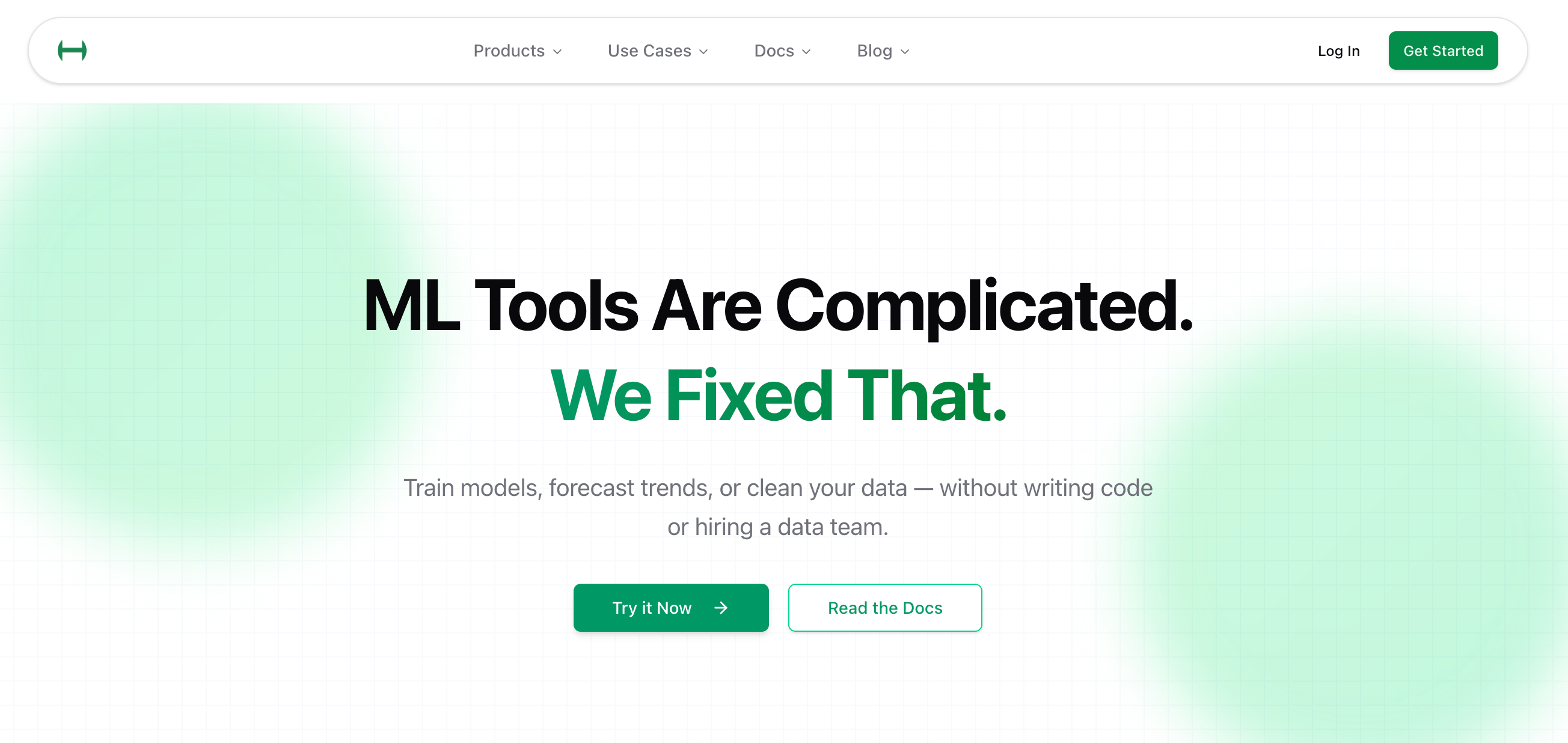
Heimdall offers an AutoML-focused approach that automates the entire ML pipeline**.** The platform ingests CSV data, automatically cleans and prepares it, builds optimal models, evaluates performance and biases, and creates production-ready API endpoints. It quickly constructs custom models for classification or regression use cases, making ML deployment accessible for teams without deep data science expertise.
Heimdall’s key features:
Data privacy controls, including differential privacy and federated learning support, enable ML on sensitive datasets.
Compliance templates for GDPR, HIPAA, and SOC 2 accelerate certification processes with pre-configured policies.
Audit logging captures the complete history of model deployments, predictions, and configuration changes for compliance documentation.
Heimdall pricing:
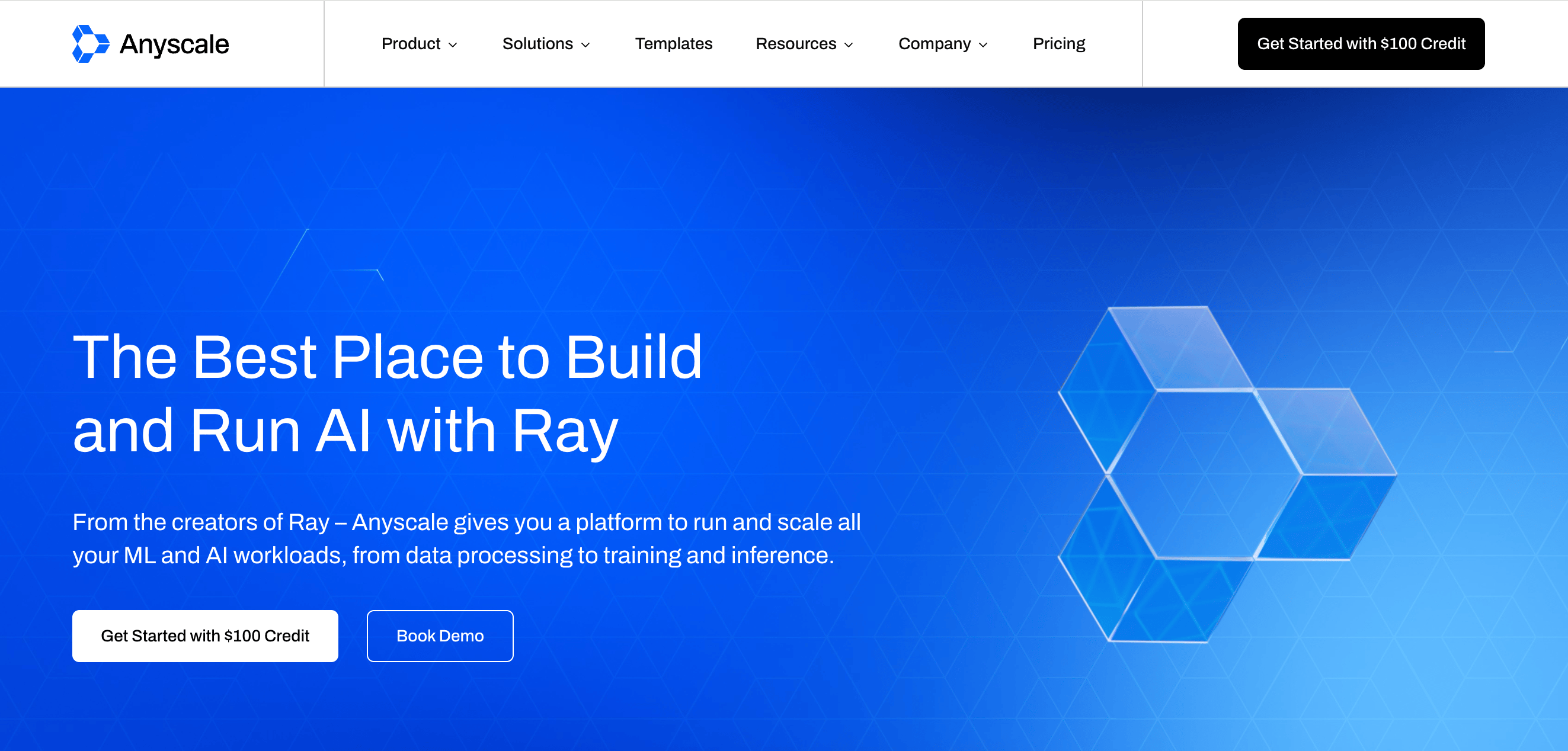
The creators of Ray built Anyscale, which offers a managed platform for distributed Python workloads. It operates with a particular focus on batch inference and large-scale ML training. This platform excels at workloads that require coordination across multiple machines, including reinforcement learning through RLlib (Ray’s scalable reinforcement learning library), large-scale hyperparameter tuning via Ray Tune, and processing large datasets. For teams already using Ray’s infrastructure, this tool is a solid option for easy integration.
Anyscale’s key features:
Distributed training capabilities handle data-parallel, model-parallel, and pipeline-parallel training across hundreds of GPUs.
Autoscaling clusters automatically provision and deprovision compute resources based on workload demands, optimizing cost efficiency.
Production-ready Ray libraries (RLlib, Ray Tune, Ray Data) provide battle-tested implementations of advanced ML patterns.
Anyscale pricing:
Pay-as-you-go pricing model with $100 credit
A100 BYOC: $0.6388/hour compute
H100 BYOC: $1.86/hour compute
What is Modal used for in ML deployment?
Modal is used for running serverless ML workloads, including model inference, batch processing, and distributed training, without requiring infrastructure management. Data scientists deploy models as auto-scaling API endpoints, run scheduled retraining jobs, and process large datasets. Modal’s Python-native approach allows you to prototype locally and deploy to production with minimal code changes.
What are the best Modal alternatives for AI inference?
DigitalOcean’s GradientAI platform provides a developer-friendly serverless GPU infrastructure with straightforward pricing and fast deployment. Replicate and Baseten excel for low-latency inference with simple deployment workflows. RunPod offers competitive pricing for batch inference with per-second billing. For LLM workloads, eesel AI provides specialized optimizations. AWS SageMaker is ideal for enterprises that need comprehensive monitoring and AWS integration.
How do serverless ML platforms handle scaling?
Serverless platforms maintain pre-warmed container pools to handle traffic spikes, automatically provisioning additional capacity as needed. Containers scale to zero when idle to save costs, though this creates cold start latency. Platforms like Baseten achieve sub-second cold starts through container caching, while DigitalOcean’s GradientAI uses optimized container orchestration to minimize cold start delays. For high-traffic scenarios, minimum instance counts keep models always warm, while request batching maximizes GPU utilization.
Are these ML deployment platforms suitable for production workloads?
Yes, most platforms are production-ready, although suitability varies depending on the requirements. AWS SageMaker, Anyscale, and Baseten offer enterprise-grade reliability with SLAs (Service Level Agreements) and support. Replicate and RunPod power production systems, but may have less stringent SLAs. DigitalOcean’s GradientAI offers production-ready infrastructure with predictable performance and monitoring capabilities, making it particularly well-suited for teams seeking simplicity without sacrificing reliability.
Which ML deployment options are open source?
ClearML is the primary open-source platform offering full MLOps capabilities for self-hosting. Replicate’s Cog for packaging models is open-source, although the platform itself is proprietary. Anyscale is built on open-source Ray, but the managed platform is commercial. All other platforms—RunPod, Baseten, Northflank, SageMaker, eesel AI, Heimdall, and DigitalOcean Gradient—are proprietary solutions.
Accelerate your AI/ML, deep learning, high-performance computing, and data analytics tasks with DigitalOcean Gradient™ AI GPU Droplets. Scale on demand, manage costs, and deliver actionable insights with ease. Zero to GPU in just 2 clicks with simple, powerful virtual machines designed for developers, startups, and innovators who need high-performance computing without complexity.
Key features:
Powered by NVIDIA H100, H200, RTX 6000 Ada, L40S, and AMD MI300X GPUs
Save up to 75% vs. hyperscalers for the same on-demand GPUs
Flexible configurations from single-GPU to 8-GPU setups
Pre-installed Python and Deep Learning software packages
High-performance local boot and scratch disks included
HIPAA-eligible and SOC 2 compliant with enterprise-grade SLAs
Sign up today and unlock the possibilities of DigitalOcean Gradient™ AI GPU Droplets. For custom solutions, larger GPU allocations, or reserved instances, contact our sales team to learn how DigitalOcean can power your most demanding AI/ML workloads.
此内容由惯性聚合(RSS阅读器)自动聚合整理,仅供阅读参考。 原文来自 — 版权归原作者所有。