





What if your browser could actually use websites the way you do? Not just display them, but interact with them, complete tasks, and execute workflows autonomously? That’s exactly what agentic browsers are doing.
These AI-powered tools do more than just show web pages—they navigate sites, fill forms, make purchases, book appointments, and handle multi-step processes. This is brand-new ground, and companies like Perplexity (with their Comet browser) and Fellou are pioneering this shift from passive browsing to active AI-driven web interaction. Below, we’ll walk you through everything you need to know about agentic browsers and how you can capitalize on the new technology.
Key takeaways:
Agentic browsers use AI agents to autonomously navigate websites and complete tasks like booking flights, filling forms, and making purchases without manual clicking or human intervention.
While they offer major productivity gains through 24/7 automation and reduced cognitive load, they also introduce privacy risks, potential loss of browsing control, and dependency on AI accuracy for real-world consequences.
This shift forces websites to redesign for both human and AI users, requiring cleaner navigation structures, API-first development strategies, and optimization for agent functionality rather than just visual appeal and SEO.
Agentic browsers use autonomous AI agents to navigate websites, interact with web elements, and complete tasks on behalf of users. They actively engage with websites to execute workflows, fill forms, make purchases, and perform multi-step processes without direct human intervention.
This marks a new era in how we use the internet. Traditional browsing follows a pattern: search, evaluate results, click links, read content, then manually complete desired actions. Agentic browsing compresses this entire workflow into a single instruction: tell the AI what you want accomplished, and it handles everything from research to execution.
Traditional browsers render HTML, display images, and respond to your clicks and keystrokes. You’re always the one in control, manually navigating from page to page, reading content, and completing tasks yourself.
Agentic browsers empower AI to do the work. Instead of you using the browser to view websites, AI agents interact with websites on your behalf. These agents navigate website layouts, interpret content, make decisions about next steps, and execute actions based on your outlined goals and preferences.
Traditional browsers wait for your input, but agentic browsers proactively navigate, analyze, and interact with web content.
Current browsers treat websites as static documents to be consumed. You click, scroll, read, and manually input information. Every action requires conscious human decision-making (from interpreting page layouts to understanding where to click next).
Think about booking a flight:
You visit multiple airline websites
Compare prices
Check dates
Enter passenger information
Navigate through checkout processes.
Each step demands your attention, decision-making, and manual input. Multiply this across dozens of routine web tasks, and you quickly see why browsing feels like work (because it is).
Agentic browsers remove all the nitty-gritty clicking and viewing. Instead of serving content for human interpretation, they become execution engines that understand website functionality and complete objectives autonomously. The browser becomes an intelligent assistant that can navigate complex workflows, interpret dynamic content, and make contextual decisions based on your goals.
This is more than automation—it’s intelligent automation. Agentic browsers adapt to different website designs, handle unexpected scenarios, and learn from interactions to improve future performance. They turn every website into a programmable interface that AI agents can use to accomplish real-world tasks (not just generate content) while you focus on higher-value activities.
Rather than following pre-programmed scripts, agentic AI browsers use advanced reasoning to adapt to different websites:
Intent interpretation: The AI agent analyzes your request to understand the desired outcome. Then, it breaks down goals into actionable steps. For example, “book a dinner reservation for Friday night” becomes a series of tasks: find restaurant options, check availability, compare times, and complete booking forms.
Website analysis: The agent crawls the current webpage’s structure to identify interactive elements like buttons, forms, links, and navigation menus. It understands both the visual layout and underlying code to determine how to interact with each element.
Action planning: The agent uses this analysis and user intent to create a step-by-step execution plan. This might involve navigating through multiple pages, filling out forms with relevant information, or comparing options across different sections of a site.
Execution with adaptation: The agent carries out the planned actions while continuously monitoring results. If something doesn’t work as expected (like a button that doesn’t respond or a form that requires additional information), the agent adapts its approach in real-time.
Result validation: After completing actions, the agent verifies that the intended outcome was achieved. It can confirm successful purchases, validate booking confirmations, or identify when additional steps are needed to complete a task.
Learning and improvement: The agent stores insights from each interaction to improve future performance on similar websites and tasks. This builds a knowledge base of smarter, more efficient web interaction patterns.
Startups and established companies are jumping on this AI-powered opportunity, developing AI-native browsing solutions that change how we interact with the web:
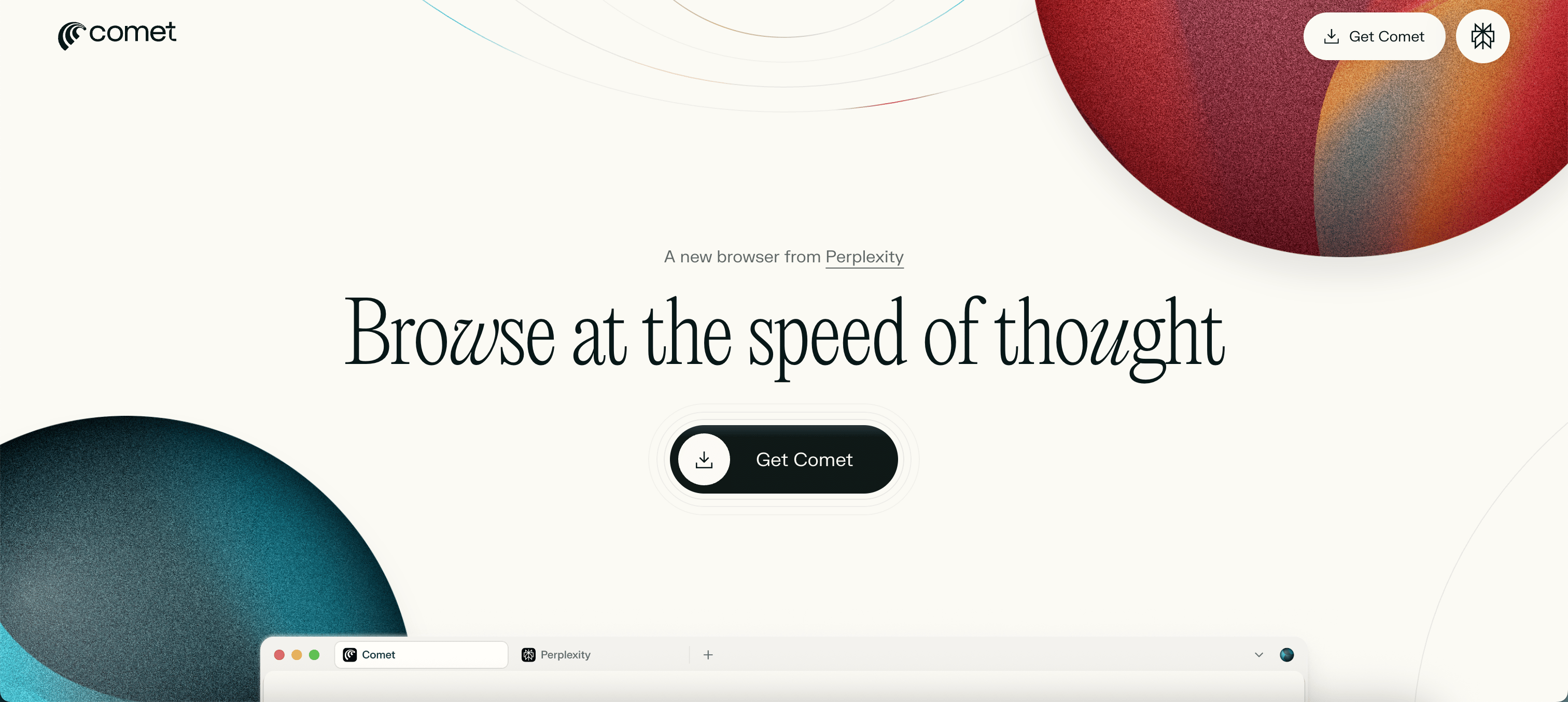
Perplexity’s Comet browser is one of the most ambitious agentic browsing projects to date. Comet is built on the company’s existing AI search expertise to integrate autonomous agents that can navigate websites, complete forms, and execute multi-step workflows. The browser combines Perplexity’s natural language processing with web automation, allowing users to accomplish tasks through conversational AI commands rather than manual navigation.
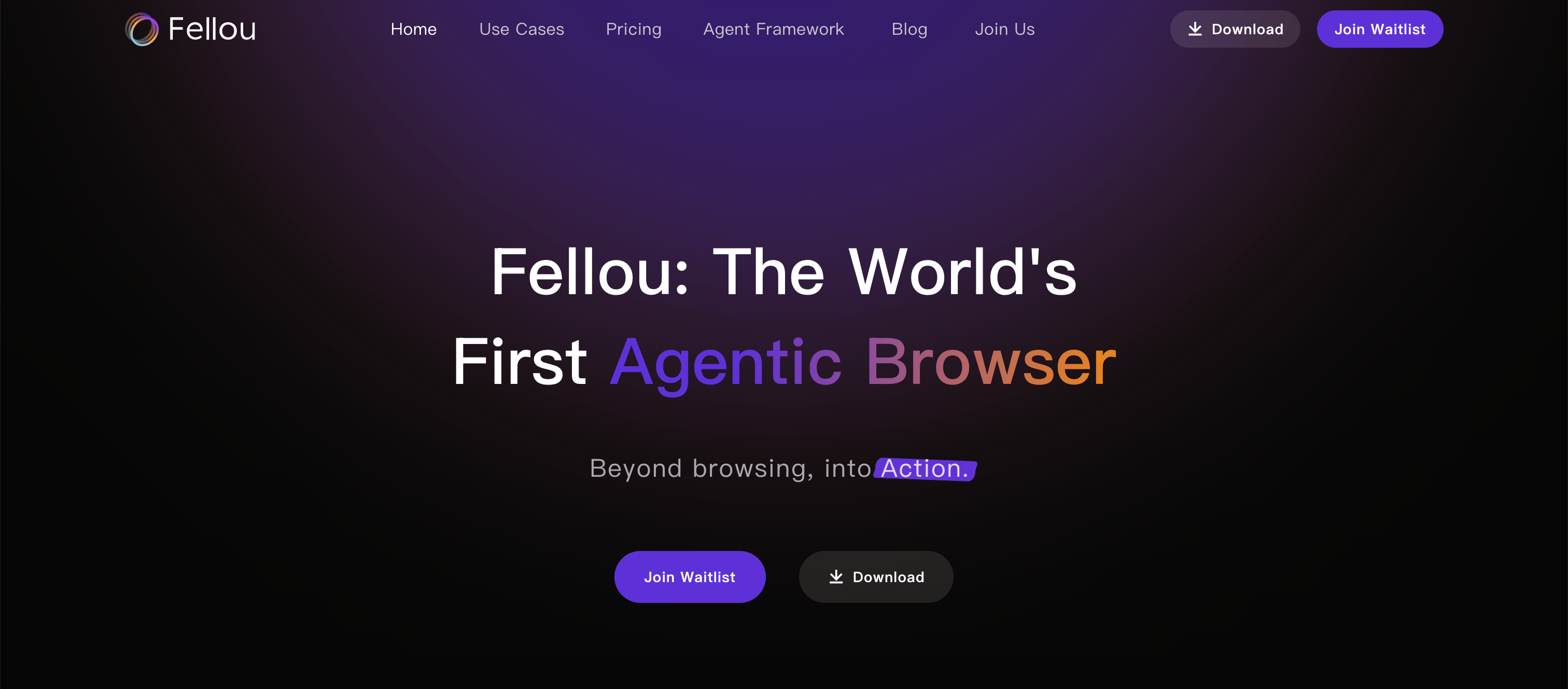
Fellou positions itself as an AI-native browser designed specifically for agentic workflows. It’s not retrofitting AI capabilities onto traditional browser architecture—Fellou has built its platform from the ground up to support autonomous agent interactions. The browser focuses on productivity use cases to enable AI agents to handle routine web tasks like data entry, research compilation, and workflow automation across multiple websites.

Dia browser takes a developer-focused approach to agentic browsing. It provides tools and APIs that allow users to create custom AI agents for specific web interaction scenarios. The platform focuses on programmability and customization that help technical users who want to build specialized automation workflows.

Opera’s experimental Neon project incorporates AI-driven features that can suggest actions and automate certain browsing tasks. It maintains the traditional browser interface while adding intelligent assistance layers.
Agentic browsers usher in a new future for web interaction, but there are trade-offs to this new technology, and there are still plenty of use cases when human intervention trumps AI automation.
Automated task completion: AI agents handle repetitive web tasks like form filling, appointment booking, and comparison shopping. This eliminates manually navigating through multi-step processes across different websites.
Improved productivity: Users can delegate complex workflows to agents while focusing on higher-value activities. Instead of spending hours researching and booking travel, you can instruct an agent to find the best options within your parameters.
24/7 autonomous operation: Agents can monitor websites, track changes, and complete time-sensitive tasks around the clock. They can watch for price drops, monitor application deadlines, or automatically renew subscriptions when needed.
Reduced cognitive load: Eliminates decision fatigue from complex web navigation and task completion processes. Users provide high-level goals while agents handle the detailed execution and decision-making.
Personalized web interaction: Agents learn user preferences and optimize browsing patterns for individual needs. They become better over time at anticipating needs and streamlining workflows.
Privacy and security risks: AI agents need permissions and data access to function, but this creates potential vulnerabilities around personal information and financial data exposure.
Loss of browsing control: Users surrender direct oversight of web interactions, potentially missing important information, context, or opportunities for serendipitous discovery.
Website compatibility issues: Many sites aren’t designed for AI agent interaction (yet). This will lead to errors, incomplete task execution, or blocked access when security systems detect automated behavior.
Dependency on AI accuracy: Agent mistakes in understanding context or executing tasks can have real-world consequences. That could be everything from incorrect purchases to missed opportunities or inappropriate actions.
Limited human judgment: Agents struggle with nuanced decisions, especially those around emotional intelligence, cultural context, or subjective preferences that humans intuitively understand.
Agentic browsers force a rethinking of how websites are designed, optimized, and monetized. This shift will reshape the entire web development landscape over the next few years.
This means creating clean, predictable navigation structures that agents can understand while maintaining visual appeal for human visitors. We’ll see exactly what that looks like soon, but it might involve less visually impressive JavaScript and more naturally navigable elements. We’ll likely see more structured layouts, consistent naming conventions, and logical information hierarchies that AI agents can interpret consistently.
Yes, beautiful visual designs will still be important for human users, but websites will need to integrate APIs that let AI agents access information and complete tasks more efficiently. This dual approach (visual interfaces for humans, programmatic interfaces for agents) is the new standard.
Before, website designers and writers focused exclusively on users and SEO. They needed search engines to be able to crawl and understand their sites. Now, agentic browsers will start to evaluate websites based on functionality, data quality, and task completion. Sites that nail these criteria will probably gain advantages in this new ecosystem.
How do agentic browsers work compared to regular browsers?
Regular browsers display websites for human interaction and require manual clicking and navigation. Agentic browsers use AI agents that autonomously navigate websites, complete forms, and execute tasks based on user instructions.
What agentic browser options are currently available?
Leading options include Perplexity Comet (which integrates AI agents with web automation), Fellou browser (designed specifically for agentic workflows), and Dia browser (offering developer-focused customization tools).
What types of websites work best with agentic browsers?
Websites with clear navigation structures, consistent layouts, and well-organized information work best. E-commerce sites, booking platforms, and form-heavy websites already incorporate these elements, but complex visual interfaces or sites requiring human judgment may be challenging.
What are the main privacy and security risks of agentic browsing?
Risks include extensive data access permissions, potential exposure of personal information, automated accidents without user oversight, and vulnerability to AI agent errors that could compromise accounts or make unauthorized transactions.
What happens to my data when agentic browsers interact with websites?
Agentic browsers collect interaction data to improve performance, but this creates privacy concerns around cross-site tracking and data aggregation. Users should review privacy policies and data handling practices before granting agents access permissions to the broader web.
DigitalOcean Gradient Platform makes it easier to build and deploy AI agents without managing complex infrastructure. Build custom, fully-managed agents backed by the world’s most powerful LLMs from Anthropic, DeepSeek, Meta, Mistral, and OpenAI. From customer-facing chatbots to complex, multi-agent workflows, integrate agentic AI with your application in hours with transparent, usage-based billing and no infrastructure management required.
Key features:
Serverless inference with leading LLMs and simple API integration
RAG workflows with knowledge bases for fine-tuned retrieval
Function calling capabilities for real-time information access
Multi-agent crews and agent routing for complex tasks
Guardrails for content moderation and sensitive data detection
Embeddable chatbot snippets for easy website integration
Versioning and rollback capabilities for safe experimentation
Get started with DigitalOcean Gradient Platform for access to everything you need to build, run, and manage the next big thing.
此内容由惯性聚合(RSS阅读器)自动聚合整理,仅供阅读参考。 原文来自 — 版权归原作者所有。