






82% said the state’s transit system is in fair or poor condition.
Send this article to your social connections.
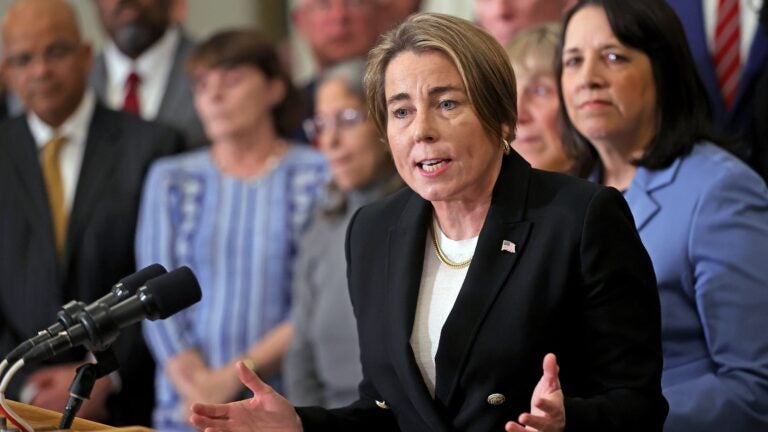
Despite recent efforts to renovate and restore the MBTA, Massachusetts voters remain largely dissatisfied with the state’s public transit system, a new poll from MassINC Polling Group found. Perhaps related, voters also saddled Gov. Maura Healey with an underwater approval rating in the poll.
In a survey of 800 Massachusetts registered voters, 82% said the state’s transportation system is in fair or poor condition, according to a MassINC news release.
Few respondents said they see progress on the MBTA, as 43% believe the system has stayed “about the same,” while 19% feel it has worsened, the poll results show. Only 21% reported seeing any improvement.
Advertisement:
MassINC described these figures as being “worse” than those recorded in 2024 and 2025 resident surveys.
However, the organization noted that harsh winters “may explain some of the pessimism,” as a focus group held prior to the poll highlighted grievances regarding snow removal from sidewalks, roads, and bus stops. At the same time, the focus group found that residents are concerned about the quality and speed of construction projects, which has reduced the public’s desire to increase transit system investments, according to MassINC.
Despite these concerns, “microtransit services” emerged as a specific area with majority backing, the poll results showed. Approximately two-thirds of those surveyed favored increased state funding for these services, which assist smaller communities that lack full-fledged bus service and rely on on-demand vans and minibuses.
Advertisement:
“At a time when money is tight for voters and state government alike, it’s encouraging to see continued support for transit for our rural communities,” Massachusetts Executive Director of Transportation Reggie Ramos said. “These programs provide crucial mobility — a lifeline — to some of our least connected residents, many of whom have no other way of getting around.”
A majority of respondents also said free public transit on Election Day would make it easier for the community to vote, according to MassINC. Groups that are more likely to be served by transit — such as non-white voters, current transit riders, and lower-income voters — are even more likely to think it would make a difference, the poll found.
“We’re seeing massive efforts underway in other states to dismantle voting rights, especially for communities of color,” Executive Director of Massachusetts Voter Table Shanique Rodriguez said. “This poll shows the Massachusetts voters want to go another direction, taking common sense steps to make voting easier and more inclusive.”
Beyond policy issues, the survey examined approval ratings for elected officials, including Healey and Sen. Ed Markey, who are both facing challengers in the upcoming November 2026 midterm elections.
Advertisement:
“Both Donald Trump (31-61) and Maura Healey (39-45) are underwater, while Ed Markey is only slightly above (40-37),” MassInc said.
Healey is facing significant unfavorability among men, independents, voters under 45, and those with lower income and education levels, according to the poll.
Furthermore, the survey evaluated two ballot questions centered on Election Day.
One proposal aims to allow same-day voter registration, a measure supported by 58% of respondents. However, public awareness remains limited: Only 34% of voters realize that Massachusetts currently lacks the policy, according to the survey results.
A second ballot question proposes a gradual reduction of the state income tax from 5% to 4% over three years.
While 66% initially supported the cut, many participants changed their stance after learning it would decrease state budget funding and primarily benefit the wealthiest residents, MassINC officials said. Upon learning this information, support dropped to 40%, with 50% intending to vote “no.”
MassINC Vice President Richard Parr said polling on ballot questions can be “extremely volatile,” as new details can dramatically shift voter opinions.
“If the income tax question goes before voters, this polling shows that what voters know about its full effects could have a dramatic impact on the outcome,” Parr added.
Advertisement:
The poll, which surveyed voters over five days in March using text invitations and live phone interviews, carries a margin of error of plus or minus 4.4 percentage points.
Sign up for the Today newsletter
Get everything you need to know to start your day, delivered right to your inbox every morning.
Want to leave a comment?
To comment, please create a screen name in your profile