






Forty percent of US homeowners got help with their down payment in 2026.
Share
Send this article to your social connections.
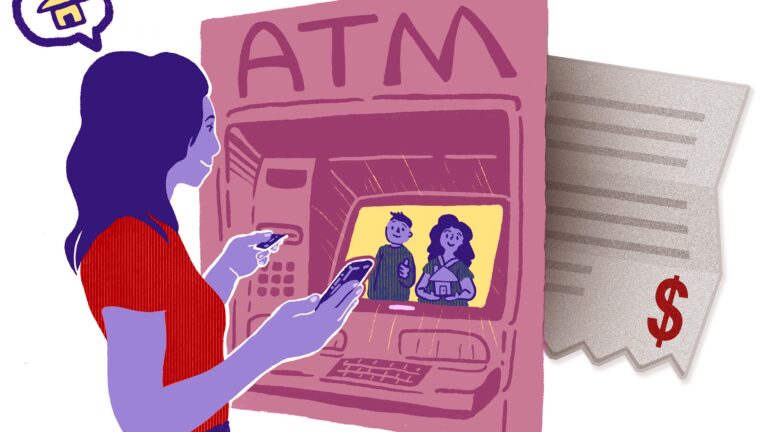
As the cost of housing in Greater Boston continues to rise — with the median sales price of a single-family home exceeding $1 million this spring, up from $989,500 last April, according to the Massachusetts Association of Realtors — more parents are stepping in to help their adult children buy homes. But while the bank of Mom and Dad can be invaluable to those who couldn’t otherwise achieve homeownership, tax professionals warn that there could be unintended consequences, as some gifts may trigger tax laws.
“Given the price of houses in Greater Boston, I see many parents contributing to down payments for their kids, especially first-time buyers, or even paying the whole amount for the house,” said Debby Belt, a senior associate at Hammond Residential Real Estate in Chestnut Hill. Belt said that in about half of her transactions, parents are contributing in some capacity to help their kids buy a home — and that she’s seen gifts up to $2 million.
A LendingTree survey released in April demonstrates how essential financial support has become, especially for younger home buyers, finding that 40 percent nationally got help with their down payment this year (up from 35 percent in 2023). That includes 78 percent of Gen Z (up to age 29) homeowners and 56 percent of millennials (30 to 45 years old). Moreover, more than one in three survey respondents said they couldn’t have bought their home without help.
“In a place like Boston, it’s just really hard to get your foot in the door right now,” said Matt Schulz, LendingTree’s chief consumer finance analyst. “Prices are high, competition is tough, and even people with solid incomes can struggle to save enough for a down payment. That’s why we’re seeing so many buyers turn to their parents for help. For some, the unfortunate truth is that it’s the only way buying a home is even possible.”
But just because parents are in a financial position to pay for their child’s down payment, or gift them an entire house, should they? There could be tax ramifications that all parties should know.
Inheritance
First, it’s helpful to know what happens if a home is passed down after death. Nationally, every person has a lifetime exemption called the unified credit; for people dying in 2026, it’s $15 million. That exemption applies to gifts made during that person’s lifetime, as well as estate assets transferred at the time of death. It’s as if the Internal Revenue Service keeps a running tab of taxable gifts you make, and those gifts are then deducted from the amount of assets you can transfer free of federal estate taxes at your death.
For example, let’s say someone gave $5 million worth of taxable gifts during their life and then died with a taxable estate valued at $25 million. The $5 million is deducted from the unified credit, leaving $10 million. Anything above that — in this person’s case, $15 million — is potentially subject to federal estate taxes. However, if that person died with a taxable estate of just $10 million, there would be no federal estate taxes due.
At a state level in Massachusetts, estate taxes (for people dying on or after Jan. 1, 2023) apply to gross estates of more than $2 million, so potentially, someone could be liable for both federal and Massachusetts estate taxes.
“Many residents of Massachusetts are subject to estate taxes because the threshold is so low and our real estate values are so high,” said Katherine Dorval, a trust and estate attorney with Bowditch & Dewey in Worcester.
Lifetime gifts
Under federal gift tax rules, in 2026 a person can give $19,000 per person per year (called the annual exclusion) without having to report it to the IRS. So, for a married couple giving cash to a child to purchase a home, each parent could give $19,000 for a total of $38,000 that not only doesn’t require a gift tax return to be filed, but also doesn’t use up any of the lifetime unified credit. For gifts above $19,000, a gift tax return is required.
“A lot of people are confused about the $19,000 limit,” said Dorval. “But it’s not really a limit on the amount of gifts you can give; it’s just the amount where the IRS says that below that amount, they won’t pay attention to it.”
When they do pay attention, federal gift taxes are paid by the donor, not the recipient, but but only if they exceed the $15 million lifetime exemption. Massachusetts does not have an additional state gift tax.
More Real Estate

A gift is made anytime someone gives something away for less than its fair market value without expecting anything of equal value in return.
If a parent gifts a child a house, the child gets a carryover basis for the asset. That means that for income tax purposes, it’s as if the child steps into the parents’ shoes and “inherits” their basis (total financial investment) for the house. For example, if your adjusted basis for a house is $1 million and you gift it to your child, he or she will be considered to have a $1 million net value as well and would have to pay capital gains taxes over that amount when the house sells, unless the child qualified for an exclusion from capital gains under the Internal Revenue Code. The lower the net value, the higher the capital gains tax bill.
Compare that to the tax situation if a parent dies and a child inherits the house. In that case, the child gets a “stepped-up” basis to fair market value as of the date of the parent’s death. So, if the house is sold immediately, the capital gains taxes due may be significantly reduced — or zero.
Parents who may be approaching retirement also need to think about how a monetary gift impacts them. “Once that money is out the door, it’s no longer available for things like retirement, health care, or unexpected personal needs,” said Julian B. Morris, a certified financial planner with Concierge Wealth Management in Boston. “Question what your life will look like after the gift — your generosity shouldn’t come at the expense of your own financial security.”

Robyn A. Friedman
Robyn A. Friedman is an award-winning freelance writer who has covered real estate and personal finance for over two decades. Follow her @robynafriedman.
Address Newsletter
Our weekly digest on buying, selling, and design, with expert advice and insider neighborhood knowledge.